
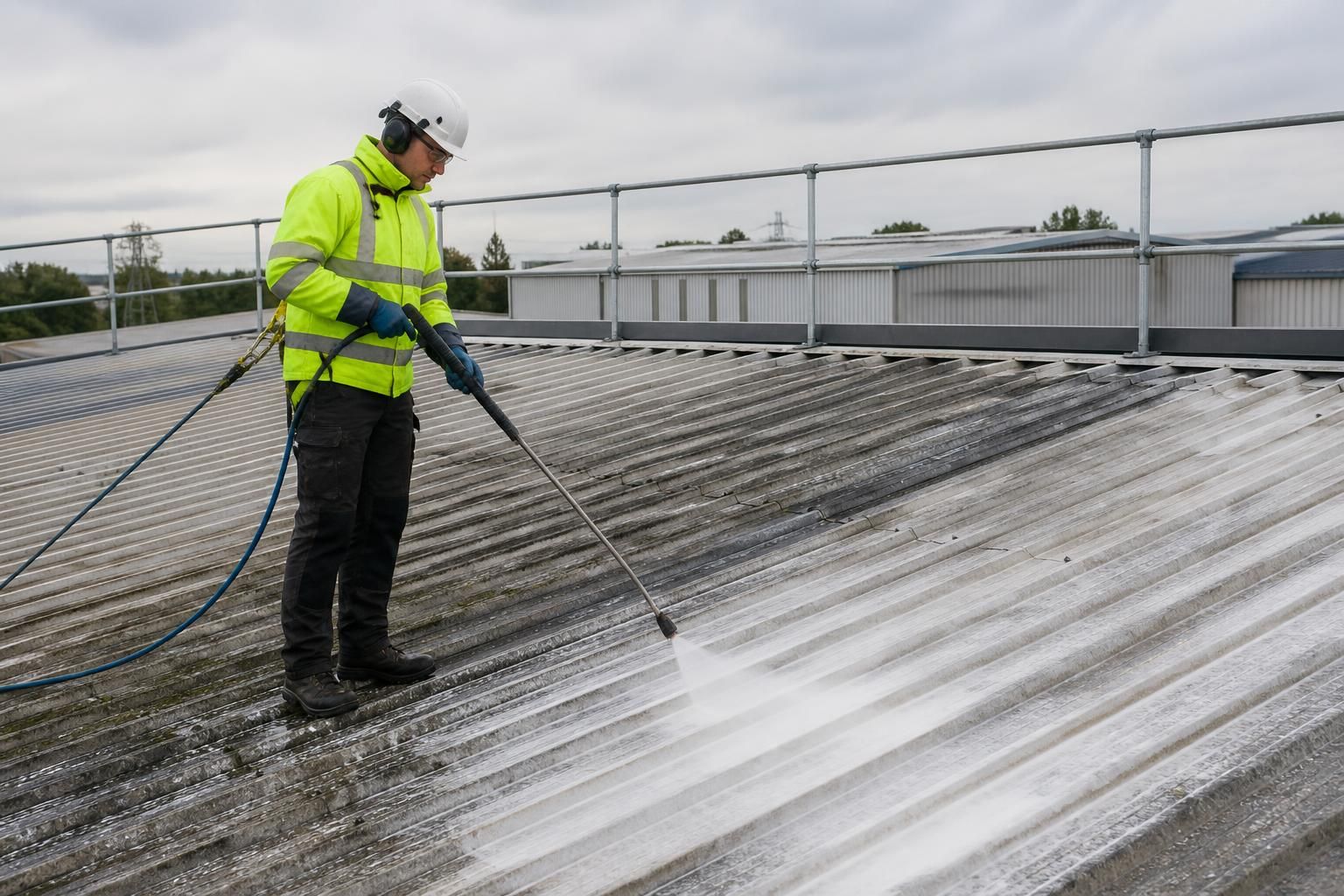
How do specialised soft wash systems safeguard sensitive surfaces while ensuring effective cleaning?
Specialised soft wash systems use low-pressure application with carefully selected cleaning solutions to remove dirt, algae, moss and staining without the force that can damage sensitive surfaces. Controlled application, dwell time and thorough rinsing help protect coatings, roofing materials, cladding and masonry while delivering an effective clean.
Specialised soft wash systems clean exterior surfaces by applying purpose-selected detergents or biocidal solutions at low pressure, allowing the chemistry and controlled dwell time to loosen contamination before a gentle rinse. This reduces the mechanical force placed on sensitive materials while still removing organic growth, atmospheric soiling, staining and residues that ordinary water pressure may not shift safely.
Why low pressure matters
High-pressure cleaning can force water beneath laps, seals and joints, strip coatings, roughen masonry or dislodge fragile areas of pointing. It may also damage roof coverings, painted cladding and weathered substrates when the pressure, nozzle or working distance is unsuitable. Soft washing limits this risk by using pressure primarily to apply and rinse the solution rather than relying on impact to break contamination from the surface.
The correct pressure is not automatically the lowest available setting. It must be appropriate for the surface, its condition and the access arrangement. A professional operator adjusts the pump, nozzle, flow rate and spray distance to achieve even coverage without driving water into vulnerable details. Areas that are cracked, delaminated, poorly sealed or already friable require particular care and may need repair or a different cleaning method before washing begins.
How the cleaning process protects the substrate
- Inspection and identification: The surface is assessed for its material, coating, age, condition, previous repairs, drainage paths and nearby sensitive features. This helps determine whether soft washing is suitable and whether a test patch is required.
- Preparation: Loose debris is removed where appropriate, windows, vents, electrical equipment, planted areas and pedestrian routes are protected, and runoff controls are put in place. Openings and defects that could allow water ingress are noted before application.
- Solution selection: The cleaning solution is selected for the type of contamination and the material being treated. Organic growth such as algae, moss and lichen may require a biocidal treatment, while traffic film, grease or atmospheric deposits may need a different detergent or a separate pre-treatment.
- Controlled application: The solution is applied evenly at low pressure, avoiding unnecessary overspray. Keeping the surface wet during application and working in manageable sections helps maintain consistent contact without allowing the product to dry unpredictably.
- Measured dwell time: The solution is left to work for an appropriate period, monitored according to the substrate, weather and contamination. Dwell time allows the chemistry to break down soiling, reducing the need for aggressive agitation or repeated pressure washing.
- Gentle rinsing and inspection: The surface is rinsed using a controlled pressure and sufficient water flow to remove loosened material and residues. The result is checked progressively so that additional treatment can be applied only where necessary.
Protection of common sensitive surfaces
Soft wash systems are particularly useful for roof coverings, painted or coated cladding, render, masonry, stonework, signage and other surfaces where impact cleaning could cause deterioration. On roof materials, low-pressure application helps reduce the chance of cracked tiles, displaced granules, damaged protective finishes and water being driven beneath overlaps. Moss and lichen are treated rather than simply blasted away, although heavy growth may still need careful manual removal before treatment.
Painted metal and coated steel can be vulnerable to scratched finishes, exposed edges and corrosion if abrasive methods are used. A compatible detergent and a controlled rinse can remove surface contamination while preserving the coating. However, cleaning does not restore coating that has already failed. Rusting, blistering, chalking or exposed substrate should be recorded and referred for appropriate remedial work.
Render, stone and masonry vary considerably in porosity and strength. A soft wash can reduce the risk of etching and surface loss compared with aggressive pressure, but chemical compatibility remains essential. Some stone types, aged mortar, historic finishes and decorative coatings may be sensitive to particular solutions. A small inconspicuous test area can confirm the cleaning response, colour stability and rinse requirements before wider application.
Why the solution is as important as the equipment
Soft washing is not simply pressure washing at a lower setting. Its effectiveness depends on choosing a solution that targets the contamination without harming the surface, surrounding vegetation or drainage system. The concentration must be controlled, applied consistently and rinsed thoroughly where the product instructions require it. Mixing incompatible chemicals can create dangerous reactions or reduce cleaning performance, so products should never be combined unless the manufacturer’s guidance specifically permits it.
Biocidal treatments can continue working after the visible contamination has been removed, helping address embedded organic growth. They are not a substitute for good surface assessment or maintenance, and they must be handled, stored and disposed of responsibly. Operators should follow current safety data, product labels, site controls and relevant environmental requirements, particularly where runoff could enter watercourses or affect planted areas.
Controls that prevent damage during soft washing
- Use a pre-clean inspection and document existing defects, staining, failed sealant and damaged coatings.
- Carry out a test patch where the material, coating or contamination is uncertain.
- Select nozzles, pressure and spray distance for the substrate rather than using one setting across the whole building.
- Keep solution and rinse water away from air intakes, electrical components, open windows and unprotected occupants.
- Protect landscaping and control runoff in accordance with the product and site requirements.
- Prevent the cleaning solution from drying on glass, painted details or other vulnerable areas.
- Use suitable access equipment so the operator can maintain a consistent working distance without overreaching.
- Inspect the cleaned area during the work and stop if colour change, coating failure, water ingress or unexpected surface damage appears.
Good access planning is a safety measure as well as a quality control. Working from an unstable position can lead to inconsistent application, excessive pressure or missed sections. Properly selected access equipment allows the operator to keep the lance or applicator at the intended angle and distance, while maintaining safe separation from roof edges, traffic, members of the public and building services.
When soft washing is not the complete solution
Soft washing is effective for many biological and surface-based contaminants, but it is not suitable for every condition. Thick cement deposits, hardened construction residue, heavy oil, deeply ingrained rust or failing coatings may need specialist preparation, steam cleaning, mechanical methods or repair. Using a soft wash solution on a fundamentally defective surface can conceal a problem temporarily without resolving it.
Pressure washing may still have a role on robust, sound surfaces where impact is appropriate, while steam cleaning can be useful where heat and low moisture are advantageous. The safest method is chosen after considering the material, contamination, access, drainage, surrounding environment and required finish. In some projects, a combined approach is more controlled than relying on a single technique.
Practical outcome for commercial premises
For façades, roofs, cladding and hardstanding across commercial sites, a properly specified soft wash system provides controlled cleaning with less risk of substrate erosion, coating damage and water intrusion than an unsuitable high-pressure approach. Its success depends on the full method: accurate surface identification, compatible chemistry, controlled application, appropriate dwell time, careful rinsing and responsible runoff management. These controls make soft washing a practical option when the appearance and condition of the underlying surface must be preserved as well as the contamination removed.
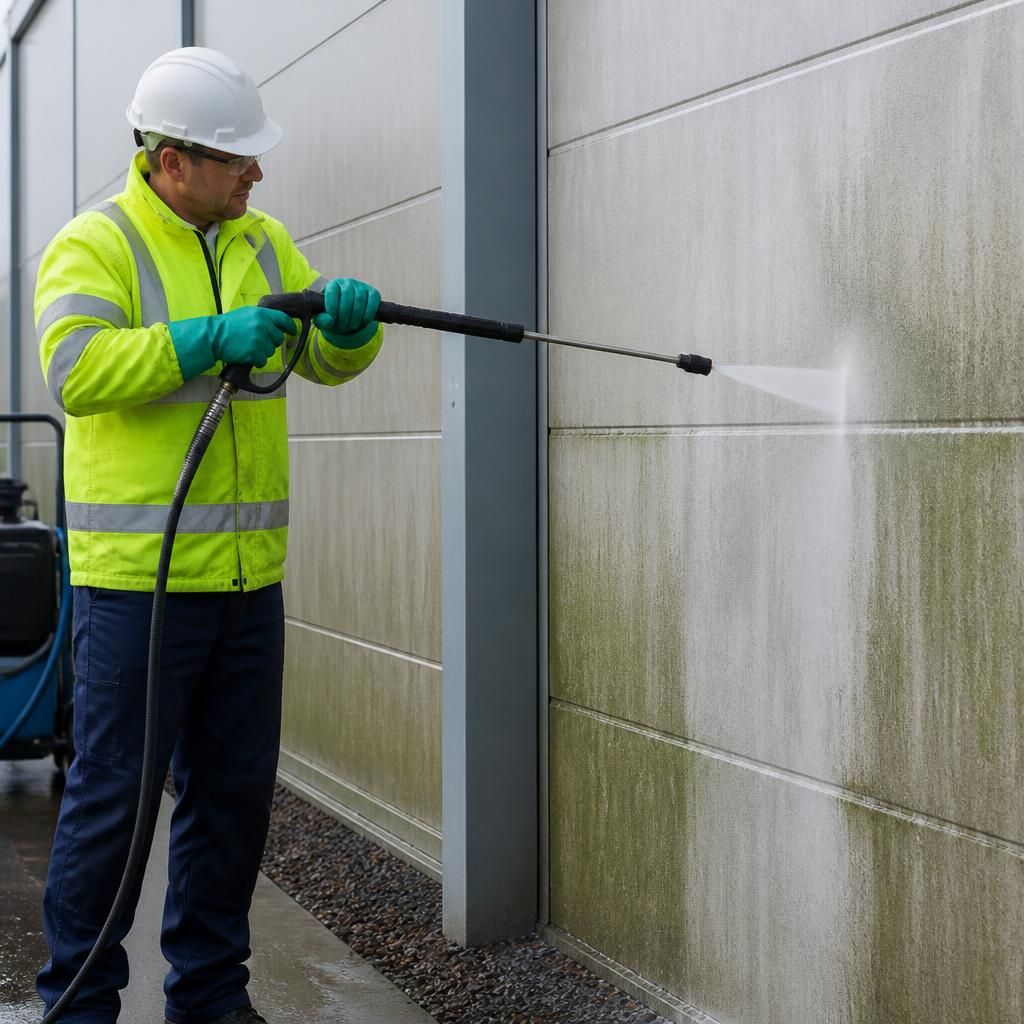
Specialised soft wash systems protect sensitive surfaces by combining low-pressure application with a cleaning solution selected for the material and contamination. The solution loosens algae, moss, atmospheric soiling and other residues, reducing the need for aggressive pressure that could strip coatings, erode masonry or force water beneath roof overlaps and cladding joints.
Before full application, the surface should be inspected and, where necessary, tested in a discreet area. This confirms that the solution is compatible with the coating or substrate and shows how much dwell time and rinsing are required. Operators then work in controlled sections, protect openings and nearby landscaping, and rinse thoroughly without allowing the solution to dry on vulnerable details.
This process is particularly important for painted cladding, render, stonework, signage and roof coverings. Soft washing can remove contamination while preserving the underlying finish, but it cannot correct failed coatings, damaged pointing or defective seals. Those issues should be recorded and addressed separately rather than concealed through cleaning.
Discuss Your Soft Washing Requirements
Discuss your soft washing requirements with our team to identify the safest, most effective method for your roofs, façades, cladding or other sensitive surfaces. We can assess the substrate, contamination and site conditions before recommending a suitable cleaning approach.