
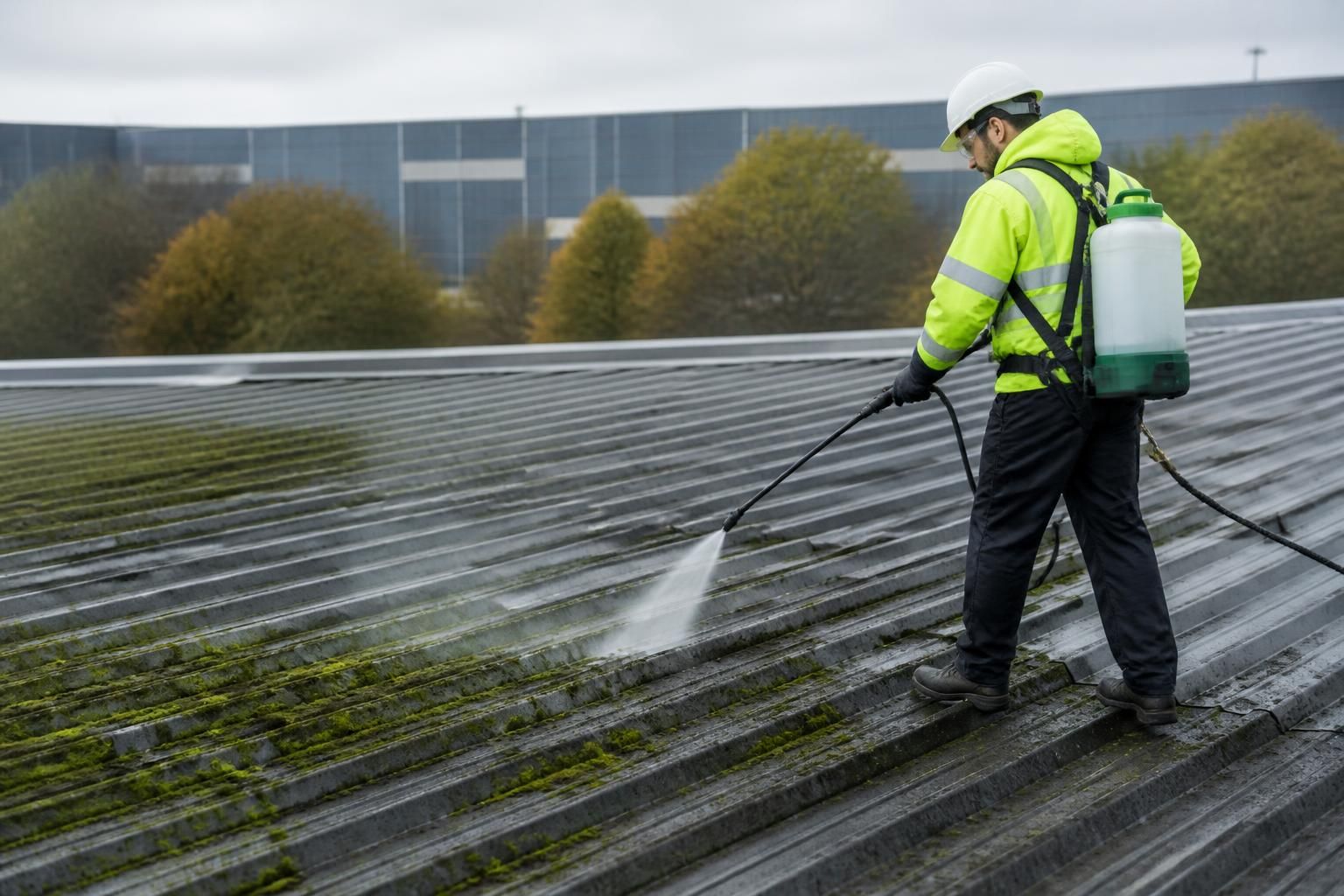
How do anti moss roof sprays contribute to the longevity of roof surfaces?
Anti moss roof sprays help extend roof lifespan by controlling moss, algae and lichen that retain moisture, obstruct drainage and encourage surface deterioration. Applied correctly to a suitable roof surface, they support preventative maintenance and reduce the need for aggressive cleaning, although they do not repair existing structural damage.
Anti moss roof sprays contribute to roof longevity by controlling moss, algae and lichen before these growths can retain moisture, obstruct drainage or contribute to surface deterioration. They are a preventative treatment rather than a repair system: when applied to a suitable roof after an appropriate clean, they help keep the surface drier and reduce the frequency and intensity of future cleaning.
Moss and other organic growths can affect a roof in several ways. Their root-like structures may work into surface imperfections, while dense growth holds moisture against tiles, slates and other roofing materials. This repeated dampness can encourage weathering, staining and freeze-thaw damage where conditions allow. Moss can also spread across laps, channels and valleys, restricting the movement of rainwater and increasing the risk of localised pooling or overflowing.
An anti moss spray helps break this cycle. The active treatment is designed to weaken or control organic growth that remains on, or begins to recolonise, the roof surface. Once the growth has died back, rainfall and routine maintenance can remove the residue gradually, or it can be cleared as part of a planned cleaning operation. Removing the biological material reduces moisture retention and helps keep drainage routes open, so the roof is better able to perform its intended function.
The main longevity benefits include:
- Less moisture retention: a cleaner surface is less likely to remain continuously damp beneath a layer of moss or lichen.
- Reduced surface disturbance: controlling growth can limit the need for repeated scraping, harsh agitation or high-pressure cleaning, all of which may be unsuitable for some roofing materials.
- Clearer drainage paths: reducing growth around tiles, slates, gutters, valleys and outlets helps rainwater flow away from the roof structure.
- Slower biological recolonisation: a suitable residual treatment can delay the return of moss and algae, supporting a more manageable maintenance cycle.
- Earlier identification of defects: a clean roof makes cracked tiles, displaced slates, failed flashings and blocked drainage easier to inspect and address.
The treatment is most effective when it forms part of a planned roof maintenance system. A professional assessment should be completed first to identify the roofing material, its condition, the type and density of growth, nearby drainage routes and any access constraints. The roof may require a compatible soft wash, manual removal or another low-impact cleaning method before the spray is applied. Treating a heavily contaminated surface without removing loose growth can reduce the consistency of the result and leave organic debris obstructing drainage.
Application technique is important. The product must be suitable for the specific roof surface and used in accordance with its instructions, including the required dilution, coverage, dwell time and weather conditions. Operators should control overspray and runoff, protect sensitive surrounding surfaces, and prevent the solution entering watercourses or contaminating areas used by people, pets or wildlife. Access equipment and personal protective equipment should be selected according to the roof design and the chemical being used.
Anti moss sprays do not extend the life of every roof in the same way. Their benefit depends on the underlying material and its condition. Sound concrete tiles, many clay tiles and other compatible surfaces may respond well to a properly selected treatment, whereas fragile, porous, weathered or damaged materials require a more cautious assessment. Some roof coatings, painted finishes, sealants and heritage materials may be affected by unsuitable chemicals or cleaning methods. A treatment should never be used to disguise deterioration or postpone necessary repairs.
It is also important to distinguish between moss control and waterproofing. An anti moss spray does not restore broken tiles, repair defective pointing, replace failed flashing or make a leaking roof watertight. It cannot reverse structural movement, widespread erosion or damage caused by prolonged water ingress. Where defects are found, they should be recorded and referred for suitable roofing repairs before preventative treatment is relied upon.
For commercial and industrial properties, scheduled application can support planned maintenance by reducing the build-up that contributes to blocked gutters, stained elevations and avoidable reactive work. It can also help maintain a cleaner, more professional appearance between major cleaning visits. However, the correct interval depends on exposure, shading, surrounding vegetation, roof construction and the level of existing growth; it should be established through inspection rather than applied automatically.
After treatment, roof condition should be reviewed periodically. Checks should include the roof covering, laps and joints, valleys, gutters, downpipes, flashings and any areas shaded by trees or adjacent structures. Removing leaf litter and keeping drainage systems clear remains essential, because an anti moss spray cannot compensate for blocked gutters or persistent sources of dampness.
In practice, the spray provides the greatest longevity benefit when it is used as one part of a controlled maintenance process: assess the roof, select a compatible cleaning method, remove or treat organic growth, apply the product safely, manage runoff, inspect for defects and schedule follow-up maintenance. Used in this way, anti moss roof sprays help reduce the conditions that accelerate roof wear while avoiding unnecessary mechanical stress on the surface.
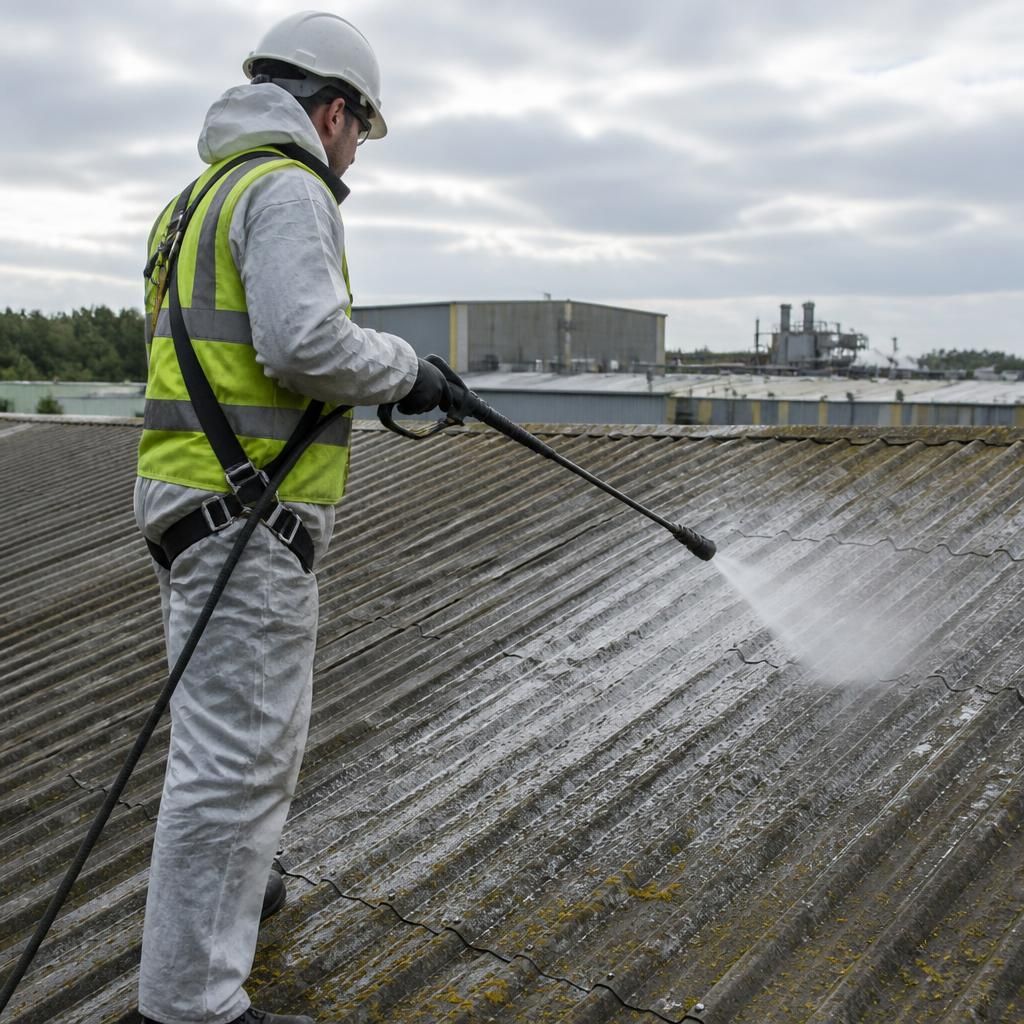
Anti moss roof sprays help extend roof surface life by controlling moss, algae and lichen that retain moisture against tiles and obstruct drainage routes. Keeping these growths under control reduces prolonged dampness and helps limit the surface weathering associated with repeated moisture exposure.
They are most effective as part of planned maintenance, rather than as a substitute for roof repairs. After a suitable clean, a compatible treatment can slow recolonisation and reduce the need for aggressive scraping or pressure washing. The roof should still be inspected for cracked tiles, displaced slates, defective flashings and blocked gutters, because a spray cannot repair structural defects or resolve water ingress.