
How can professional equipment improve the effectiveness of cleaning steel buildings?
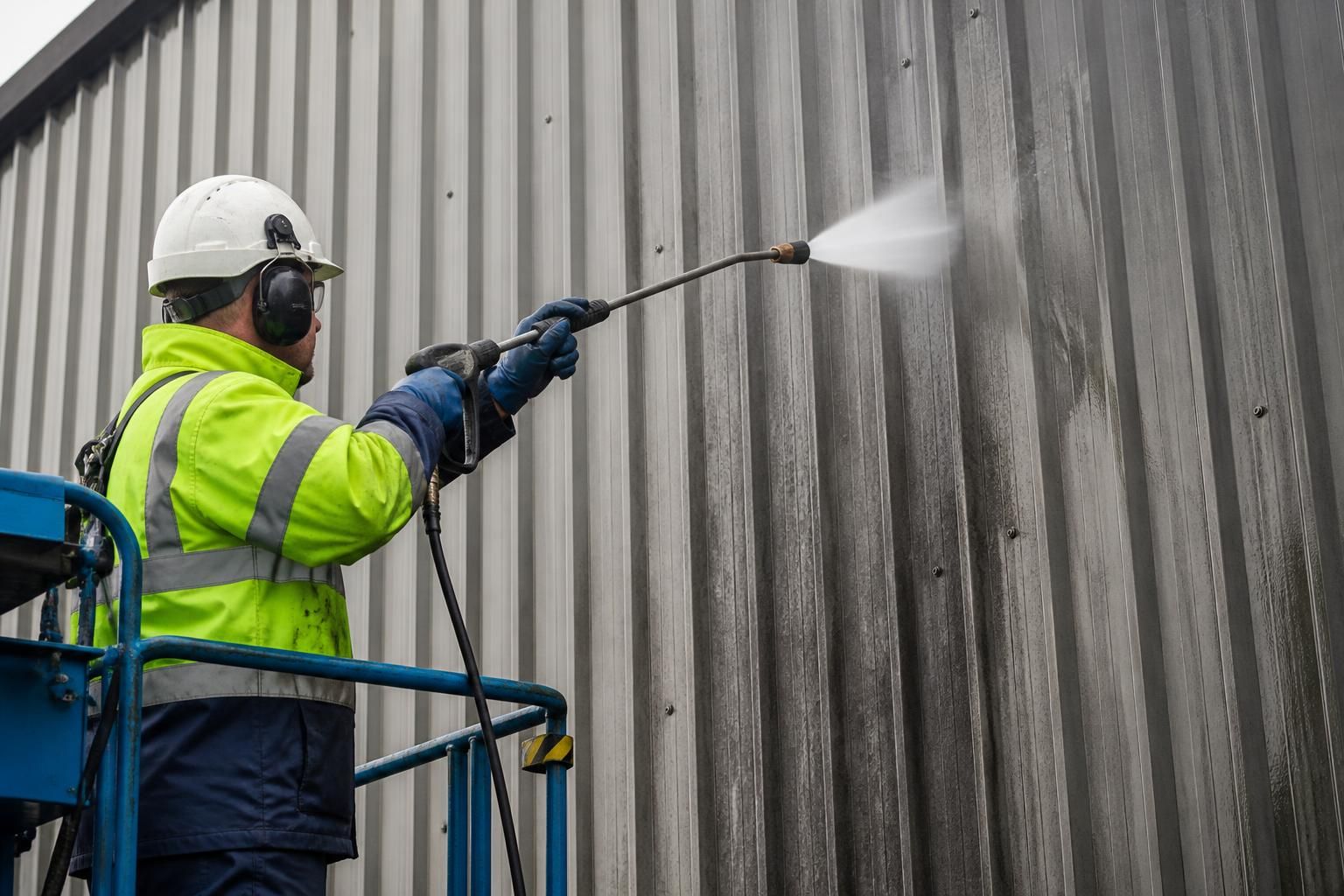
Professional equipment improves steel building cleaning by combining controlled pressure, heated water or steam, suitable detergents and safe access systems to remove dirt, oil, biological growth and surface staining efficiently. Correctly selected settings also help protect protective coatings, reduce the risk of corrosion and deliver consistent results across large façades, cladding and structural steelwork.
Professional equipment improves the cleaning of steel buildings by providing controlled pressure, adjustable water temperature, suitable detergents and safer access to difficult areas. This combination removes dust, traffic film, oil, bird fouling, algae, moss, rust staining and other contaminants more consistently than basic domestic equipment, while helping to protect paint, galvanised finishes, sealants and corrosion-control coatings.
Steel buildings commonly include profiled cladding, insulated panels, structural steelwork, roofs, loading bays, roller doors and areas of exposed framework. Each surface can respond differently to water pressure, heat and chemicals. Professional cleaning therefore starts with assessing the substrate, its coating and the type of contamination, rather than applying the same method across the whole building.
Controlled pressure protects the steel and its coatings
Commercial pressure washing equipment allows the operator to regulate pressure, flow and nozzle selection for the surface being cleaned. This is important because excessive pressure can damage painted finishes, drive water behind joints, disturb sealants or expose vulnerable edges. On older cladding, it may also remove weakened coating or accelerate the deterioration of already damaged areas.
Using the lowest effective pressure helps loosen contamination without unnecessarily stressing the surface. Wider fan patterns are generally useful for broad cladding, while more controlled attachments can help with frames, ledges and localised deposits. The operator can also change the working distance and angle to reduce the risk of forcing water into overlaps, vents, electrical fittings or building openings.
Hot water and steam improve the removal of difficult deposits
Cold water can remove loose soil and general dust, but heated water is often more effective against oily residues, traffic film, grease and ingrained dirt around workshops, depots, warehouses and industrial units. Heat helps soften deposits so they can be removed with less mechanical force and, in some situations, less detergent.
Steam cleaning provides a lower-volume approach for selected areas and sensitive components. It can be useful for localised grime, organic growth and residues where limiting water runoff is important. Steam is not suitable for every coating or joint, however, and heat must be controlled around plastics, sealants, insulation interfaces and painted surfaces. A professional assessment determines whether hot pressure washing, steam, soft washing or a combination is appropriate.
Detergent systems improve cleaning efficiency
Professional chemical application systems distribute detergents evenly over large façades and cladding. This gives the cleaning solution time to break down organic growth, grease and atmospheric soiling before rinsing. Applying a suitable solution first can reduce the need for aggressive pressure and helps produce a more even finish across large elevations.
The detergent must be compatible with the steel finish and surrounding materials. Painted and powder-coated surfaces, galvanised steel, rubber seals, glazing, landscaping and drainage systems all need consideration. Chemicals should be applied at the correct strength, prevented from drying on the surface and rinsed away thoroughly where required. Runoff must also be managed so that cleaning agents and loosened contaminants do not enter unsuitable drainage channels or affect nearby ground and watercourses.
Specialist access equipment reaches the full building envelope
Steel buildings often have high façades, roof edges, canopies, gutters and recessed sections that cannot be cleaned effectively from ground level. Water-fed poles, long-reach systems, mobile access platforms, scaffold towers and other suitable access equipment allow operatives to work closer to these areas while maintaining better control of the cleaning process.
Access equipment is selected according to the building layout, ground conditions, working height, overhead obstructions and the presence of members of the public or site traffic. Proper positioning reduces the temptation to increase water pressure simply to reach an inaccessible area. It also supports a more consistent finish and helps prevent missed bands of dirt beneath rooflines and around structural details.
Equipment helps manage corrosion risk
Cleaning does not replace repairs or protective coating work, but it can reveal corrosion, coating failure, damaged fixings and open joints that were previously hidden by dirt. Removing contaminants such as salts, oil and organic matter reduces the conditions that can contribute to ongoing deterioration, particularly where moisture remains trapped against the steel.
After cleaning, surfaces should be inspected for bubbling paint, exposed metal, rust staining, failed sealant and damaged cladding edges. Rust should not simply be concealed with cleaning chemicals or paint. Where corrosion is present, the appropriate repair, preparation and recoating specification should be agreed with the responsible building or maintenance professional.
Rinsing is equally important. Residual detergent or contaminated water left on steelwork can mark the finish and may contribute to coating problems. A controlled rinse, followed by an inspection of joints, drainage points and vulnerable details, helps confirm that the building is clean and that no avoidable residue remains.
Professional equipment makes large projects more consistent
Large steel façades are difficult to clean evenly with basic equipment because output, pressure and application patterns can vary. Commercial systems provide a more reliable flow of water and chemical solution, allowing the operator to work systematically across elevations. This is particularly useful where a building has visible sections, adjoining units or multiple materials that must be finished to a consistent standard.
A typical process may include:
- Inspecting the cladding, coatings, joints, fixings, roof edges and surrounding areas.
- Identifying oil, organic growth, rust staining, bird fouling and other contamination.
- Testing the proposed pressure, temperature and detergent on an inconspicuous area.
- Protecting doors, vents, electrical components, vehicles, plants and sensitive neighbouring surfaces.
- Applying the selected cleaning solution and allowing appropriate dwell time without letting it dry.
- Rinsing with controlled pressure, working methodically from clean areas towards lower or more contaminated sections.
- Checking for remaining staining, blocked drainage points, coating defects and areas requiring repair.
Safety is an important part of effectiveness
Professional equipment is only effective when it is used by trained operatives who understand the building and the risks of the process. High-pressure water, heated systems, chemicals, work at height, electrical services and site traffic all require suitable controls. Equipment should be inspected before use, access arrangements should be planned, and work areas should be segregated where spray, falling debris or wet surfaces could affect others.
For commercial and industrial steel buildings, the best result usually comes from combining several methods rather than relying on one machine. Controlled pressure can clean broad areas, heated water can deal with greasy deposits, soft washing can treat biological growth and specialist access systems can reach high or restricted sections. Selecting the method for the coating, contamination and site conditions improves cleaning effectiveness while reducing the likelihood of damage, corrosion-related problems and repeat work.
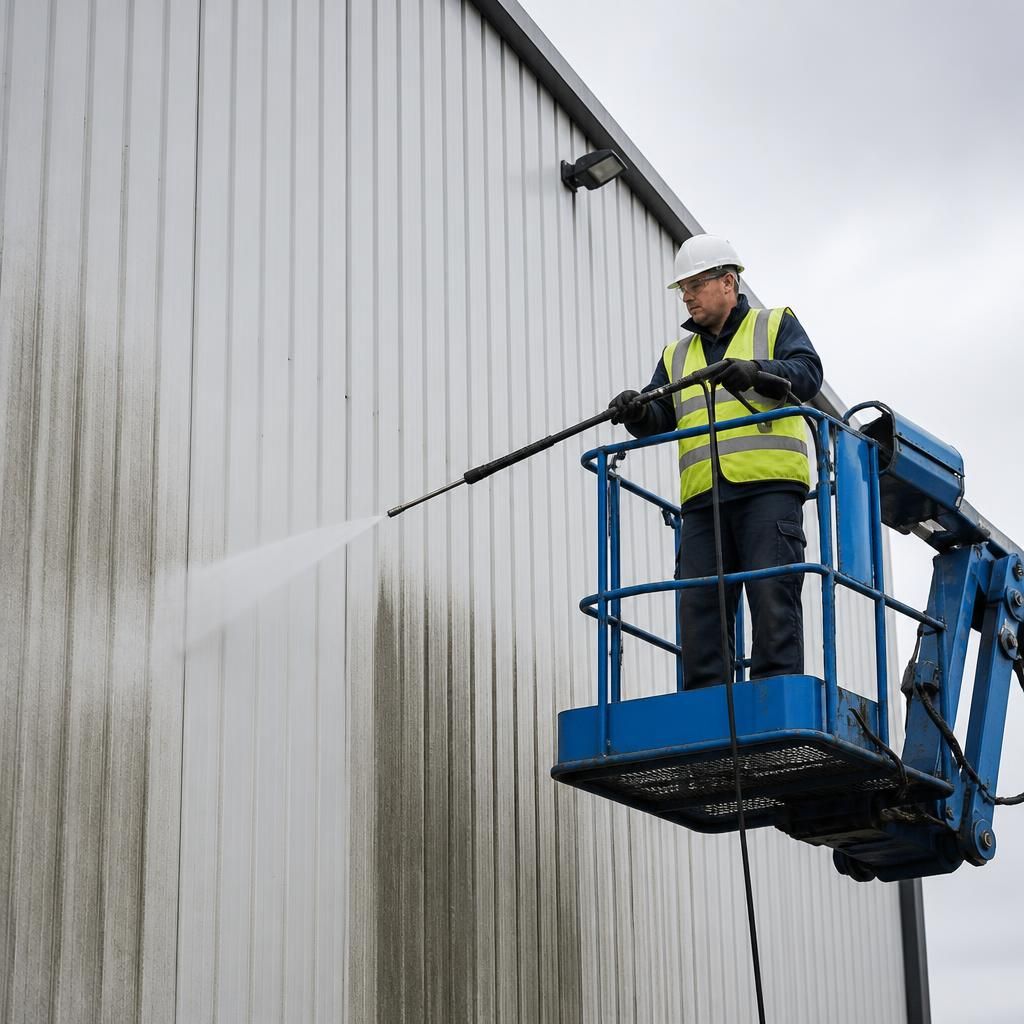
Professional equipment improves steel building cleaning by combining adjustable pressure, controlled water temperature and suitable detergent application. This allows operators to remove oily deposits, traffic film, bird fouling and biological growth without relying on excessive force that could damage paint, galvanised finishes, sealants or cladding joints.
Equipment can also be selected for the building’s layout. Long-reach systems and suitable access platforms help clean high façades, roof edges and recessed framework safely, while consistent water flow and spray patterns produce a more even finish across large elevations. Testing the method on an inconspicuous area first helps confirm that the pressure, heat and cleaning solution are appropriate for the steel coating.
Arrange a professional steel building cleaning assessment
Arrange a professional steel building cleaning assessment to identify the most suitable equipment, cleaning methods and access requirements for your site. We can assess the cladding, coatings, contamination and corrosion risks before preparing a practical cleaning plan.