What are the environmental considerations and how do you mitigate potential negative impacts during roof pressure washing?
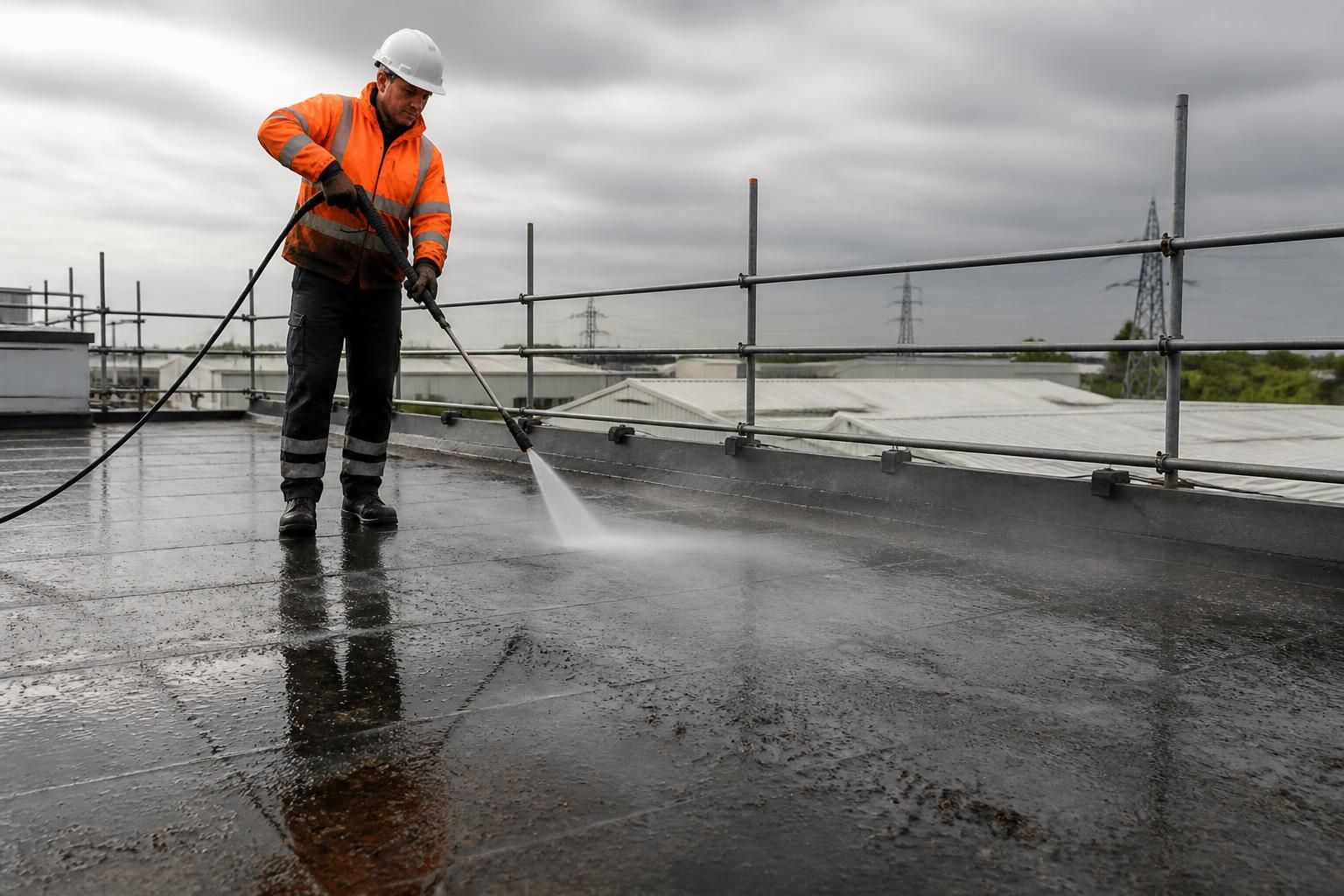
Roof pressure washing can create contaminated run-off, disturb wildlife and use significant water if poorly controlled. We mitigate these impacts by selecting the least aggressive effective cleaning method, controlling and collecting run-off, protecting drains and nearby habitats, and disposing of waste responsibly in line with UK environmental requirements.
Roof pressure washing can affect the environment through contaminated run-off, water consumption, chemical use, noise, emissions and disturbance to wildlife. We mitigate these risks by assessing the site before work begins, choosing the least aggressive effective cleaning method, controlling where water travels, protecting drainage systems and disposing of collected waste through appropriate routes.
Controlling contaminated run-off
Roof deposits may contain moss, algae, dirt, silt, bird fouling, decaying organic matter and residues from previous treatments. Pressure washing can carry these materials into gutters, surface-water drains, soil, neighbouring properties or watercourses. Run-off is therefore treated as a controlled waste concern rather than allowed to leave the site unchecked.
- We identify roof falls, downpipes, gullies, drains, watercourses, planted areas and vulnerable neighbouring surfaces before cleaning.
- We use drain covers, bunding, temporary barriers, collection points and other suitable controls where run-off could enter an inappropriate drain or sensitive area.
- Gutters and downpipes are monitored and cleared so that loosened material does not create blockages or uncontrolled discharge.
- Where practical, dirty water and solid debris are collected for appropriate disposal instead of being directed into surface-water drainage.
- We inspect the surrounding area after cleaning and remove deposited sediment, moss and other residues.
Surface-water drains commonly discharge to local watercourses without the treatment provided by foul-water systems. We do not assume that a nearby drain is suitable for wash water. Disposal arrangements are considered in advance, and any trade-effluent or wastewater requirements are checked with the relevant water authority or site manager.
Using water and cleaning products responsibly
Water use depends on the roof material, level of soiling, access arrangements and selected method. We avoid excessive flow and prolonged washing by using controlled equipment, suitable nozzles and a method matched to the surface. Low-pressure washing, soft washing or steam cleaning may be more appropriate than high-pressure cleaning where they can achieve the required result with less run-off or risk to the roof.
Cleaning products are not automatically environmentally preferable to water alone. If a treatment is necessary, we select a product suitable for the roof and the surrounding conditions, follow its instructions and use the minimum effective application. The assessment considers the product’s impact on plants, soil, aquatic life, people, painted surfaces and other materials. Chemicals are not allowed to enter watercourses, ponds or unprotected drainage, and treated surfaces are rinsed or managed in accordance with the product guidance.
Safety data sheets and control measures are reviewed where chemical products are used. Operatives store, transport and handle products securely, prevent spills and keep unused materials out of drains and soil. We do not use a biocide or detergent simply as a routine addition when mechanical cleaning or controlled water cleaning is sufficient.
Protecting wildlife and surrounding habitats
Roofs, eaves, gutters and outbuildings can provide nesting or roosting spaces for birds and habitat for other species. A pre-start inspection looks for visible nests, active wildlife, protected features and nearby ponds, trees or planted areas that could be affected by spray, debris or access equipment. Work may need to be adapted, postponed or referred for specialist ecological advice where protected wildlife could be disturbed. We also prevent loose moss, debris and chemical mist from reaching garden areas, planted borders and habitats.
Bird fouling is handled carefully because it can present a hygiene risk as well as an environmental contamination risk. Debris is dampened or controlled where appropriate, collected rather than swept into drains, and managed using suitable personal protective equipment and waste procedures.
Reducing disturbance and site impacts
Pressure washing equipment can generate noise, vibration, exhaust emissions and spray drift. We plan access and working areas to minimise disturbance to occupants, neighbours and nearby businesses. Equipment is maintained properly, operated only when required and positioned to reduce unnecessary noise and emissions. Doors, windows, air intakes, vehicles, electrical equipment and pedestrian routes are protected from water and overspray.
Access equipment and temporary hoses are positioned to avoid damaging verges, landscaped areas and drainage covers. Spill kits and other response equipment are kept available where fuels, oils or cleaning chemicals are present. Any accidental spill is contained promptly, prevented from reaching drainage and reported through the agreed site procedure.
Responsible waste handling
Removed moss, silt, sludge, packaging, disposable materials and contaminated solids are kept out of general surface drainage and not left on the property. Waste is separated where practical, stored securely and transferred using an appropriate waste management route. Waste documentation may be retained for commercial sites that require an auditable record.
Before work starts, we confirm the roof construction, existing coatings, drainage layout, access constraints and nearby environmental sensitivities. The method statement and risk assessment then set out the pressure, water volume, products, run-off controls, access equipment and waste arrangements. This site-specific approach reduces environmental impact while still providing effective roof cleaning and helps ensure that the work is carried out in accordance with applicable UK environmental, drainage, waste and site-management requirements.
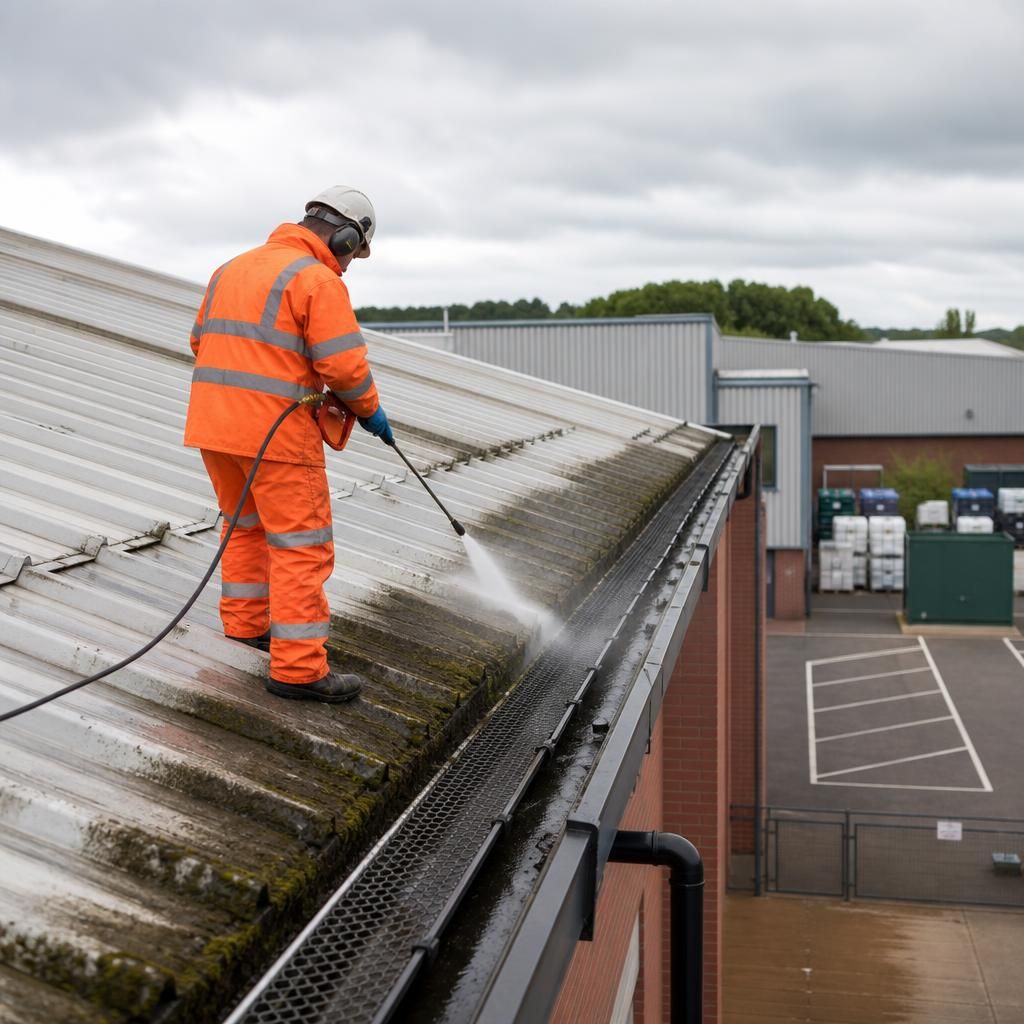
Environmental mitigation during roof pressure washing means controlling contaminated water, loosened debris, cleaning products and spray so they do not enter unsuitable drains, soil, watercourses or neighbouring properties. The main control is to plan the movement and collection of run-off before cleaning starts, rather than trying to manage it after discharge has occurred.
We inspect roof falls, gutters, downpipes, gullies, surface-water drains, planted areas and nearby water features as part of the site assessment. Where necessary, we use drain covers, temporary bunding, barriers and collection points, while monitoring gutters and downpipes for blockages. Removed moss, silt and sludge are collected and handled through an appropriate waste route instead of being washed into surface-water drainage.
Water and cleaning products are used only where they are suitable for the roof and surrounding environment. The method statement records the proposed equipment, pressure, products, run-off controls and disposal arrangements, allowing the work to be adapted if conditions change during cleaning.