
How often should a roof be pressure washed to maintain its condition?
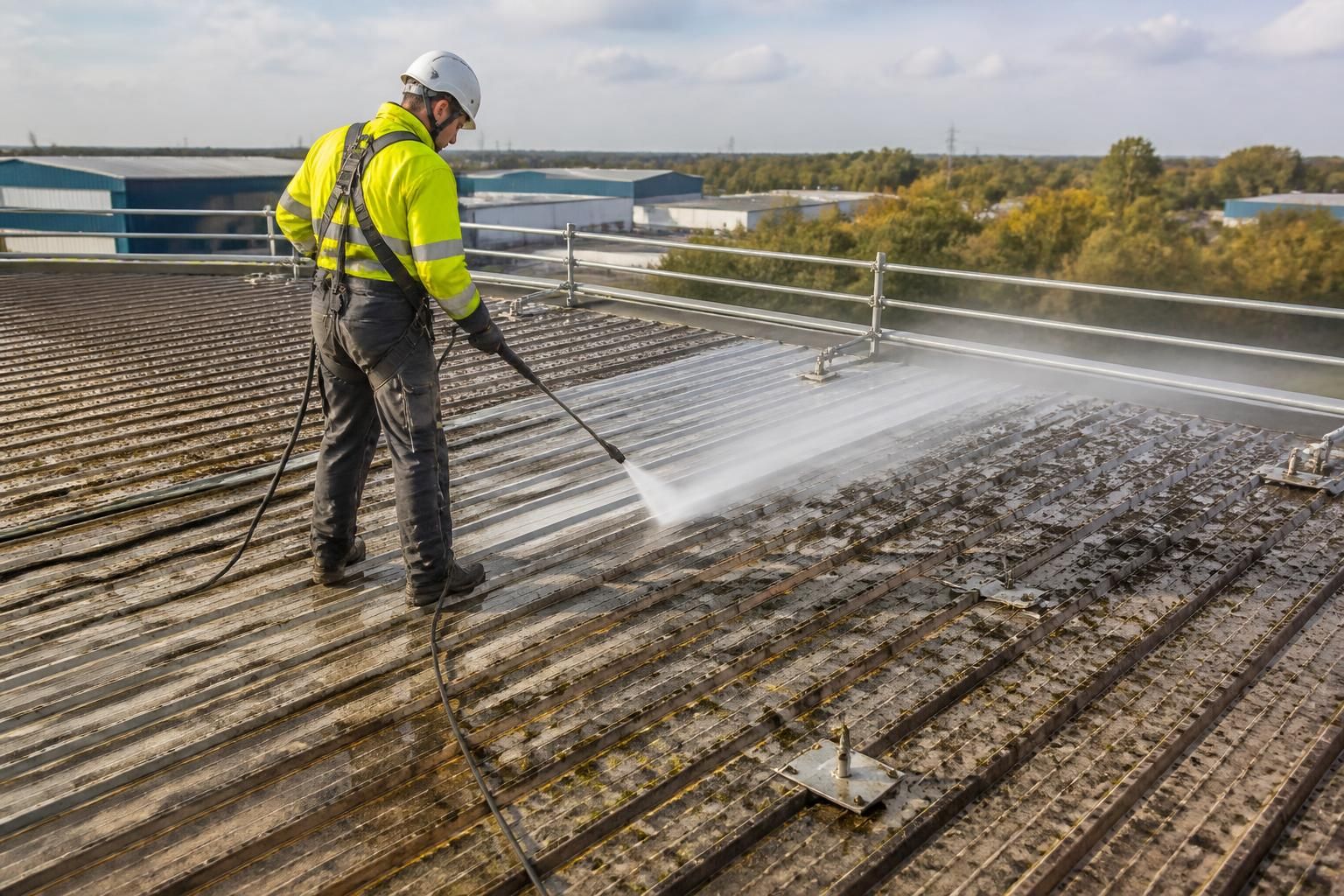
Most roofs should not be pressure washed on a fixed schedule; they should be assessed at least annually and cleaned when moss, algae, dirt or other contamination begins to affect the roof’s condition or appearance. Commercial roofs may need more frequent professional cleaning where they are exposed to heavy pollution, overhanging trees or persistent damp, using pressure levels and methods suitable for the roofing material.
Most roofs should be inspected at least annually and pressure washed only when the roof’s condition, contamination or appearance justifies cleaning. A fixed cleaning interval is not suitable for every roof. The correct frequency depends on the roofing material, surrounding environment, drainage, level of pollution and the cleaning method that the surface can safely tolerate.
Pressure washing should be part of a planned roof maintenance programme rather than an automatic annual treatment. During an inspection, the roof should be checked for moss, algae, lichen, bird fouling, atmospheric grime, construction dust, blocked drainage channels and areas where moisture is being retained. Cleaning is generally appropriate when contamination is affecting water flow, encouraging biological growth, making defects harder to identify or creating an unacceptable appearance.
Environmental conditions can make some roofs require more frequent attention. Roofs beneath overhanging trees, close to busy roads or industrial sites, and in shaded or poorly ventilated locations tend to collect dirt and remain damp for longer. These conditions can encourage moss and algae growth. Roofs on commercial and industrial premises may also need additional inspections where dust, exhaust deposits, airborne debris or nearby construction work is creating repeated contamination.
Roofs in exposed, well-drained locations may remain in good condition for longer between cleaning visits. However, a clean appearance does not remove the need for inspection. Small defects, loose coverings, failed sealants and blocked outlets can develop beneath or alongside surface contamination and should be identified before any washing takes place.
The roofing material is a major factor in deciding whether pressure washing is suitable and how often it can be carried out. Concrete tiles, some coated metal surfaces and other robust materials may tolerate carefully controlled pressure when the manufacturer’s guidance and the roof’s condition allow it. Older, brittle or weathered tiles, slate, asphalt-based coverings, membranes, coatings and fragile sheet materials may require a lower-pressure approach, steam cleaning or another method instead. Some roofs should not be pressure washed at all.
Before recommending a repeat cleaning interval, the roof should therefore be assessed for:
- the type, age and current condition of the roofing material;
- existing cracks, loose tiles, damaged coatings, open joints or failed flashings;
- the depth and type of moss, algae, lichen or other contamination;
- drainage arrangements and the risk of dirty water entering gutters or surface-water systems;
- nearby trees, pollution sources, construction activity and areas of persistent shade;
- manufacturer or roofing warranty requirements; and
- safe access arrangements and the cleaning method appropriate to the surface.
For many properties, an annual roof inspection provides a sensible basis for planning maintenance. A professional may recommend cleaning during that inspection, schedule it for a suitable season or leave the roof untreated if the contamination is minor and the surface is sound. Where a roof is exposed to heavy soiling or rapid biological growth, condition checks may need to take place more often. Conversely, cleaning too frequently can cause unnecessary wear, particularly if excessive pressure, unsuitable attachments or aggressive techniques are used.
After severe weather, nearby building work or incidents that deposit substantial debris, the roof should be reviewed rather than waiting for the next planned visit. Storms can loosen coverings or damage flashing, and pressure washing a compromised roof may spread water beneath the surface or worsen an existing defect. Repairs and safe access checks should be completed before cleaning begins.
For commercial and industrial premises, roof cleaning is best incorporated into a wider planned maintenance schedule. Records of inspections, contamination levels, defects, cleaning methods and any recommendations make it easier to identify whether the roof is becoming dirty unusually quickly. They also help coordinate cleaning with façade, cladding, gutter and drainage maintenance while limiting disruption to the business.
Cleaning frequency should not be used to compensate for underlying problems. Persistent moss, standing water, blocked outlets or recurring staining may indicate inadequate drainage, damaged surfaces, nearby vegetation or a moisture issue. These causes should be addressed alongside cleaning so that contamination does not return unnecessarily quickly.
Before any pressure washing takes place, the method and pressure level should be selected for the specific roof rather than applying a standard setting. The roof should be inspected, vulnerable areas protected, gutters and drainage routes managed, and runoff controlled in line with environmental requirements. Where pressure washing is unsuitable, a lower-pressure or non-pressure treatment may provide safer maintenance.
In practical terms, arrange a professional assessment at least annually, monitor roofs exposed to persistent damp, pollution, trees or construction dust more closely, and clean only when inspection shows that it is beneficial and safe. This approach maintains the roof’s condition without subjecting the covering to unnecessary pressure washing.
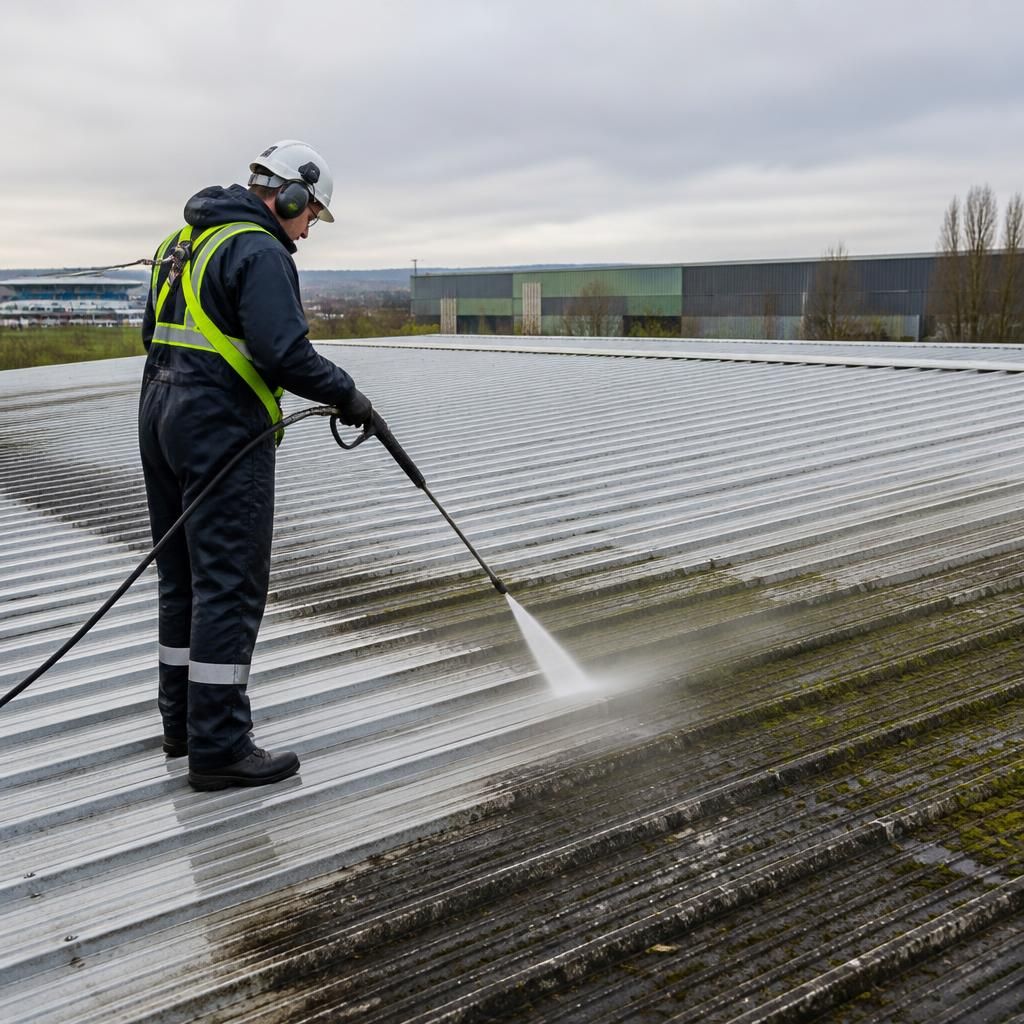
Most roofs should be inspected at least annually, but pressure washing should only be scheduled when contamination and the roofing material make cleaning necessary and safe. Moss, algae, lichen, atmospheric grime, blocked drainage and persistent damp are signs that a professional assessment may be needed sooner.
Roofs beneath trees, near busy roads or industrial sites, and on shaded commercial premises often require closer monitoring because dirt and biological growth return more quickly. The cleaning interval should always be based on the roof’s condition, material, drainage and exposure—not an automatic annual pressure-washing routine.