
How often should a roof be pressure washed to maintain its condition?
Most roofs should be professionally pressure washed only when inspection shows a build-up of moss, algae, dirt or other contamination—often as part of a planned maintenance cycle rather than on a fixed annual schedule. The appropriate frequency depends on the roofing material, surrounding trees, weather exposure, drainage and the cleaning method used, so an inspection is recommended before each treatment.
There is no universal timetable for roof pressure washing. A roof should be cleaned when an inspection confirms that moss, algae, lichen, atmospheric dirt, bird fouling or other contamination is affecting its appearance, drainage or condition. For most properties, the safest approach is a planned inspection at least annually, with cleaning scheduled according to the roof material, site conditions and the method suitable for that surface.
Cleaning too frequently can expose roofing materials to unnecessary mechanical action, while leaving contamination in place can retain moisture, obstruct drainage and encourage deterioration. The objective is controlled maintenance rather than washing the roof on a fixed annual cycle.
Factors that determine cleaning frequency
- Roofing material: Concrete tiles, clay tiles, slate, coated metal cladding, membranes and other systems have different tolerances. A method suitable for one material may damage another, particularly where surfaces are aged, brittle, coated or already weathered.
- Shade and moisture: Roofs beneath trees or beside taller buildings often remain damp for longer. Limited sunlight encourages moss, algae and lichen to establish more quickly.
- Tree cover: Falling leaves, needles, pollen and organic debris can collect in valleys, gutters and behind roof features. This may require more frequent inspections even where the main roof surface appears clean.
- Local pollution: Industrial emissions, traffic residue and airborne dust can create a film on roof surfaces and cladding. The level of exposure varies considerably between sites.
- Drainage and roof design: Low-pitched areas, parapets, roof valleys and complex detailing can hold water and debris. These locations should be checked as part of every maintenance visit.
- Previous cleaning and treatments: A roof that has been cleaned correctly and kept clear of overhanging vegetation may remain presentable for longer. However, biocidal or protective treatments do not remove the need for inspection.
- Building use and risk: Commercial, industrial and public buildings may need a documented maintenance programme because blocked drainage, loose contamination or an unprofessional external appearance can affect operations and site safety.
When to arrange an inspection
Arrange a roof inspection when moss or algae is spreading, dark staining is becoming established, gutters are repeatedly filling with debris, water is not draining correctly or contamination is visible around roof edges and outlets. An inspection is also sensible after severe weather, nearby construction work or any incident that may have deposited dust, fragments or other material on the roof.
For commercial premises, roof cleaning can be incorporated into the wider external maintenance schedule. The inspection should record the roof material, existing defects, contamination levels, access requirements and any areas needing repair before cleaning. If the roof is already damaged, pressure washing should not be used to conceal the problem; repairs or advice from an appropriate roofing professional may be required first.
Why the cleaning method matters
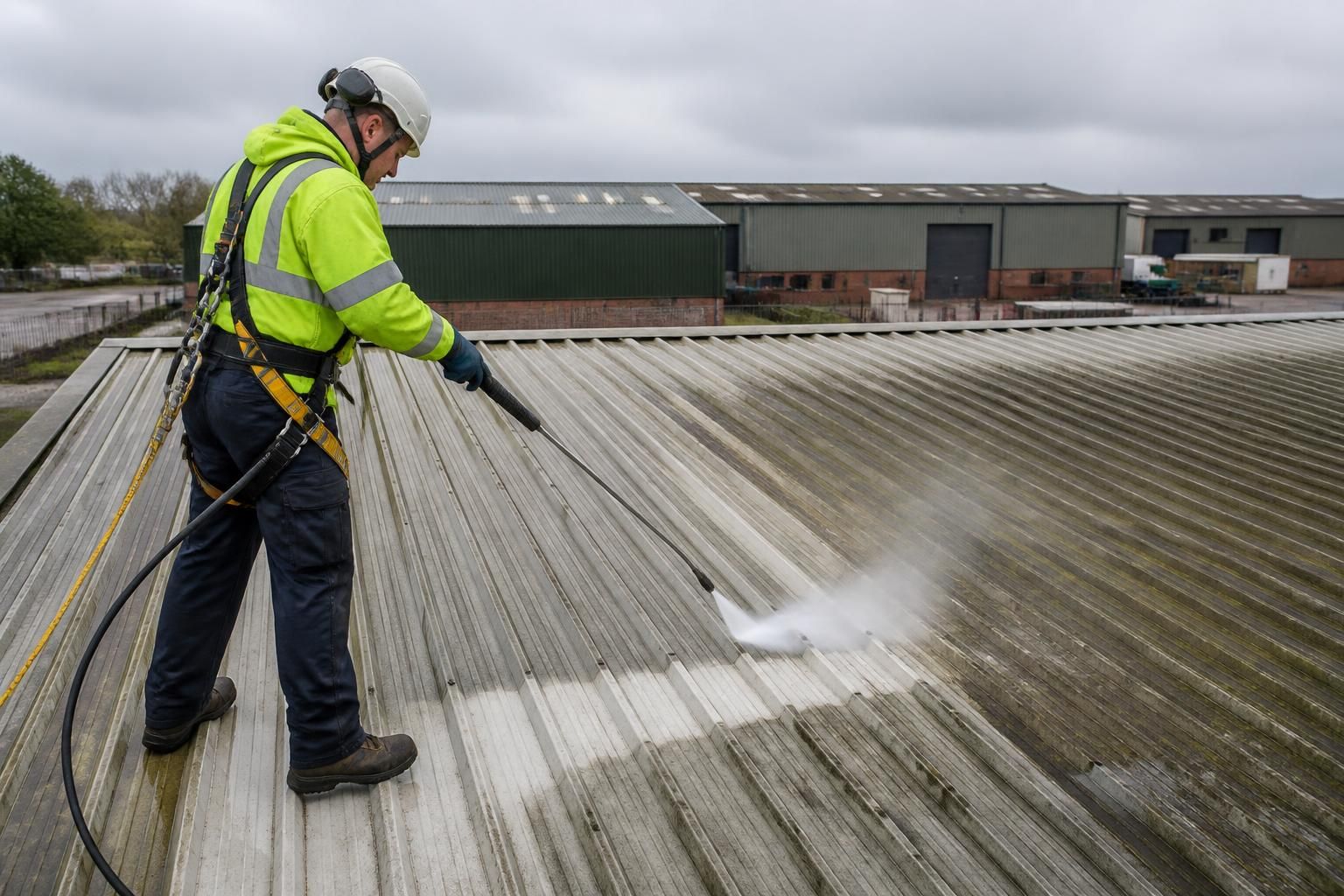
Pressure washing is not automatically suitable for every roof. Excessive pressure, an unsuitable nozzle or directing water beneath tiles, flashings, laps and seals can dislodge materials or drive water into parts of the roof that should remain dry. Older tiles, slate, coatings and fragile details require particular care.
A competent contractor will select the least aggressive effective method. This may involve controlled low-pressure washing, steam cleaning, soft washing or manual removal, depending on the surface and contamination. Water pressure, temperature, cleaning agents, dwell time and the direction of cleaning should all be controlled. Access equipment and suitable protection should be used so operatives do not place avoidable loads on vulnerable roof areas.
Before work starts, the roof should be assessed for cracked or loose tiles, failing pointing, damaged coatings, exposed fixings, defective flashings and blocked outlets. Windows, doors, ventilation openings, vehicles, planted areas and drainage systems should also be protected from run-off and loosened debris.
A practical maintenance pattern
- Inspect the roof and associated drainage as part of the planned building maintenance programme.
- Identify the type and extent of contamination, along with any defects or access limitations.
- Select a cleaning method that is appropriate for the roofing material rather than defaulting to high-pressure washing.
- Complete the cleaning with controlled run-off management and removal of dislodged debris.
- Check the finished roof, gutters, outlets and surrounding areas.
- Record the condition and set the next inspection based on how quickly contamination returns and how the roof is used.
In sheltered or heavily shaded locations, inspections may need to be more frequent than at exposed sites. Conversely, a roof with limited contamination and good drainage may not require regular pressure washing at all. The condition of the roof, not the calendar alone, should determine when treatment is necessary.
After cleaning, keeping gutters, valleys and outlets clear, trimming overhanging vegetation and reporting damaged tiles or cladding promptly can help prolong the clean condition. Follow-up inspections are particularly useful where moss or algae has returned previously, where the building is exposed to industrial pollution or where roof drainage is critical.
For Encanto Exterior Cleaning customers, the most reliable recommendation is based on a site-specific inspection. This confirms whether pressure washing is appropriate, identifies areas requiring a gentler technique and establishes a sensible maintenance interval without subjecting the roof to unnecessary cleaning.
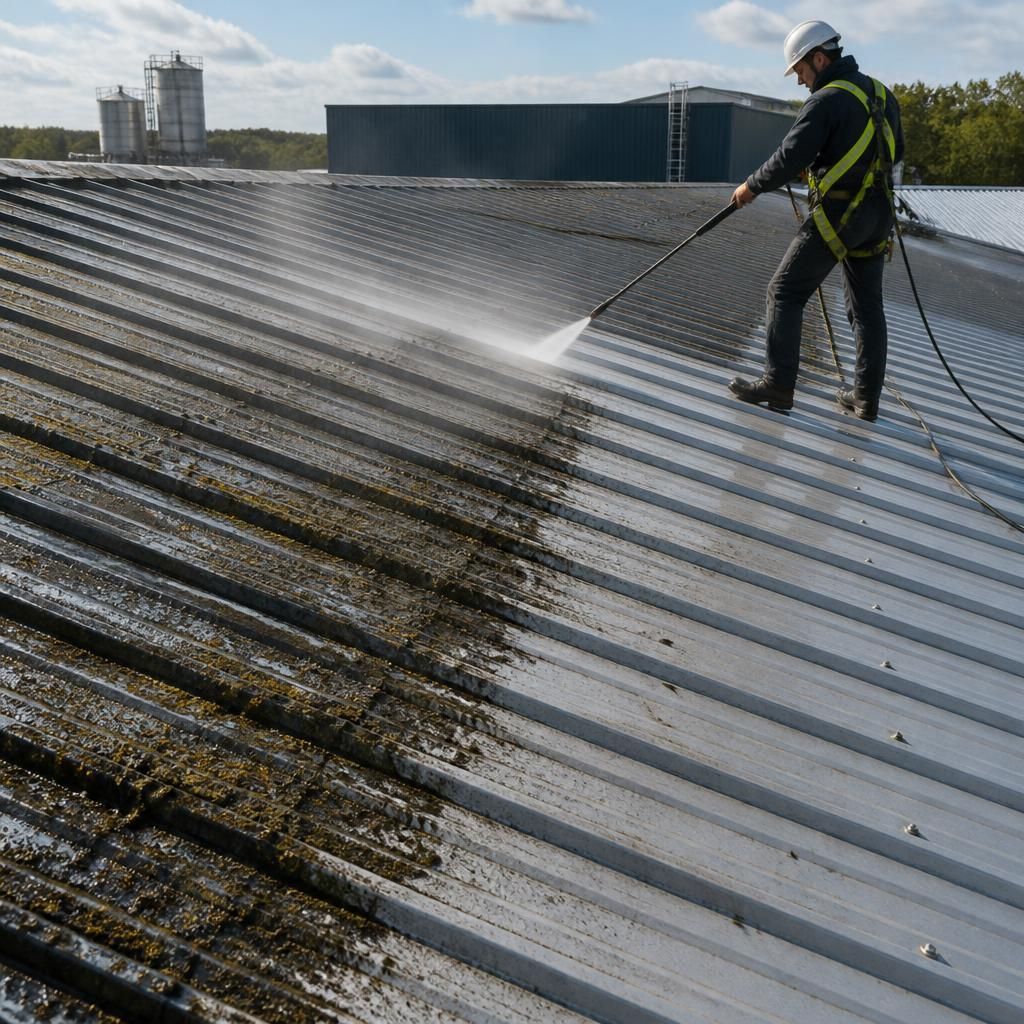
Roof pressure washing should be scheduled according to the roof’s condition, not as an automatic annual treatment. Planned inspections can identify moss, algae, debris, blocked drainage or staining early, allowing cleaning only when it is necessary and when the surface is suitable for the chosen method.
Shaded roofs, roofs beneath trees and buildings exposed to pollution may need more frequent inspections because contamination returns sooner. After cleaning, keeping gutters, valleys and outlets clear and recording the roof’s condition helps establish a sensible maintenance interval without subjecting tiles, slate, coatings or membranes to unnecessary mechanical cleaning.