
How does the provider ensure environmentally friendly practices during roof pressure washing?
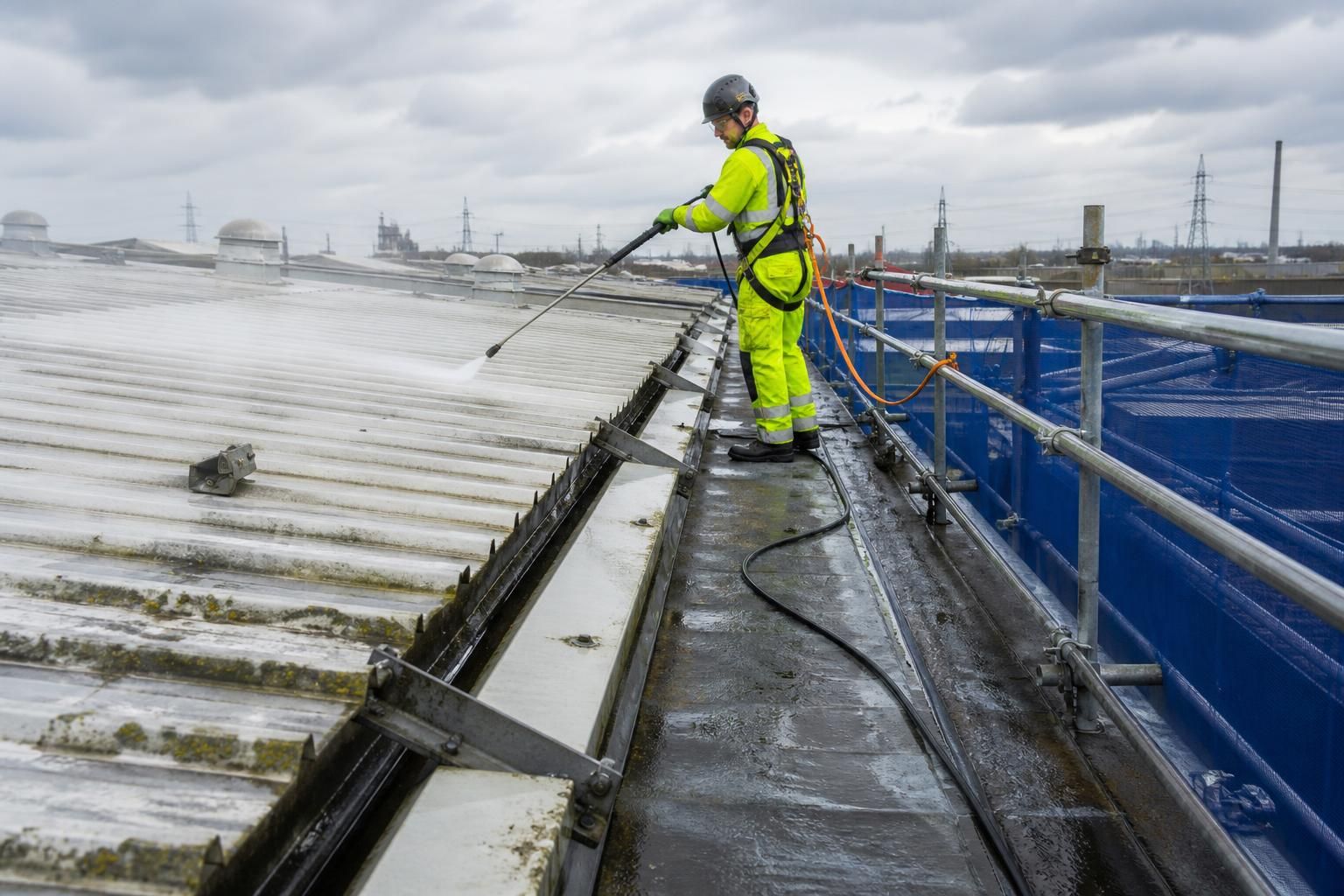
Environmentally friendly roof pressure washing combines the lowest effective pressure with controlled water use, biodegradable treatments where appropriate, and careful protection of surrounding surfaces. Run-off is managed to prevent contaminated water, moss and cleaning residues entering drains or soil, with waste handled responsibly in line with site and environmental requirements.
Environmentally friendly roof pressure washing relies on using the least aggressive cleaning method that will achieve the required result, while controlling water, cleaning products and run-off. Before work begins, the roof construction, soiling, drainage arrangements and surrounding environment are assessed. This allows the cleaning method to be matched to the surface rather than applying unnecessarily high pressure, excessive water or unsuitable chemicals.
Protecting the roof and surrounding environment
Roof cleaning is planned to avoid damage to tiles, slates, coatings, membranes, flashings and roof-mounted equipment. Pressure is adjusted to suit the material and condition of the roof, and lower-pressure washing or steam cleaning is used where this is more appropriate than forceful cleaning. This reduces the risk of dislodging granules, opening joints, damaging fragile surfaces or creating additional repair waste.
Before cleaning, vulnerable areas around the building are protected. This can include blocking or covering outlets temporarily, protecting planted areas and external fixtures, and identifying where dirty water could flow. Particular care is taken around rainwater goods, drainage channels, neighbouring properties and areas where run-off could reach soil, watercourses or public surfaces.
Responsible water use
Water consumption is controlled through suitable equipment, carefully directed cleaning and the use of pressure rather than unrestricted flow. Operators avoid allowing hoses or spray systems to run unnecessarily, and work in manageable sections so that water is used only where it is needed. Where site conditions require it, water can be collected, contained or redirected for appropriate disposal rather than being allowed to spread across the property.
On commercial and industrial sites, the approach is coordinated with the existing drainage and environmental controls. The team can establish where clean and contaminated water may travel, confirm site discharge requirements and agree any necessary containment or recovery measures with the responsible property or facilities manager.
Run-off and waste-water management
Roof deposits may contain moss, algae, dirt, silt, bird fouling, old treatment residue and other contaminants. These materials should not be swept into surface-water drains without consideration of the site’s drainage arrangements. Loose debris is controlled during preparation and removed from gutters, collection points and accessible surfaces. Dirty water is managed in accordance with the site requirements and applicable environmental obligations.
Where recovery is necessary, wet vacuuming, temporary bunding, drain protection or other containment measures may be used. The appropriate method depends on the roof, the volume of water, the drainage layout and the type of contamination. Collected waste and residues are handled responsibly, with disposal arrangements selected for the material involved rather than treated as ordinary surface water.
Careful selection of cleaning products
Water and mechanical cleaning are considered before chemical treatment. If a biocide, detergent or other treatment is needed for moss, algae or organic staining, it is selected for compatibility with the roof and used only at the required concentration and coverage. Product instructions, control measures and site-specific environmental risks are taken into account.
Products are prevented from reaching areas that could be harmed, including planted ground, ponds, watercourses, ventilation openings and sensitive building materials. Treatments are not applied in unsuitable weather conditions where wind or rain could cause drift or uncontrolled run-off. Any product containers and contaminated materials are stored, transported and disposed of in line with relevant instructions and site procedures.
Reducing repeat cleaning and unnecessary impact
A properly assessed cleaning programme can reduce the need for repeated intensive washing. Removing organic growth, improving gutter maintenance and identifying sources of persistent staining can help preserve the roof’s condition and appearance. Where suitable, a follow-up treatment or planned maintenance visit may be recommended, but it is not applied automatically when cleaning alone is sufficient.
Work is also organised to reduce avoidable disruption. Access equipment is selected according to the building and roof layout, helping operators reach the work area safely and accurately without unnecessary movement over the roof. Equipment is maintained so that leaks, inefficient spray patterns and preventable fuel or water use are identified before work starts.
Site controls and documentation
For larger commercial or industrial projects, environmental precautions are included in the method statement and risk assessment where required. The working plan can record the roof materials, cleaning technique, products, drainage controls, waste arrangements and emergency actions for accidental spills or uncontrolled discharge. Site rules, client environmental policies and local drainage requirements are followed alongside general good practice.
After cleaning, the work area is checked for remaining debris, blocked outlets, product residue and signs of uncontrolled run-off. Any concerns are reported to the client, and recommendations are provided where roof repairs, gutter clearance or planned maintenance would help prevent further deterioration. This combination of low-impact methods, controlled water use, responsible waste handling and documented site procedures provides an environmentally conscious approach to professional roof pressure washing.
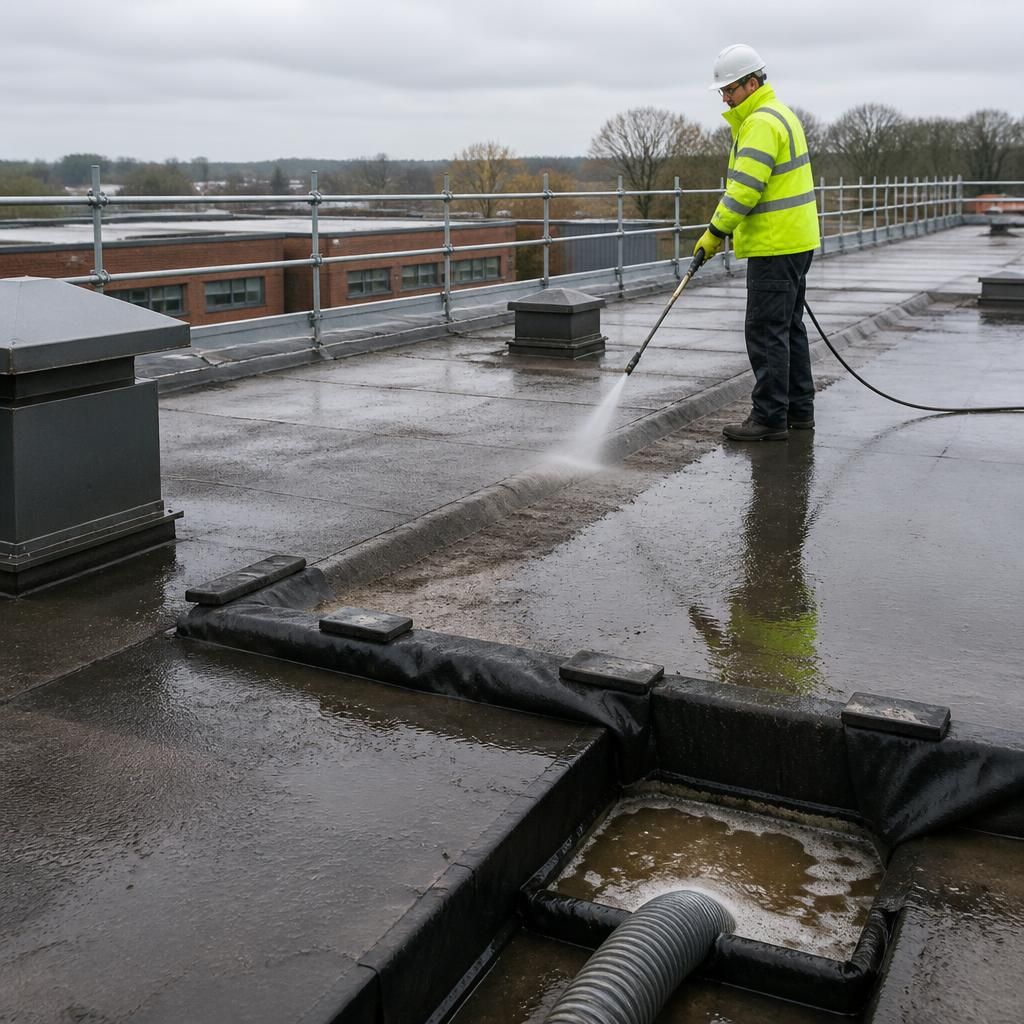
Environmentally friendly roof pressure washing includes controlling contaminated run-off so moss, algae, silt and cleaning residues do not enter surface-water drains, soil or nearby watercourses. Before work starts, drainage routes are assessed and vulnerable outlets, planted areas and external surfaces are protected where necessary.
Water is directed and used only where required, while loose debris is removed from gutters and collection points. If recovery is needed, suitable measures such as drain protection, temporary bunding or wet vacuuming can contain dirty water for responsible disposal in accordance with site requirements.