
How does pressure washing prevent moss and algae buildup on roofs?
Pressure washing prevents moss and algae buildup by removing the organic growth, spores and surface deposits that allow them to spread across roof tiles and other roofing materials. Using the correct pressure, equipment and technique leaves the roof cleaner and less hospitable to regrowth, although routine inspections and maintenance are still needed for lasting control.
Pressure washing helps prevent moss and algae buildup on roofs by removing the organic growth, spores, dirt and moisture-retaining deposits that support further spread. When the correct pressure, water flow, nozzle and working method are used, cleaning leaves tiles and other suitable roofing materials less hospitable to regrowth. It does not provide permanent prevention on its own, so inspections, good drainage and appropriate follow-up treatments remain important.
Moss and algae develop where roof surfaces stay damp and collect organic debris. Shaded elevations, overhanging trees, blocked gutters, persistent condensation and areas with limited airflow are particularly vulnerable. Moss can form a layer over tiles, while algae often appear as dark streaks or green staining. These deposits hold moisture against the roof surface and can trap additional dirt, creating conditions in which growth becomes established.
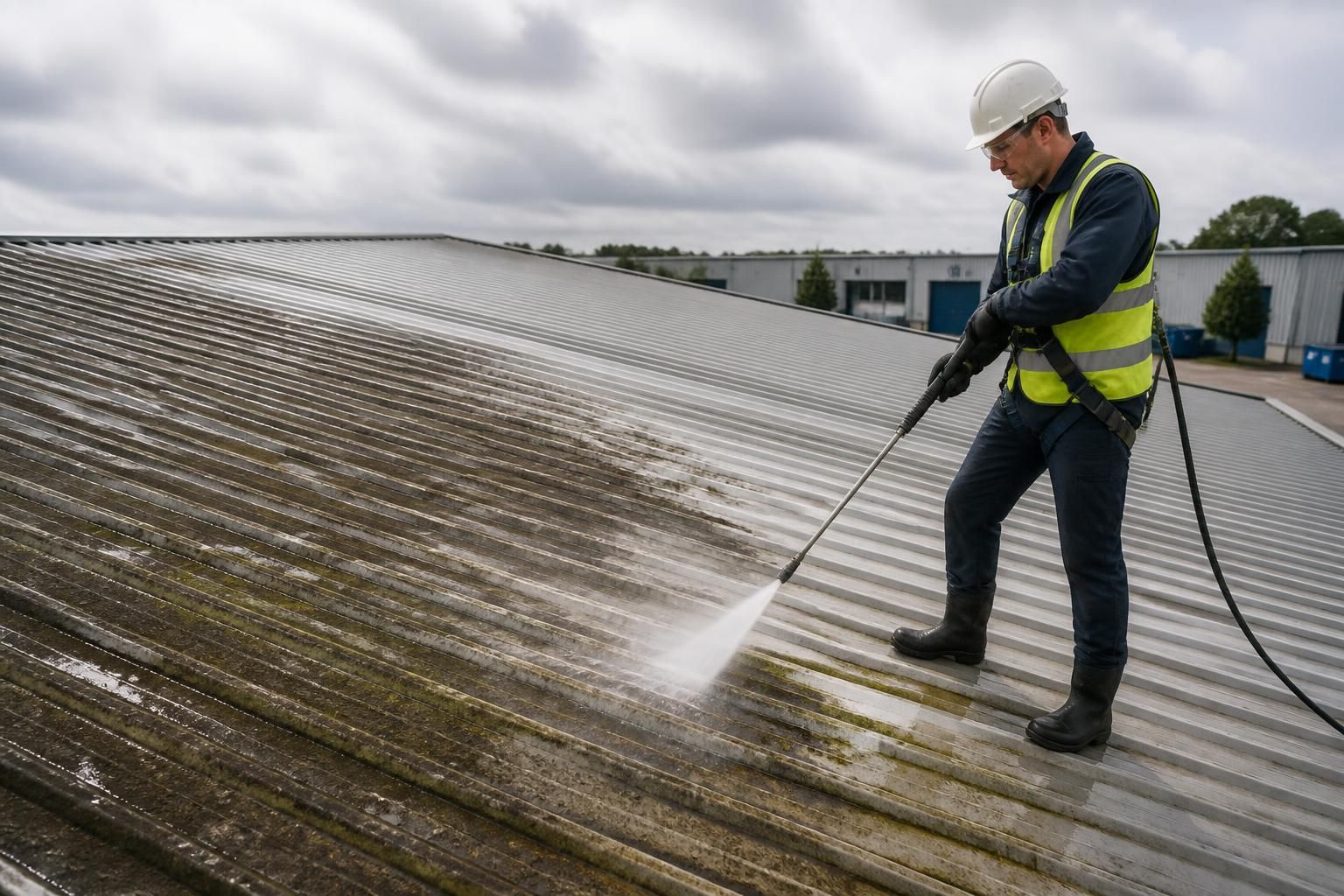
During professional pressure washing, controlled water pressure breaks the bond between the growth and the roof surface. The operator works systematically to remove moss, algae, lichen, loose debris and surface staining without directing excessive force beneath tiles, slates, flashings or other vulnerable details. Removing this material clears drainage paths and reduces the damp, shaded surface conditions that allow spores to settle and develop.
The method must be matched to the roofing material and its condition. Robust, sound tiles may tolerate carefully controlled pressure washing, whereas aged, cracked, delaminating or fragile materials may require a lower-pressure approach, soft washing or steam cleaning instead. Excessive pressure can dislodge tiles, drive water beneath laps, strip protective finishes or worsen existing defects. For that reason, roof cleaning should not be treated as a standard high-pressure application across every roof.
A suitable roof cleaning process usually includes:
- Inspecting the roof, access points, drainage arrangements, roof covering and visible defects before work begins.
- Identifying the type of moss, algae, lichen and surface contamination present.
- Selecting pressure, temperature, nozzle type and cleaning technique according to the material and condition of the roof.
- Removing loose growth and debris in a controlled direction to avoid unnecessary loading of gutters or surrounding areas.
- Cleaning the roof surface evenly rather than concentrating force in one area.
- Checking valleys, gutters, outlets and other drainage points after cleaning so removed growth does not obstruct water flow.
- Applying a suitable post-clean treatment where appropriate to help suppress remaining spores and slow regrowth.
- Inspecting the finished surface and reporting any defects or maintenance issues identified during the work.
Pressure washing is most effective when it removes the conditions that allow moss and algae to remain attached. It can also expose problems that were hidden by organic growth, such as cracked tiles, failed pointing, damaged flashing or blocked drainage. Identifying these issues promptly is important because water retained around defects can accelerate deterioration and lead to leaks.
Cleaning alone cannot stop new spores from arriving. Roofs beneath trees, beside taller buildings or in persistently shaded locations may naturally develop new growth sooner than exposed roofs. Nearby vegetation should be managed where possible, gutters and downpipes should be kept clear, and the roof should be checked periodically for early signs of regrowth. Prompt removal is generally less intrusive than allowing a thick layer of moss to become established.
For commercial and industrial properties, a planned maintenance arrangement can combine roof inspections, cleaning, gutter clearance and checks of associated external surfaces. This approach helps property managers identify changes between visits and schedule work around site access, tenants, operational requirements and weather conditions. It also reduces the likelihood of moss and algae spreading onto walkways, drainage systems or adjacent façades.
Environmental controls are also relevant. Removed growth and wash water should be managed so that debris does not enter surface-water drains or contaminate surrounding areas. The cleaning method and any treatment should be selected with the roof material, nearby landscaping, drainage system and site use in mind. Where a lower-impact technique can achieve the required result, it may be preferable to using unnecessary pressure or chemical application.
In summary, pressure washing prevents moss and algae buildup by physically removing established growth and the dirt deposits that retain moisture. Its lasting effectiveness depends on using a material-appropriate technique, correcting drainage or shading issues where possible, and carrying out follow-up inspections and maintenance. A professional assessment is advisable before cleaning, particularly where the roof is aged, fragile, difficult to access or part of a larger commercial premises.
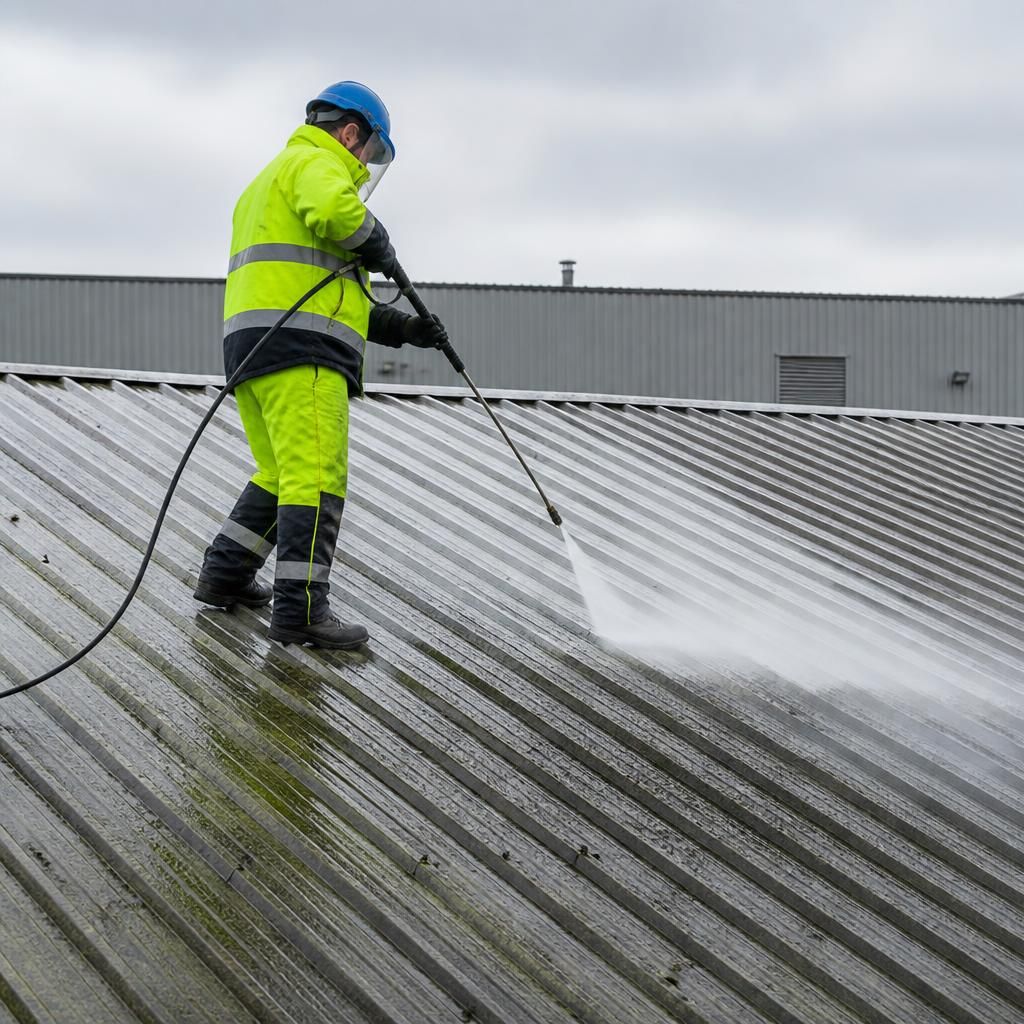
Pressure washing helps prevent moss and algae returning by removing the growth, organic debris and surface deposits that retain moisture on roof coverings. A clean, well-drained surface provides fewer conditions for spores to settle and establish.
The cleaning method must be matched to the roof material and its condition. Controlled pressure can remove established moss and algae from suitable, sound tiles, while fragile, aged or damaged coverings may require a lower-pressure method or steam cleaning. Excessive force can disturb tiles, damage protective finishes or drive water beneath overlaps, so professional assessment and follow-up inspections remain important.
Arrange a professional roof pressure washing assessment
Arrange a professional roof pressure washing assessment to confirm the safest cleaning method for your roof covering and identify any drainage or maintenance issues. Contact Encanto Exterior Cleaning to discuss your requirements across Birmingham, the West Midlands or the wider UK.