
Can pressure washing damage roof shingles?
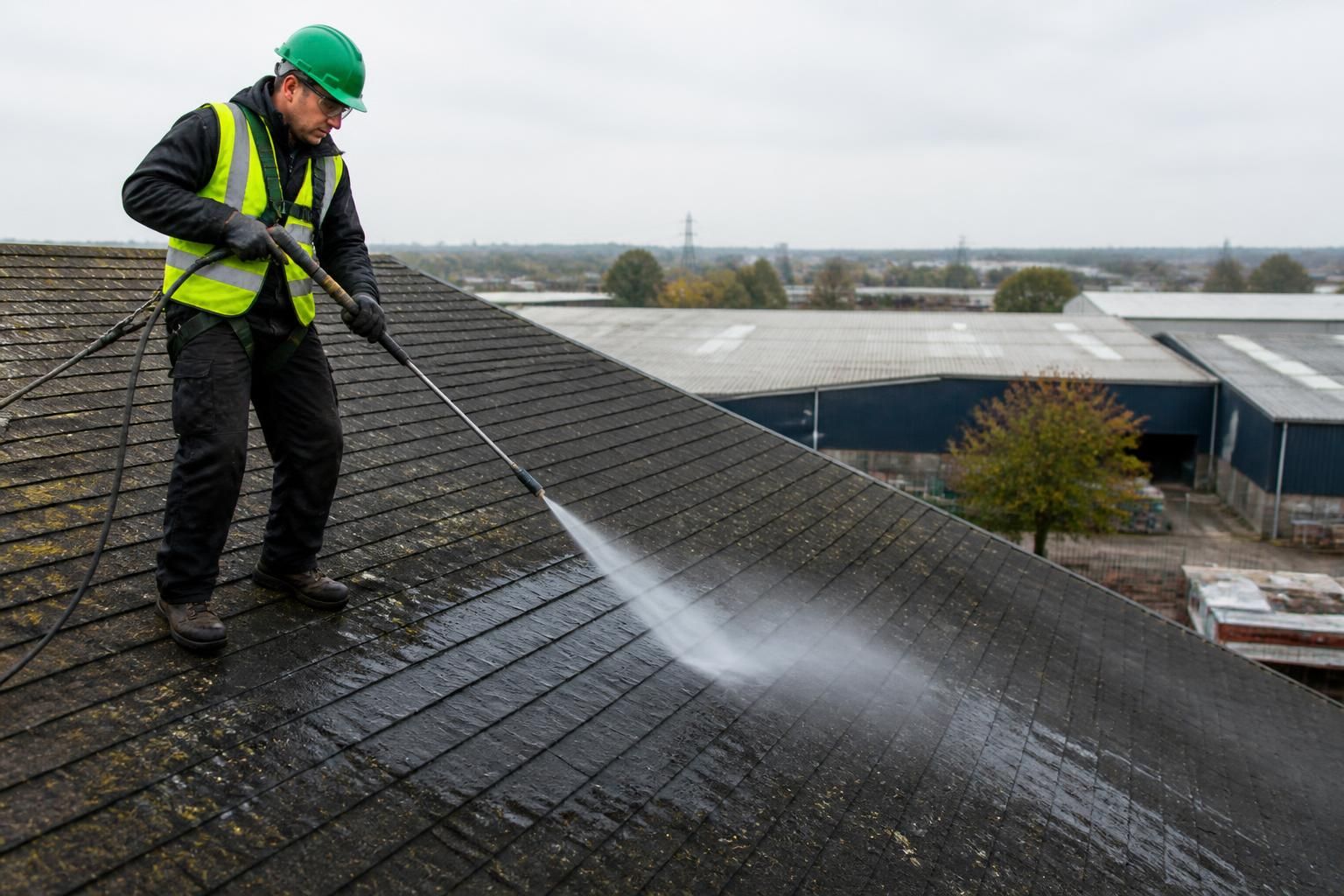
Yes, pressure washing can damage roof shingles if excessive pressure or an unsuitable nozzle is used, potentially loosening shingles, removing protective granules and forcing water beneath the roof covering. Professional roof cleaning should begin with an inspection and use the lowest effective pressure or a gentler method suited to the shingle material.
Yes. Pressure washing can damage roof shingles when the pressure, nozzle, water temperature or cleaning method is unsuitable for the roofing material. Excessive pressure may remove protective granules, lift or crack shingles, drive water beneath overlapping courses and expose the underlay or roof deck to moisture. The risk is particularly significant with ageing, brittle, loose or already damaged shingles.
Shingles are designed to shed rainfall from above, not to withstand a concentrated jet directed beneath their edges. A pressure washer can disturb the bond between asphalt shingles, strip away surface granules and damage the backing layer. Once granules are lost, the shingle may weather more quickly and become less resistant to ultraviolet light, temperature changes and water penetration.
Damage is not always immediately visible. A roof may appear clean after washing but later develop lifted edges, dislodged pieces, dampness in the loft or water staining on ceilings. Water forced under the shingle courses can also affect battens, underlay, insulation and timberwork. For this reason, cleaning should not begin until the roof covering, its age, condition and construction have been assessed.
Pressure washing is more likely to cause problems when:
- a narrow or rotating nozzle is used close to the surface;
- high pressure is directed upwards beneath shingle edges;
- the operator attempts to remove moss by force rather than treating and gently removing it;
- shingles are cracked, curled, loose, brittle or missing granules;
- the roof has vulnerable flashings, roof vents, sealants or exposed joints;
- the operator walks directly on fragile areas or uses the roof covering as a working platform; or
- dirty water and displaced debris are allowed to enter gutters, valleys or drainage outlets.
A safer approach is to use the least aggressive method that will achieve the required result. Depending on the shingle type and condition, this may involve low-pressure application, controlled rinsing, manual removal of loose growth, a suitable cleaning solution or steam cleaning. Low pressure does not mean careless pressure: the equipment must still be controlled so that water is not driven beneath the shingle courses. Steam can be appropriate for some roofs, but its temperature, application distance and runoff must be managed to avoid thermal or moisture-related damage.
Cleaning products also require care. A solution that is suitable for one roofing material may stain another, weaken sealants or harm nearby plants and drainage systems. Any treatment should be compatible with the shingles, applied in accordance with the product guidance and prevented from drying on windows, cladding, painted surfaces or sensitive landscaping. Moss should not simply be blasted away, as its root-like growth can already be holding on to the surface and its removal may expose existing defects.
A professional roof-cleaning process should include:
- Inspection: checking the shingle condition, roof pitch, access, drainage, flashings, penetrations and signs of previous water ingress.
- Method selection: choosing pressure, temperature, nozzle type and cleaning treatment according to the specific roof covering rather than using one setting for every roof.
- Protection: safeguarding walls, windows, landscaping, gutters and other building features before work starts.
- Controlled cleaning: working in a direction and manner that reduces the chance of forcing water under the shingles, with regular checks for movement or surface loss.
- Post-clean inspection: checking for loose material, blocked outlets, damaged details and areas requiring repair or further maintenance.
It is also important to distinguish cleaning damage from pre-existing deterioration. Granule loss in gutters, curling, cracking, exposed nail heads, staining inside the building or loose shingles should be recorded before work. If the roof is near the end of its serviceable life or has significant defects, cleaning may not be appropriate until repairs or replacement have been considered. Washing cannot restore weathered shingles and may make an underlying problem more apparent.
Before any work is authorised, check that the proposed method is suitable for the particular shingle material and that the contractor will stop if defects are uncovered. Ask how water will be kept out of vulnerable joints, how runoff will be managed and what inspection will take place after cleaning. Where manufacturer guidance or a roof warranty applies, the proposed process should not conflict with its requirements.
For most shingle roofs, the objective should be effective cleaning with minimal mechanical force, not achieving the fastest result with the highest pressure. A condition-led assessment and carefully controlled technique help remove moss, algae and surface soiling while reducing the likelihood of granule loss, leaks and premature roof deterioration.
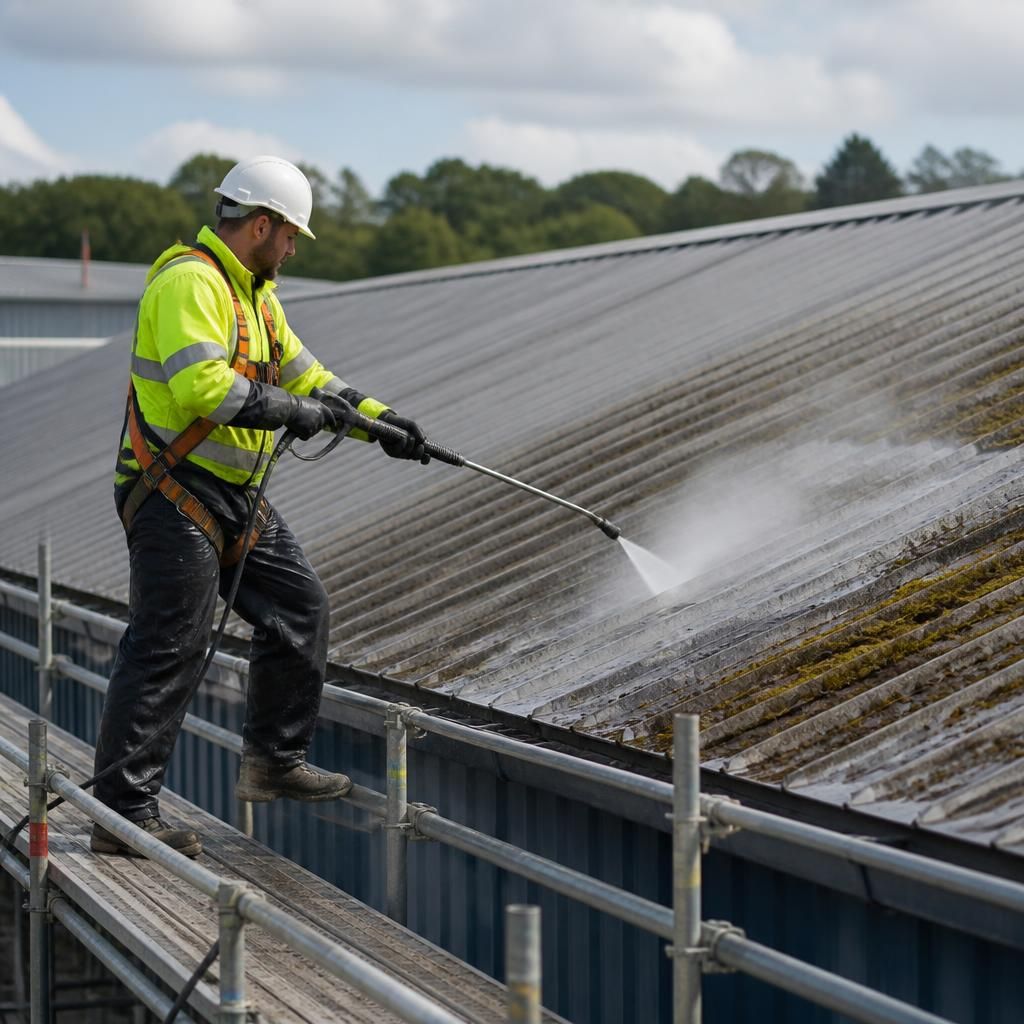
Pressure washing can damage roof shingles when water is applied too forcefully or directed beneath the overlapping edges. A narrow spray may remove protective granules, loosen brittle shingles and force water into the underlay, even when the roof looks clean immediately afterwards.
The safer approach is to assess the shingle condition first and use the least aggressive suitable method. Controlled low-pressure cleaning, gentle rinsing or steam cleaning may be more appropriate than high-pressure washing, with particular care around flashings, vents, valleys and already damaged areas.
Book a Professional Roof Shingle Assessment
If you are concerned that pressure washing could damage your roof shingles, arrange a professional roof shingle assessment before cleaning begins. We can inspect the roof condition and recommend the safest suitable method for removing moss, algae and surface dirt.