
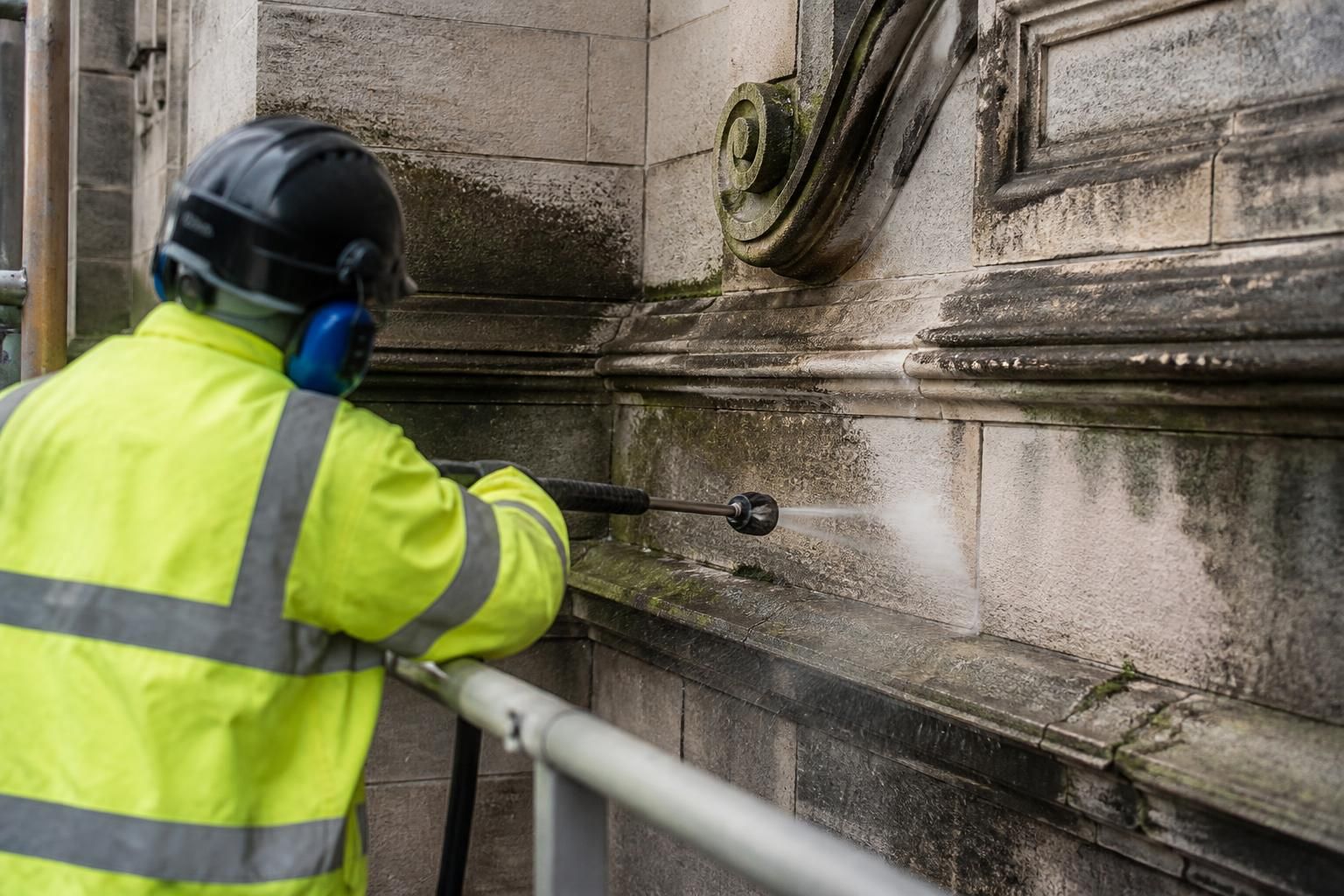
What surfaces should be avoided when using high-pressure washing techniques on façades?
High-pressure washing should generally be avoided on fragile, porous or poorly bonded façade surfaces, including soft stone, weathered brick, delicate render, painted coatings, timber, glass, loose pointing and historic decorative features. These areas require a lower-pressure approach or alternative methods such as soft washing, steam cleaning or controlled chemical treatment to prevent erosion, cracking, water ingress and finish damage.
High-pressure washing should be avoided on fragile, porous, weathered or poorly bonded façade surfaces. This includes soft and decayed stone, aged brick, delicate render, painted or coated finishes, timber, vulnerable glass, loose pointing and historic decorative details. High-pressure water can remove the surface itself, force moisture behind coatings, open cracks and joints, or cause water ingress. These areas should be assessed individually and cleaned using a controlled lower-pressure method, soft washing, steam cleaning or another suitable treatment.
Soft and weathered stone
Soft stone, including weathered limestone, sandstone and some decorative masonry, can be damaged by concentrated water pressure. The jet may erode the face of the stone, enlarge existing pores and remove fine details that cannot be replaced. Repeated cleaning can leave an uneven texture or expose weaker material beneath the surface. Stone that is friable, flaking, cracked or already deteriorated is particularly unsuitable for high-pressure washing.
Harder stone is not automatically safe. Previous repairs, surface coatings, open joints and differences in porosity can make some sections more vulnerable than others. A suitable approach normally involves a close inspection, a small test area and carefully controlled equipment. Low-pressure rinsing, steam cleaning or a compatible cleaning solution may be more appropriate than a forceful water jet.
Historic, handmade or weathered brickwork
Old brick can have a softer face than modern engineering brick, especially where the surface has been exposed to frost, salts, pollution or prolonged dampness. High pressure may strip the fired outer layer, known as the brick arris or face, leaving the more absorbent inner material exposed. This can accelerate further weathering and produce patchy areas that are difficult to repair invisibly.
High pressure should also be avoided where brickwork has open cracks, spalled faces, loose units or weak mortar. Water can penetrate through defects and drive contamination further into the wall. Gentle cleaning and controlled rinsing are generally safer, with particular care taken around vulnerable mortar joints.
Loose, recessed or deteriorated pointing
Pointing that is cracked, powdery, missing or poorly bonded should not be subjected to a high-pressure jet. The force can widen joints, remove sound material around weak sections and increase water penetration into the façade. This is especially important on older buildings where lime-based mortar may be softer than the surrounding brick or stone.
Cleaning should be completed carefully before any necessary repointing, but the method must not create additional joint damage. Where mortar is already unstable, the façade may require local repairs and a gentler cleaning process rather than pressure washing.
Delicate render, stucco and external wall coatings
Render and stucco can be vulnerable to impact, particularly when they are thin, cracked, hollow-sounding or beginning to detach from the substrate. High-pressure water may enlarge cracks, lift edges, remove the surface finish or drive water behind the render. Once moisture is trapped, blistering, staining, freeze damage and further debonding may follow.
Textured, painted and elastomeric coatings also require caution. A pressure jet can create visible lines, strip pigment, expose the base coat or produce an inconsistent appearance. A lower-pressure soft wash, controlled steam treatment or carefully selected chemical cleaner may provide better results, subject to compatibility testing and thorough rinsing.
Painted, powder-coated and specialist finishes
Painted façades, metal panels and powder-coated cladding should not be treated with high pressure unless the finish has been confirmed to be sound and suitable for the proposed method. Pressure can lift edges, remove chalked paint, dull the coating or expose the substrate. It may also force water beneath a coating that is already blistered or poorly adhered.
Specialist finishes, including protective films, anti-graffiti coatings and decorative surface treatments, must be identified before cleaning. The coating manufacturer’s care requirements and a test patch should guide the method. If the finish is failing, cleaning alone will not correct the underlying problem and may make the defect more visible.
Timber façades and timber features
High-pressure washing can scar timber, raise the grain and remove protective stains or paint. It may also force water into end grain, joints and fixings, increasing the risk of swelling, rot or corrosion. Soft or weathered timber is particularly susceptible, as the surface fibres may already be degraded.
Timber cladding, shutters, doors, fascias and decorative features are usually better suited to gentle cleaning with controlled water flow and a compatible detergent. Any areas with peeling coatings, open joints or signs of decay should be repaired or assessed before cleaning.
Glass, glazing seals and delicate window assemblies
Glass itself can tolerate suitable cleaning methods, but high-pressure washing is risky around glazing systems. The jet can damage seals, force water into frames, disturb gaskets and enter vents or drainage channels. Older, leaded, wired or decorative glazing may be especially vulnerable. Contamination or grit carried by the water stream can also mark the surface.
Window frames, silicone joints, movement joints and perimeter seals should be protected from direct impact. Glazing should normally be cleaned with controlled flow and suitable tools rather than a concentrated high-pressure jet.
Loose or failing façade components
High pressure should not be directed at loose tiles, panels, coping stones, cornices, sills, trims, signage, cables, vents or other attachments. The force can dislodge an unstable component or drive water behind it. It can also expose defects that present a falling-object or electrical hazard.
Loose items should be secured, removed or repaired before cleaning. Electrical fittings, lighting, sensors and ventilation openings require suitable isolation or protection. A pre-cleaning inspection should identify these areas so that the cleaning method does not compromise the façade or attached services.
Historic and decorative features
Carved stone, terracotta, architectural mouldings, sculptures, reliefs and other historic details should not be treated as ordinary masonry. Fine edges and weathered surfaces can be permanently softened by high-pressure cleaning. Historic paint, patination and lime-based finishes may also be removed even when they appear stable.
These features often require a conservation-led approach, including documentation, material identification, test cleaning and approval of the proposed method. Gentle steam cleaning, nebulous water cleaning or specialist conservation techniques may be considered where appropriate. The aim should be to remove harmful soiling without stripping historic fabric or altering the appearance of the feature.
Surfaces affected by salts, frost or existing damp
Façades showing efflorescence, frost damage, persistent damp, biological growth within open joints or salt contamination need additional care. High-pressure water can add moisture to an already compromised wall and may push soluble salts deeper into porous materials. It can also detach weakened fragments and make spalling worse.
The source of the damp or salt should be considered before intensive cleaning. Defective rainwater goods, failed sealants, leaking joints and poor drainage may need attention first. Cleaning a symptomatic area without addressing the cause can lead to recurring staining and further deterioration.
How the cleaning method should be selected
Surface material alone does not determine whether pressure washing is suitable. The assessment should consider the age and condition of the façade, porosity, existing coatings, joint strength, previous repairs, type of soiling and the consequences of water entering the building. Pressure, water temperature, nozzle type, distance, flow and dwell time all affect the level of risk.
- Inspect the façade for cracks, hollow render, loose components, open joints, failed coatings and signs of damp.
- Identify the substrate and any applied finish before choosing detergents or equipment.
- Protect glazing, vents, electrical fittings, joints and adjacent vulnerable surfaces.
- Carry out a controlled test clean in an inconspicuous area and allow the result to be assessed.
- Use the least aggressive method that removes the soiling effectively, rather than increasing pressure to compensate for an unsuitable technique.
- Monitor the surface during cleaning for colour change, erosion, coating loss, water penetration or joint damage.
Where high-pressure washing is unsuitable, alternatives can include soft washing, low-pressure rinsing, steam cleaning, manual cleaning or a controlled chemical treatment. The chosen method must be compatible with the façade material and the type of contamination, with appropriate controls for run-off and surrounding surfaces.
For commercial and industrial façades, avoiding damage is as important as removing dirt. A professional assessment should record vulnerable materials and defects before work starts, define areas that must not receive direct pressure and set out a test-and-review process. This protects the building fabric, reduces avoidable repairs and helps achieve a consistent clean without compromising the façade’s existing finish.
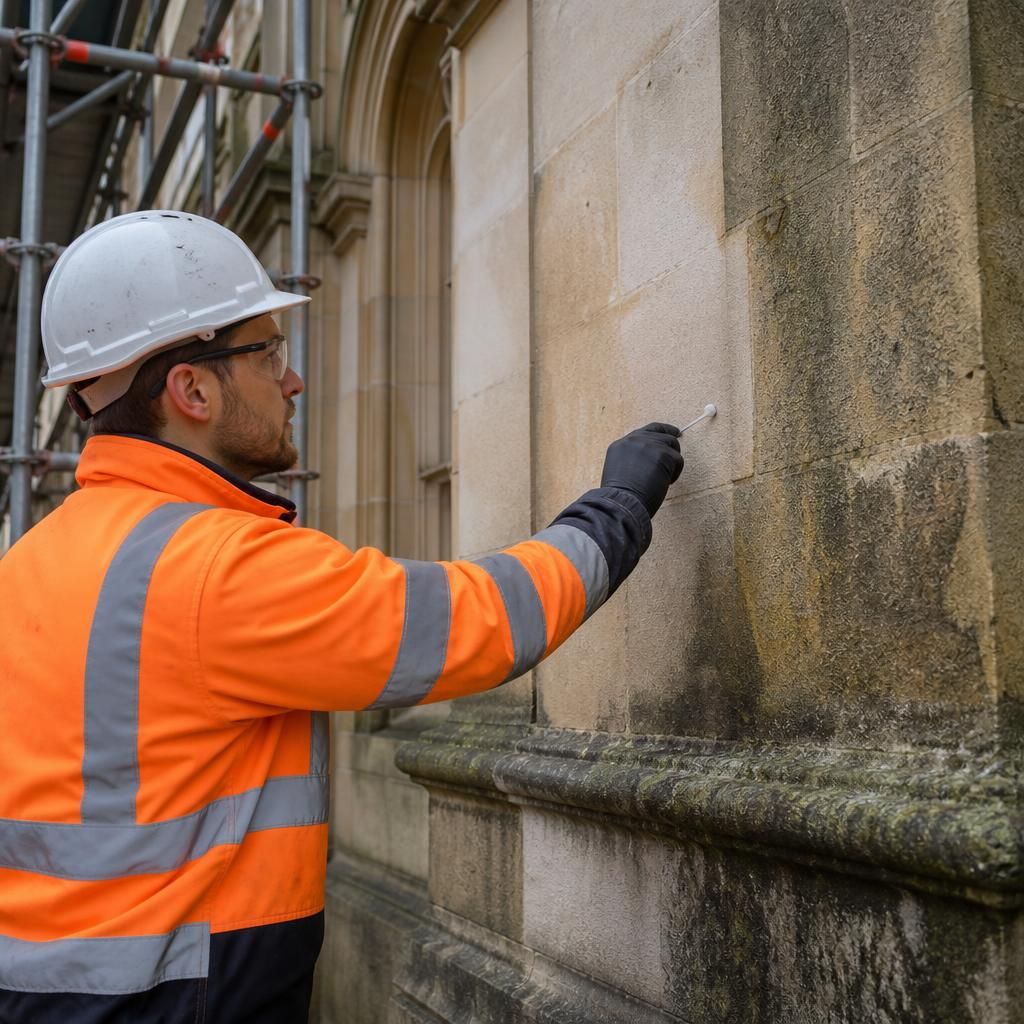
Before high-pressure washing is used on a façade, vulnerable surfaces should be identified and tested with the least aggressive suitable method. A small, inconspicuous test area can reveal whether the substrate, coating, pointing or decorative finish is likely to erode, mark or allow water ingress.
Where the test shows a risk of damage, the area should be excluded from direct pressure washing and cleaned using a controlled alternative, such as soft washing, steam cleaning, low-pressure rinsing or manual treatment. This approach is particularly important around weathered masonry, render, glazing seals, painted finishes and historic details.
Arrange a Façade Surface Assessment
Arrange a façade surface assessment with Encanto Exterior Cleaning to identify materials and areas that should not receive direct high-pressure washing. We can recommend a suitable cleaning method based on the façade’s condition, coatings and risk of water ingress.