
What surfaces can be safely pressure washed during façade cleaning?
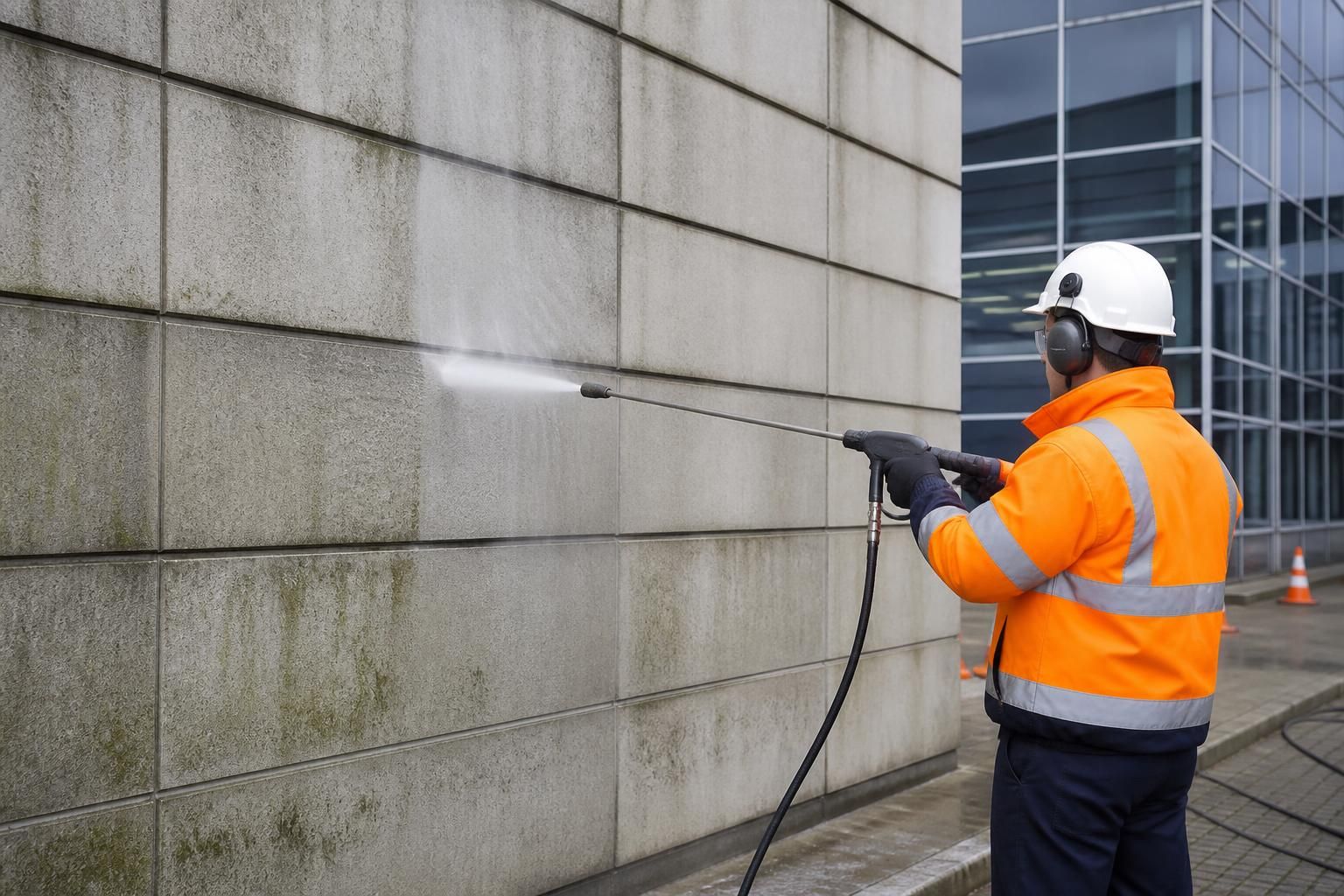
Suitable surfaces commonly include sound brickwork, concrete, stone, metal cladding and some rendered façades, provided the material is assessed first and the pressure, temperature and cleaning method are adjusted accordingly. Delicate, weathered, cracked or poorly bonded surfaces may require low-pressure or steam cleaning instead of conventional high-pressure washing.
Sound, well-bonded brickwork, concrete, suitable natural stone, metal cladding and some rendered façades can generally be pressure washed safely during façade cleaning. The method is only safe when the surface has been assessed first and the pressure, water temperature, nozzle, distance and cleaning agent are matched to the material and its condition. Low-pressure or steam cleaning is often more appropriate for delicate, weathered or defective surfaces.
Brickwork: Fired brick is commonly suitable for controlled pressure washing, particularly where the main contamination is traffic film, algae, moss or general soiling. The brick itself may be robust, but the mortar joints can be weaker and more vulnerable to erosion. Water should not be concentrated on deteriorated pointing, open joints, cracked bricks or areas where the face of the brick is flaking. Older, handmade, soft or porous bricks may need a gentler approach, such as low-pressure cleaning or steam cleaning.
Concrete: Sound precast and cast concrete can usually tolerate pressure washing, making it suitable for removing dirt, algae, atmospheric deposits and some biological growth. Particular care is needed around exposed aggregate, spalled areas, cracks, damaged edges and previously repaired sections. Excessive pressure can remove the surface paste, enlarge defects or expose aggregate unevenly. Reinforced concrete façades should also be checked for areas where water could reach exposed reinforcement or defective joints.
Natural stone: The correct method depends on the type, finish and condition of the stone. Hard, dense stone such as granite may accept carefully controlled pressure washing, while softer or more porous materials, including some sandstone and limestone, can suffer surface erosion, staining or increased water absorption. Pressure should not be directed at friable surfaces, open joints, carved details or historic finishes. A lower-pressure method, soft washing or steam cleaning may provide better control where the stone is weathered or valuable.
Metal cladding: Aluminium, coated steel and other metal panels can often be cleaned with controlled pressure, provided the coating and fixings are intact. The spray should be kept away from panel laps, seals, vents, electrical fittings and areas where water could be driven behind the cladding. Abrasive tools and unsuitable chemicals may damage factory-applied coatings, so the cleaning solution should be compatible with the metal and any protective finish. Rusting fixings, failed sealant and loose panels should be recorded before cleaning rather than concealed by it.
Rendered façades: Render is not automatically suitable for conventional high-pressure washing. Sound, well-adhered modern render may be cleaned using a carefully controlled low-pressure method, but cracked, hollow, friable or poorly bonded render can be dislodged by the water jet. Textured, painted and insulated render systems require particular caution because pressure can damage the finish or force water behind the system. A visual inspection, gentle test area and suitable nozzle are essential before wider cleaning begins.
uPVC and other plastic façade components: uPVC cladding, window frames, soffits and similar components can generally be cleaned with low to moderate pressure. High pressure can mark the surface, lift seals, force water into joints or damage brittle, aged plastic. Restoration coatings and painted plastic surfaces should be tested to confirm that the finish is firmly bonded and will not be stripped by the cleaning process.
Glass and glazed surfaces: Glass itself is usually cleaned with low pressure and a suitable detergent rather than a concentrated high-pressure jet. The greater risks are to gaskets, seals, beading, window vents, frames and adjacent joints. Existing chips, scratched panes and failed seals should be identified before cleaning. Any protective film, signage or applied coating must also be checked for compatibility with water pressure and cleaning chemicals.
Painted, coated and decorative surfaces: Pressure washing may be appropriate for a sound, well-adhered coating, but it can remove loose paint, expose bare substrate or create visible differences between cleaned and uncleaned areas. Decorative stone, glazed brick, terracotta, architectural detailing and historic finishes should be treated as sensitive surfaces unless their condition has been confirmed. Cleaning a small inconspicuous area first helps establish whether the finish, colour and texture remain unaffected.
Before selecting the equipment, the façade should be assessed for:
- the material, surface finish and likely age of each elevation;
- cracks, spalling, flaking, hollow areas, failed pointing and loose coatings;
- open joints, movement joints, vents, seals, windows and other water-sensitive details;
- previous repairs, paint systems, protective coatings and areas of discolouration;
- access restrictions, drainage arrangements and the risk of contaminated run-off.
A small test area should then be cleaned using the least aggressive method likely to achieve the required result. The test should be reviewed after the surface has dried, as some damage, staining or colour variation is not immediately apparent while the façade is wet. The cleaning team can then adjust the pressure, nozzle pattern, working distance, temperature and dwell time of any detergent. Pressure should be kept moving rather than held in one place, and the substrate should not be cleaned more aggressively simply to compensate for an unsuitable chemical or technique.
Surfaces that are cracked, loose, heavily weathered, friable, poorly bonded or vulnerable to water penetration should not normally receive high-pressure washing. Timber, soft masonry, degraded pointing, failing render, old coatings and defective cladding joints often require low-pressure cleaning, steam cleaning, soft washing, hand cleaning or remedial work before the façade can be washed. High pressure should never be used as a substitute for repairing defects.
Safe façade cleaning also involves protecting windows, doors, vents, lighting, electrical equipment and surrounding finishes, while collecting or controlling contaminated water where necessary. A suitable method statement should record the surfaces assessed, the test results, the equipment and settings selected, and any defects found before work. This makes the cleaning process more consistent and helps distinguish existing deterioration from any change caused during cleaning.
In practice, the safest pressure-washing method is determined by the weakest part of the façade, not the strongest. A robust brick or concrete elevation may tolerate controlled pressure, while its mortar, seals, coatings or adjoining render may require a gentler treatment. Matching the method to each surface produces a cleaner result while reducing the risk of erosion, water ingress, coating failure and avoidable repairs.
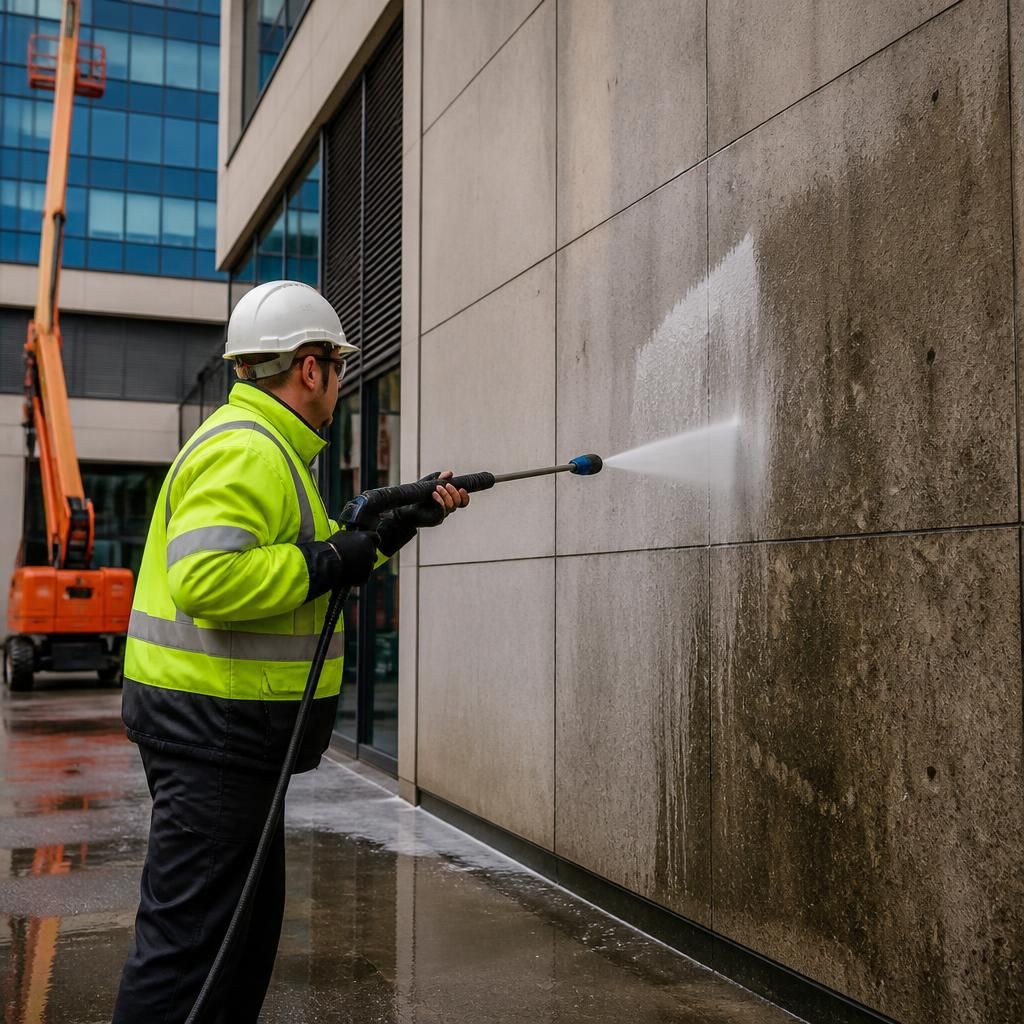
Safe façade pressure washing depends on the condition of the most vulnerable component, not simply the strength of the main surface. Sound brick or concrete may tolerate controlled pressure, while adjoining mortar, render, seals, coatings or joints may require low-pressure or steam cleaning.
A small test area should be cleaned first and checked once dry. This confirms that the selected pressure, nozzle, distance, temperature and cleaning solution remove the contamination without eroding the surface, lifting coatings or forcing water behind the façade.