
What steps are involved in preparing a façade for pressure washing?
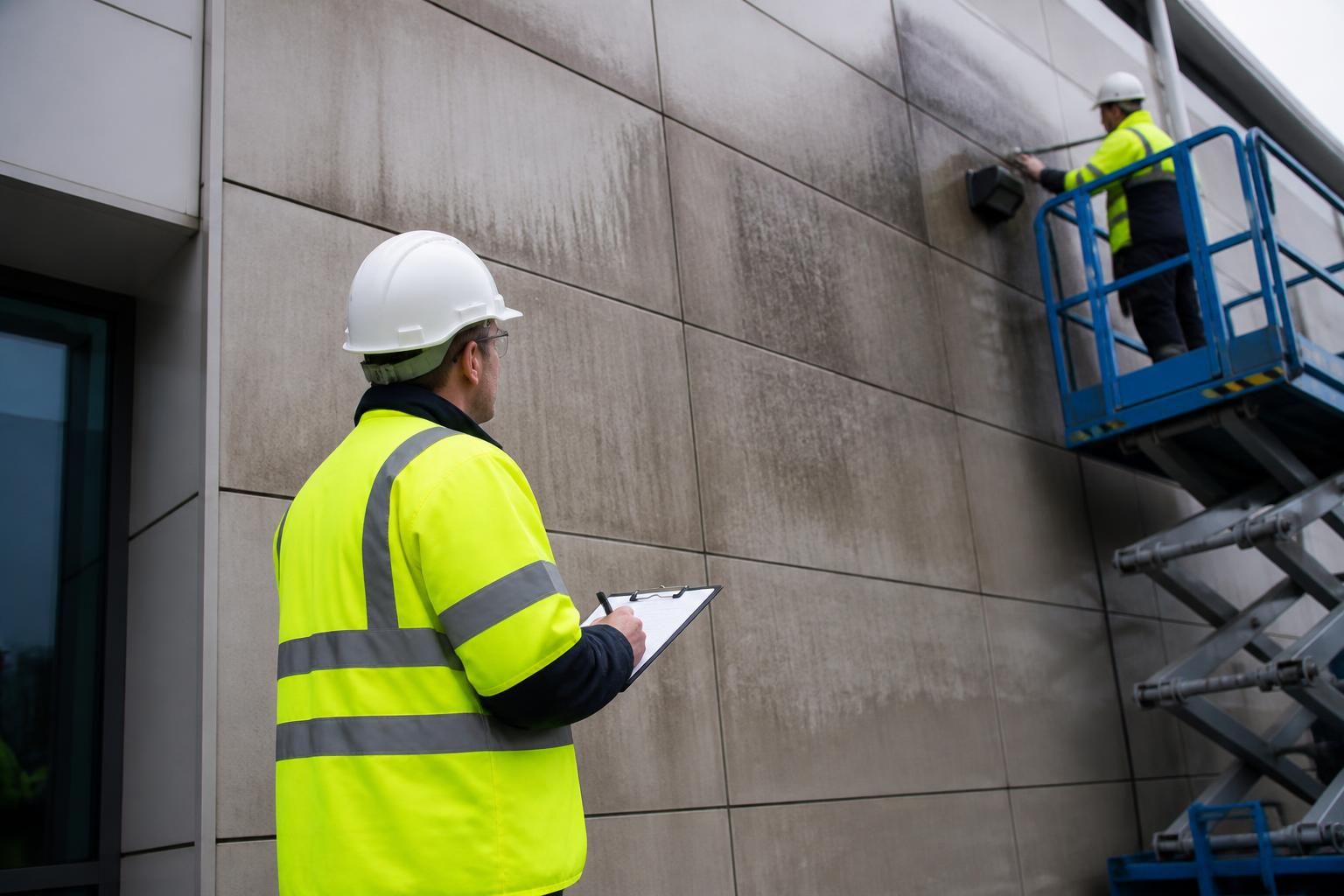
Preparing a façade for pressure washing involves inspecting the surface and identifying fragile materials, existing damage, contamination and areas requiring specialist treatment. The process also includes protecting windows, doors, landscaping and nearby equipment, planning safe access and drainage, selecting suitable pressure and temperature settings, and carrying out a small test clean before the main work begins.
Preparing a façade for pressure washing involves assessing the building, identifying risks and vulnerable materials, protecting adjacent areas, arranging safe access and drainage, and selecting a cleaning method that will remove the contamination without damaging the substrate. A small test area should be completed and reviewed before the full façade is cleaned.
1. Survey the façade and surrounding area
The preparation starts with a close visual inspection of the façade and its immediate surroundings. This establishes what the surface is made from, how it has been maintained and whether pressure washing is suitable. The survey should identify:
- Façade materials, such as brick, concrete, stone, render, painted surfaces, metal cladding, UPVC or composite panels
- Existing dirt, traffic film, algae, moss, bird fouling, oil deposits, atmospheric staining, paint, cement residue or graffiti
- Cracks, spalling, loose pointing, failed sealant, delaminated coatings, corrosion and areas of water ingress
- Fragile features, including decorative details, vents, louvres, joints, membranes, signage, glazing and areas of previous repair
- Nearby electrical equipment, lighting, alarms, air-conditioning units, ventilation openings and other services that could be affected by water
- Ground conditions, drainage routes, pedestrian access, vehicle movements and the potential for contaminated run-off
Photographs and notes from the survey provide a reference point before work begins. They also help distinguish existing defects from any changes observed after cleaning.
2. Determine whether pressure washing is appropriate
Not every façade should receive the same treatment. The cleaning method must reflect the material, its condition and the type of contamination. Sound masonry may tolerate controlled pressure, while aged render, soft stone, friable brick, poorly bonded coatings and weathered pointing may require lower pressure, a softer wash system or a different treatment altogether.
Pressure is only one part of the cleaning process. Water temperature, flow rate, nozzle type, spray distance, dwell time and cleaning chemicals all affect the result. Increasing pressure is not always the most effective way to remove staining and can cause etching, surface loss, water penetration or damage to joints and coatings.
Where the façade contains multiple materials, each area should be assessed separately. For example, a robust brick elevation may require a different setting from adjacent render, window surrounds or metal cladding. Areas that cannot be safely cleaned with water should be excluded or treated using a suitable specialist method.
3. Identify and address defects before washing
Water can enter through open joints, cracks, failed seals and damaged openings. Before cleaning, loose material should be removed where appropriate and defects requiring repair should be recorded. Depending on the façade, preparation may include:
- Repairing or isolating loose pointing and damaged render
- Securing loose panels, trims, signs or decorative elements
- Renewing failed sealant around windows, doors and service penetrations where required
- Closing or protecting openings that could allow water into the building
- Removing unstable coatings or arranging a separate treatment for them
- Checking that roof edges, gutters, downpipes and drainage points can accept the expected volume of water
Cleaning does not correct structural movement, defective waterproofing or failing finishes. If significant defects are found, the work may need to be adjusted, postponed or coordinated with a building repair contractor.
4. Check for hazardous or specialist contamination
Contamination should be identified before equipment is selected. Bird fouling, biological growth, oil, chemical residue, paint and graffiti can each require different preparation and controls. Bird fouling and other organic contamination may require careful removal and disinfection. Graffiti may need a compatible chemical treatment rather than high pressure alone. Oil and other residues can spread through run-off if they are not contained.
Where there is a possibility of hazardous materials, such as asbestos-containing components, lead-based coatings or unidentified chemical deposits, the material should be assessed before cleaning. Pressure washing must not disturb hazardous substances without appropriate investigation, controls and waste arrangements.
5. Protect windows, doors, fixtures and nearby property
Before washing begins, vulnerable items should be covered, sealed or isolated as appropriate. This can include windows, doors, letterboxes, intercoms, electrical outlets, cameras, sensors, external lights, ventilation grilles, air-conditioning units, signs and painted joinery. Protection must not obstruct required ventilation or create a separate safety risk.
Nearby vehicles, stock, plant, furniture, lighting and building entrances should be moved or protected. Landscaping may need temporary covers or controlled watering, particularly where cleaning solutions are being used. Covers should be arranged so that they do not trap water against the building or damage plants through overheating.
Windows and doors should be checked after protection is installed. They must remain secure during cleaning, and occupants should be told which entrances or areas will be temporarily unavailable.
6. Plan access and work at height
The access method should be selected after considering the building height, façade layout, ground conditions, overhead obstructions and the reach required to clean safely. Possible arrangements include mobile elevated work platforms, towers, scaffolding, abseil access or telescopic equipment, depending on the site and task.
Access equipment must be suitable for the ground and working conditions. A site plan should account for overhead cables, fragile roofs, openings, traffic routes, public areas and emergency access. Exclusion zones, barriers and warning signs may be needed below the work area to prevent people from entering the spray zone or being struck by falling debris.
Operators should not rely on extending a pressure-washing lance beyond a safe working position. Using the correct access equipment helps maintain a consistent spray distance and gives better control over the cleaning pattern.
7. Arrange water supply, drainage and run-off controls
Pressure washing can produce substantial run-off, particularly on large commercial façades. Before work begins, the team should identify where water will flow and whether drains are suitable to receive it. Drain covers, bunding, collection systems or temporary containment may be required to prevent dirty water entering public areas, surface-water drains, soil or watercourses.
Run-off controls should reflect the contamination being removed and any cleaning products being used. Wastewater may need to be collected, filtered, treated or disposed of through an approved route rather than discharged directly. The site should also have a plan for managing overspray, splashback and water entering doorways or service areas.
8. Select the cleaning system and operating settings
Once the surface and risks have been assessed, the cleaning system can be specified. This includes the choice between cold or hot water, pressure and flow settings, nozzle configuration, cleaning agents and any supplementary steam or soft-washing process.
Settings should be kept only as high as necessary for the particular surface and contamination. The nozzle should be held at a controlled distance and moved consistently rather than concentrated on one point. Hot water can improve the removal of greasy or oily deposits, but temperature must also be suitable for the substrate, coatings, sealants and surrounding materials.
Cleaning products should be compatible with the façade and used in accordance with their instructions. They should not be mixed without confirmation that the combination is safe and effective. Dwell times must be controlled so that solutions do not dry on the surface or run into unprotected areas.
9. Carry out a test clean
A discreet test area is cleaned before the main operation. The test should represent the most sensitive or typical part of the façade and should use the proposed pressure, temperature, nozzle, distance and cleaning product. The result is then checked for:
- Changes in colour, texture or surface profile
- Loss of pointing, aggregate, coating or protective finish
- Water penetration or staining around joints and openings
- Whether the contamination has been removed evenly
- Any visible difference between cleaned and uncleaned areas
A successful test does not automatically prove that every part of the elevation can be treated identically. Different materials and contamination levels may require separate test areas and settings. The agreed approach should be recorded before full cleaning proceeds.
10. Confirm the site controls before starting
The final preparation stage is a site briefing and check of the agreed method. This should confirm the work area, access arrangements, exclusion zones, protection, water and power supplies, drainage controls, emergency procedures and contact arrangements with the building representative.
Occupants and other contractors should be informed about expected noise, spray, temporary restrictions and any requirement to keep windows or doors closed. Weather conditions should also be considered, as wind can carry spray beyond the intended area and rain or freezing conditions can affect safety, chemical performance and run-off control.
Once these checks are complete, the façade is ready for controlled cleaning. The operative should continue monitoring the surface throughout the work rather than treating the initial settings as fixed. If the substrate reacts unexpectedly, the process should be stopped and reassessed before proceeding.
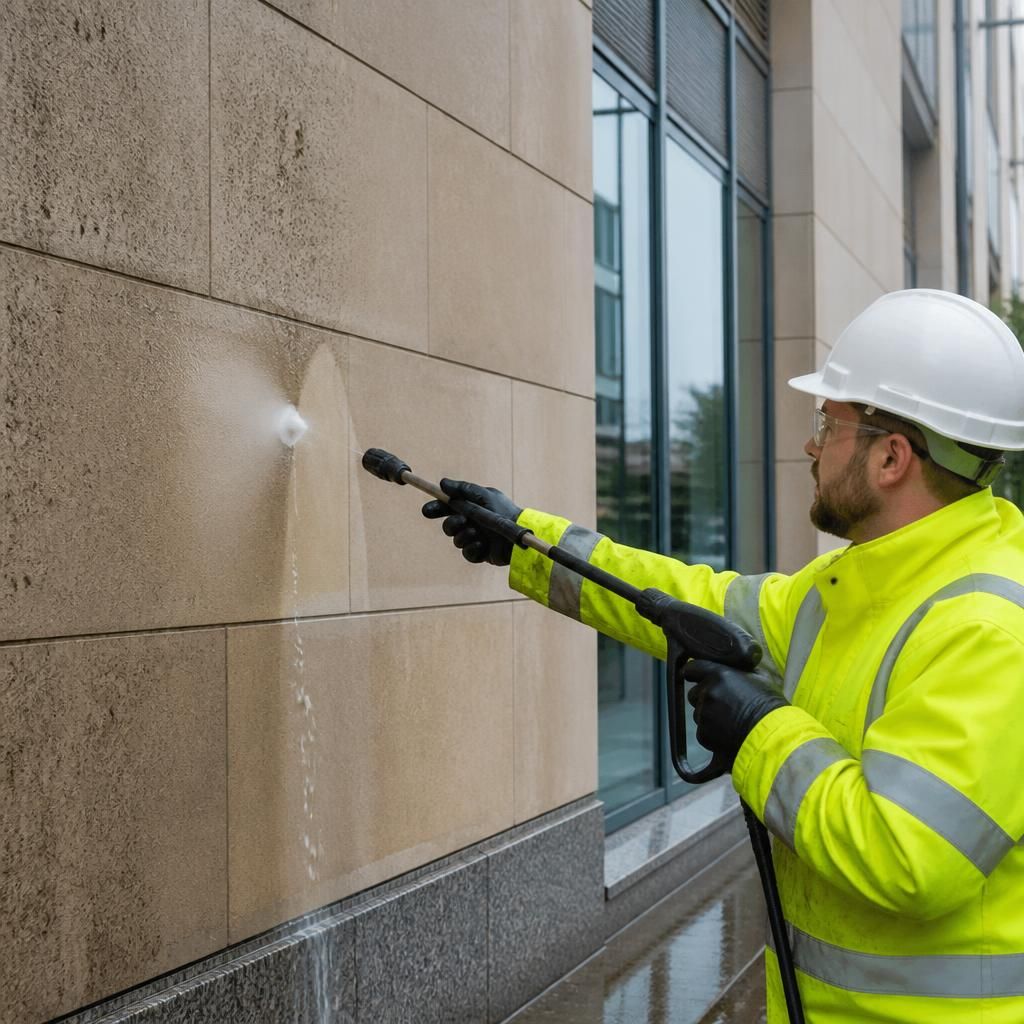
A discreet test clean is an essential preparation step before pressure washing the full façade. It confirms that the proposed pressure, temperature, nozzle, spray distance and cleaning solution are suitable for the specific surface and contamination.
The test area should include a representative or particularly sensitive section of the façade. After cleaning, it is checked for changes in colour or texture, loss of pointing or coating, water penetration, streaking and uneven results. If the surface reacts unexpectedly, the method can be adjusted before larger areas are treated. Where a building contains different materials, separate test areas may be needed for brick, render, stone, cladding or painted finishes.