
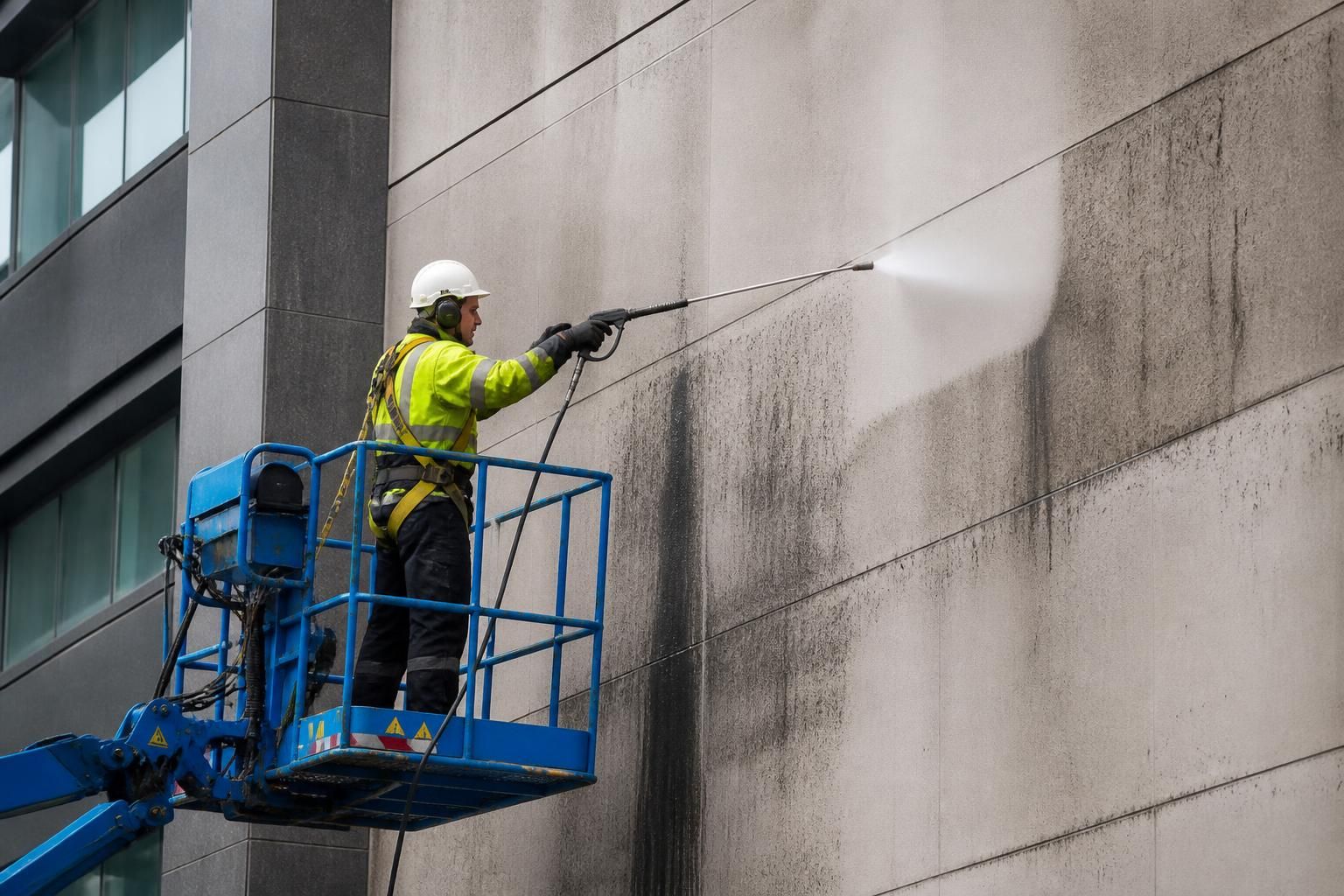
What safety protocols are followed during façade pressure washing?
During façade pressure washing, Encanto Exterior Cleaning follows site-specific risk assessments, controlled pressure and water settings, safe access procedures, and measures to protect people, surrounding property and the façade itself. Operatives use suitable PPE, isolate or manage work areas, control run-off and inspect surfaces before, during and after cleaning.
Façade pressure washing is carried out under a site-specific safety plan covering people, access, equipment, water, cleaning products, the building and surrounding property. Before work starts, Encanto Exterior Cleaning assesses the façade, identifies foreseeable hazards and agrees suitable controls with the client. The method is then adapted to the building’s height, condition, materials, occupancy, location and required cleaning result.
Risk assessment and method statement: The project is reviewed before equipment is brought on site. This includes identifying fragile or deteriorated surfaces, loose masonry, glazing, overhead services, electrical equipment, restricted access, vehicle movements, members of the public, occupied premises and possible water ingress. Where appropriate, the agreed method statement explains the cleaning sequence, equipment, pressure and temperature settings, access arrangements, exclusion zones, run-off controls and emergency procedures.
Operatives are briefed on the site controls before starting, and the work is reviewed if conditions change. Pressure washing is stopped if unexpected defects, unstable materials, unsafe weather, uncontrolled public access or equipment problems make the planned method unsuitable. A client or site contact is informed where an issue could affect the scope, access or safety of the work.
Competent operatives and suitable equipment: Façade cleaning is undertaken by operatives who understand pressure-washing equipment, access systems, surface behaviour and the hazards associated with water and cleaning chemicals. Equipment is selected for the task and checked before use. Hoses, lances, trigger mechanisms, connections, electrical leads, fuel systems, access equipment and protective guards are inspected for damage or defects. Faulty equipment is removed from service rather than used on the building.
Work equipment is used and maintained in line with the relevant manufacturer’s instructions and applicable UK requirements, including controls associated with work equipment, hazardous substances and work at height. Where powered access, scaffolding or other specialist access is needed, it is planned and operated by suitably trained and authorised personnel. Access equipment is positioned on an appropriate surface, secured where necessary and kept clear of vehicle routes and other site hazards.
Controlled pressure and water settings: The façade is inspected before cleaning so the pressure, flow, temperature and nozzle configuration can be selected for the material and level of soiling. Cleaning normally begins with a controlled test area or low-impact approach, particularly where the surface is aged, weathered, painted, jointed or already damaged. The method is adjusted if the test indicates a risk of marking, erosion, coating failure, water penetration or damage to pointing and sealants.
The lance is kept at a controlled distance and directed consistently rather than concentrated on vulnerable details. Operatives avoid forcing water into open joints, cracks, vents, air bricks, seals, doors, windows, roof edges and building services. High pressure is not treated as a substitute for correct technique: lower pressure, hot water, steam, a suitable detergent or additional dwell time may be safer and more effective for a particular façade.
Personal protective equipment: PPE is selected following the risk assessment and may include waterproof protective clothing, suitable gloves, eye or face protection, hearing protection, safety footwear and head protection. Respiratory protection may be required where the work creates an inhalation risk, such as certain deposits or cleaning products. PPE supplements, but does not replace, physical controls such as isolation, safe access and suitable operating distances.
Exclusion zones and public protection: The area below and around the façade is controlled to prevent people walking into the spray, falling debris, hose routes or moving equipment. Barriers, cones, warning signs and a banksman or other agreed control may be used where necessary. Entrances, pedestrian routes, fire exits and vehicle access are kept clear or managed in coordination with the site. On occupied premises, cleaning times and work areas are arranged to reduce interaction with staff, visitors, residents and members of the public.
Windows, doors, vents, air-conditioning units, lighting, signage, sensitive finishes and nearby vehicles or equipment are protected where required. Loose items are removed or secured, and the client is advised if an item cannot be adequately protected without temporary isolation or relocation.
Work at height and weather controls: Work at height is planned to avoid unnecessary exposure and uses the most suitable access method for the façade. Operatives maintain secure footing and do not use improvised platforms or unsafe leaning positions while handling a pressure-washing lance. Wind, rain, ice, poor visibility and lightning can affect access, spray control and electrical safety. Work is postponed, reduced or stopped when weather conditions make the operation unsafe or prevent adequate control of water and equipment.
Electrical, chemical and water controls: Water and electricity are kept apart wherever practicable. Electrical installations and equipment near the work area are identified, protected or isolated by the responsible person before cleaning begins. Leads and connections are routed to reduce damage, trip hazards and contact with standing water.
Where detergents, biocides or other treatments are used, the product information and control measures are reviewed in advance. Chemicals are stored, diluted, applied and removed in accordance with the manufacturer’s instructions and the relevant COSHH assessment. Operatives use the specified PPE and prevent spray drift onto people, neighbouring property, plants and incompatible materials.
Run-off is controlled rather than allowed to enter sensitive areas or drainage systems without consideration. Drain covers, collection methods, bunding or other measures may be used where appropriate. Dirty water, chemical residues, paint fragments and other debris are handled in accordance with the site requirements and applicable environmental controls. The cleaning team also checks that discharge will not create a slip hazard or affect adjoining premises.
Inspection and handover: After cleaning, the façade and surrounding area are inspected for missed deposits, disturbed materials, water ingress, damage, standing water, debris and any changes to protected items. Barriers and equipment are not removed until the area is safe for normal use. Any defect revealed during cleaning is recorded and reported rather than concealed by further pressure washing. Where agreed, the client receives relevant observations about surface condition, access restrictions, remedial work or future maintenance.
These protocols help ensure that façade pressure washing is controlled from initial assessment through to final inspection. They also allow the cleaning method to be changed promptly when the building, site conditions or surface response shows that the original approach is not sufficiently safe.
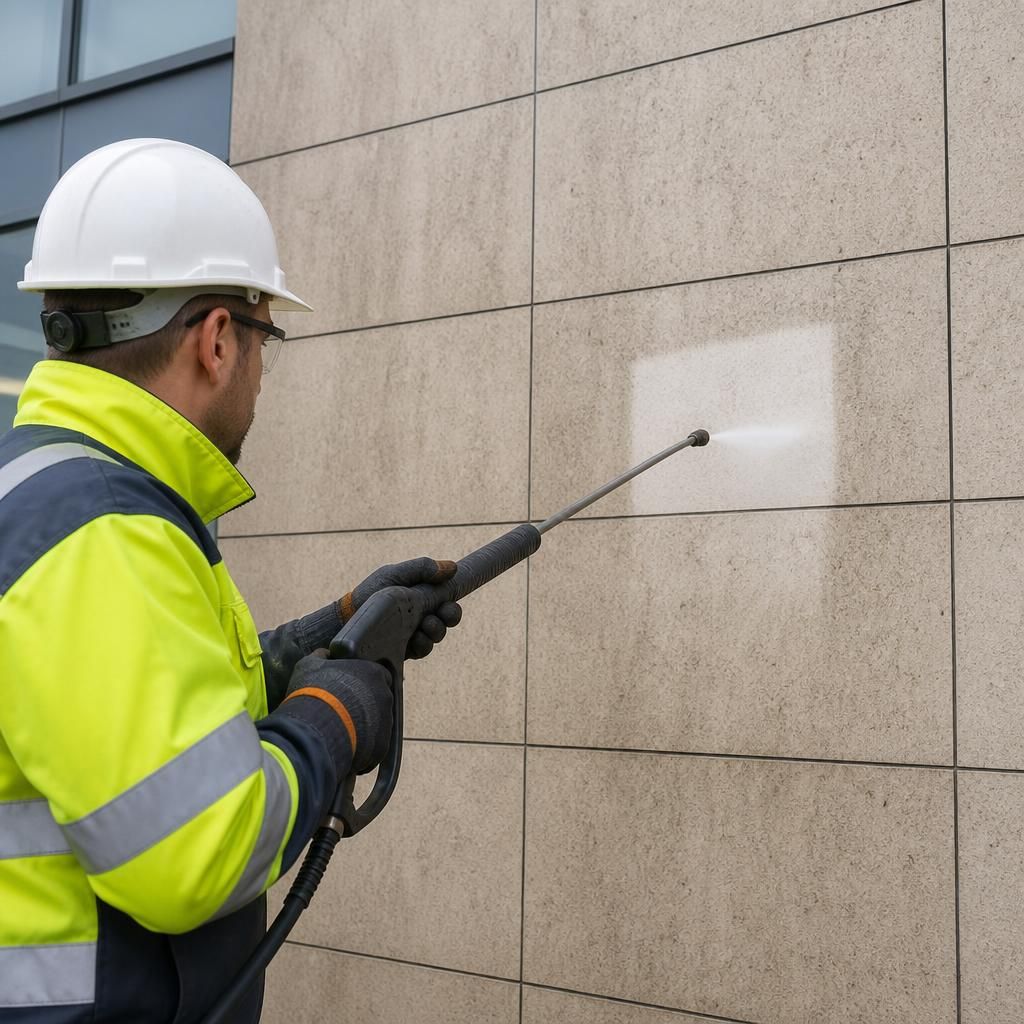
A controlled test area is a key façade pressure washing safety measure. Before full cleaning begins, the operative tests a discreet section to confirm that the selected pressure, water flow, temperature, nozzle and cleaning product are suitable for the surface.
The test checks for marking, erosion, coating failure, colour change, water penetration and damage to pointing or sealants. The lance is kept at a controlled distance and the result is assessed before the method is extended across the façade. If the surface responds poorly, the process is changed to a lower-pressure setting, hot water, steam, a suitable detergent or a gentler application technique.