
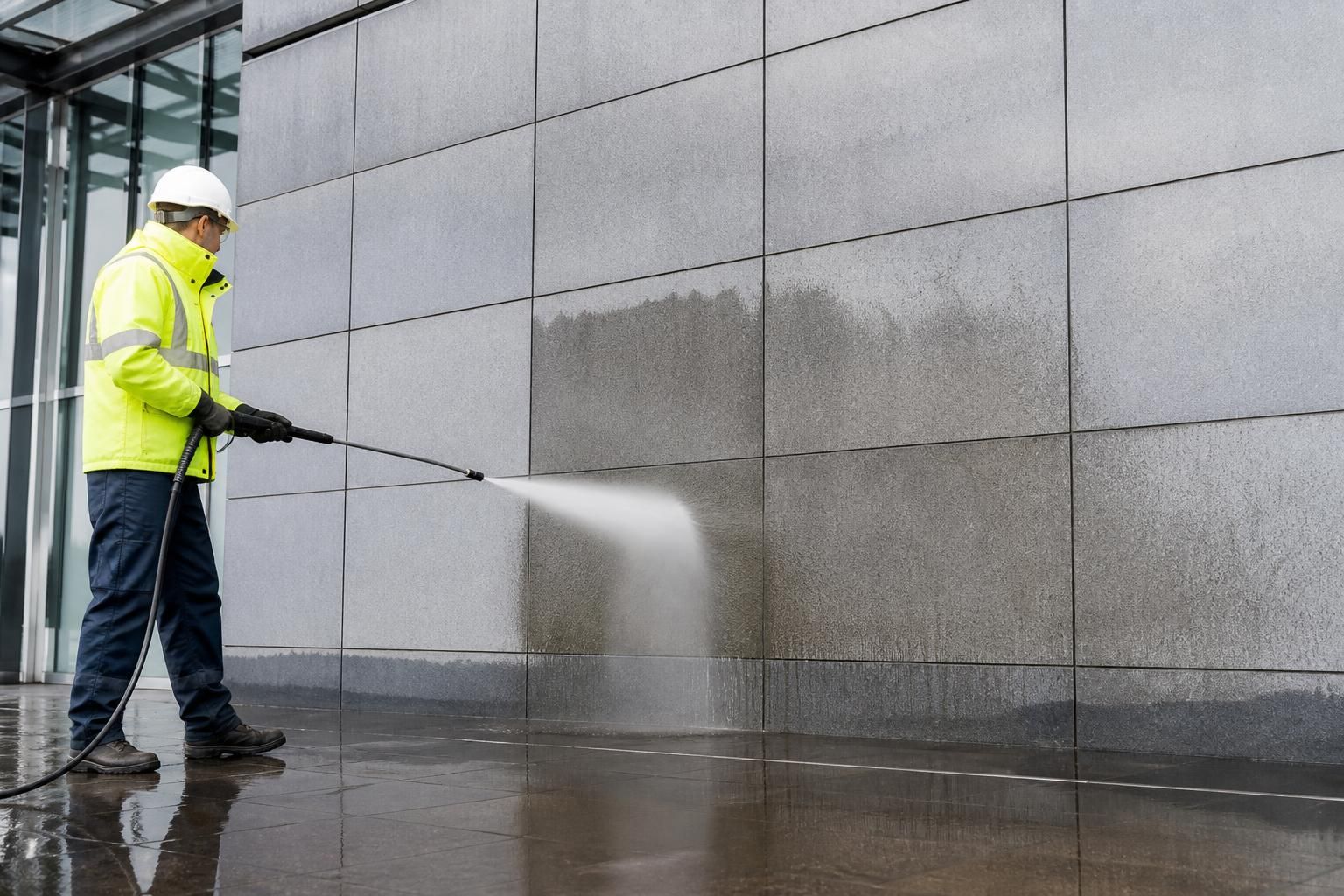
What materials can be safely pressure washed without causing damage?
Many robust façade materials, including brickwork, concrete, stone, metal cladding and some UPVC surfaces, can be pressure washed safely when the pressure, temperature, nozzle and cleaning solution are matched to the material. Delicate, weathered, porous or coated surfaces require lower-pressure methods and a professional assessment to prevent surface erosion, staining, water ingress or damage to joints and finishes.
Brickwork, sound concrete, selected natural stone, metal cladding and well-maintained UPVC can usually be pressure washed without damage when the equipment and method are matched to the material. Safety depends on more than the surface itself: its age, condition, porosity, coatings, joints and previous repairs must be assessed before cleaning. A surface that is suitable for controlled pressure washing may be damaged by excessive pressure, heat, an unsuitable nozzle or prolonged spraying.
Brickwork is commonly suitable for pressure washing where the bricks and mortar are sound. Moderate pressure, a suitable fan nozzle and controlled passes can remove dirt, algae, traffic film and some surface staining. Older, soft or handmade bricks require greater care because aggressive cleaning can erode the face of the brick, expose the inner material or remove weathered details. Mortar joints are particularly vulnerable, especially where they are loose, recessed or already showing signs of failure.
Concrete is generally robust and can be cleaned effectively with pressure washing. It is often used for façade panels, architectural features, steps, loading areas and surrounding hard surfaces. The operator must still check for surface scaling, cracks, exposed aggregate, weak repairs and areas where water could enter through joints. A controlled technique helps prevent patchy results and avoids forcing water into defects.
Natural stone can sometimes be pressure washed, but the correct method varies considerably between stone types. Dense, sound stone may tolerate carefully controlled pressure, while softer or more porous stone can suffer from surface loss, scoring, staining or increased water absorption. Limestone, sandstone and older stone façades often need a lower-pressure approach, a wider spray pattern or a gentler cleaning system. Historic stonework should be assessed particularly carefully before any pressure is applied.
Metal cladding, including coated steel and aluminium panels, is normally suitable for low- to moderate-pressure washing when the coating is intact. Cleaning should avoid lifting edges, forcing water behind panels or damaging sealant around joints and penetrations. Strong chemicals and excessive heat can affect painted or powder-coated finishes, so the cleaning solution must be compatible with the coating. Corroded, scratched or delaminated panels may need repair or specialist treatment rather than conventional pressure washing.
UPVC cladding and trims can usually be cleaned safely using a controlled, lower-pressure method. This is effective for removing general grime, algae and atmospheric deposits without abrading the surface. Older UPVC may be brittle, chalked or discoloured, and strong pressure can mark the finish or drive water behind overlapping sections. Restoration work also requires care because cleaning can reveal uneven fading that was previously hidden by dirt.
Render is not automatically suitable for high-pressure cleaning. Sound, modern render may tolerate a carefully adjusted low-pressure wash, but cracked, blown, friable or painted render can be damaged easily. Pressure may widen cracks, remove the finish or drive water behind the render system. A gentle test area should be used first, with particular attention to insulated render systems and decorative coatings.
Other materials require additional caution:
- Painted or coated surfaces: pressure can strip loose paint, lift edges and leave visible differences between sound and failed areas.
- Timber: high pressure can cut into the grain, raise fibres and remove protective coatings. Low-pressure cleaning is normally more appropriate.
- Glass and glazing seals: these can be cleaned, but the spray should not be directed at damaged seals, open joints or vulnerable frames at close range.
- Terracotta, tiles and decorative masonry: pressure can chip edges, remove glaze or damage older, porous units.
- Historic or repaired façades: mixed materials and incompatible repairs may react differently, making a full assessment essential.
Before cleaning, the façade should be inspected for cracks, open joints, loose material, failed sealant, corrosion, damaged coatings, previous repairs and water-sensitive features. Windows, vents, electrical fittings and openings should be protected where necessary. A small test area helps confirm whether the selected pressure, nozzle, temperature and cleaning solution achieve the required result without marking or eroding the surface.
Pressure should be kept only as high as necessary. A wider fan pattern and a suitable working distance generally provide more control than concentrating the spray in one point. The operator should keep the lance moving, avoid directing water into joints and use a consistent technique to reduce streaking and uneven cleaning. Hot water or steam may remove certain deposits effectively at lower pressure, which can be preferable where the material is sound but vulnerable to mechanical force.
Safe pressure washing also depends on managing the water and residue produced during cleaning. Run-off should be controlled so that detergents, paint particles, biological growth and contaminated deposits do not enter drains or affect nearby areas. Once cleaning is complete, the façade should be checked for any remaining defects, displaced sealant or areas requiring repair rather than further washing.
The safest approach is therefore material-specific rather than based on a single pressure setting. Robust, sound surfaces can often be pressure washed successfully, while porous, weathered, coated or damaged materials may need soft washing, steam cleaning, manual cleaning or specialist conservation methods. Where the façade’s condition or construction is uncertain, a professional assessment and test clean should be completed before the main works begin.
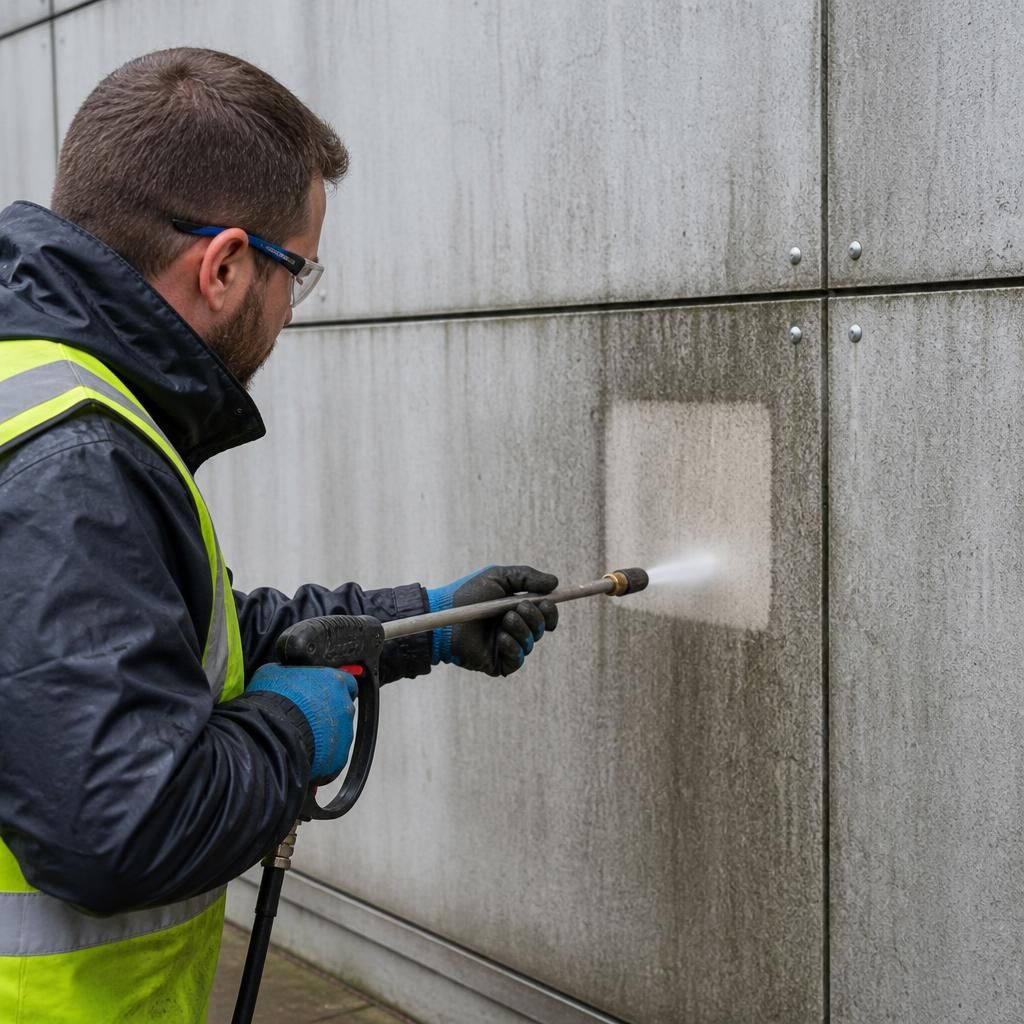
A small test area is the safest way to confirm whether a façade material can tolerate pressure washing. The test should use the proposed nozzle, pressure, distance, temperature and cleaning solution, then be checked for marking, colour change, surface erosion, disturbed joints or exposed aggregate. If the surface reacts poorly, the method can be changed to lower-pressure washing, steam cleaning or manual treatment before the main work begins.
Arrange a Façade Material Assessment
Arrange a façade material assessment before cleaning to confirm which pressure, temperature and cleaning method are suitable for your building’s surfaces.
We can identify vulnerable materials, coatings and defects, then recommend a controlled test clean where required.