
What is the impact of pressure washing on different façade materials?
Pressure washing affects each façade material differently: brick and robust cladding can often tolerate controlled cleaning, while natural stone, render, older masonry and painted surfaces may be damaged by excessive pressure, heat or unsuitable techniques. The correct approach depends on the material’s condition, using test patches and adjusted pressure, temperature and cleaning methods to remove dirt without causing erosion, marking, water ingress or loss of surface finish.
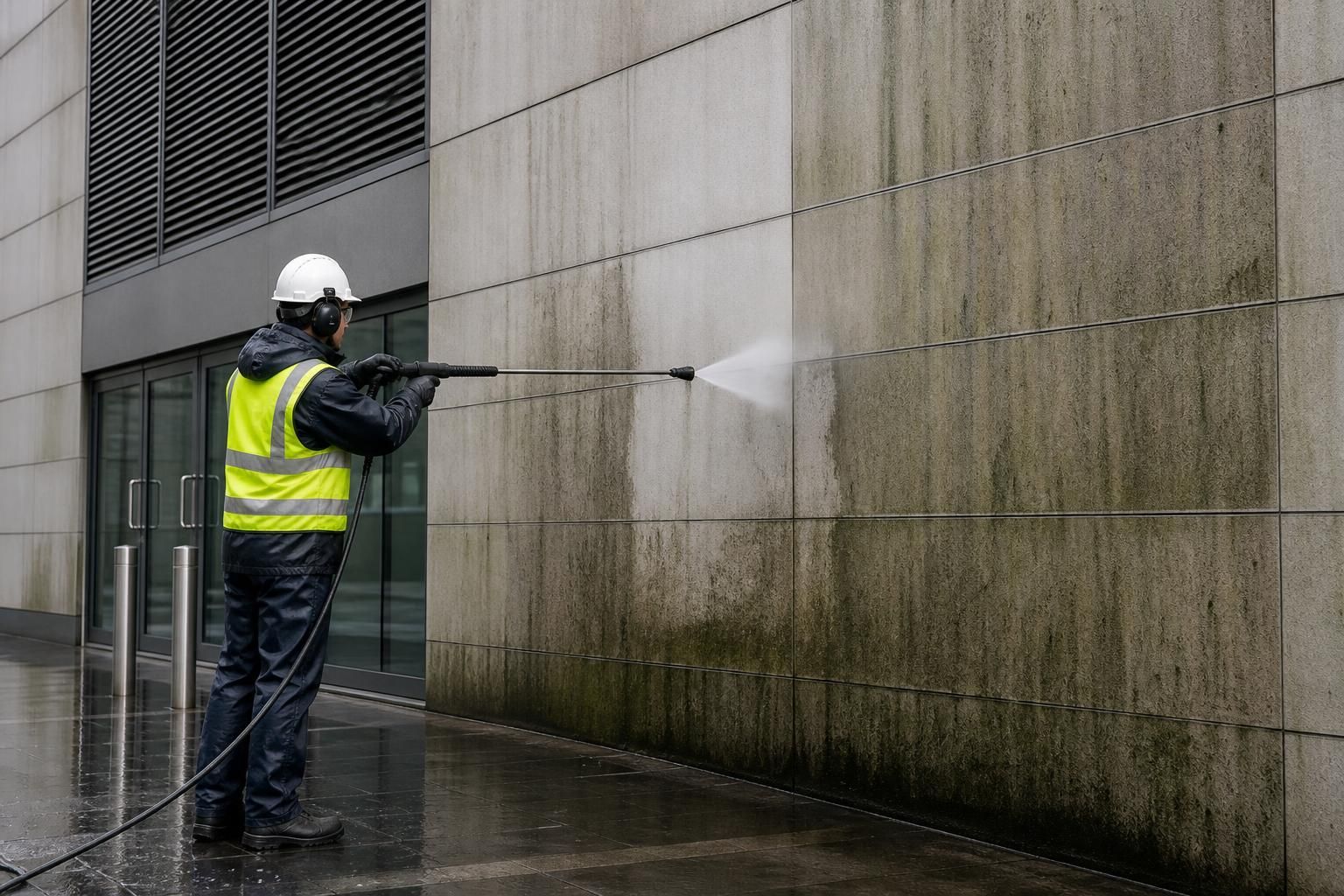
Pressure washing can remove dirt, algae, traffic film, pollution and loose coatings from a façade, but its effect depends on the material, its condition and the cleaning method used. Sound brick and some durable cladding may tolerate controlled pressure washing, whereas natural stone, render, painted finishes, older masonry and weathered surfaces can suffer erosion, marking, water ingress or loss of finish if excessive pressure, heat or an unsuitable nozzle is used.
The main factors are not pressure alone. Water temperature, nozzle type, working distance, flow rate, cleaning angle, dwell time and the choice of detergent all affect the result. A competent façade cleaning assessment therefore identifies the substrate and its weak points before deciding whether pressure washing is appropriate.
How pressure washing can affect a façade
Pressure washing works by applying water energy to the surface. This can detach contamination effectively, but the same energy may also remove a surface layer or force water into joints, cracks and porous materials. Potential effects include:
- Surface erosion: repeated or aggressive cleaning can wear away softer brick faces, mortar, render or stone.
- Discolouration and patching: uneven cleaning, detergent residue or differential weathering can leave visible variations across the façade.
- Damage to joints: mortar pointing, sealants and failed repairs may be loosened or washed out.
- Water ingress: water can enter through open joints, cracks, failed seals, vents and damaged details, particularly when directed upwards or into openings.
- Loss of coatings: paint, protective treatments, limewash and specialist finishes may be removed or dulled.
- Secondary staining: dissolved pollutants, rust, biological growth or dirty rinse water can run across areas that have already been cleaned.
Brickwork
Sound modern brick is often suitable for carefully controlled pressure washing, particularly when the contamination is surface dirt, algae or general atmospheric soiling. However, bricks vary considerably in hardness and porosity. Older, handmade, soft or frost-damaged bricks may have a fragile face that can be etched, pitted or removed by aggressive cleaning.
Mortar joints are frequently more vulnerable than the brick itself. High pressure can widen joints, remove friable mortar and expose the wall to further water penetration. Cleaning should therefore use the lowest effective pressure, a suitable fan pattern and an appropriate working distance. Loose pointing, cracks and spalled bricks should be identified before work starts, and repairs may be required before the façade is washed.
Natural stone
Natural stone cannot be treated as one material. Granite and some dense, well-maintained stone may withstand a controlled wash, while limestone, sandstone and other porous or layered stones can be damaged by pressure, heat or incompatible chemicals. Pressure may remove the weathered surface, open the pores, expose weaker layers or alter the stone’s texture.
Stone can also react with cleaning products. Acidic products may damage calcareous stone, while alkaline products or solvents may affect certain finishes and nearby materials. A test patch in an inconspicuous area is essential. In some cases, low-pressure rinsing, steam cleaning or a specialist non-abrasive method is safer than conventional high-pressure washing.
Render and painted render
Render may look solid while containing hairline cracks, hollow areas, previous repairs or sections with poor adhesion. Pressure can enlarge cracks, remove the surface texture, expose aggregate or detach areas that are already loose. Painted render presents an additional risk because the water may lift, blister or strip the coating, especially around edges, cracks and failed repairs.
Gentle washing, controlled rinsing and suitable detergents are generally preferable. The surface should be allowed to dry before assessing whether staining is biological, embedded dirt, paint failure or a defect within the render. Cleaning cannot correct delamination, structural cracking or failing coatings, and these issues should be recorded and referred for repair where necessary.
UPVC and other cladding
UPVC cladding and many metal panels can usually be cleaned effectively, but high pressure may force water behind laps, trims, seals and fixings. It can also deform thin panels, damage seals, lift printed or painted finishes and leave streaks if dirt is not rinsed evenly.
Cladding should be assessed for chalking, corrosion, loose panels, failed sealant and damaged coatings. A broad spray pattern and controlled pressure are normally safer than a concentrated jet. Cleaning around joints, vents, windows and service penetrations requires particular care. For coated metal, the cleaning method must be compatible with the finish so that it removes contamination without altering the colour or protective layer.
Glass, windows, seals and architectural details
Façade pressure washing can affect adjacent materials even when the main wall surface is suitable. Concentrated spray may damage window seals, force water through vents, mark soft frames or break fragile glazing components. It can also drive water into electrical fittings, signage, expansion joints and concealed cavities.
Windows and openings should be protected or avoided where appropriate. Water should not be directed into vents, joints or the underside of architectural projections. Any pre-existing failed sealant or cracked glazing should be noted before cleaning rather than treated as a pressure-washing fault afterwards.
Painted, coated and repaired surfaces
Painted façades, powder-coated panels, protective coatings and localised repairs may not respond in the same way as the surrounding substrate. A coating can appear sound but have poor adhesion, and pressure may reveal this by causing lifting or flaking. A repaired patch may also have a different hardness or texture, leading to a visible contrast after cleaning.
Where preserving the coating is important, cleaning should begin with the least aggressive practical method. Test patches help establish whether the finish can tolerate the proposed pressure, temperature and detergent. The test should be reviewed after drying, because some marks or colour differences are not apparent while the surface is wet.
How the cleaning method is selected
- Inspect the façade: identify the substrate, construction details, age, previous treatments, contamination and visible defects.
- Check vulnerable areas: examine mortar, pointing, cracks, sealants, openings, coatings, vents, fixings and areas of biological growth.
- Carry out a test patch: use a discreet area to compare pressure, temperature, nozzle choice and detergent compatibility.
- Start with the gentlest effective approach: increase cleaning intensity only when the surface remains sound and contamination is not being removed adequately.
- Control the application: keep the spray moving, avoid concentrating water in one location and work in a consistent pattern to reduce patching.
- Rinse and inspect: remove detergent and loosened contamination without directing dirty water into joints or vulnerable details.
- Review the dry finish: check for missed staining, residue, surface changes, damaged pointing or areas requiring repair.
When pressure washing may not be suitable
High-pressure cleaning should be avoided or significantly modified where masonry is friable, stone is highly porous or layered, render is loose, coatings are failing, pointing is defective, or water could enter the building. It may also be inappropriate for heritage façades where the original surface must be preserved. Alternatives can include low-pressure washing, steam cleaning, soft washing, manual treatment or a specialist conservation-cleaning system.
Cleaning method statements should account for runoff, nearby occupants, vehicles, electrical equipment and drainage. Contaminated water must be managed in accordance with the site and environmental requirements rather than allowed to enter unsuitable drains or watercourses.
What this means for façade maintenance
Pressure washing is not automatically damaging, but it is not a universal solution for every façade. The safest result comes from matching the cleaning energy to the weakest part of the construction, not simply to the most stubborn stain. Controlled testing, suitable access, competent operators and post-cleaning inspection help preserve the substrate while achieving a consistent professional finish.
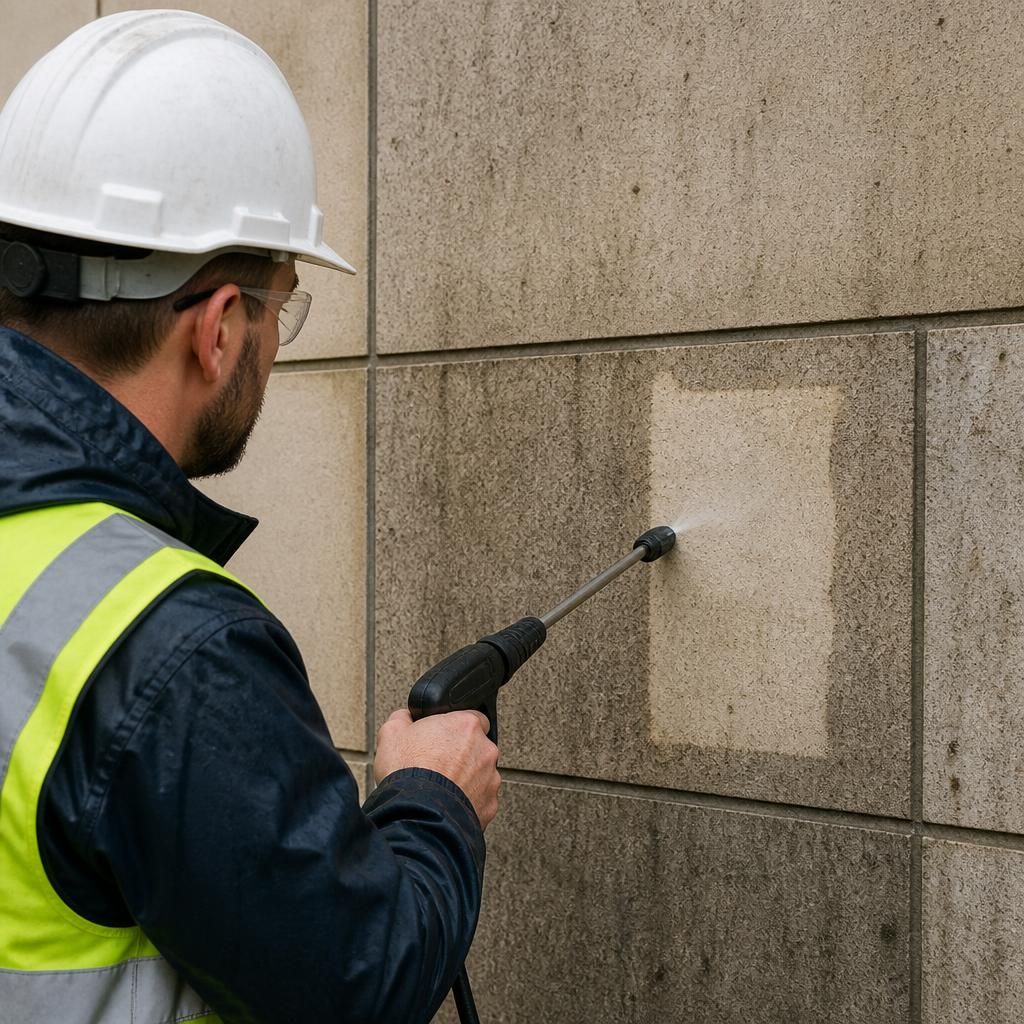
A test patch shows how a façade material will respond to the proposed pressure, temperature, nozzle and cleaning solution before larger-scale work begins. This is particularly important on older brickwork, natural stone, render, painted surfaces and coated cladding, where aggressive cleaning can cause erosion, marking, coating loss or water penetration.
The test area should be inspected while wet and again after drying. This helps identify changes in colour, texture, pointing, coating adhesion and surface finish that may not be visible immediately. If the substrate or finish shows damage, the cleaning method should be reduced or changed to a lower-pressure, steam or manual approach before work continues.