
What are the environmental considerations associated with façade pressure washing?
The environmental considerations of façade pressure washing include water consumption, wastewater and runoff control, chemical selection, and protection of surrounding surfaces, drains and vegetation. Responsible cleaning uses suitable pressure and temperature settings, biodegradable products where appropriate, and planned wastewater management to prevent pollutants entering soil or watercourses.
The main environmental considerations of façade pressure washing are water consumption, wastewater and runoff control, cleaning product selection, energy use, and protection of surrounding surfaces, drains, soil, vegetation and wildlife. A responsible cleaning method uses only the pressure, temperature, water volume and products needed for the façade, with suitable controls to prevent contaminated water entering the environment.
Water consumption should be considered at the planning stage. Pressure washing can use substantial volumes of water, particularly on large commercial façades or where several cleaning passes are required. Water use can be reduced by:
- Surveying the façade first so heavily soiled areas receive targeted treatment rather than unnecessary repeated washing.
- Using appropriate nozzles, flow rates and pressure settings for the material and contamination.
- Pre-treating suitable organic growth or ingrained deposits where this reduces the need for prolonged washing.
- Using equipment efficiently and avoiding uncontrolled overspray.
- Recovering and reusing water where the equipment and contamination allow it.
Using less water is not the only objective. A low-flow method that requires repeated cleaning may have a greater overall environmental impact than a carefully selected, more effective process. The method should therefore balance water efficiency with cleaning performance, surface protection and the number of visits required.
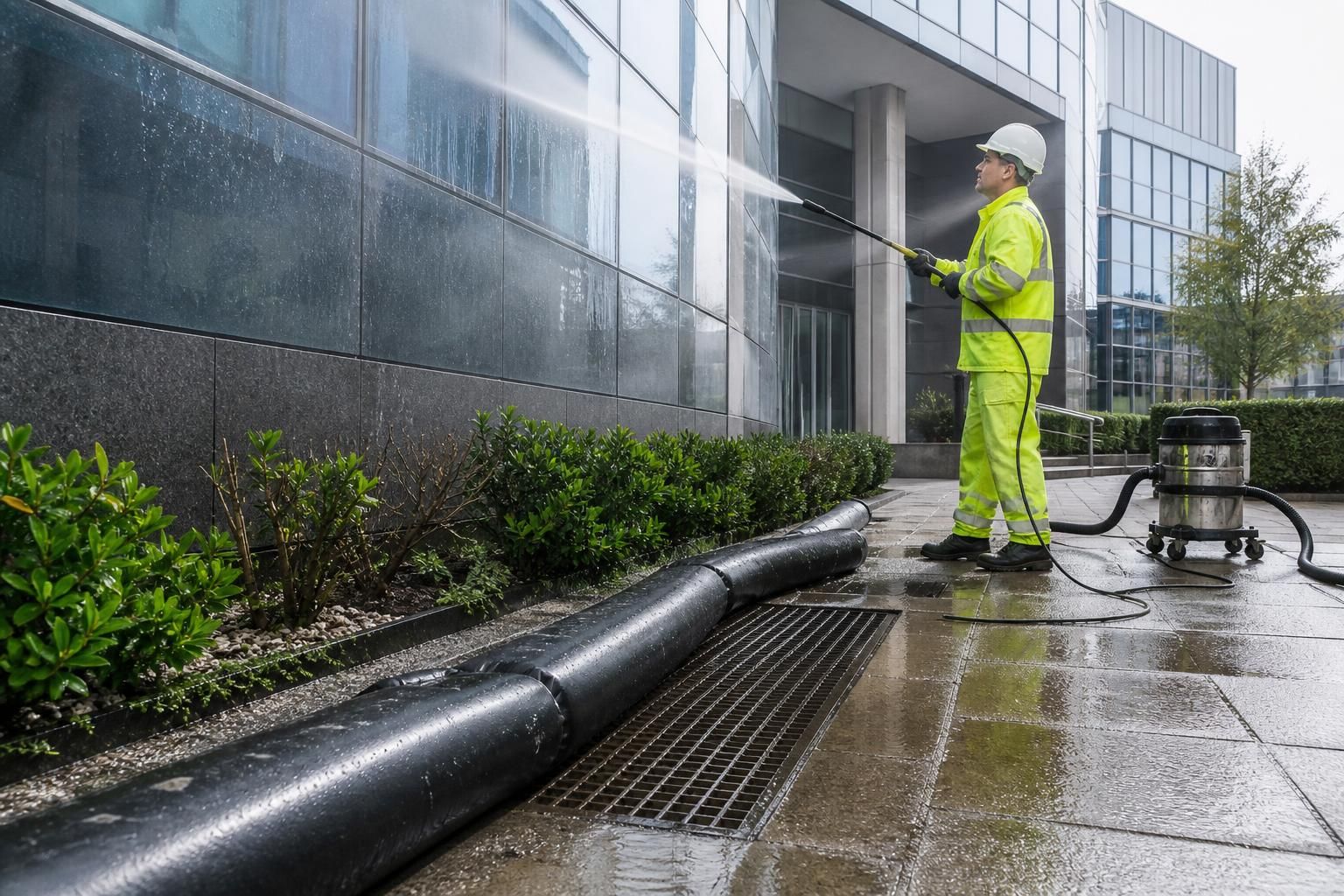
Wastewater and runoff are often the most important environmental controls. Façade wash water may contain dirt, algae, moss, oils, paint particles, cement residue, salts, traffic film or cleaning chemicals. It should not be allowed to flow into soil, surface-water drains, ponds, streams or other watercourses. Runoff can be controlled by using drain covers, bunding, temporary channels, wet vacuums, water-recovery systems and suitable containment measures. Recovered water and collected solids should be handled according to their contents and disposed of through an appropriate route.
Discharge to a foul sewer may require approval from the relevant sewerage provider, and contaminated or trade wastewater may need additional controls. The correct arrangements depend on the site, the type of contamination and local requirements. A site assessment and method statement should identify drainage points, confirm the proposed discharge or recovery arrangements, and set out what will happen if unexpected contamination is found.
Cleaning products must be selected for both the façade and the receiving environment. Product choice should take account of the substrate, the type of soiling, dilution requirements, contact time and the proposed wastewater arrangements. Biodegradable or low-impact products may be preferable where they are suitable, but biodegradable does not automatically mean that a product can be discharged without controls. Some substances can still affect aquatic life, soil or drainage systems during or shortly after breakdown.
Only the required amount of product should be mixed, and application should be controlled to prevent drift onto windows, planted areas, vehicles and neighbouring property. Safety data and product instructions should be followed, including requirements for storage, handling, rinsing and disposal. Combining products without confirmation of compatibility should be avoided, as this can create hazardous reactions or make wastewater more difficult to manage.
Energy use is also relevant, particularly when hot water or steam cleaning is specified. Heating water requires more energy than cold-water washing, although the higher temperature can improve cleaning efficiency and reduce the need for detergents or repeated passes in suitable applications. The most responsible option is not automatically the lowest-temperature method; it is the method that achieves the required result with an appropriate balance of energy, water, product use and working time. Well-maintained equipment, efficient operating practices and avoiding unnecessary idling can help reduce fuel consumption.
Façade cleaning can affect nearby vegetation, soil, wildlife and building users if the work is not properly controlled. Before work begins, surrounding planting should be identified and protected from chemical overspray, contaminated runoff and excessive pressure. Doors, windows, vents, lighting, signage and other adjacent features should also be protected. Where a building may support nesting birds or other protected wildlife, the timing and scope of work should be considered before access equipment and cleaning operations are arranged.
Noise, spray drift and disturbance should be managed as part of the environmental plan. Suitable working hours, equipment positioning and communication with the building’s occupants can reduce disruption. On occupied commercial or public sites, the cleaning sequence may be arranged to keep noisy activities away from sensitive areas or busy periods where practicable.
Surface selection has an environmental as well as a maintenance purpose. Excessive pressure, unsuitable heat or aggressive chemicals can remove coatings, damage pointing, open porous materials or create a need for repair and replacement. A pre-cleaning inspection, small test area and material-specific method help prevent that avoidable waste. The assessment should consider the façade material, existing coatings, joints, previous repairs, water sensitivity and the type of contamination present.
A responsible façade pressure washing plan will normally include:
- An inspection of the façade, surrounding ground and drainage layout.
- Identification of the soiling and any substances that may make the wastewater hazardous or difficult to discharge.
- Selection of the lowest-impact effective cleaning method, including pressure, temperature and product controls.
- Protection for drains, planting, adjacent surfaces, pedestrians and building services.
- Runoff capture, filtration, recovery or approved discharge arrangements.
- Safe storage and controlled use of detergents and other treatment products.
- Checks during the work to confirm that runoff is contained and the façade is not being damaged.
- Appropriate disposal of recovered water, sludge, debris and empty product containers.
For large or contaminated sites, environmental controls should be documented in the risk assessment and method statement, with the site team briefed before work starts. If conditions change, such as blocked drains, unexpected paint residues or heavy rainfall, the operation may need to pause while the containment and disposal arrangements are reviewed.
In practice, the most environmentally responsible façade cleaning is not defined by one particular machine or product. It is determined by the suitability of the method, the control of wastewater, the prevention of avoidable damage and the quality of the site planning. A properly assessed pressure washing programme can maintain the façade while limiting water use, chemical release, energy consumption and disturbance to the surrounding environment.
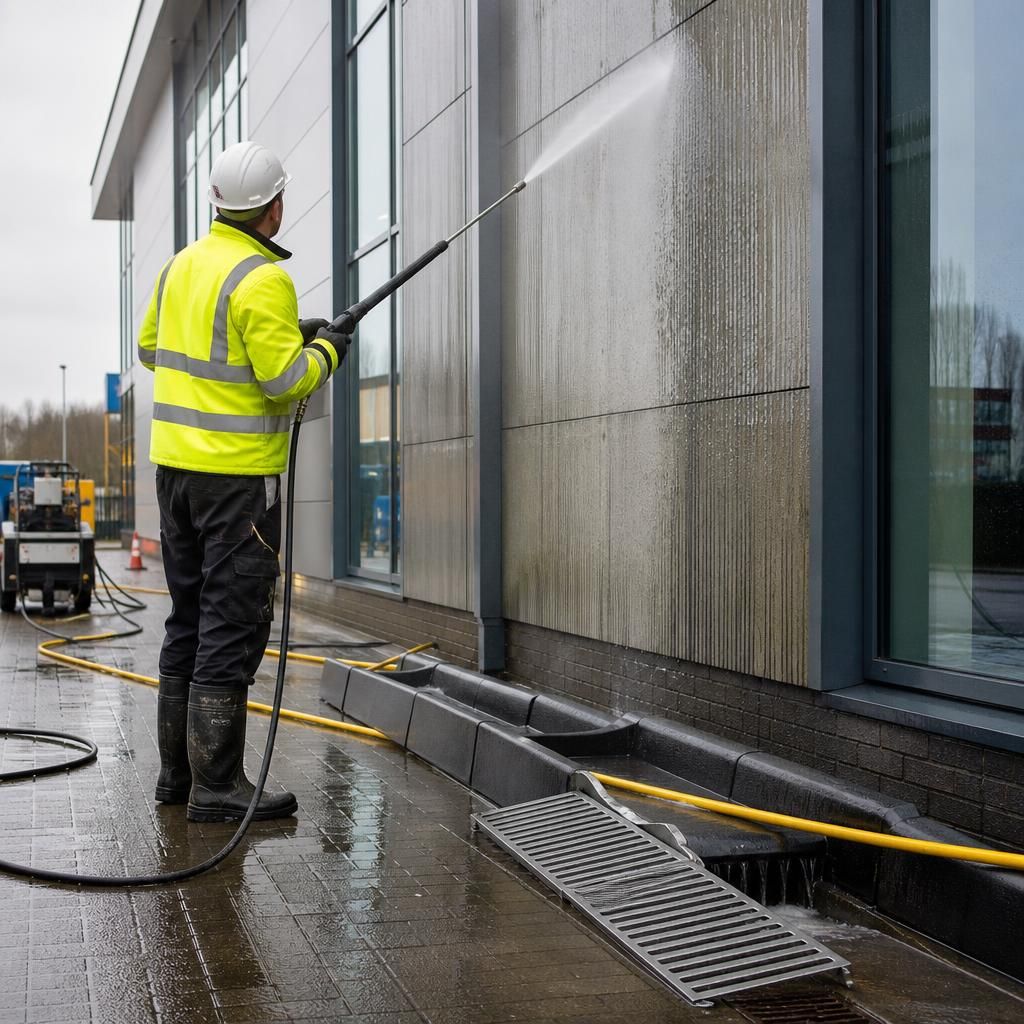
Controlling wastewater and runoff is one of the most important environmental considerations during façade pressure washing. Wash water can carry dirt, oils, algae, paint particles, salts and cleaning residues, so it must not be allowed to enter soil, surface-water drains, ponds or watercourses without suitable controls.
Before work starts, the drainage layout and likely contamination should be assessed. Drain covers, temporary bunding, collection channels and wet vacuums can help contain water, while recovery or filtration systems may be appropriate for larger or more contaminated sites. Any proposed discharge to a foul sewer should be confirmed with the relevant sewerage provider, and recovered water, sludge and debris should be handled through an appropriate disposal route.
Runoff controls should be checked throughout the clean, particularly if weather conditions change or unexpected residues are exposed. This prevents pollution while also reducing the risk of contaminated water reaching planting, neighbouring property or areas used by building occupants.