
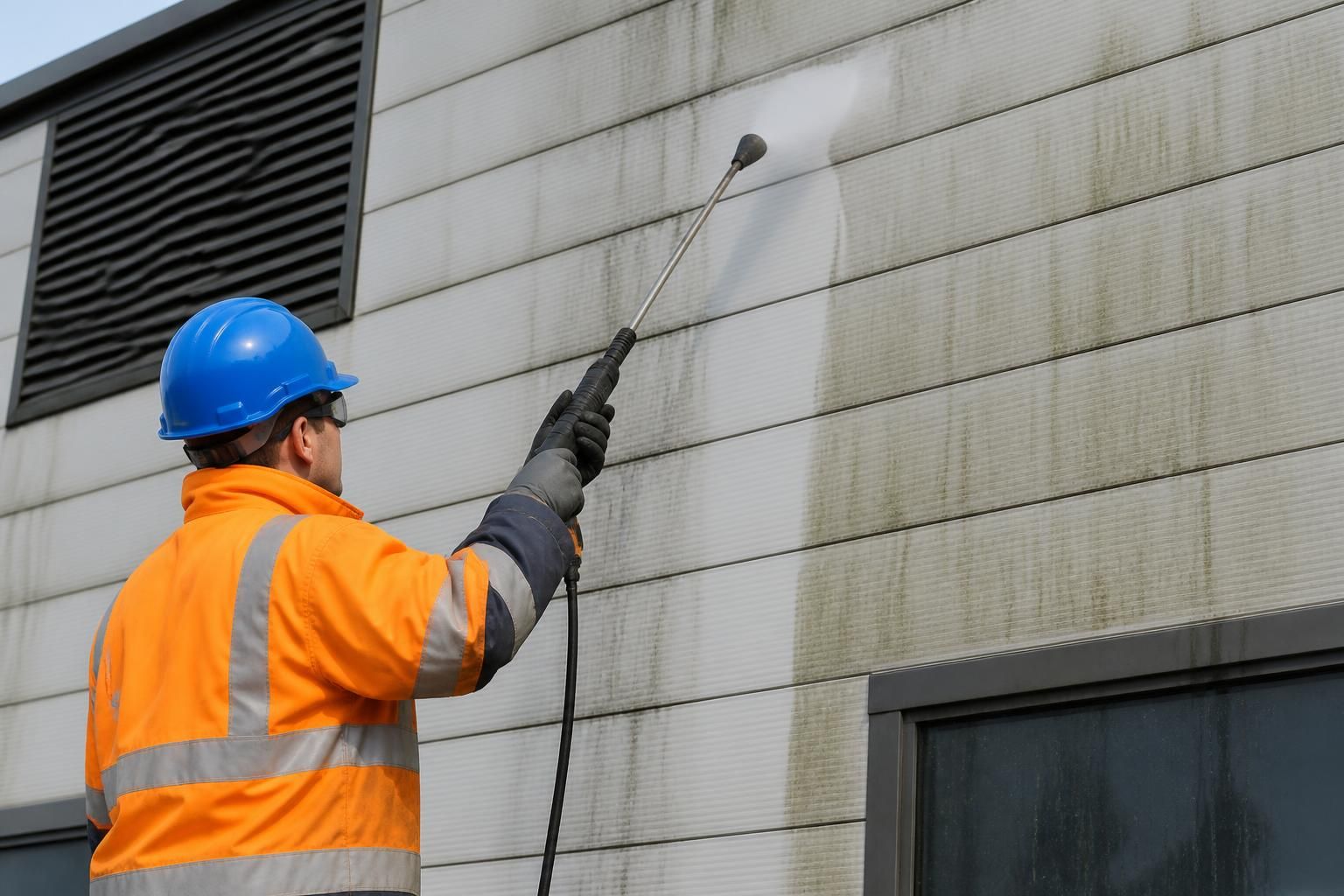
What steps are involved in the professional cleaning of UPVC cladding?
Professional UPVC cladding cleaning involves an initial inspection, identification of the cladding type and soiling, preparation of the work area, controlled application of suitable cleaning solutions, low-pressure rinsing, and a final quality check. Where required, the process also includes stain treatment or gentle restoration, with access and wastewater controls used to protect the building, workers and surrounding areas.
Professional UPVC cladding cleaning is a controlled process that starts with an inspection and ends with a documented quality check. The cleaning team identifies the cladding profile, surface condition and type of soiling before selecting compatible solutions, access methods, pressure levels and rinsing techniques. This approach removes dirt without damaging the UPVC, seals, joints, coatings or surrounding building materials.
1. Initial inspection and survey
The work begins with an assessment of the elevations, access requirements and existing condition of the cladding. This normally includes checking for general atmospheric dirt, algae, moss, bird fouling, traffic film, grease, rust marks, organic staining, paint, adhesive residue and graffiti. Particular attention is given to areas beneath roof lines, around windows, near loading bays and at low level, where soiling is often heavier.
The survey also identifies damage or defects that cleaning cannot rectify, such as cracked panels, failed sealant, loose trims, corrosion on fixings, open joints and water ingress points. These issues should be recorded before work starts so that they are not mistaken for cleaning failures or attributed to the cleaning process.
2. Identifying the cladding and selecting a method
UPVC cladding may have different profiles, finishes, textures and levels of weathering. The cleaning method is therefore selected for the specific surface rather than applied as a standard treatment to every elevation. The team considers whether the material is smooth or textured, coated or uncoated, heavily weathered or relatively sound, and whether adjacent surfaces could be affected by water or cleaning products.
Suitable cleaning solutions are chosen for the type of contamination and used at the lowest effective strength. Strong solvents, abrasive powders, aggressive pads and excessive pressure can mark or dull UPVC, damage decorative finishes or affect seals. A small, inconspicuous test area is treated first to confirm compatibility, dwell time, agitation requirements and the appearance after rinsing.
3. Preparing the work area
Before cleaning, the working area is isolated and prepared. This can include placing barriers and warning signs, protecting entrances and sensitive equipment, covering vulnerable nearby surfaces, and arranging safe access using suitable equipment. Vehicles, pedestrians, tenants and other contractors must be kept clear of the active work zone.
Drainage and wastewater arrangements are considered before water or cleaning solution is applied. Run-off should be controlled so that it does not enter unsuitable drains, contaminate landscaped areas or spread loosened dirt across clean surfaces. Where necessary, drain protection, collection, filtration or approved disposal arrangements are put in place.
4. Removing loose contamination
Loose dust, cobwebs, leaves and surface debris are removed before wet cleaning. This reduces the amount of material that could be spread during rinsing and helps the cleaning solution reach bonded dirt. Dry removal is carried out carefully around trims, vents, joints and other vulnerable details.
5. Applying the cleaning solution
The selected solution is applied evenly, usually from the bottom upwards where appropriate, to reduce visible run lines and prevent dirty solution from passing over areas that have already been treated. The product is allowed to dwell for the required time so it can soften atmospheric film and break down organic or greasy contamination.
Dwell time is monitored rather than left to chance. The surface must not be allowed to dry out, particularly in warm, windy or exposed conditions. Additional solution may be applied where soiling is particularly established, but excessive chemical strength is not a substitute for correct preparation and controlled agitation.
6. Agitating stubborn soiling
Soft brushes, suitable non-abrasive pads or specialised tools may be used to loosen bonded dirt. Agitation is controlled to avoid scratching the surface or forcing water behind joints and trims. Heavy deposits such as bird fouling, algae or traffic film may require more than one treatment, with the surface rinsed between stages where necessary.
Graffiti, paint, rust and adhesive residues are treated separately because they do not respond to the same products as ordinary dirt. Any specialist treatment is tested first, kept away from incompatible surfaces and followed by thorough rinsing. If staining has penetrated, faded or altered the surface, cleaning may improve its appearance without returning it to an original condition.
7. Low-pressure rinsing
Once the soil has been loosened, the cladding is rinsed using controlled water flow and pressure appropriate to its condition. The aim is to remove dissolved dirt and cleaning residue without driving water behind panels, into vents or through defective seals. High pressure is not automatically more effective and can cause surface damage, strip finishes or create problems inside the building.
Rinsing is normally carried out systematically, checking overlaps, underside edges, channels, window surrounds and other areas where residue can collect. Clean water is used until the run-off is clear and no detergent film remains on the cladding.
8. Detailed cleaning and gentle restoration
After the main wash, the team checks awkward or heavily soiled areas that may need additional attention. This can include cills, corner trims, fixing lines, canopy edges and areas below drainage outlets. Where suitable, a gentle restoration treatment may be considered for weathered or discoloured UPVC, but restoration is distinct from routine cleaning and depends on the condition and finish of the material.
Restoration cannot safely remove every mark. Deep scratches, permanent fading, chemical damage and degraded surfaces may require repair, replacement or a separate refurbishment decision. The condition should be explained clearly rather than treated with increasingly aggressive products.
9. Final inspection and handover
The completed elevations are inspected in suitable light from ground level and, where necessary, from the access equipment. The check looks for remaining visible soiling, streaks, missed sections, detergent residue, damage and water trapped around details. Any isolated areas requiring further treatment are corrected before the work is signed off.
The surrounding area is then left clean and safe, with protective coverings, barriers and wastewater controls removed when appropriate. A professional handover should record the areas cleaned, treatments used, access arrangements, any pre-existing defects and recommendations for future maintenance. This information helps determine whether the next visit should be routine cleaning, targeted stain treatment or a wider cladding restoration programme.
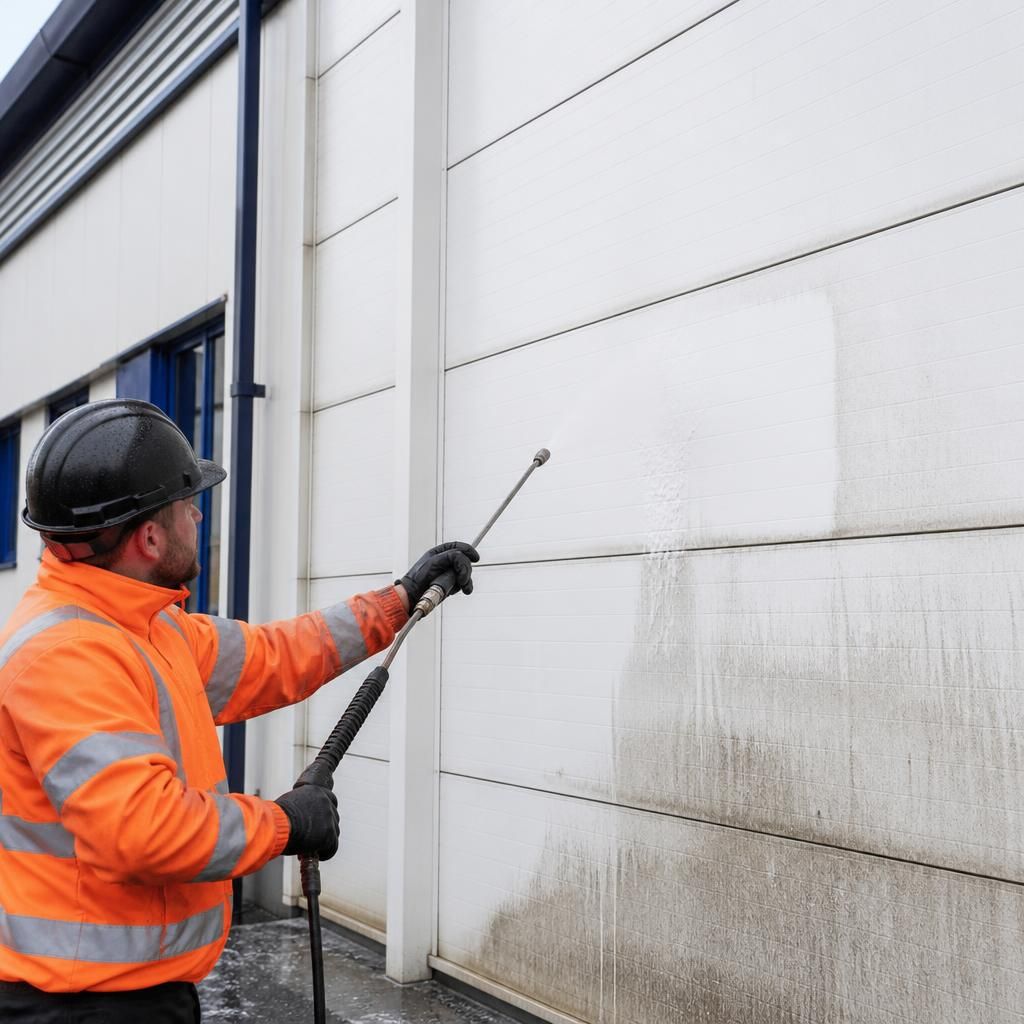
Professional UPVC cladding cleaning starts with a small test area before the main wash. This confirms that the cleaning solution, dwell time, agitation and water pressure are suitable for the cladding’s finish and condition.
The cleaner then works in manageable sections, loosening embedded dirt with a compatible solution and soft agitation before carrying out a controlled, low-pressure rinse. This prevents detergent residue, streaking and water being forced behind panels, trims or seals. Heavily stained areas, such as those affected by algae, bird fouling, grease or graffiti, are treated separately rather than exposing the whole elevation to unnecessarily aggressive chemicals.