
What safety measures should be in place during UPVC cladding cleaning to protect both workers and the building?
UPVC cladding cleaning should be carried out under a documented risk assessment and method statement, with suitable PPE, trained operatives, secure access equipment, exclusion zones and controls for water, chemicals and electrical hazards. Workers must use the correct pressure and cleaning products for the cladding, protect nearby surfaces and building openings, manage runoff safely, and inspect the façade before and after cleaning to prevent damage.
UPVC cladding cleaning should be controlled through a documented risk assessment and method statement, competent operatives, suitable personal protective equipment, secure access equipment and a clearly managed work area. The cleaning method must also control water pressure, chemicals, runoff, electrical risks, falling objects and potential damage to the cladding, fixings, seals, windows and nearby finishes.
Before work begins, the contractor should inspect the building and record the condition of the cladding. This inspection should identify cracked or distorted panels, failed joints, loose trims, damaged sealant, exposed fixings, fragile areas, staining that may require a different treatment, and any existing defects that could be mistaken for cleaning damage. The location of windows, doors, vents, roof edges, electrical equipment, sensitive landscaping and public access routes should also be included in the assessment.
A suitable risk assessment and method statement should set out the proposed cleaning products, equipment, access arrangements, pressure limits, emergency procedures and waste-water controls. Operatives should understand the document before starting work, and the controls should be reviewed if the building, weather, access conditions or cleaning method changes. Where the work involves height, traffic, public areas, hazardous contamination or specialist access, additional plans and permits may be required.
- Competent operatives: Workers should be trained in pressure washing, chemical handling, work at height, access equipment and the particular risks presented by the building. They should know how to test a small inconspicuous area before proceeding across the façade.
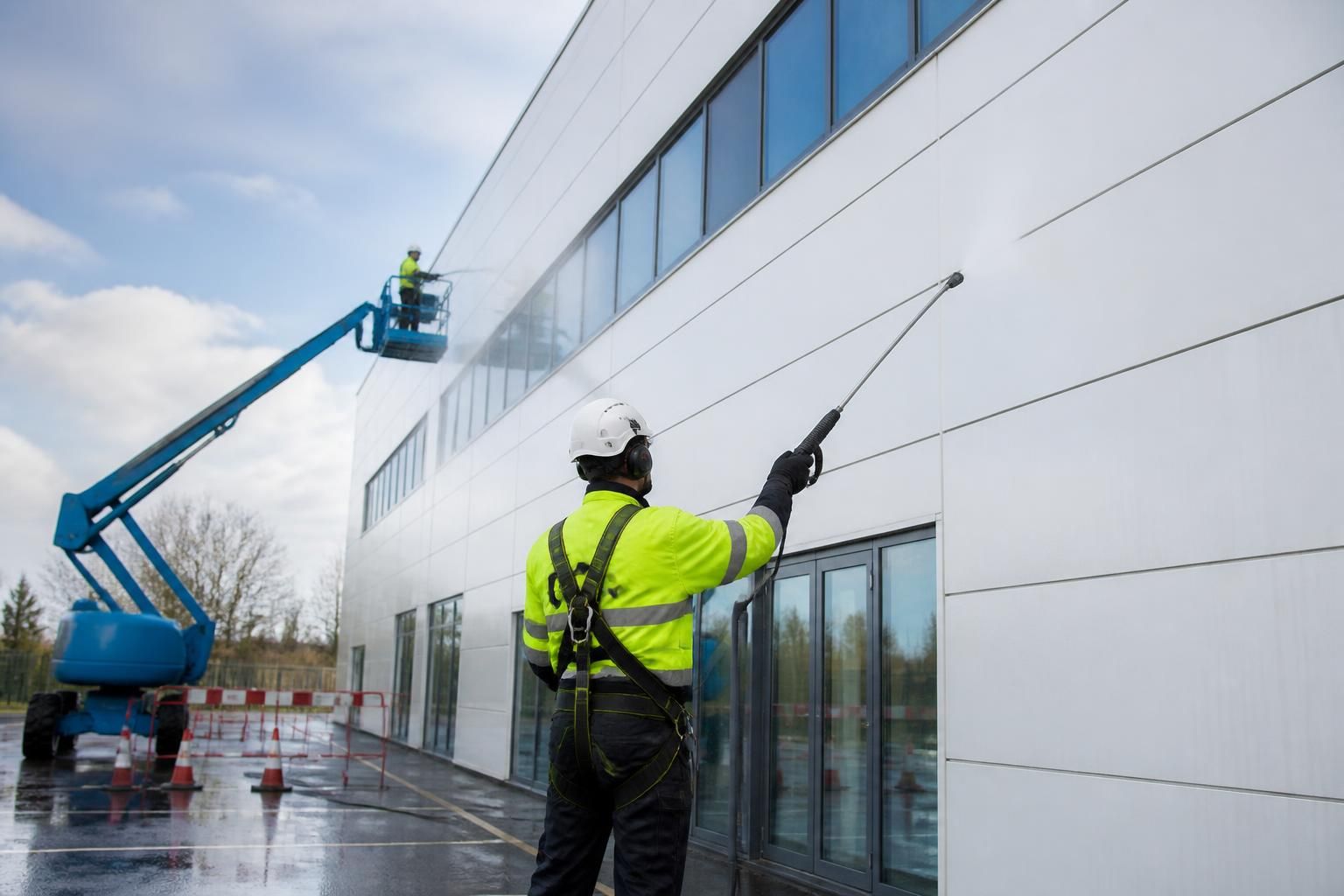
- Personal protective equipment: Depending on the task, this may include protective footwear with suitable grip, gloves compatible with the cleaning chemicals, eye or face protection, waterproof protective clothing, hearing protection and suitable head protection. Respiratory protection may be necessary where a product assessment identifies an inhalation risk.
- Secure access: Towers, mobile elevating work platforms, scaffold, ladders or rope-access systems should be selected for the building and the task rather than used interchangeably. Equipment must be inspected, positioned on suitable ground and used by people with the relevant training. Operatives should not overreach from platforms or use improvised access arrangements.
- Fall prevention: Work at height should be planned to avoid falls wherever possible. Guardrails, edge protection, travel restraint or fall-arrest systems should be used where appropriate, with a rescue plan in place for anyone who could be left suspended after a fall.
- Exclusion zones: The area below and around the work should be segregated with barriers and clear warning signs. Doors, paths, loading areas and vehicle routes may need temporary controls, banksmen or agreed changes to pedestrian and traffic movement. Tools, hoses and removed debris must not create trip hazards.
Water pressure must be matched to the condition and profile of the UPVC cladding. Excessive pressure can force water behind joints, lift trims, damage seals, mark the surface, loosen fittings or drive contamination into vents and openings. Cleaning should normally begin with the least aggressive effective method, using a controlled spray pattern and maintaining a safe distance from the surface. Operatives should avoid directing water into joints, laps, vents, damaged areas, electrical fittings and unsealed penetrations.
Cleaning solutions should be selected for UPVC and diluted and applied in accordance with the product safety data sheet. A product that is suitable for one façade material may stain, soften or discolour UPVC, metalwork, glass seals, painted surfaces or surrounding finishes. Chemicals should never be mixed unless the manufacturer specifically permits it. Containers must be labelled and securely stored, and operatives should have access to the required handling, first-aid and spill-response information.
Before applying a chemical, nearby windows, doors, vents, air-intake grilles, signage, lighting, cameras and other vulnerable items should be closed, isolated or protected. Plants, soil, vehicles and pedestrian areas may also require covering or temporary removal. Protection must not obstruct emergency exits or create additional fire, access or trip risks. Any protective sheeting should be secured so that it cannot become detached in wind.
Electrical safety is particularly important where water, powered equipment and external services are present. Electrical outlets, lighting, signage, distribution equipment and cables should be identified before cleaning and protected from spray and runoff. Damaged or exposed electrical components should be reported and isolated by a suitably authorised person rather than sprayed. Extension leads and powered equipment should be appropriate for the environment, routed safely and kept away from standing water.
Runoff must be contained and managed so that dirty water or chemical residue does not enter surface-water drains, neighbouring property, soil or watercourses without suitable controls. Drain covers, temporary bunding, wet vacuums, collection systems or other measures may be needed, depending on the site and the cleaning product. The disposal route should be agreed in advance, and any spill should be stopped, contained and reported in accordance with the site procedure and product guidance.
Weather conditions should be checked throughout the work. High winds can make access equipment and protective sheeting unsafe, while rain, frost or poor light can affect footing, visibility, chemical performance and runoff control. Work should be paused if conditions compromise the stability of the equipment, the safety of people nearby or the ability to control water and chemicals. Hot surfaces or direct sunlight may also cause cleaning products to dry too quickly and leave residue or streaking.
The cleaning team should carry out a controlled test area before full production cleaning. This confirms that the pressure, temperature, dwell time and product are suitable without causing colour change, gloss variation, surface marking or water penetration. The test should include nearby details where possible, such as trims, sealant, glazing and painted metalwork. The agreed method should be adjusted if the result is unsatisfactory.
During cleaning, operatives should work systematically and maintain communication with colleagues and the site contact. Hoses and cables should be managed as the work progresses, equipment should not be left pressurised when unattended, and access equipment should not be moved while occupied unless it is designed and approved for that operation. Any loose panel, unexpected leak, damaged seal, unusual surface reaction or change in site condition should be reported and assessed before work continues.
On completion, the façade and surrounding areas should be inspected for cleanliness, residual chemical, water ingress, damaged finishes, disturbed trims and blocked or contaminated drainage points. Protective coverings should be removed carefully, waste and runoff controls should be cleared responsibly, and windows, doors, vents and electrical items should be confirmed as safe to return to normal use. A completion record should note the method used, products applied, areas cleaned, defects identified and any recommendations for repair or future maintenance.
These measures protect both people and the building because they combine safe access and site control with material-specific cleaning practices. UPVC cladding should not be cleaned using a standard pressure-washing routine without first considering its age, construction, condition, fixings, joints and adjacent materials. Where defects or fragile areas are found, cleaning should be coordinated with the responsible building manager so that repairs, isolation or specialist assessment can be arranged before the façade is treated.
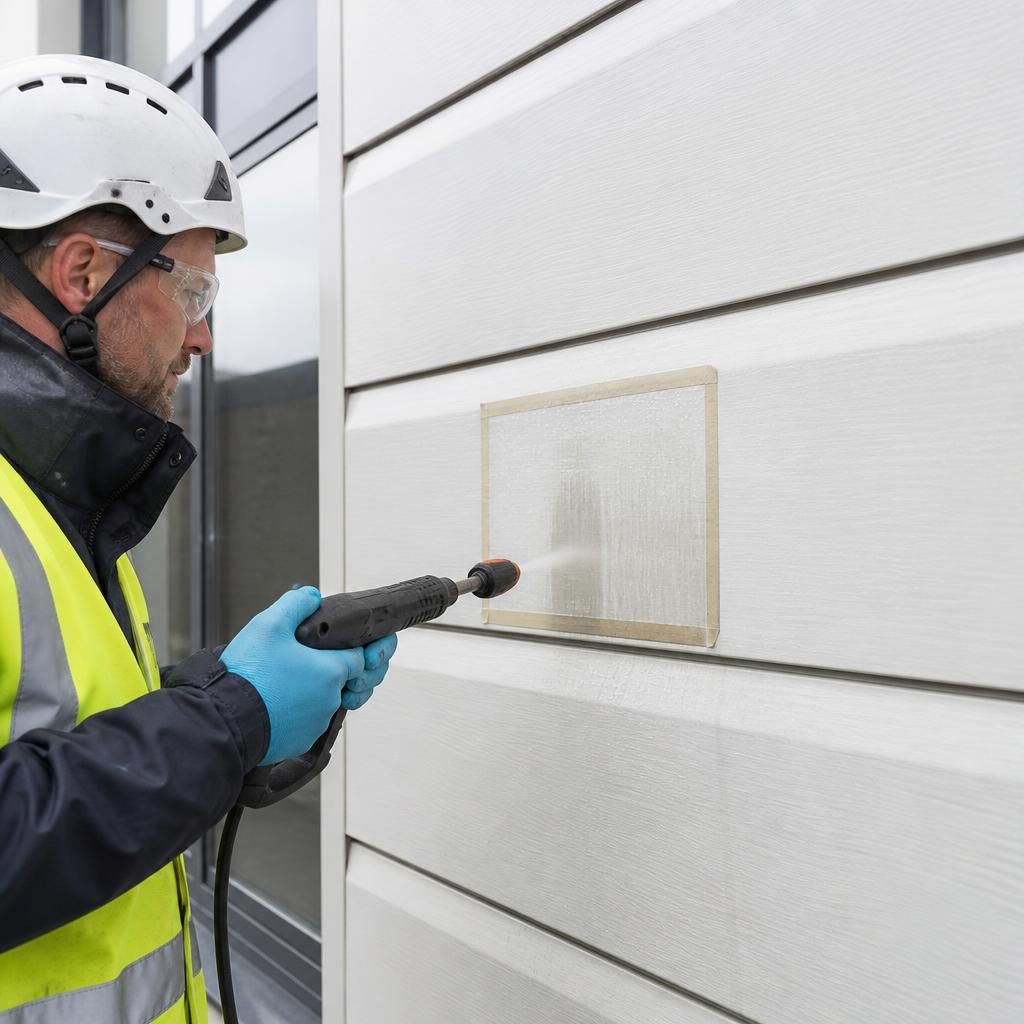
A controlled test area is an essential safety measure when cleaning UPVC cladding because it confirms that the selected pressure, temperature and cleaning solution will not damage the surface or adjacent materials. The test should be carried out in an inconspicuous location and assessed after rinsing and drying for colour change, gloss variation, marking, softened areas, staining or water penetration.
The test should also include trims, sealant, glazing and painted metalwork where these will be exposed during the main clean. If the result is unsuitable, the method must be adjusted before wider work begins. This simple step helps prevent avoidable damage and provides a clear basis for the cleaning controls recorded in the method statement.