
What precautions are necessary to protect UPVC cladding during cleaning?
Protect UPVC cladding during cleaning by using the least aggressive effective method, testing solutions on an inconspicuous area first, and avoiding excessive pressure, heat, abrasive tools and harsh chemicals. Operatives should also protect seals, joints, vents, windows and surrounding materials, control water run-off, and follow the cladding manufacturer’s guidance throughout the work.
Protecting UPVC cladding during cleaning requires the least aggressive effective method, careful control of pressure and heat, compatible cleaning products, and testing before full application. Operatives should also protect seals, joints, vents, windows and nearby materials, manage water run-off, and follow the cladding manufacturer’s recommendations throughout the work.
Inspect the cladding before cleaning. A pre-cleaning inspection should identify the cladding type, surface finish, age, previous coatings and any existing defects. Loose panels, cracked sections, failed sealant, exposed fixings, damaged trims and areas of chalking or discolouration may require repair or specialist treatment before cleaning begins. Cleaning a defective surface without accounting for these issues can allow water behind the cladding or worsen existing damage.
The inspection should also establish whether dirt is limited to surface deposits or whether the cladding has biological growth, atmospheric staining, oil contamination, graffiti or residue from previous treatments. Different contaminants may require different cleaning methods. Using a stronger chemical or more forceful equipment than necessary increases the risk of affecting the UPVC’s finish without improving the result.
Check the manufacturer’s guidance. Where available, cleaning instructions should be reviewed before work starts. These may specify suitable detergents, restrictions on pressure washing, water temperature limits and precautions for particular finishes or panel systems. If the cladding’s composition or finish is uncertain, a small trial area and a conservative cleaning method are preferable to assuming that all UPVC products will respond in the same way.
Use a test patch first. Any detergent, biocide or specialist treatment should be applied to an inconspicuous area and assessed after the recommended dwell time and rinsing. The test should check for colour change, streaking, surface dullness, softening, whitening, staining or any reaction with sealants and trims. A successful test area should be allowed to dry fully where practical, as some changes are less apparent while the surface is wet. The proposed method should be adjusted or rejected if the result is unsuitable.
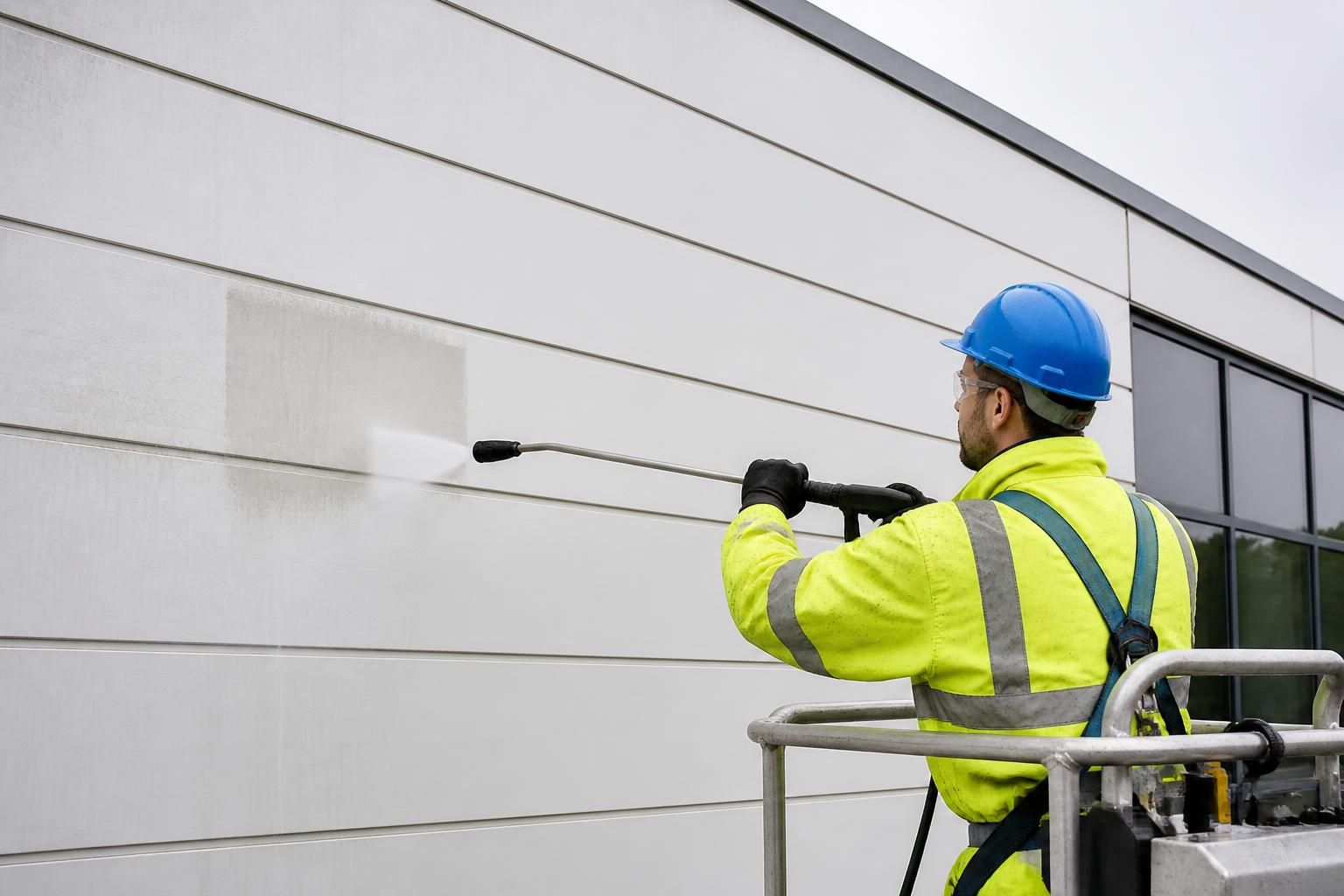
Choose the least aggressive effective cleaning method. Soft washing, low-pressure rinsing or controlled steam cleaning may be appropriate, depending on the contamination and the manufacturer’s guidance. Pressure should be sufficient to remove deposits but not so high that it drives water into laps, joints, fixings or ventilation openings. The lance should be kept at a safe working distance, moved continuously and directed in a way that avoids forcing water behind the panels.
High pressure applied close to the surface can mark or roughen the finish, lift edges, loosen trims and damage sealant. It can also spread contamination across adjacent areas. Broad fan patterns and controlled passes are generally safer than narrow, concentrated jets. Operatives should avoid directing water upwards into panel joints or behind flashings unless the system has specifically been designed to tolerate that approach.
Control heat carefully. Excessive heat can soften UPVC, distort panels, affect protective finishes and cause uneven changes in appearance. Steam cleaning may be suitable for some applications, but temperature, dwell time and working distance must be controlled. Heat should not be concentrated on one spot, particularly where panels are dark, exposed to direct sunlight or already showing signs of movement or distortion.
Use compatible chemicals and the correct dilution. Cleaning solutions should be selected for the contaminant and the cladding material. Strong solvents, abrasive compounds, aggressive caustic products and unapproved acids can attack the UPVC surface, fade its colour or damage sealants, gaskets and adjacent finishes. Products should never be mixed unless the manufacturer’s instructions expressly permit this. Correct dilution, controlled application and thorough rinsing are essential, as detergent residue can leave streaks or attract further dirt.
Biocidal treatments should be used only where biological growth is present and in accordance with the product instructions. They should not be allowed to dry on the cladding unless specifically intended for that use. Dwell times should be controlled so that the solution remains effective without unnecessarily extending contact with the surface.
Avoid abrasive cleaning equipment. Scouring pads, wire brushes, harsh scrapers and abrasive powders can leave fine scratches or permanently alter the sheen of UPVC. Soft brushes, suitable non-abrasive pads and clean equipment are safer choices where agitation is needed. Tools should be kept free from grit, rust and loose debris that could be dragged across the cladding.
Protect vulnerable details and surrounding materials. Windows, doors, vents, air-intake grilles, electrical fittings, lighting, signage and sensitive coatings should be covered or shielded where appropriate. Particular care is needed around seals, gaskets, movement joints, panel overlaps, corner trims and penetrations. Protection must not obstruct required ventilation or create a hazard for workers or building users.
Nearby brickwork, render, timber, painted surfaces, metals, roofing materials and landscaping may react differently to the cleaning solution or run-off. These areas should be protected, pre-wetted or rinsed as appropriate. Metal components should not be left in contact with a chemical solution, and any accidental splashes should be removed promptly using clean water and the approved procedure.
Manage run-off and rinsing. Dirty water and cleaning solutions should be prevented from collecting behind panels, entering vents or flowing onto vulnerable surfaces. Drainage points, gullies and downpipes should be checked before work begins, and run-off should be contained or directed in line with the site’s environmental controls. Thorough rinsing removes suspended dirt and chemical residue, but it should be carried out with controlled water flow rather than excessive pressure.
Cleaning should be planned around suitable weather conditions. Strong sunlight can cause products to dry too quickly and leave marks, while wind can spread spray, chemicals and contaminated water beyond the work area. Frost and very low temperatures may affect rinsing and increase the risk of water remaining in joints. The surface should be allowed to dry sufficiently for a proper inspection.
Use safe access without damaging the façade. Access equipment, ladders and platforms should be positioned so that they do not bear against panels, trims, gutters or fragile features. Padding and suitable standoff arrangements may be needed, and equipment should be moved rather than dragged across finished surfaces. Operatives should avoid standing on cladding, window sills or roof edges unless those components are specifically designed to support access loads.
After cleaning, the cladding should be inspected in dry conditions for remaining deposits, streaks, damage, displaced trims, failed sealant and signs of water ingress. Any defect or unexpected change in appearance should be recorded and reported rather than concealed by further aggressive cleaning. A method statement and site record should normally document the products used, test results, areas treated and any limitations identified.
These precautions reduce the likelihood of cosmetic damage and help preserve the cladding’s weather resistance. Where panels are badly weathered, brittle, coated, distorted or affected by unknown staining, a controlled trial and specialist assessment are safer than attempting to restore the entire elevation with high pressure or harsh chemicals.
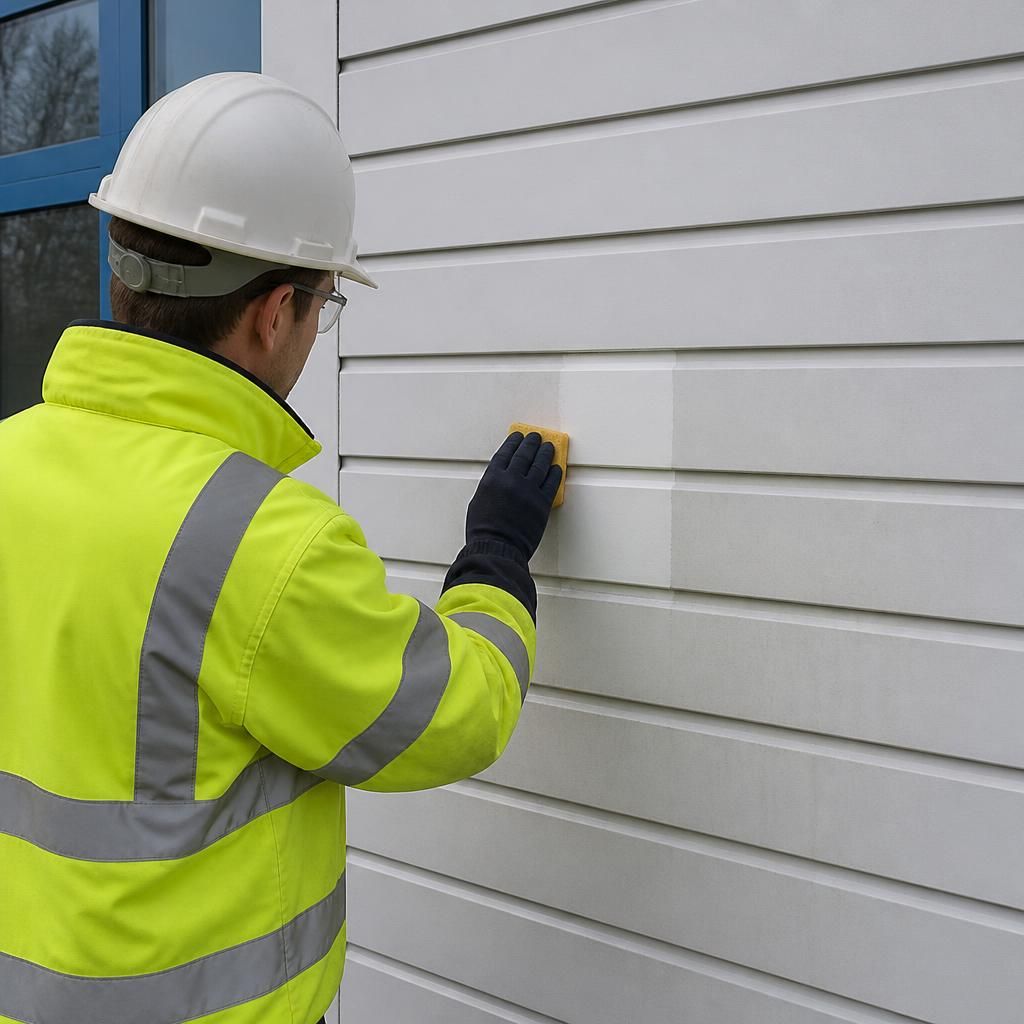
A small test patch is essential before cleaning the full UPVC elevation. It confirms that the proposed detergent, biocide, steam or rinsing method is compatible with the cladding’s surface finish and surrounding sealants.
The test area should be inconspicuous and assessed after the correct dwell time, rinsing and drying. Check for colour change, streaking, dullness, whitening, softening or damage to trims and seals. If any reaction occurs, the method should be adjusted or rejected before work continues. This precaution prevents a localised cleaning issue from becoming widespread cosmetic or material damage.