
What maintenance schedule should be followed for UPVC cladding to ensure long-term performance and aesthetic retention?
A UPVC cladding maintenance schedule should include routine visual inspections, gentle cleaning at planned intervals, and prompt repairs when damage, staining, seal failure or discolouration is identified. Arrange a formal inspection at least annually, while increasing cleaning and inspection frequency where cladding is exposed to heavy traffic, pollution, coastal conditions, industrial deposits or persistent moisture.
A suitable uPVC cladding maintenance schedule combines regular visual checks, planned gentle cleaning, periodic professional inspections and prompt repairs. The exact frequency should reflect the building’s exposure, cladding profile, colour, surrounding environment and manufacturer’s care instructions. Cladding on a clean, low-traffic site may need less frequent cleaning than panels beside a main road, industrial premises, construction activity, trees or the coast.
Maintenance should be treated as a continuing building-care responsibility rather than a one-off restoration project. Dirt, traffic film, algae, moss, bird deposits, industrial pollutants and persistent moisture can gradually affect the appearance of uPVC. If these deposits are left in place, they may make defects harder to identify and can contribute to staining, blocked drainage paths or deterioration around joints and fixings.
At handover or before starting a maintenance programme
- Obtain and review the cladding manufacturer’s cleaning and maintenance guidance. This should take precedence where it specifies approved products, equipment, dilution rates or restrictions.
- Record the cladding type, finish, colour, locations and areas that are difficult to access.
- Take clear reference photographs of elevations, joints, trims, corners, sills, penetrations and areas with existing marks or discolouration.
- Identify nearby sources of contamination, such as busy roads, loading bays, kitchens, manufacturing processes, trees, standing water or construction work.
- Note any previous repairs, sealant work, coating applications or known problems so that changes can be assessed accurately during later inspections.
A baseline record helps distinguish normal surface soiling from new damage. It also prevents an aggressive cleaning treatment being used where the underlying issue is failed sealant, water ingress, corrosion of associated components or a damaged panel.
Routine visual checks
Building staff or the facilities team should carry out a visual check as part of normal site inspections. The inspection does not usually require access equipment if the accessible areas can be viewed safely from ground level. Look for:
- New staining, streaking, chalking, fading or uneven discolouration.
- Algae, moss, mould-like growth, bird fouling, grease or deposits from nearby construction and industrial activity.
- Cracks, splits, dents, warping, loose panels, open joints or movement around trims.
- Failed or shrunken sealant around windows, doors, rooflines, service penetrations and junctions.
- Blocked or poorly draining channels, trapped debris and signs that water is being directed behind the cladding.
- Corrosion, staining or loose fixings on adjoining metalwork, flashings, gutters and support components.
Record the location and condition of any defect rather than relying on a general note such as “cladding requires attention”. Photographs taken from the same viewpoints make progressive deterioration easier to identify. Any loose panel, open joint, suspected water ingress or defect at height should be referred for competent assessment rather than disturbed during routine cleaning.
Planned cleaning
Arrange gentle surface cleaning when visible soiling begins to affect the appearance or before deposits become firmly established. Many commercial buildings benefit from cleaning at regular planned intervals, commonly aligned with the wider external maintenance programme. The interval should be shortened where the façade is exposed to traffic film, airborne pollution, salt, high humidity, tree debris, bird fouling or industrial deposits.
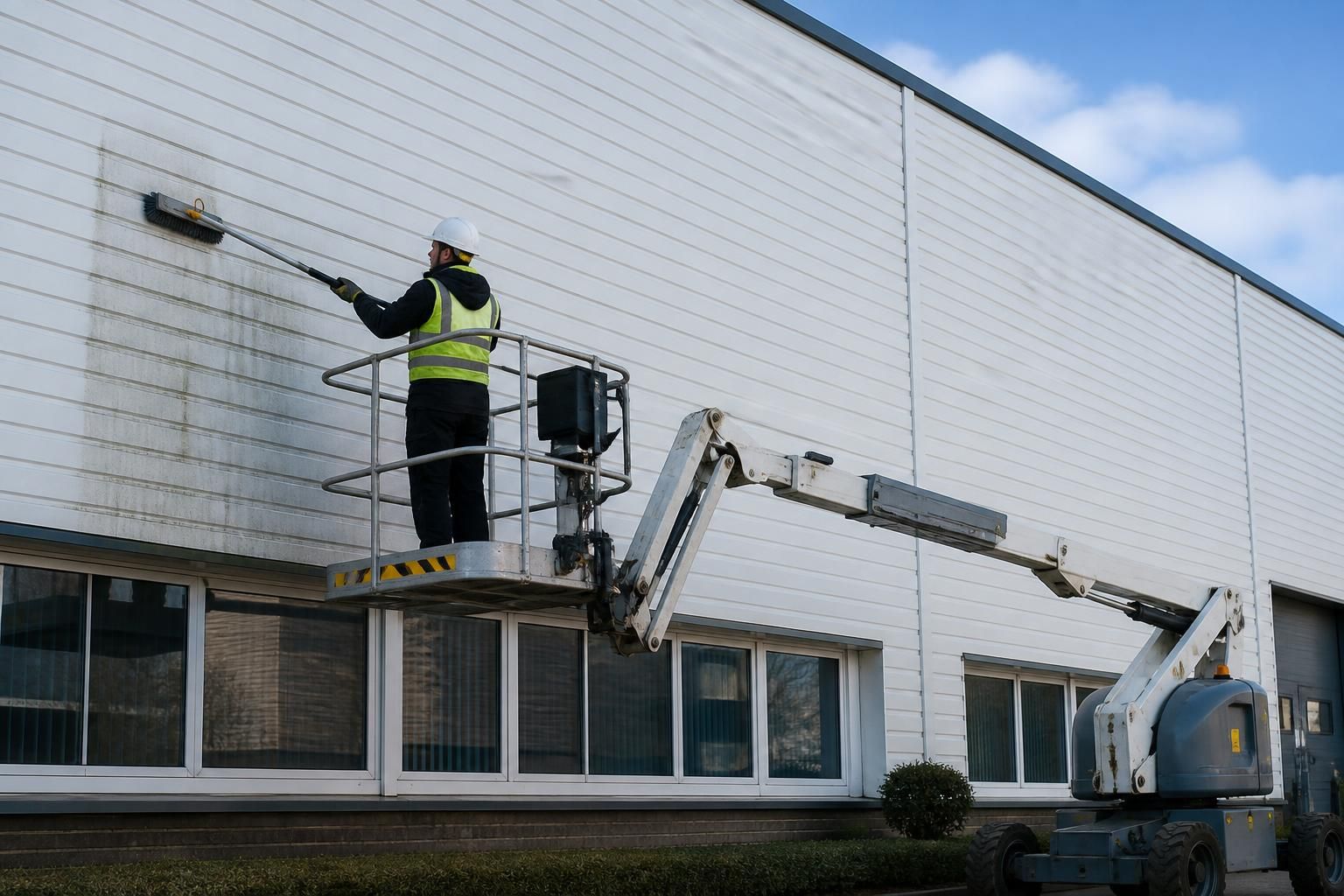
Cleaning should normally begin with the least aggressive effective method. A competent contractor will assess the surface, test the proposed process in an inconspicuous area and select a suitable combination of low-pressure washing, soft agitation or steam cleaning. The process should remove contamination without abrading the finish, forcing water behind joints or affecting adjacent materials. Strong solvents, abrasive pads, uncontrolled high pressure and unapproved chemicals should not be used simply to obtain a faster result.
Where cleaning is undertaken in stages, inspect the surface after rinsing and drying. Some marks become apparent only when the panel is dry, while apparent discolouration may indicate permanent weathering, chemical damage or a problem below the surface rather than removable dirt.
Seasonal and event-based checks
Inspect vulnerable areas after periods of severe weather, prolonged rainfall, strong winds, frost or nearby building work. Weather can expose loose trims, damaged sealant and drainage problems that were not obvious during a routine visual check. Construction, refurbishment or road works may also create dust, cement residue, paint splashes or other deposits that should be removed using a method appropriate to the contaminant and the cladding finish.
Autumn inspections are useful where trees overhang the building, as leaves and organic debris can retain moisture against surfaces and obstruct drainage. After winter, check joints, fixings, lower elevations and shaded areas for movement, biological growth and staining. In coastal or salt-exposed locations, rinsing and inspection may need to take place more frequently than at an inland site.
Formal professional inspection
Arrange a documented inspection at least annually, with more frequent reviews where the building has demanding exposure or a history of defects. A professional inspection should cover the full accessible façade rather than only the most visible elevation. It should assess the condition of panels, profiles, trims, seals, fixings, interfaces with windows and doors, drainage details and adjacent materials.
Access equipment may be needed to inspect high-level joints, roofline details and areas hidden from ground level. Any access system must be selected and operated through a suitable risk assessment, with controls for pedestrians, vehicles, fragile surfaces, overhead hazards and falling objects.
The inspection report should separate cleaning recommendations from repair requirements. It should identify the location, likely cause, urgency and recommended treatment for each issue. This distinction is important because cleaning a failed joint or heavily damaged panel will not resolve the underlying defect.
Repairs and follow-up
Deal with minor issues before the next planned clean where practicable. Replace failed sealant with a compatible product, secure or replace damaged trims, investigate loose fixings and renew panels that are cracked, distorted or beyond effective restoration. Do not seal over wet areas or conceal evidence of water ingress without establishing the cause.
After repairs, carry out a follow-up check to confirm that joints are sound, drainage paths remain clear and the repair has not introduced incompatible materials or visible variation. Update the building’s maintenance record with photographs, products used, access arrangements and any change to the recommended cleaning interval.
A practical schedule
- During routine site checks: look for visible contamination, damage, loose components, blocked drainage and failed sealant.
- After severe weather or nearby works: inspect exposed elevations and remove harmful deposits once it is safe and appropriate to do so.
- At planned cleaning intervals: clean using a tested, non-abrasive method suited to the finish and surrounding materials.
- At least annually: arrange a documented inspection of the complete accessible cladding system and review the maintenance plan.
- Whenever a defect is found: record it, assess its cause and arrange repair or specialist advice without waiting for the next routine clean.
The schedule should be reviewed after each professional clean or inspection. If deposits return quickly, the building may need more frequent cleaning, improved drainage, changes to nearby activities or investigation of a persistent moisture source. Consistent records and early intervention protect the appearance of uPVC cladding while reducing the likelihood that a minor maintenance issue develops into a more disruptive repair.

A suitable UPVC cladding maintenance schedule combines routine visual checks, planned gentle cleaning and a documented professional inspection at least annually. The interval should be adjusted for exposure: façades beside busy roads, industrial sites, trees, coastal air or persistent moisture may require more frequent attention.
During each check, look for staining, biological growth, blocked drainage paths, failed sealant, loose trims, damaged panels and signs of water ingress. Record defects with photographs and arrange competent assessment where access or repairs are required. Cleaning should use the least aggressive effective method and be followed by a dry-surface inspection, as permanent discolouration or seal failure will not be resolved by removing surface dirt alone.
Arrange Your UPVC Cladding Maintenance Inspection
Arrange a professional UPVC cladding maintenance inspection to assess cleaning needs, sealant, drainage, fixings and any areas requiring repair. Contact Encanto Exterior Cleaning to review your maintenance schedule and plan the appropriate next steps.