
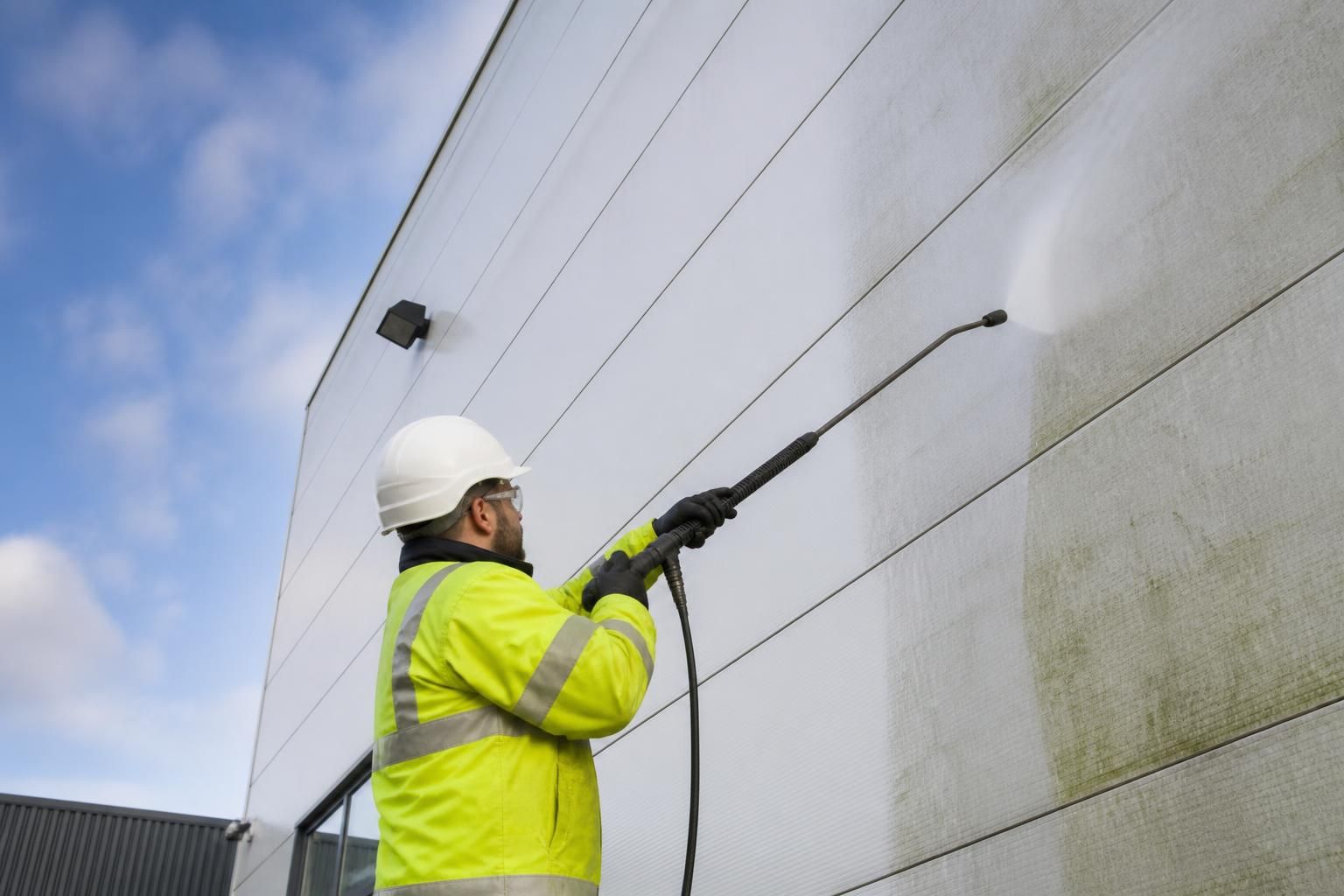
What factors determine the cost of UPVC cladding cleaning services?
The cost of UPVC cladding cleaning services is determined mainly by the total cladding area, building height and access requirements, the level and type of soiling, and the cleaning method needed. Surface condition, site access, water and power availability, and any additional restoration or protective work can also affect the final quotation.
The cost of UPVC cladding cleaning services is determined primarily by the total area to be cleaned, building height and access requirements, the type and severity of soiling, and the cleaning method required. The condition of the cladding, site logistics, available water and power, and any restoration or protective work can also affect the final quotation.
Cladding area and layout
The total surface area is a major pricing factor because it determines the labour, equipment use, water consumption and cleaning time involved. A large, uninterrupted façade is generally more efficient to clean than a smaller building with numerous elevations, recessed sections, canopies, loading areas or intricate architectural details.
The quotation may also take account of areas that are difficult to measure or reach, such as cladding above entrances, behind service installations or around rooflines. Windows, signage, vents and other fixtures may need to be worked around carefully, increasing the time required even when the overall cladding area is modest.
Building height and access
Access arrangements often have a significant effect on the price. Low-level cladding may be reachable using ground-based equipment, whereas taller elevations may require mobile elevating work platforms, powered access equipment, scaffold or specialist reach systems. The most suitable option depends on the height, ground conditions, façade design and the distance between the equipment and the building.
Access costs can include equipment hire, delivery, setup, inspection and trained operators. Where a machine cannot be positioned directly beside the building, additional manoeuvring or working time may be necessary. Restricted yards, narrow service roads, overhead obstructions and uneven ground should be identified during the survey because they can change the access method required.
Type and severity of soiling
Light surface dust and loose dirt are usually less time-consuming to remove than traffic film, algae, moss, bird deposits, atmospheric staining, oil contamination or ingrained pollution. Different contaminants require different treatment times, pressures and cleaning solutions.
Staining may also be more concentrated on elevations exposed to busy roads, prevailing weather or nearby industrial activity. Where deposits have built up over a long period, repeated treatment or gentle agitation may be needed rather than a single wash. This increases labour and may require additional rinsing to prevent residues drying on the surface.
Cleaning method and equipment
The chosen method affects both the work rate and the equipment needed. Depending on the cladding finish and contamination, cleaning may involve controlled pressure washing, soft washing, steam cleaning, specialist detergents or a combination of techniques. UPVC should be cleaned using a method appropriate to its condition, surface profile, seals and adjacent materials.
Pressure alone is not always the quickest or safest solution. Lower-pressure cleaning with suitable pre-treatment may be necessary where the surface is weathered, the joints are vulnerable or nearby materials could be damaged. Steam cleaning can be useful for certain deposits but may require slower, more controlled application. The quotation should therefore reflect the method needed to achieve a satisfactory result without over-cleaning the cladding.
Condition of the UPVC cladding
Sound, well-maintained cladding is generally more straightforward to clean than panels affected by chalking, discolouration, brittle seals, failed coatings, cracks or previous chemical damage. A pre-cleaning inspection is important because cleaning can reveal existing defects that were hidden beneath dirt and organic growth.
If panels or trims are loose, damaged or particularly weathered, the cleaning plan may need to be adjusted. Additional care, hand cleaning or minor preparation may be required. Cleaning contractors should distinguish between removable dirt and permanent fading, oxidation or material deterioration, as cleaning cannot reverse every form of discolouration.
Restoration and additional treatments
A standard maintenance clean is different from a restoration project. If the cladding has been neglected, the scope may include intensive stain removal, treatment of biological growth, multiple cleaning stages, hand finishing or the removal of adhesive and other residues. These tasks require more time and specialist products than routine cleaning.
Protective treatments may also be considered after cleaning. Their suitability depends on the cladding type, its existing finish and the manufacturer’s requirements. Any treatment should be specified separately so that the quotation clearly shows the cost of cleaning and the cost of optional protection or restoration work.
Site access and operational constraints
Commercial premises often need to remain operational while cleaning takes place. The price may be affected by requirements to work around staff, visitors, deliveries, vehicles, tenants or public areas. Cleaning near entrances, pedestrian routes and loading bays may require phased working, temporary barriers, banksmen or out-of-hours attendance.
Parking restrictions, permits, security procedures and limited equipment storage can also add preparation time. Where water run-off could enter drains or affect neighbouring property, suitable containment and recovery arrangements may be needed. These environmental and site-control measures are part of responsible commercial cleaning rather than optional extras.
Water, power and drainage
Ready access to a suitable water supply and electrical power can make the work more efficient. If these services are unavailable, unsuitable or located far from the working area, the contractor may need to provide additional equipment such as tanks, hoses, generators or longer cable runs.
Drainage is equally important. Depending on the contaminants and cleaning products used, wastewater may need to be controlled, collected or disposed of in accordance with site and environmental requirements. A difficult drainage arrangement can increase setup and handling time.
Health, safety and compliance requirements
Commercial and industrial cleaning work must be planned around safe access, work at height, equipment operation, public protection and the condition of the building. The scope may require a site-specific risk assessment, method statement, exclusion zones, traffic management or coordination with the client’s facilities team.
These requirements do not necessarily indicate a problem with the project; they reflect the controls needed to protect workers, occupants, visitors and the building. The cost should account for competent personnel, appropriate access equipment and the time required to set up and dismantle safely.
Frequency and contract scope
Regular planned cleaning can be priced differently from a one-off intensive clean because recurring work may prevent heavy build-up and make future visits more predictable. A maintenance programme may also allow work to be coordinated with other external cleaning or planned site activities.
For larger estates or multiple buildings, the quotation may be based on a phased programme rather than a single visit. Combining elevations or sites can sometimes reduce duplicated mobilisation and setup, although the final cost still depends on the access, condition and requirements of each location.
What should be included in a quotation?
A useful quotation should state the areas included, the proposed cleaning method, access arrangements, expected preparation, treatment of wastewater, working hours and any exclusions. It should also identify whether restoration, stain removal, repairs, protective treatments, traffic management or out-of-hours work are included or priced separately.
Photographs can help with an initial assessment, but a site survey is usually the most reliable way to establish the scope. The survey allows the contractor to inspect the cladding, test suitable cleaning methods where necessary, assess access and identify risks that cannot be confirmed remotely.
For an accurate price, provide details of the building elevations, approximate cladding areas, height, known contamination, access restrictions, preferred working times and the availability of water, power and drainage. A tailored quotation can then reflect the actual work required rather than relying on a broad price based only on building size.
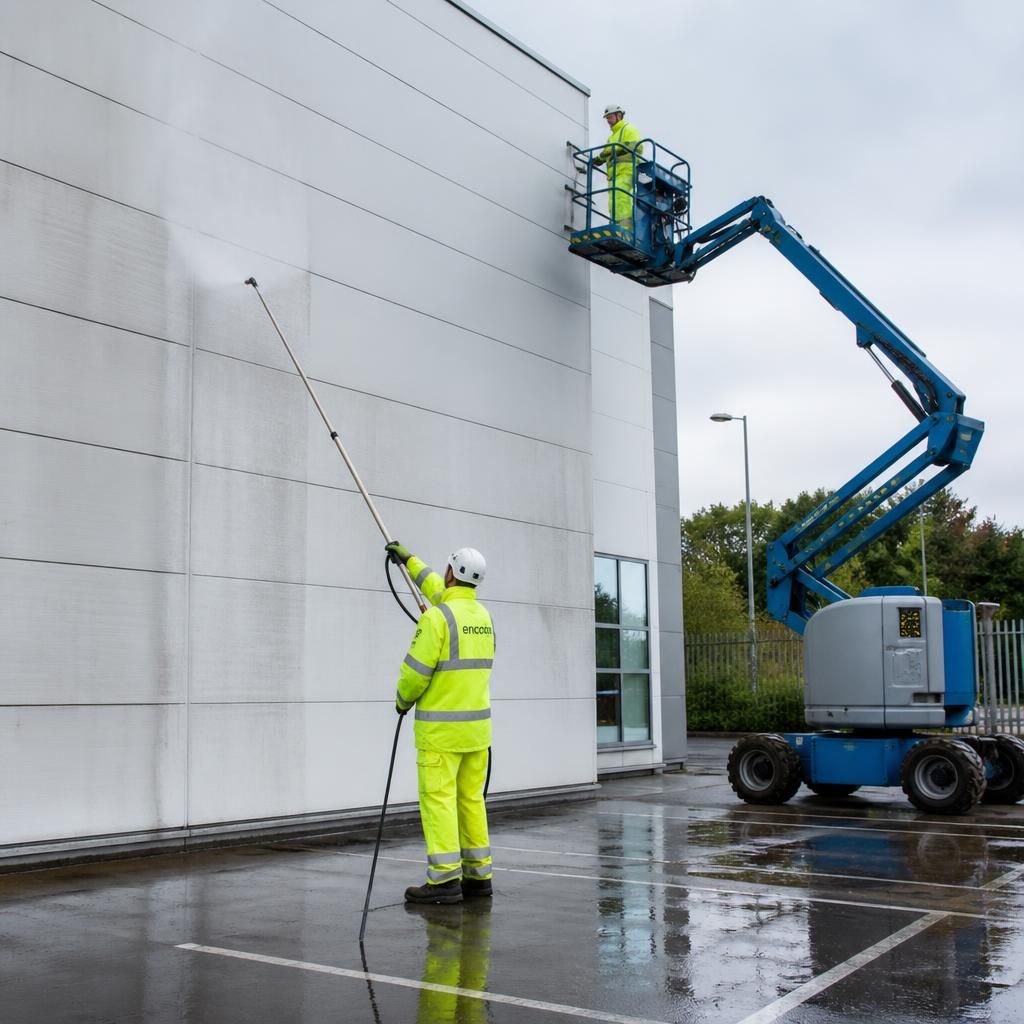
Building access is often a significant factor in the cost of UPVC cladding cleaning, particularly where elevations are high, obstructed or difficult to reach from ground level. The required solution may include specialist reach systems, a mobile elevating work platform, scaffold or other access equipment, depending on the building design and ground conditions.
A quotation should account for equipment delivery, positioning, setup, inspection and safe operation, as well as any traffic management or exclusion zones needed to protect people and vehicles. Restricted yards, uneven ground, overhead obstructions and limited working space can all increase preparation time. A site survey helps confirm the safest and most efficient access method before the cleaning price is finalised.