
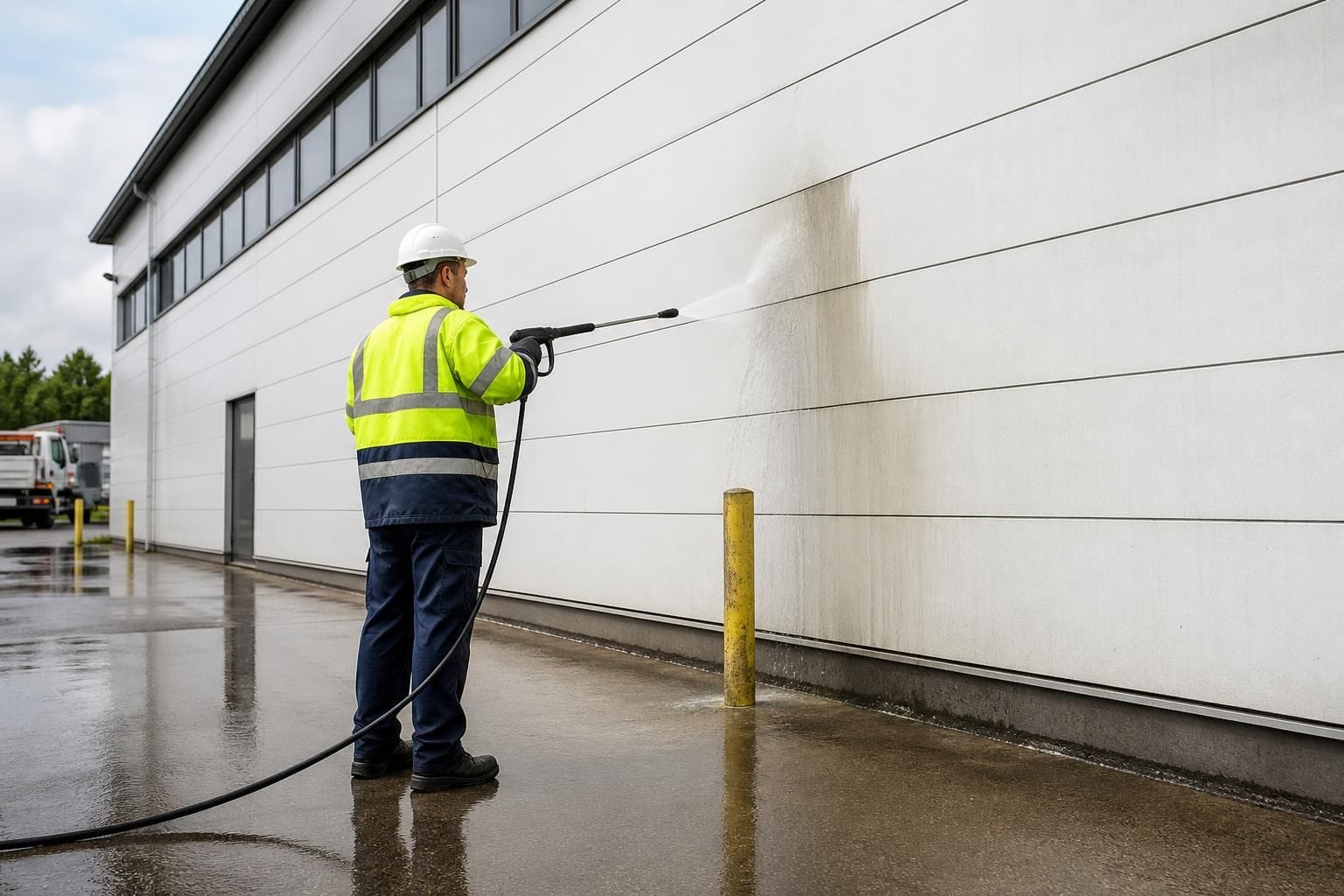
What are the key benefits of regular UPVC cladding cleaning?
Regular UPVC cladding cleaning removes dirt, algae, staining and pollutants before they cause persistent discolouration or surface deterioration. It helps maintain a professional appearance, protect the cladding’s finish, support longer service life and identify damage or maintenance issues at an early stage.
Regular UPVC cladding cleaning removes surface dirt, traffic film, algae, mould, atmospheric pollutants and staining before they become difficult to remove or contribute to deterioration. The main benefits are a cleaner and more professional appearance, better protection of the cladding’s finish, easier maintenance, earlier identification of defects and the potential to extend the material’s useful service life.
It preserves the appearance of the building
UPVC cladding is exposed to rain, airborne pollution, dust, bird deposits and organic growth throughout the year. These contaminants can leave façades looking dull, streaked or uneven, particularly around rooflines, windows, loading areas and sheltered elevations. Routine cleaning restores a more consistent appearance and helps retain the intended colour and finish of the cladding.
This is particularly important for commercial premises, managed property portfolios, retail units, offices and industrial buildings where the external condition of the building contributes to how tenants, visitors, staff and customers assess the site.
It helps prevent staining from becoming established
Some contamination is relatively easy to remove when it is loose or recent. If it is left in place, repeated wetting and drying can allow staining, algae and biological growth to become more firmly attached to the surface. Pollutants may also combine with moisture to form deposits that require more intensive treatment.
Regular cleaning reduces the build-up of these deposits and can make future maintenance more straightforward. It does not guarantee that every mark will disappear, particularly where staining has penetrated a weathered finish, but it reduces the likelihood of long-standing discolouration.
It protects the cladding’s surface and finish
Routine removal of contaminants helps limit the time that moisture, organic growth and corrosive atmospheric deposits remain against the UPVC surface. This supports the condition of the outer finish and can reduce avoidable surface deterioration, including persistent marking, loss of uniformity and premature weathering.
Cleaning must be carried out using methods suitable for UPVC. Excessive pressure, unsuitable chemicals, abrasive tools or concentrated heat can damage the surface, seals, joints or surrounding materials. Professional cleaning therefore involves assessing the cladding, selecting an appropriate process and testing it in a discreet area before work proceeds across the elevation.
It can support a longer service life
Clean cladding is not automatically free from defects, and cleaning cannot reverse cracking, failed fixings, damaged joints or advanced weathering. However, controlling surface contamination helps maintain the material in serviceable condition and reduces the risk that minor maintenance issues are concealed by dirt or biological growth.
Early attention to contamination and defects can help avoid more extensive remedial work. Keeping records of cleaning and inspection also provides useful information when planning planned maintenance, refurbishment or replacement.
It helps reveal defects at an earlier stage
Dirt can obscure staining caused by water ingress, damaged sealant, open joints, loose panels, corrosion on fixings or impact damage. Once the surface has been cleaned, these issues are easier to see and report. A professional contractor can identify visible concerns during the works, although a cleaning inspection is not a substitute for a detailed building survey.
Early identification is valuable because the underlying cause can be investigated before it leads to more extensive damage to the cladding system or the structure behind it.
It supports safer and more hygienic external areas
Organic growth and accumulated deposits can make surfaces appear neglected and may spread to adjacent areas, including walkways, canopies and service yards. Cleaning the cladding and associated external surfaces as part of a planned programme helps maintain a more controlled and hygienic environment.
Where cleaning involves areas above entrances, pedestrian routes or operational spaces, the work should be planned with suitable access equipment, exclusion zones, runoff control and protection for people, vehicles and property.
It can reduce long-term maintenance costs
Regular cleaning is generally easier to plan than infrequent restoration after heavy contamination has been allowed to accumulate. A maintenance programme can reduce the need for aggressive treatment, specialist stain removal or extensive access arrangements caused by neglected elevations.
The most cost-effective interval depends on the building’s location, exposure, cladding profile, surrounding vegetation, traffic levels and the type of contamination present. Coastal, industrial, urban and heavily shaded sites may require closer monitoring than sheltered premises in cleaner surroundings.
It helps maintain a consistent property standard
For property managers and organisations responsible for several buildings, scheduled UPVC cladding cleaning provides a consistent standard across the estate. Planned work can be coordinated with façade inspections, roof maintenance, window cleaning and other external services, reducing disruption and making budget planning more predictable.
A documented programme should record the areas cleaned, the condition observed, any limitations caused by weather or access, and recommendations for follow-up work. This creates a practical maintenance history rather than relying on appearance alone.
It supports professional presentation and compliance expectations
A clean external envelope contributes to the presentation of a workplace and can help meet landlord, tenant, facilities management or site-management standards. In some sectors, maintaining clean and well-presented premises forms part of wider property, environmental or operational procedures. Cleaning does not by itself establish compliance with every legal or contractual requirement, but it supports good site management and demonstrates that the external fabric is being maintained.
Regular cleaning is most effective when combined with inspection
The benefits are greatest when cleaning is treated as planned exterior maintenance rather than a one-off cosmetic service. Before work begins, the cladding should be assessed for its material condition, previous coatings, vulnerable details, access requirements and likely contamination. After cleaning, the surface should be checked for remaining staining, damage and areas requiring further investigation.
Cleaning frequency should then be reviewed according to how quickly contamination returns and whether the building’s use or surroundings change. A suitable method may include low-pressure washing, steam cleaning or carefully controlled chemical treatment, depending on the condition of the UPVC and the nature of the deposits. The objective is to remove contamination effectively without damaging the cladding, joints, seals or adjacent surfaces.
In summary, regular UPVC cladding cleaning maintains appearance, limits the build-up of damaging deposits, supports the condition and service life of the cladding, improves the visibility of defects and helps property owners plan maintenance before problems become more disruptive. It should form part of a wider inspection and maintenance programme, with the cleaning method and frequency matched to the building rather than applied as a standard treatment to every site.
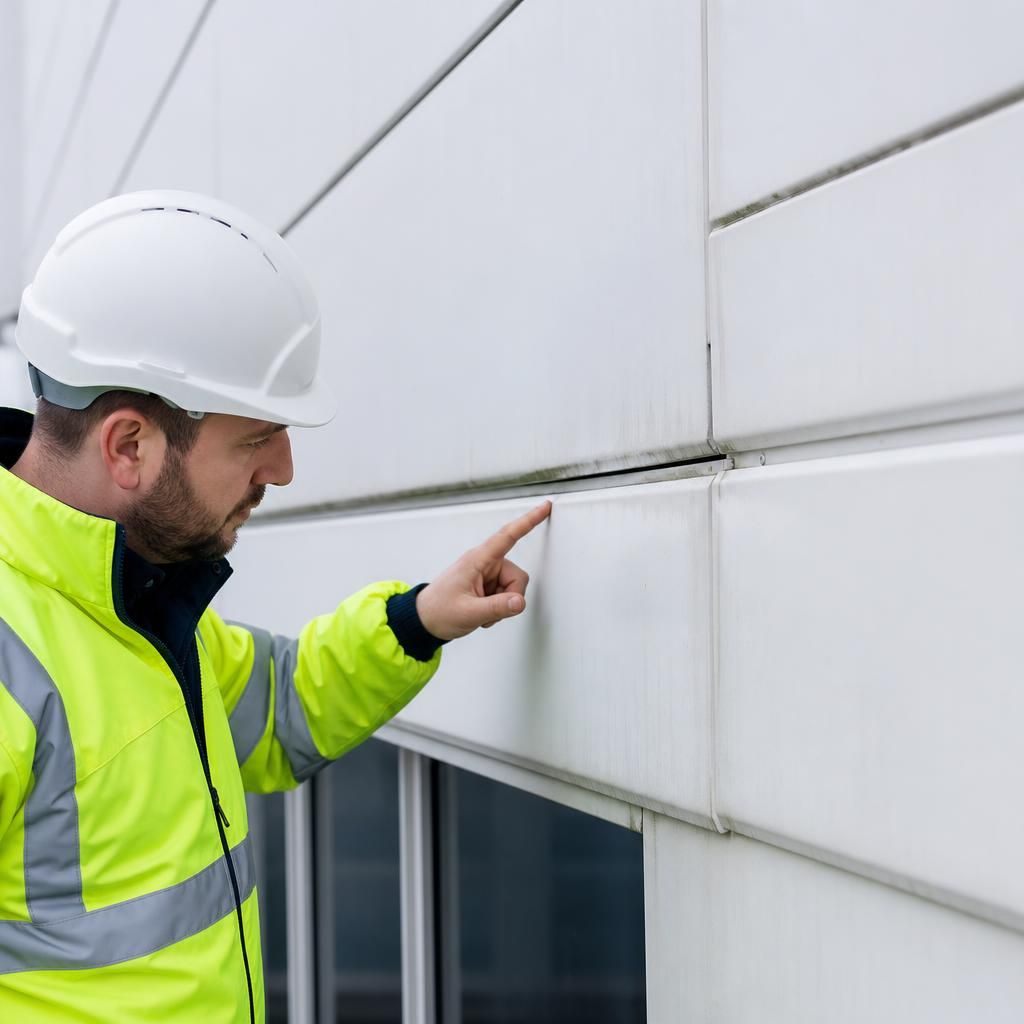
Regular UPVC cladding cleaning helps reveal defects that may be hidden beneath dirt, algae, traffic film or bird deposits. Once the surface is clean, issues such as open joints, damaged sealant, loose panels, staining linked to water ingress and impact damage are easier to identify and report.
Early visibility allows the underlying cause to be investigated before a minor maintenance issue develops into more extensive damage. Cleaning is not a substitute for a detailed building survey, but combining it with a visual inspection provides useful information for planned repairs and ongoing façade maintenance.