
What are the environmental impacts of the cleaning solutions used in UPVC cladding cleaning and how are these managed?
UPVC cladding cleaning solutions can affect drainage systems, soil and aquatic life if detergents, biocides or contaminated runoff are released without control. Responsible contractors manage these risks by selecting suitable, biodegradable products, controlling runoff, protecting drains and landscaping, and disposing of wastewater and residues in accordance with environmental requirements.
Cleaning solutions used on UPVC cladding can affect surface water, foul drainage, soil, vegetation and aquatic life if chemicals or contaminated runoff are allowed to escape uncontrolled. The environmental risk depends on the product selected, its concentration, the dirt being removed, the condition of the drainage system and the way wastewater is contained, recovered and disposed of. Responsible UPVC cladding cleaning therefore combines suitable chemical selection with controlled application, runoff management and lawful waste handling.
UPVC itself is generally resistant to water-based cleaning products, but it can accumulate atmospheric pollution, traffic film, algae, moss, bird fouling, construction dust and other contaminants. Removing this material can create polluted wastewater even where only a mild detergent is used. The runoff may contain suspended solids, organic matter, oils, metal residues or biological contamination, so environmental controls apply to the complete cleaning process rather than to the detergent alone.
Potential environmental impacts of cleaning products
- Detergents and surfactants: These help loosen grease and dirt, but some surfactants can be harmful to aquatic organisms if they enter streams, ponds or surface-water drains. They may also create foaming and interfere with water treatment processes when discharged incorrectly.
- Alkaline or acidic products: Products used to remove stubborn deposits can alter the pH of soil or water. Incorrect dilution or uncontrolled discharge may damage vegetation, affect aquatic life and corrode drainage infrastructure.
- Biocides and algaecides: Treatments for organic growth can be effective on algae, moss and similar contamination, but their active ingredients are designed to control living organisms. They must not be allowed to run into watercourses, planting beds or surface-water drainage.
- Solvents and specialist degreasers: These may be required for particular stains, but they can present greater risks to air quality, soil, drainage systems and the UPVC surface itself. Their use should be limited to situations where a less hazardous alternative is unsuitable.
- Contaminated residues: Dirt, bird fouling, oils, paint particles and construction residues removed from the cladding can make the wastewater environmentally harmful, even when the cleaning solution is relatively low risk.
How responsible cleaning contractors manage these risks
The first control is choosing the least hazardous product that can achieve the required result. A professional assessment considers the type of contamination, the cladding finish, nearby landscaping, drainage layout and the sensitivity of the surrounding site. Water and mechanical agitation are used where practical, with chemicals applied only when they provide a clear benefit. A product being described as biodegradable does not automatically make it suitable for discharge; its instructions, hazard information and disposal requirements still need to be followed.
Before work starts, the team should review the product label and safety data sheet, check dilution requirements and identify any restrictions on use or disposal. Products are not mixed unless the manufacturer specifically permits this. Unplanned combinations can create hazardous reactions, damage UPVC finishes or produce wastewater with more difficult treatment requirements. Appropriate handling and storage also prevent accidental spills from reaching gullies or unprotected ground.
Runoff and drainage controls
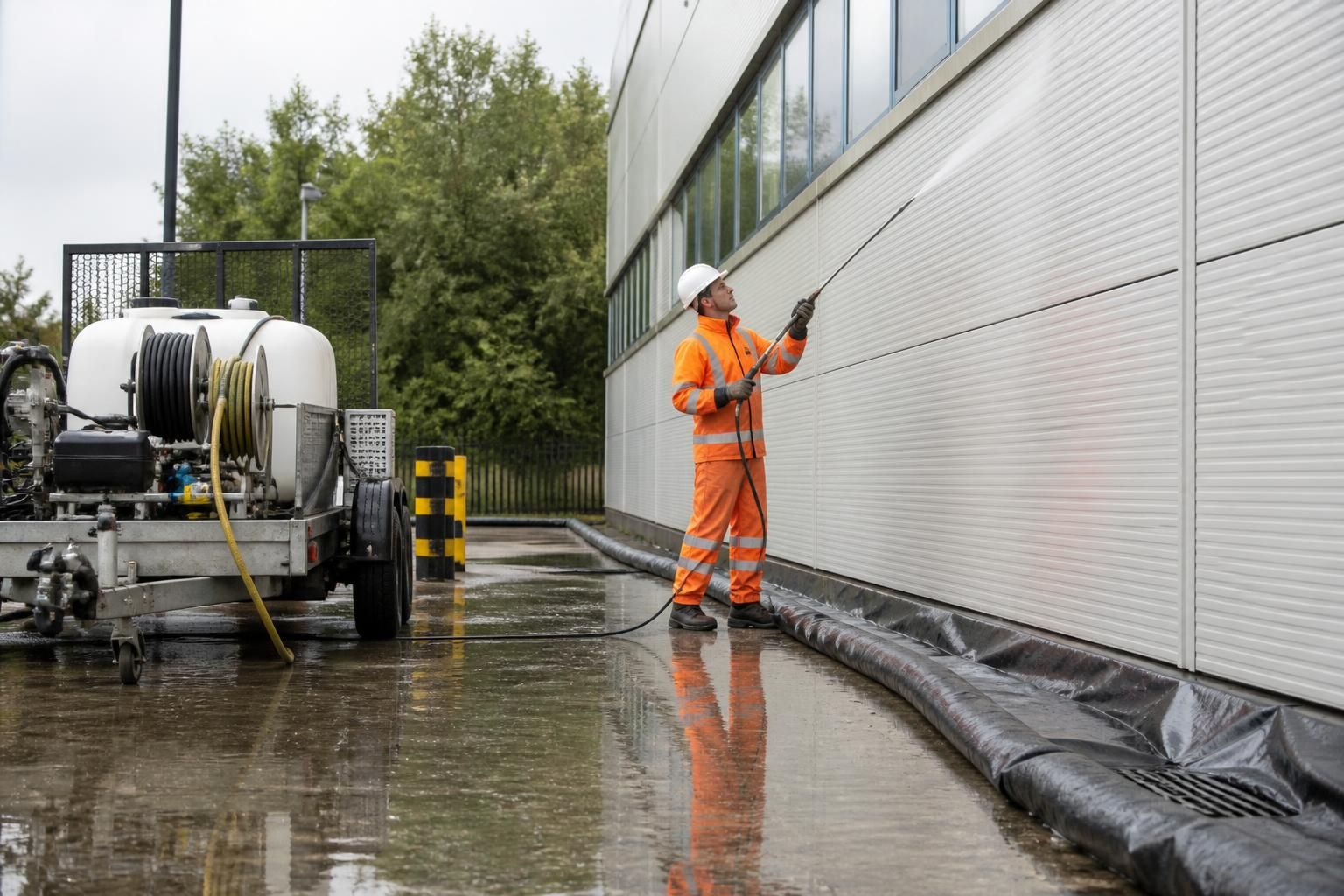
Surface-water drains usually lead directly to a watercourse or balancing system rather than to a sewage treatment works. They should therefore never be used as a convenient disposal point for chemical wash water. Before cleaning, drain locations are identified and protected where appropriate. Temporary drain covers, bunds, absorbent materials, collection mats, vacuum recovery equipment or other suitable controls can be used to prevent runoff leaving the work area.
Runoff is kept to the minimum necessary by applying solution in a controlled manner rather than flooding the façade. Low-pressure rinsing, sectional working and prompt recovery of standing water reduce the volume requiring management. Particular care is needed on sites with sloping hardstanding, open channels, nearby watercourses, porous ground, planted areas or shared drainage systems. Weather conditions are also considered: heavy rain or strong wind can spread solution beyond the intended work area and may mean that cleaning should be postponed.
Where wastewater cannot safely enter a foul drainage system under the relevant site arrangements, it should be collected for appropriate disposal. Trade effluent and discharge requirements can vary according to the premises, local water authority and receiving drainage system. A responsible contractor does not assume that permission to use a foul drain is automatic. The site owner or facilities manager may need to confirm the discharge arrangements, while collected waste may require transfer to an appropriately authorised waste facility.
Protection of soil, planting and surrounding property
Landscaped areas, trees, planted borders and exposed soil are protected from overspray and chemical runoff. Where necessary, vulnerable vegetation is covered or dampened with clean water before work, although coverings must not trap heat or remain in place longer than necessary. Any accidental spill is contained promptly using suitable absorbent materials, with contaminated materials treated as waste rather than washed into a drain.
Window frames, sealants, painted surfaces, signage, vehicles and external equipment may also be affected by cleaning products. Protecting these features reduces the need for repeat cleaning, prevents material damage and avoids creating additional waste. A small test area can confirm that the selected product and dilution are compatible with the particular UPVC profile before full application.
Waste handling and records
Empty containers, used absorbents, disposable protective materials, sludge and recovered residues should be segregated and stored securely until disposal. Containers must not be abandoned, burned or rinsed into drains. Waste is handled according to its properties and the requirements applying to the site and the contractor. Records of products used, dilution instructions, incidents, waste transfers and any agreed discharge arrangements provide an auditable account of the work and help with future maintenance planning.
Environmental management also includes preventing unnecessary repeat applications. A suitable cleaning method, accurate product dosing and a planned maintenance schedule can reduce the build-up of organic growth and heavy pollution, lowering future water and chemical use. Regular inspections may allow light contamination to be removed with less intensive methods before stronger treatment becomes necessary.
For a commercial or industrial property, the site manager should provide information about drainage, sensitive areas, previous contamination, access restrictions and any environmental controls already in place. After cleaning, the area should be inspected for remaining residues, blocked drains, damaged protection and signs of unintended runoff. This approach ensures that UPVC cladding is restored without transferring the problem to the drainage network, surrounding land or the wider environment.
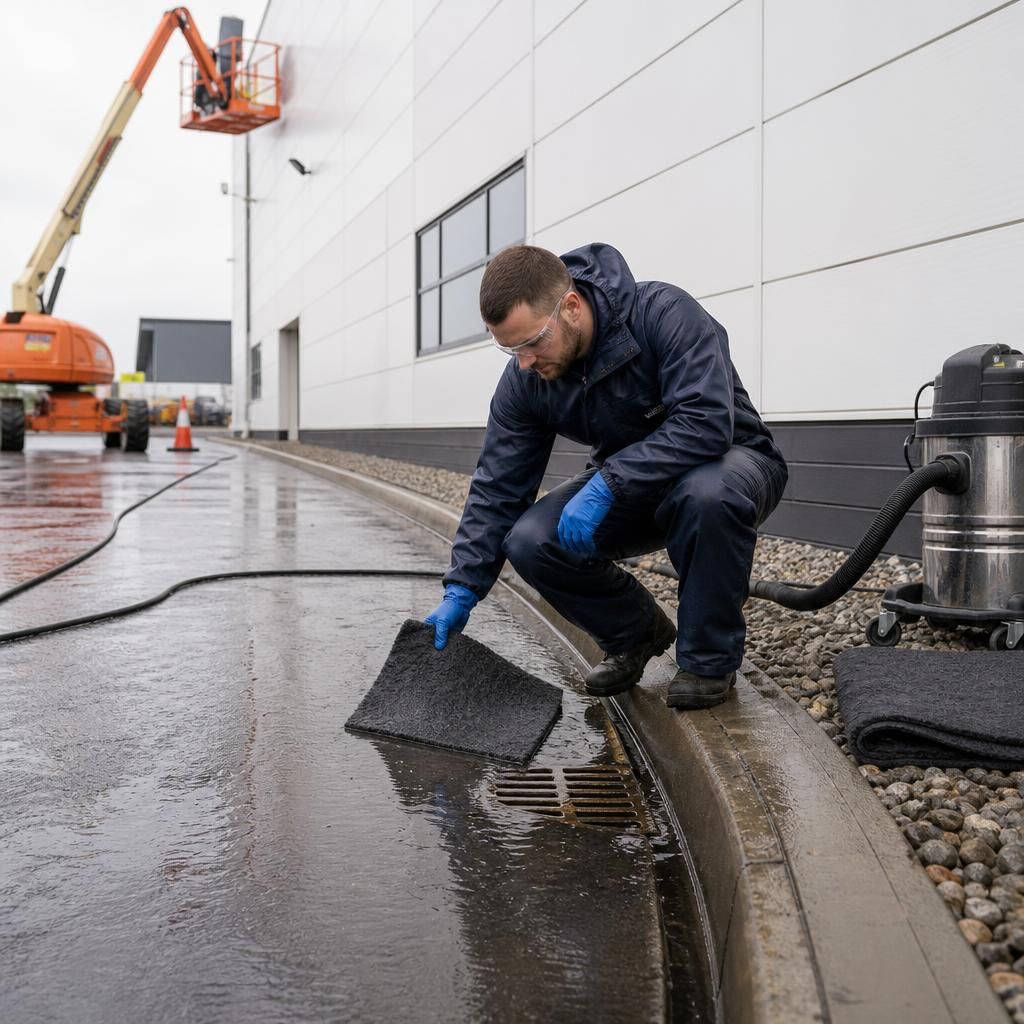
Controlling wastewater is one of the most important environmental safeguards during UPVC cladding cleaning. Wash water can contain detergent, suspended dirt, algae, oils and other contaminants, so it should not be allowed to flow into surface-water drains, planted areas or nearby watercourses.
Before cleaning, the drainage layout and surrounding ground are assessed. Suitable measures may include protecting gullies, working in manageable sections, limiting water use and recovering standing water with collection mats or vacuum equipment. Cleaning is postponed during heavy rain or strong wind where these conditions could spread runoff. Any collected wastewater, sludge or contaminated absorbent material is then handled and disposed of through the appropriate site arrangements rather than discharged indiscriminately.