
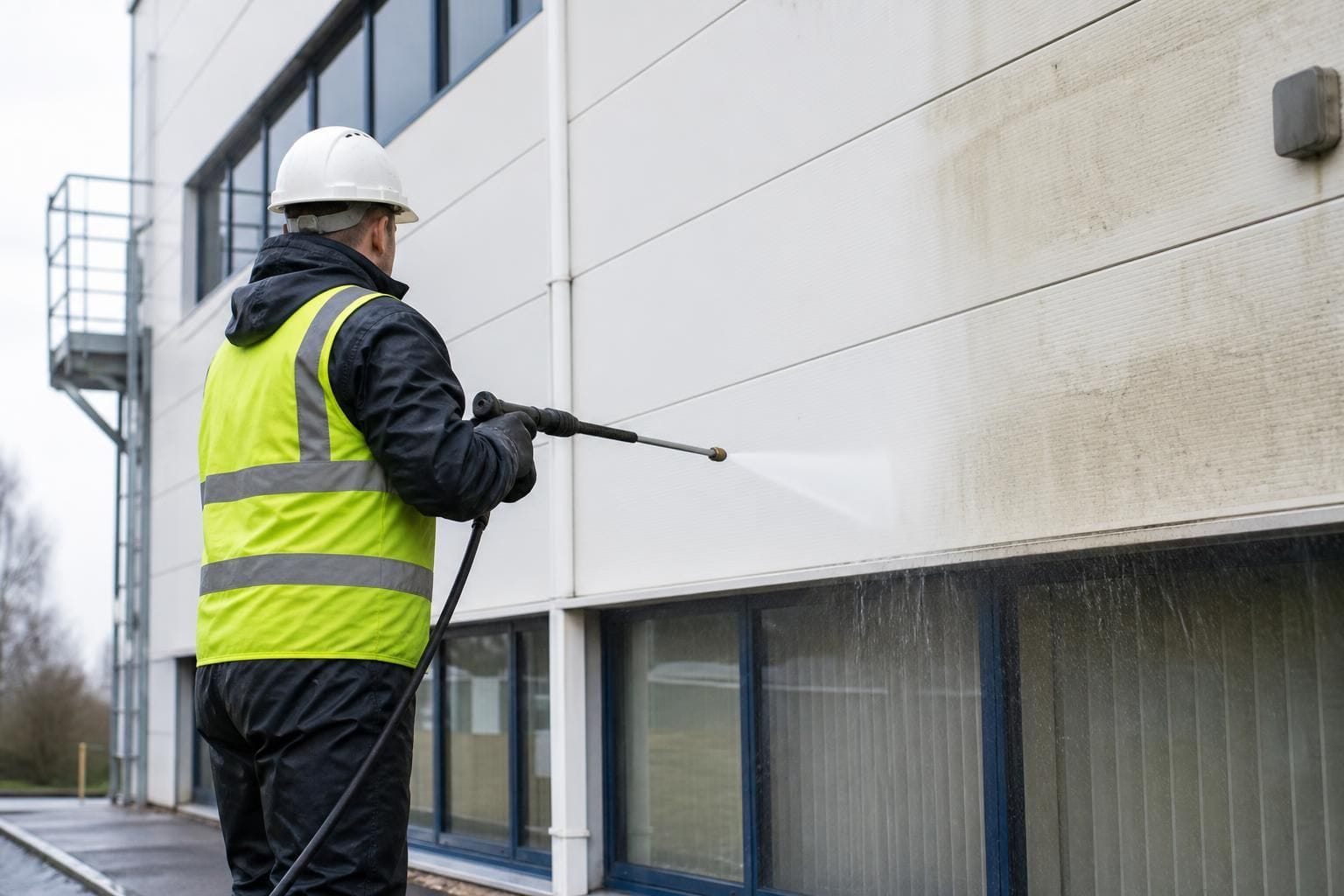
How often should UPVC cladding be professionally cleaned?
UPVC cladding should generally be professionally cleaned at least annually, with more frequent cleaning where the building is exposed to heavy traffic pollution, industrial emissions, coastal conditions, algae or persistent weathering. A site assessment can confirm the most suitable interval and identify whether targeted cleaning is needed between scheduled visits.
UPVC cladding should generally be professionally cleaned at least annually. Buildings exposed to heavy traffic pollution, industrial emissions, coastal air, algae, bird fouling or persistent damp weathering may require cleaning every six months or more frequently. The appropriate interval depends on the building’s location, cladding condition, surrounding environment, use and appearance requirements, so a site assessment should be used to confirm the maintenance schedule.
Regular professional cleaning removes deposits before they become established and more difficult to treat. Dirt, traffic film, organic growth, airborne pollutants and bird fouling can gradually mark the surface, block drainage details and make the cladding appear uneven or neglected. On commercial and industrial buildings, this can affect the appearance of the whole site and may contribute to complaints from occupants, visitors or neighbouring properties.
Annual cleaning is a suitable starting point for many buildings. A yearly visit is often appropriate where the cladding is in reasonable condition, the site is away from major pollution sources and there is no persistent problem with algae or staining. It also provides an opportunity to inspect the cladding for early signs of deterioration, failed seals, damaged panels, blocked joints or areas where water is not draining correctly.
Some buildings need a shorter interval between visits. More frequent professional cleaning should be considered where the property is located:
- Beside busy roads, junctions, loading areas or transport facilities where exhaust deposits and traffic film accumulate quickly.
- Near factories, workshops, construction activity or other sources of dust, smoke and airborne residue.
- In shaded or poorly ventilated areas where moisture encourages algae, moss or other organic growth.
- In exposed coastal locations where salt deposits and wind-driven contaminants can affect the surface.
- Under trees or close to nesting birds, where sap, pollen, leaves and fouling create localised staining.
- Where the building has a highly visible frontage, customer-facing entrance or strict appearance requirements.
- Where previous deposits have been allowed to build up and continue to return after cleaning.
For these sites, a six-monthly programme may be more suitable than a single annual visit. A shorter interval can also be justified for specific elevations rather than the entire building. For example, a north-facing wall may develop organic growth more readily than a sunny elevation, while the lower panels beside a road may collect more traffic film than upper sections. Planned, targeted cleaning can therefore be more efficient than treating every elevation at the same frequency.
Appearance is not the only factor. A panel can look acceptable from ground level while holding a film of dirt or biological growth in joints, recesses and around fixings. Deposits can retain moisture and make later cleaning more difficult. Professional cleaning at a planned interval helps prevent the surface from reaching a condition where aggressive methods, prolonged treatment or restoration work may be required.
The right frequency should be reviewed after the first scheduled clean. The condition of the cladding before treatment, the type of deposits found, the cleaning method required and the speed at which soiling returns all provide useful information. If staining returns quickly, the cause should be investigated rather than simply increasing pressure. Possible causes include a nearby pollution source, defective rainwater goods, overflowing gutters, leaking joints, vegetation contact or persistent shading.
Professional cleaning should not be confused with an occasional response to visible dirt. A planned maintenance visit normally includes an assessment of the cladding, selection of a suitable cleaning solution, controlled washing and a visual check after the work. UPVC should be cleaned using methods and pressures appropriate to the material. Excessive pressure, unsuitable chemicals or abrasive equipment can mark the surface, damage finishes or force water behind panels and seals. Steam cleaning or low-pressure washing may be appropriate in some circumstances, but the method should be selected according to the type of contamination and the condition of the cladding.
Seasonal conditions can influence the timing of cleaning. Cleaning during a suitable weather window helps solutions work consistently and allows the cladding to be inspected properly. Organic growth may be more noticeable after wet periods, while salt and general surface deposits can become more apparent after prolonged exposure. The schedule should also take account of access requirements, nearby operations, pedestrian movement, drainage and any restrictions imposed by the building owner or site manager.
Where a building is being prepared for handover, refurbishment, letting, sale or an important inspection, an additional clean may be required outside the normal maintenance cycle. This is a condition-based clean rather than evidence that the regular schedule is unsuitable. Similarly, newly installed UPVC cladding should be checked for construction dust, sealant residue and other site contamination, with cleaning carried out in accordance with the manufacturer’s recommendations.
There are several signs that the current interval may be too long:
- Traffic film or grey staining is visible across lower panels and around entrances.
- Green, black or brown organic growth is developing on shaded elevations.
- Bird fouling, sap or other deposits are becoming baked on or increasingly difficult to remove.
- Rainwater is leaving pronounced runs or streaks beneath gutters, outlets and roof edges.
- The cladding has different levels of soiling that make the building look patchy.
- Routine washing no longer removes the deposits without additional treatment.
- Cleaned areas become visibly soiled again soon after the work.
Conversely, a property may not need every elevation cleaned at every visit if inspection shows that some areas remain sound and free from significant deposits. The schedule can be divided into high-priority elevations, entrance areas, service yards and lower panels, with less exposed sections reviewed at a longer interval. This approach should be based on condition and risk rather than applying the same treatment automatically across the whole site.
For most commercial properties, the practical approach is to arrange an initial professional assessment, complete a thorough clean and then monitor how quickly contamination returns. Retain annual cleaning as the baseline where conditions are moderate, move to a six-monthly or targeted programme where soiling is persistent, and arrange additional treatment when there is a specific operational or presentation requirement. Regular inspection between visits allows problems to be identified early and helps maintain the appearance and performance of the UPVC cladding without unnecessary cleaning or overly aggressive treatment.
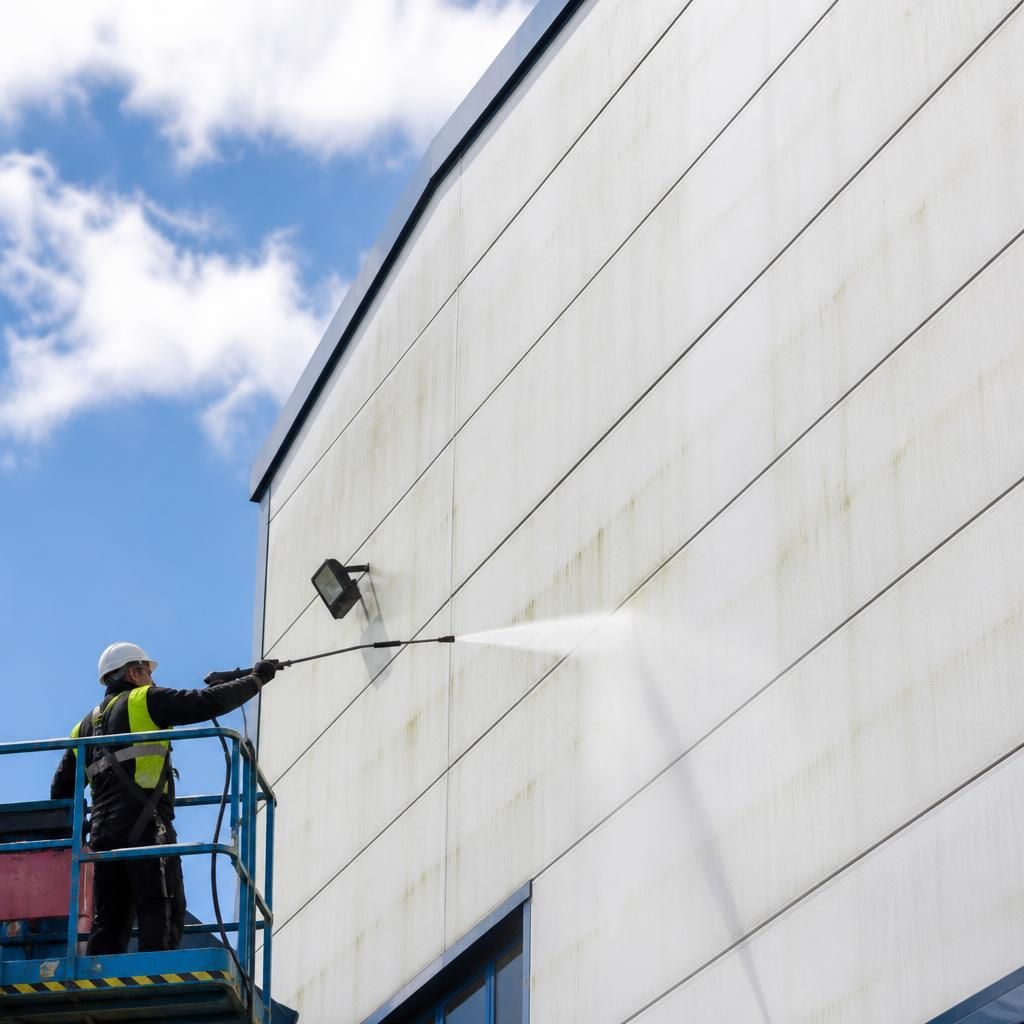
Most commercial UPVC cladding should be professionally cleaned annually, but buildings exposed to traffic pollution, industrial residue, coastal air, persistent damp or organic growth may need a six-monthly or targeted cleaning programme.
The interval should be based on how quickly contamination returns rather than appearance alone. Lower panels beside roads, shaded elevations, entrances and areas beneath gutters often soil faster than sheltered sections. Reviewing these areas between visits helps identify whether the schedule needs adjusting and prevents deposits becoming difficult to remove.