
How is the quality of UPVC cladding cleaning evaluated to ensure optimal results?
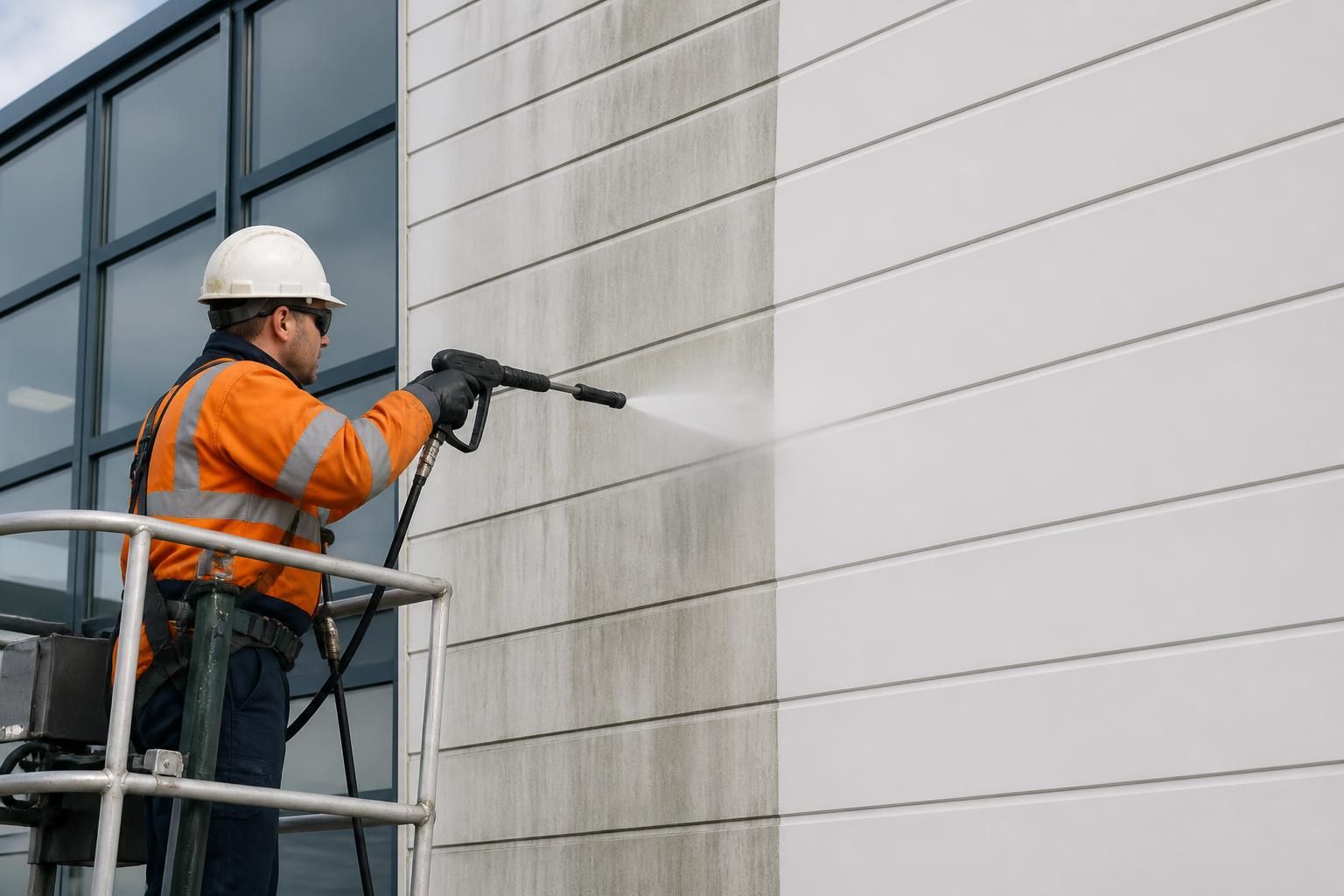
UPVC cladding cleaning quality is evaluated through pre- and post-cleaning inspections, checking that dirt, staining, algae and organic growth have been removed without damaging the surface. The finished cladding should have an even appearance, consistent colour, clean joints and edges, and no visible residue, streaking or cleaning-related defects.
The quality of UPVC cladding cleaning is evaluated by comparing the condition of the surface before and after work, checking that soiling has been removed evenly without damaging the cladding, seals, joints, fixings or surrounding finishes. A properly evaluated result should show a consistent appearance across accessible elevations, with no avoidable streaks, chemical residue, untreated bands or cleaning-related defects.
Quality control begins before any cleaning takes place. The condition survey records the type and distribution of contamination, the existing colour and finish of the UPVC, areas of staining, biological growth, oxidation, previous repairs and any defects that could be mistaken for cleaning failures. Photographs are useful for establishing a reliable comparison, particularly on large façades where different elevations may have different exposure levels.
The inspection also identifies sensitive features, including open joints, drainage points, window frames, vents, electrical equipment, signage and adjacent surfaces. Existing cracks, distortion, failed sealant or permanent discolouration should be recorded before work begins. This separates pre-existing conditions from any issue that might arise during cleaning and helps determine whether a mark is removable soil, embedded staining or a deterioration of the material itself.
A suitable cleaning method is normally confirmed with a small test area. The test checks whether the proposed pressure, temperature, equipment and cleaning solution can remove the contamination without dulling the finish, altering the colour, lifting coatings or affecting seals. The test area should be reviewed after rinsing and drying, rather than judged only while it is wet. This is particularly important where staining has weathered into the surface or where the cladding has been exposed to aggressive atmospheric pollution.
During the work, quality is assessed progressively rather than only at the end. Operatives check that the cleaning pattern is controlled and that overlapping passes do not create visible bands. Water and solution application should be even, with sufficient rinsing to remove loosened soil and chemical residue. Edges, corners, underside details, around fixings and the areas beneath projecting features require particular attention because these commonly retain dirt after a broad surface wash.
The finished cladding is assessed once it has dried. The principal checks include:
- Removal of loose dirt, traffic film, algae, moss, bird fouling and other specified contamination.
- A consistent colour and finish between adjoining cleaned sections, allowing for legitimate differences caused by orientation, age or previous weathering.
- No visible streaking, runs, patchiness, detergent residue, splash marks or untreated strips.
- Clean joints, trims, corners, reveals and edges, where safe access has been available.
- No evidence of surface scratching, pitting, distortion, whitening, gloss change, coating failure or damage to seals and fixings.
- Clean transitions around windows, doors, signage, rooflines and other neighbouring materials.
Not every stain can be removed through standard cleaning. Rust transfer, bitumen, paint, deep biological staining, oxidation and permanent UV-related discolouration may require a different treatment or may remain partly visible. Quality evaluation therefore considers whether the agreed cleaning objective has been achieved, rather than assuming that every change in appearance is a defect. Any residual staining should be identified and explained, with further treatment recommended only where it is suitable for the particular UPVC finish.
Access and viewing conditions are also relevant. High-level areas should be inspected from an appropriate position using suitable access equipment, not judged solely from ground level. Where a section cannot be safely reached or visibility is restricted, it should be noted in the completion record. Inspection should take place in adequate daylight and, where practical, from more than one viewing angle so that light reflection is not mistaken for uneven cleaning.
For commercial and industrial premises, the final quality record may include before-and-after photographs, details of the areas cleaned, the methods used, any limitations, and observations about pre-existing damage or residual staining. A representative inspection with the client or site contact can then confirm that the agreed scope has been completed. If an isolated area does not meet the required standard, it should be re-cleaned or assessed before the work is signed off.
Long-term quality is evaluated separately from immediate visual appearance. The cladding should remain free from avoidable residue and should not show delayed reactions such as patchy whitening or coating changes after drying. Clear maintenance recommendations help preserve the result, while future inspections can establish whether contamination is returning because of nearby trees, traffic, industrial emissions, drainage issues or persistent moisture. This combination of documented inspection, controlled cleaning and post-cleaning review provides the most reliable indication that UPVC cladding has been cleaned effectively and safely.
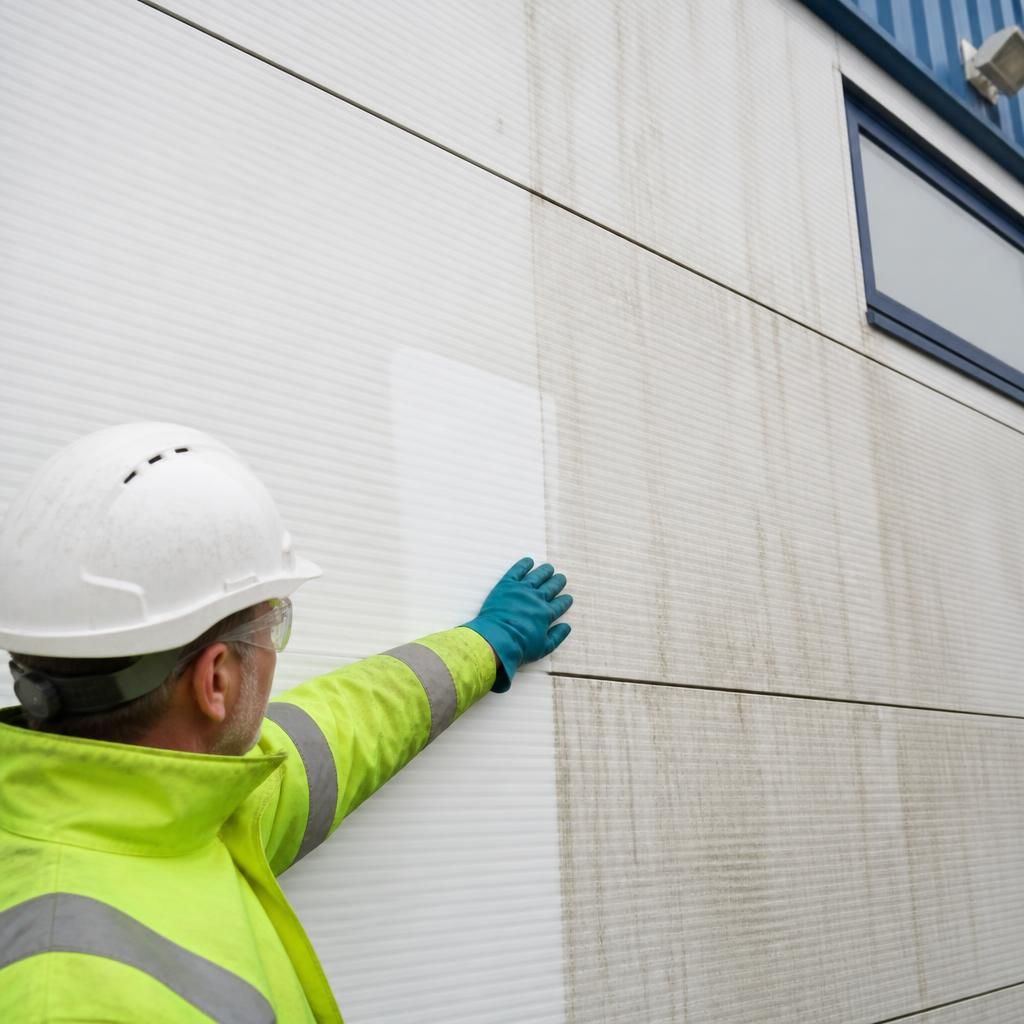
A small test area is a key quality check in UPVC cladding cleaning because it confirms that the proposed method removes the relevant soiling without damaging the surface. The test should use the intended cleaning solution, pressure, temperature and equipment, then be rinsed thoroughly and assessed after the cladding has dried.
Reviewing the dry test area helps identify changes that may not be visible while the surface is wet, including dulling, whitening, patchiness, altered colour or residue. It also shows whether the method is suitable for the particular finish and level of staining. If the result is uneven or the surface reacts adversely, the cleaning method should be adjusted before work continues across the elevation.
The approved test area provides a practical reference for evaluating the finished work. Operatives can compare adjoining sections for consistency while the client or site contact can confirm that the proposed appearance and cleaning objective are appropriate.