
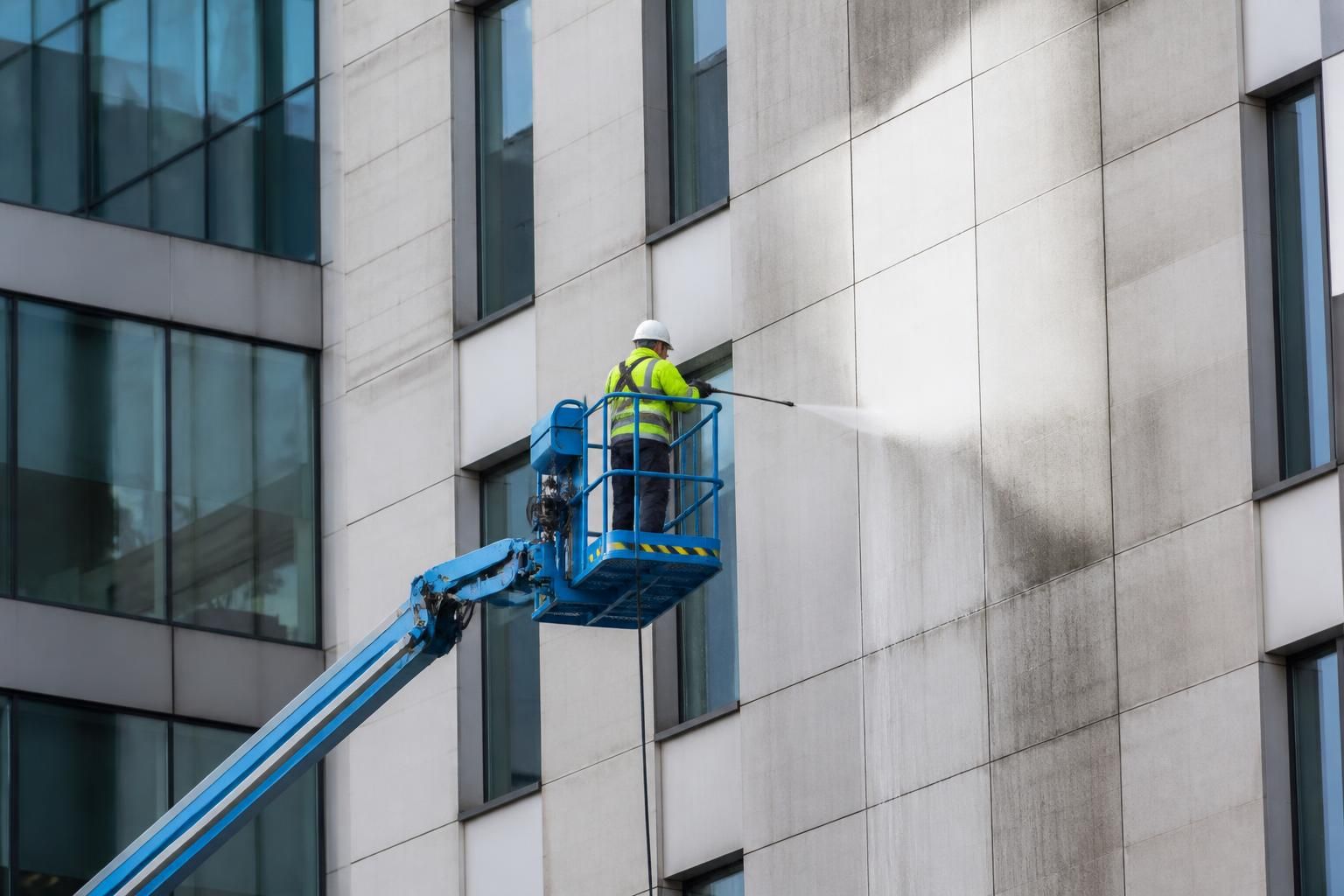
How do you assess the cost-effectiveness of façade pressure washing services?
Assess the cost-effectiveness of façade pressure washing by comparing the total project cost with the cleaning results, access requirements, reduced maintenance needs and protection of the façade’s appearance and condition. A proper assessment should include the surface type, level of soiling, equipment and access required, environmental controls, and the likely cost of delaying or replacing professional cleaning.
Assess the cost-effectiveness of façade pressure washing by comparing the complete project cost with the quality and durability of the cleaning result, the access and risk controls required, and the likely effect on future maintenance. The lowest quotation is not necessarily the best value if it excludes access equipment, wastewater controls, stain treatment, protection of sensitive materials or remedial work.
Start with a clearly defined cleaning requirement. A meaningful assessment depends on knowing what the service is expected to achieve. The specification should identify:
- The areas to be cleaned, including walls, cladding, architectural features, entrances and lower-level sections.
- The type and severity of soiling, such as general atmospheric dirt, algae, moss, carbon deposits, bird fouling, staining or graffiti.
- The required finish and any areas where complete stain removal may not be possible without damaging the façade.
- The surface materials and their condition, including painted render, brick, stone, concrete, metal cladding, UPVC or composite panels.
- Any restrictions relating to working hours, occupied premises, neighbouring properties, pedestrians, vehicles and noise.
A vague brief can produce an apparently low price that later increases when additional treatments, access or protection become necessary. A detailed scope allows quotations to be compared on the same basis.
Consider the full cost of the work rather than the cleaning rate alone. The total cost may include labour, water, detergents or specialist chemicals, hot-water equipment, pressure-washing machinery, access platforms, tower systems, mobile elevated work platforms, scaffolding, traffic management, protective sheeting, drain protection, wastewater collection and disposal. For taller or more complex premises, access and site controls can represent a substantial part of the budget.
Check whether each quotation includes mobilisation, setup and removal, test cleaning, protection of windows and adjacent surfaces, rinsing, removal of waste, final inspection and any required reinstatement. If these items are excluded, they should be treated as potential additional costs when comparing providers.
Compare the result with the method used to achieve it. Effective façade cleaning is not simply a matter of applying the highest available pressure. The appropriate combination of pressure, water temperature, flow, cleaning solution, dwell time and operator technique depends on the material and soiling. A controlled low- or medium-pressure process may be more cost-effective than aggressive cleaning if it reduces the risk of removing coatings, opening joints, driving water into the building or creating a patchy appearance.
Ask whether the proposed method includes a test patch in an inconspicuous area. This helps confirm the likely result, identify sensitive materials and establish whether additional treatment is required. It also provides a practical basis for agreeing the expected finish before the main works begin.
Include access efficiency in the assessment. A contractor may use ground-based equipment for accessible areas and suitable access equipment for higher or obstructed sections. The best option depends on the façade layout, ground conditions, building occupancy and the need to keep entrances, roads or loading areas open. A method that appears cheaper can become less efficient if operators must repeatedly move equipment, work around obstructions or clean in small disconnected sections.
For larger properties, ask for the proposed access arrangement and whether it covers the entire scope. Consider the cost of permits, parking restrictions, road or pavement protection, exclusion zones and coordination with other contractors. Efficient planning can reduce downtime and disruption without compromising safe working practices.
Account for safety and environmental controls as part of value. Proper controls are not optional extras. They protect the building, occupants, the public and the surrounding environment, while reducing the likelihood of delay or remedial cost. The assessment should consider:
- Risk assessments and method statements appropriate to the site.
- Safe systems for working at height and operating access equipment.
- Protection of windows, vents, electrical equipment, signage, doors and vulnerable finishes.
- Control of spray, overspray, noise and pedestrian or vehicle movements.
- Drain protection and arrangements for collecting, treating or disposing of contaminated run-off.
- Use of detergents and hot water where these provide a better result with less pressure or repeat cleaning.
These measures can add to the initial price, but inadequate controls may result in damaged finishes, blocked drainage, complaints, pollution incidents, work stoppages or claims. Those consequences should be included when assessing overall cost-effectiveness.
Measure durability, not just immediate appearance. A façade that looks clean immediately after washing may not represent good value if residues remain, biological growth returns quickly or the cleaning method has weakened the surface. Ask what preparation and rinsing are included, whether the cleaning is intended to remove the source of the soiling, and whether any protective or preventative treatment is suitable for the material.
Durability depends on exposure, shading, moisture, nearby traffic, vegetation, drainage and the condition of the façade. It is therefore better to assess the expected maintenance interval for the specific building than to rely on a standard time period. Records of the cleaning date, method, products, test results and areas treated provide useful evidence when planning future maintenance.
Calculate the likely whole-life cost. A simple assessment can compare the initial service cost with the expected costs of repeat cleaning, minor repairs, access, disruption and premature replacement or redecoration. Consider:
- The cost of the proposed cleaning and any associated access or site controls.
- The expected frequency of future cleaning under the building’s actual conditions.
- Potential savings from removing contamination before it causes staining, corrosion, biological growth or deterioration of joints and coatings.
- The cost of alternative approaches, such as manual cleaning, steam cleaning, chemical treatment, façade repainting, panel replacement or leaving the soiling untreated.
- Lost access, tenant disruption or operational downtime associated with each option.
Pressure washing may be less suitable or less economical where the façade requires extensive repairs, where contamination is embedded within a failing coating, or where the surface is too fragile for the proposed pressure. In those cases, a different cleaning method or repair-first approach may provide better long-term value.
Use measurable acceptance criteria. Before work starts, agree how the result will be inspected. Criteria may include uniformity of appearance, removal of specified soiling, protection of adjacent materials, absence of visible damage and completion of all agreed areas. Photographs taken before and after cleaning can help document the condition, particularly on large commercial sites where several elevations or contractors are involved.
For an ongoing maintenance contract, useful measures include the condition of representative elevations, the number of reactive call-outs, repeat staining in treated areas, disruption to building operations and whether planned cleaning is being completed within the agreed scope. These records make it easier to determine whether a cleaning programme is reducing long-term expenditure rather than simply producing a one-off visual improvement.
Compare quotations on specification, not price alone. When reviewing proposals, check that each contractor has inspected the façade or received sufficient site information, identified material risks, explained the cleaning method and allowed for appropriate access. Clarify exclusions, variation rates, water and power requirements, working hours, weather contingencies, wastewater arrangements and responsibility for damage to pre-existing defects.
A reliable quotation should make clear what will be cleaned, how it will be cleaned, what result is reasonably achievable and what circumstances could change the price. This makes the financial comparison more reliable and reduces the risk of selecting a low initial price that does not deliver the required outcome.
In practical terms, façade pressure washing is cost-effective when it delivers the required level of cleanliness without damaging the substrate, uses proportionate access and environmental controls, minimises disruption and delays more expensive maintenance or replacement. Reviewing the complete scope, expected service life, risks and whole-life consequences gives a more accurate assessment than comparing the headline cost of cleaning alone.
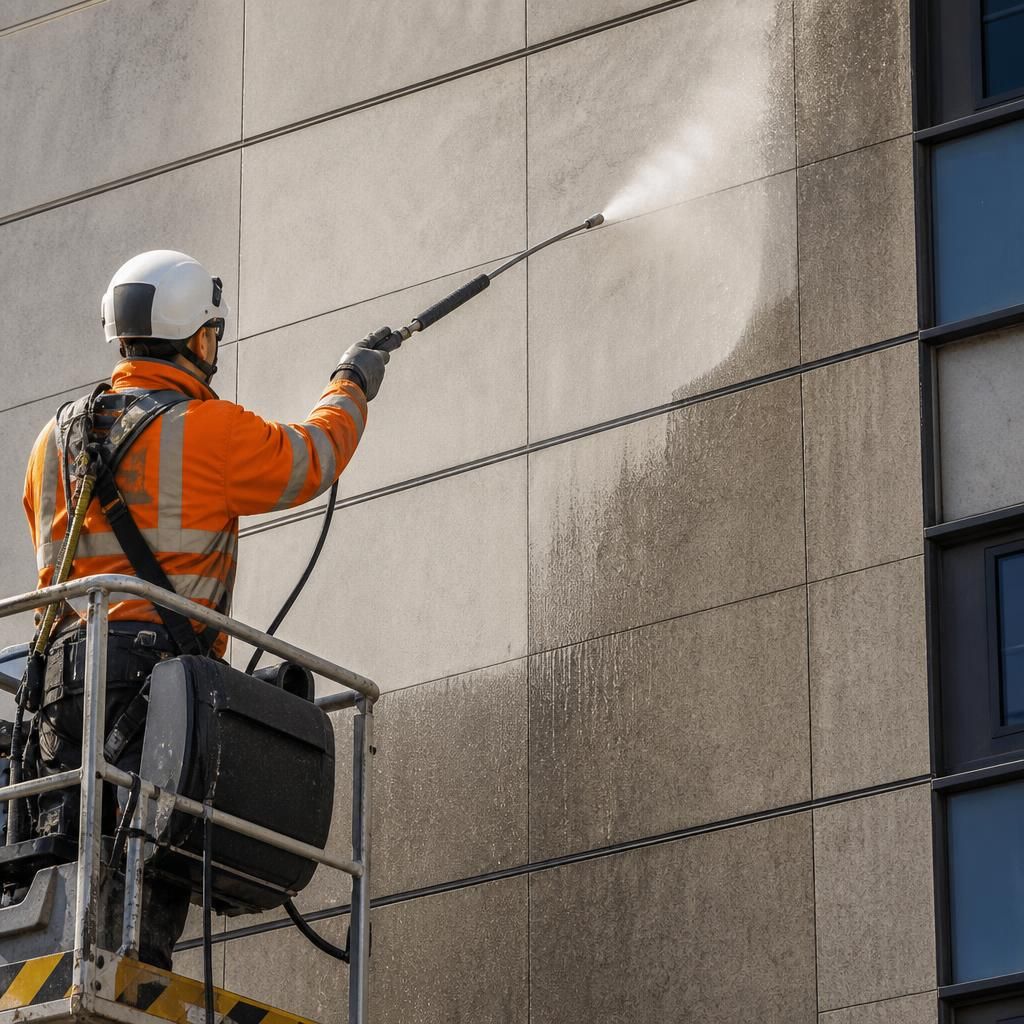
The cost-effectiveness of façade pressure washing is best assessed by comparing the complete project cost with the cleaning result, likely maintenance interval and risk of damage. A low initial quotation may not represent good value if it excludes access equipment, wastewater controls, stain treatment or protection for vulnerable surfaces.
For a reliable comparison, review whether the proposed method is suitable for the façade material and soiling. Controlled pressure, appropriate water temperature, cleaning products and a test patch can achieve the required finish while reducing the risk of damaged coatings, joints or panels. Also consider future costs, including repeat cleaning, minor repairs, disruption and premature redecoration. A service provides stronger long-term value when it restores the appearance without compromising the condition of the façade.