
How can different pressure settings impact the effectiveness of façade cleaning?
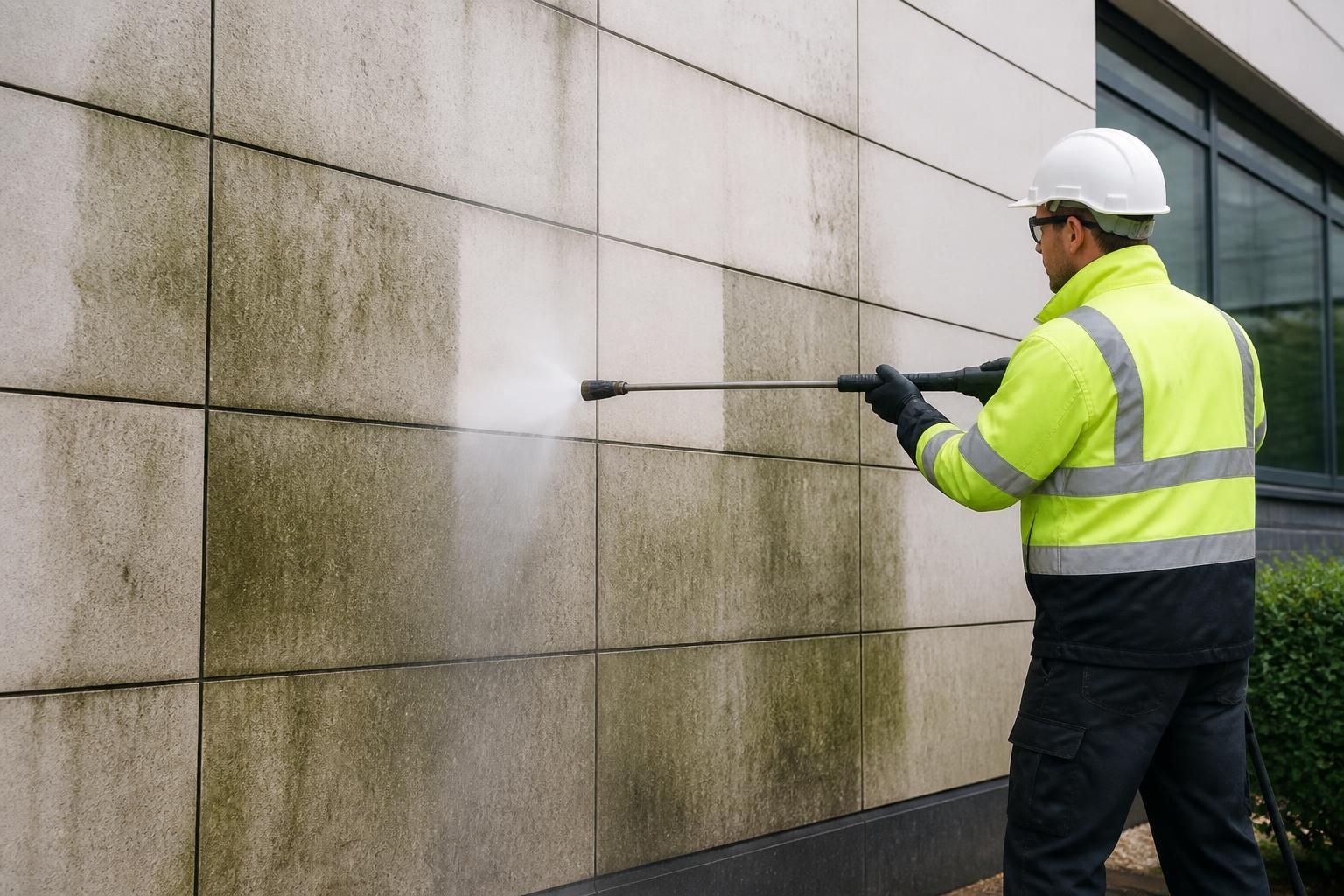
Pressure settings directly affect how effectively façade dirt, algae, stains and coatings are removed, with the correct level depending on the surface material, condition and type of contamination. Too little pressure may leave deposits behind, while excessive pressure can damage render, brickwork, mortar, cladding, seals or coatings, so the setting should be selected and tested carefully for each façade.
Different pressure settings affect façade cleaning by controlling the force applied to the surface and, therefore, how effectively deposits are removed without causing damage. The correct setting is determined by the façade material, its condition, the type of contamination, the nozzle and spray pattern, and the distance between the equipment and the surface. Lower pressure is generally safer for delicate or weathered materials, while higher pressure may be appropriate for robust surfaces and firmly bonded deposits when used under controlled conditions.
Pressure should not be considered in isolation. Cleaning performance also depends on water flow, temperature, dwell time, detergents, nozzle selection and the operator’s technique. A carefully selected lower-pressure system with suitable cleaning chemicals and sufficient dwell time can often remove contamination more effectively than excessive pressure alone.
How pressure affects cleaning results
- Insufficient pressure: Loose dirt may be removed, but ingrained pollution, algae, moss, traffic film, old coatings and some staining can remain. Repeated passes may then increase water use and extend the cleaning time without delivering a consistent result.
- Appropriate pressure: The water has enough mechanical action to lift the contamination while preserving the façade’s surface, joints, coatings and fittings. This usually provides the best balance between appearance, safety and productivity.
- Excessive pressure: The water can erode soft materials, open joints, strip protective coatings, drive moisture behind cladding or damage seals and surrounding finishes. It may also spread contamination or create visible differences between cleaned and uncleaned areas.
Façade materials respond differently to pressure. Sound brickwork may tolerate controlled pressure, but the mortar joints can be weaker than the bricks and may suffer erosion if the spray is too aggressive or held too close. Older, porous or friable brick should be treated more cautiously. Render can crack, flake or lose its surface texture under excessive force, particularly where it is already delaminating or poorly bonded.
Cladding also requires a material-specific approach. Metal panels may be marked, dented or stripped of their finish by unsuitable pressure, while coated surfaces can suffer from edge lifting or loss of protective layers. UPVC and other plastics can be scratched, distorted or discoloured if the pressure, temperature or nozzle distance is inappropriate. Sealed joints, vents, louvres and service penetrations require particular care because water can be forced behind panels or into the building envelope.
Glass, stone and concrete are not automatically suitable for high-pressure cleaning. Glass can be damaged by abrasive particles or an unsuitable nozzle, and natural stone varies considerably in hardness, porosity and sensitivity to chemicals. Concrete may withstand more mechanical action than softer finishes, but aged or spalled concrete can lose further material when exposed to excessive pressure. Surface condition is as important as the material itself.
The type of contamination influences the setting
Light dust, loose soil and surface cobwebs normally require limited mechanical action. Algae, moss and biological growth may respond better to a suitable treatment and controlled rinsing than to forceful blasting. Atmospheric pollution and oily traffic film can require a detergent or hot water to break down the deposit. Paint, adhesive residue and graffiti may need a combination of chemical treatment, steam or carefully controlled pressure rather than a single high-pressure pass.
Increasing pressure is not always the most effective response to stubborn staining. If a deposit is chemically bonded to the surface, greater force may remove part of the façade before it removes the stain. Identifying the contaminant first helps determine whether pressure, temperature, detergent, agitation or a specialist process is the appropriate solution.
How settings are selected on site
- Inspect the façade to identify the substrate, coating, joints, openings, defects and areas of previous repair.
- Assess the contamination, including whether it is loose, ingrained, biological, oily, painted or likely to contain abrasive particles.
- Check for existing deterioration such as cracks, failed mortar, flaking render, corrosion, loose cladding or damaged sealant.
- Choose a suitable nozzle and spray pattern. A wider fan generally distributes force more evenly than a narrow jet and reduces the risk of concentrated damage.
- Carry out a small test clean in an inconspicuous area, starting with the least aggressive practical method.
- Review the test area after rinsing and drying, checking both the appearance and the condition of the substrate, joints and coating.
- Adjust pressure, flow, temperature, chemical concentration, nozzle distance and operator speed to achieve removal without unnecessary force.
- Apply the approved method consistently, while reducing force around vulnerable details and switching techniques where the façade changes.
Test cleaning is particularly important because a façade can appear sound while having weakened mortar, aged coatings or hidden defects. The test should assess more than immediate cleanliness. It should also reveal whether the surface is becoming rougher, whether pigments are being removed, whether water is penetrating joints and whether the cleaned area dries evenly.
The distance and angle of the lance can alter the effective force significantly. Holding a nozzle close to the façade concentrates energy in a small area; moving it back spreads the spray and generally reduces the impact. A perpendicular spray can place more direct force on the surface, whereas a controlled angle may help lift deposits while limiting penetration into joints. These adjustments must be made by a trained operator, since changing distance or speed can affect the result even when the equipment setting remains unchanged.
Pressure washing should also be coordinated with water management and access arrangements. Higher settings can produce more spray, runoff and airborne droplets, which may affect pedestrians, neighbouring properties, electrical equipment and open building entrances. The work plan should include suitable containment, drainage controls and protection for vulnerable areas. Cleaning around windows, vents, doors, signage and façade-mounted services generally requires reduced force and closer control.
For commercial and industrial buildings, the most effective method may use different pressure levels across the same elevation. Robust lower sections, heavily soiled service areas and sound masonry may require more mechanical action, while rendered panels, decorative details, seals and upper façade elements may need a gentler approach. Treating the entire building with one fixed setting increases the risk of incomplete cleaning or avoidable damage.
After cleaning, the façade should be inspected for uniformity, remaining deposits, disturbed joints, coating loss, water ingress and damage to adjacent surfaces. Any areas that remain stained should be reassessed rather than repeatedly attacked with higher pressure. A revised chemical treatment, hot-water process, steam cleaning or specialist stain-removal method may provide a safer and more consistent result.
In practice, the correct pressure is the lowest setting that removes the identified contamination to the required standard when combined with the appropriate equipment and technique. A professional assessment and controlled test area help establish that setting before full-scale work begins, protecting the façade while delivering a clean, presentable and maintainable finish.
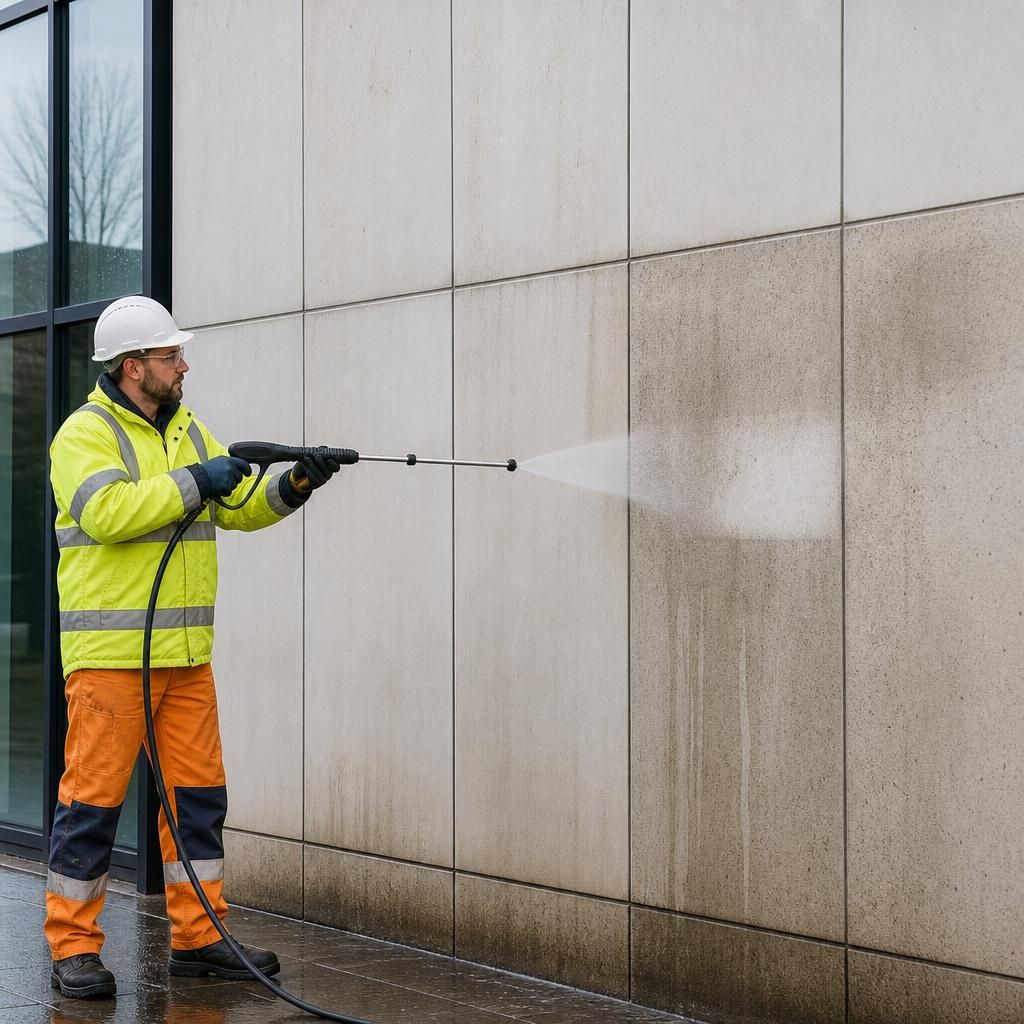
The safest and most effective façade cleaning setting is established through a controlled test area, starting with the lowest pressure likely to remove the identified contamination. This test shows whether the surface, joints, coatings and seals can withstand the cleaning method before work proceeds across the full elevation.
The test should assess more than immediate appearance. After rinsing and drying, the area should be checked for mortar erosion, render loss, coating damage, roughening, uneven colour and signs of water entering joints or fittings. If deposits remain, the method can be adjusted by changing the nozzle distance, spray pattern, water temperature or cleaning solution rather than simply increasing pressure. This approach helps produce a consistent finish while limiting avoidable damage to the façade.