
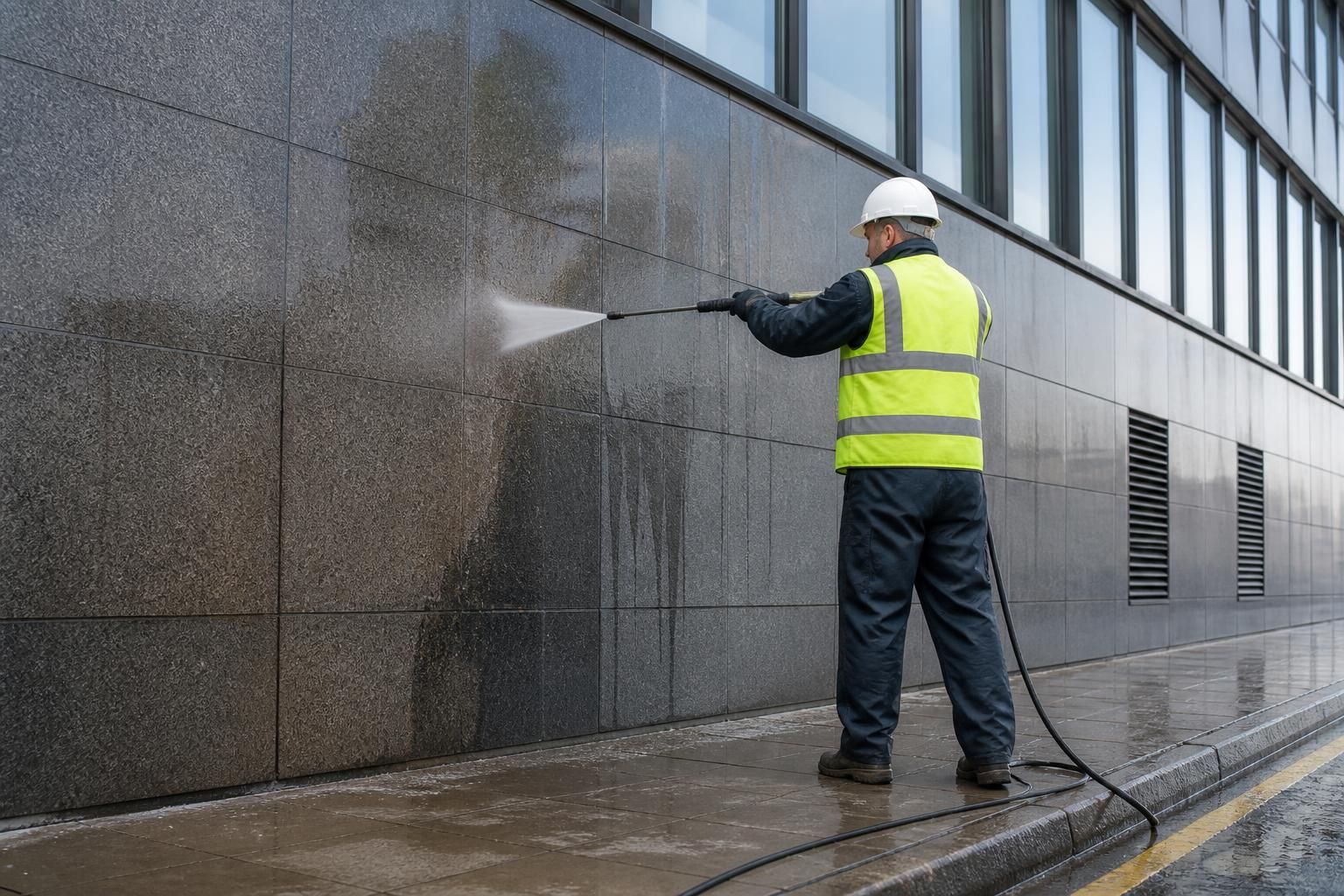
What types of façade materials are best suited for hot water pressure washing?
Hot water pressure washing is generally well suited to robust, non-porous façade materials such as brick, concrete, stone, porcelain, glazed tiles and many metal cladding systems. Timber, painted or rendered surfaces, soft stone and aged or damaged façades require lower pressure, controlled temperature and a professional suitability assessment to prevent surface damage.
Hot water pressure washing is best suited to robust, non-porous façade materials that can tolerate controlled heat and water pressure. Brick, concrete, many natural stones, porcelain and glazed tiles, and well-maintained metal cladding are usually suitable, provided the surface is sound and the correct pressure, temperature and nozzle are selected. Softer, painted, rendered, timber or damaged façades need a more cautious assessment and often a lower-pressure or steam-cleaning approach.
Brickwork is commonly suitable for hot water pressure washing. Heated water helps break down traffic film, soot, algae, moss, oils and other organic deposits without relying solely on aggressive pressure or strong chemicals. Sound, dense facing brick generally responds well, but older or porous brick can be vulnerable to surface erosion, spalling and water penetration. Mortar joints should also be checked, particularly where repointing is weathered or defective.
Concrete façades are generally compatible with hot water cleaning when the concrete is structurally sound. The process can remove ingrained dirt, biological growth, pollution deposits and some oily contamination from precast panels, retaining structures and other external concrete surfaces. Care is needed around exposed aggregate, cracked areas, friable surfaces and decorative finishes, as excessive pressure can dislodge aggregate or enlarge existing defects.
Natural stone can often be cleaned with heated water, but suitability depends on the type, condition and finish of the stone. Dense granite and some harder, well-maintained stones are usually more tolerant than soft limestone, sandstone or heavily weathered surfaces. Hot water should not be treated as a universal solution for stone: high pressure, thermal shock or unsuitable cleaning methods can mark the surface, open pores, damage pointing or remove a valued patina. A small test area is important before broader cleaning.
Porcelain, ceramic and glazed tiles are typically well suited to hot water pressure washing because their finished surfaces are dense and resistant to moisture. The main risks are not usually the tile face itself, but failed grout, loose tiles, cracked glaze, defective sealant and water entering behind the façade system. Joints, edges, movement gaps and attachments should therefore be inspected before cleaning.
Metal cladding, including coated steel and aluminium systems, may be cleaned with hot water where the coating is intact and the manufacturer’s care requirements allow it. Heated water can be effective against atmospheric grime, algae and oily deposits on industrial and commercial elevations. Pressure must be controlled around laps, joints, fixings, vents and sealants. Damaged, oxidised or chalking coatings may need a gentler method, and the cleaning process should not force water behind panels or into the building envelope.
Glass and glazed façade elements can usually tolerate warm-water cleaning, but pressure washing is not appropriate for every glazed system. Sealants, gaskets, window vents, opening lights and drainage channels can be affected by direct high-pressure spray. Where glass forms part of a curtain wall or rainscreen assembly, the surrounding framework and joints are as important as the glass itself.
Painted surfaces and render require greater care. Sound, well-adhered masonry paint or durable render may accept low-pressure hot water cleaning, particularly where algae or surface grime is the main problem. However, heat and pressure can soften, blister, strip or visibly alter coatings. Textured render can also retain water and may be damaged if the spray is held too close to the surface. A professional assessment should establish whether cleaning, repainting, repair or a combination of treatments is the appropriate option.
Timber façades are not normally suitable for standard high-pressure hot water washing. Timber can absorb water, raise its grain, damage protective coatings and suffer from surface erosion. Accidental water entry at joints or behind boards can also contribute to swelling or decay. Where timber must be cleaned, a low-pressure method with controlled moisture and an appropriate follow-on treatment is generally safer.
Soft, historic or heavily weathered materials should be treated as specialist surfaces. Old brick, soft stone, lime-based mortar, historic render and carved details may be permanently marked by conventional pressure washing. Lower-pressure steam cleaning, nebulous water cleaning or another conservation-led method may be more appropriate. The objective should be to remove harmful deposits without removing the surface material or changing the appearance of the façade.
Suitability depends on more than the material name. Before work begins, the façade should be assessed for porosity, existing coatings, cracks, failed joints, previous repairs, biological growth, corrosion, loose components and areas where water could enter. The cleaning specification should then set out the appropriate temperature, pressure, nozzle, working distance, drainage arrangements and any restrictions around windows, vents, signage and electrical equipment.
A controlled test clean is particularly important where materials are mixed, such as brick with stone detailing, render with metal trims or tiles over a backing system. The test should be inspected after drying, because staining, colour variation, coating damage and moisture-related problems may not be immediately visible. This approach confirms whether hot water pressure washing is suitable and allows the method to be adjusted before the full façade is treated.
In practical terms, hot water pressure washing is most reliable on sound brick, concrete, dense stone, glazed tile, porcelain and suitable metal cladding. It can be used on other materials only with appropriate controls and, in some cases, a different cleaning technique. For commercial and industrial façades, identifying the substrate and its condition before choosing the equipment is essential to achieve effective cleaning without compromising the building envelope or its finish.
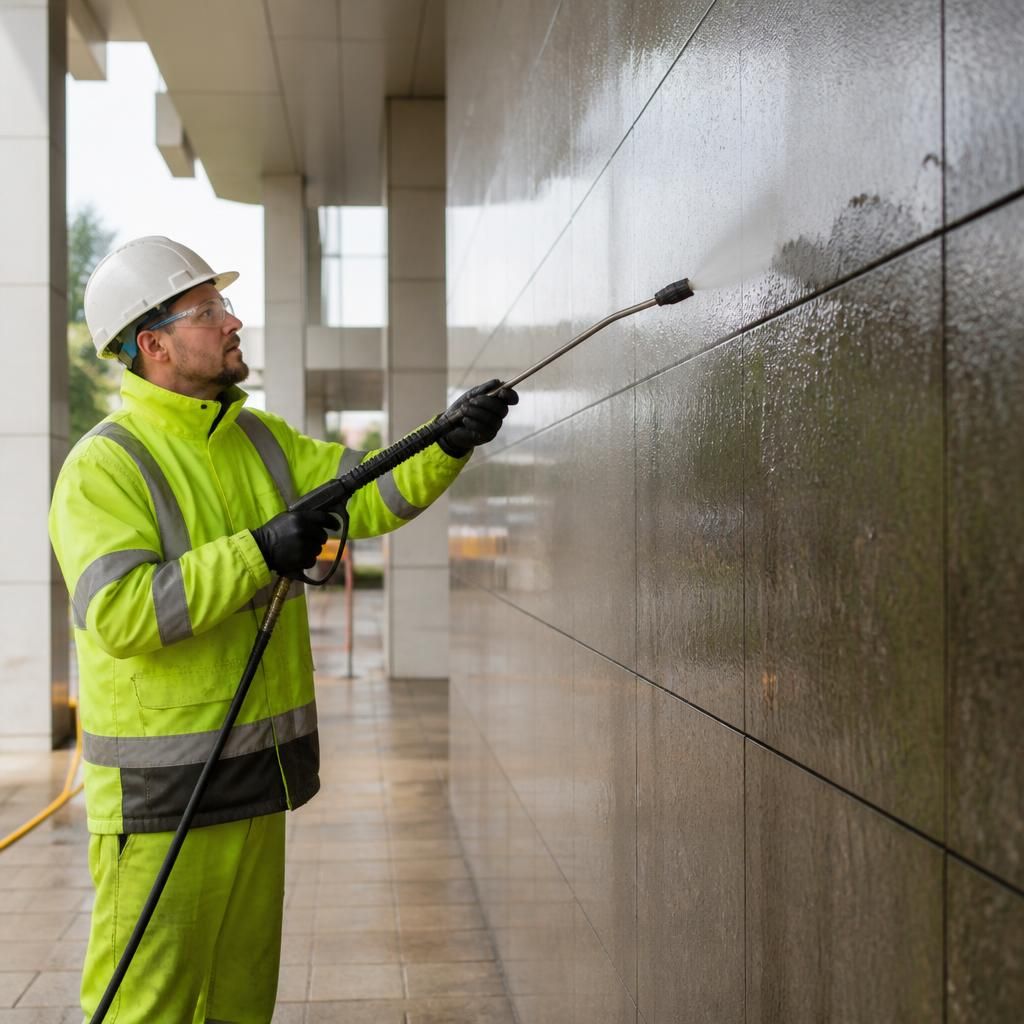
Material condition is just as important as material type. Sound brick, concrete, dense stone, glazed tile and intact metal cladding are generally well suited to hot water pressure washing, but cracked surfaces, open joints, failed coatings and weathered areas require a reduced pressure or alternative cleaning method.
A controlled test clean should be completed before treating the full façade. This checks whether the selected temperature and pressure remove the deposits without causing erosion, colour change, coating damage or water ingress. Mixed façades should be assessed element by element, with particular care around windows, sealants, vents, fixings and damaged mortar.
Book a façade suitability assessment
Arrange a façade suitability assessment with Encanto Exterior Cleaning to identify the safest hot water pressure washing method for your building materials and their condition. We can recommend the appropriate temperature, pressure and cleaning approach before work begins.