
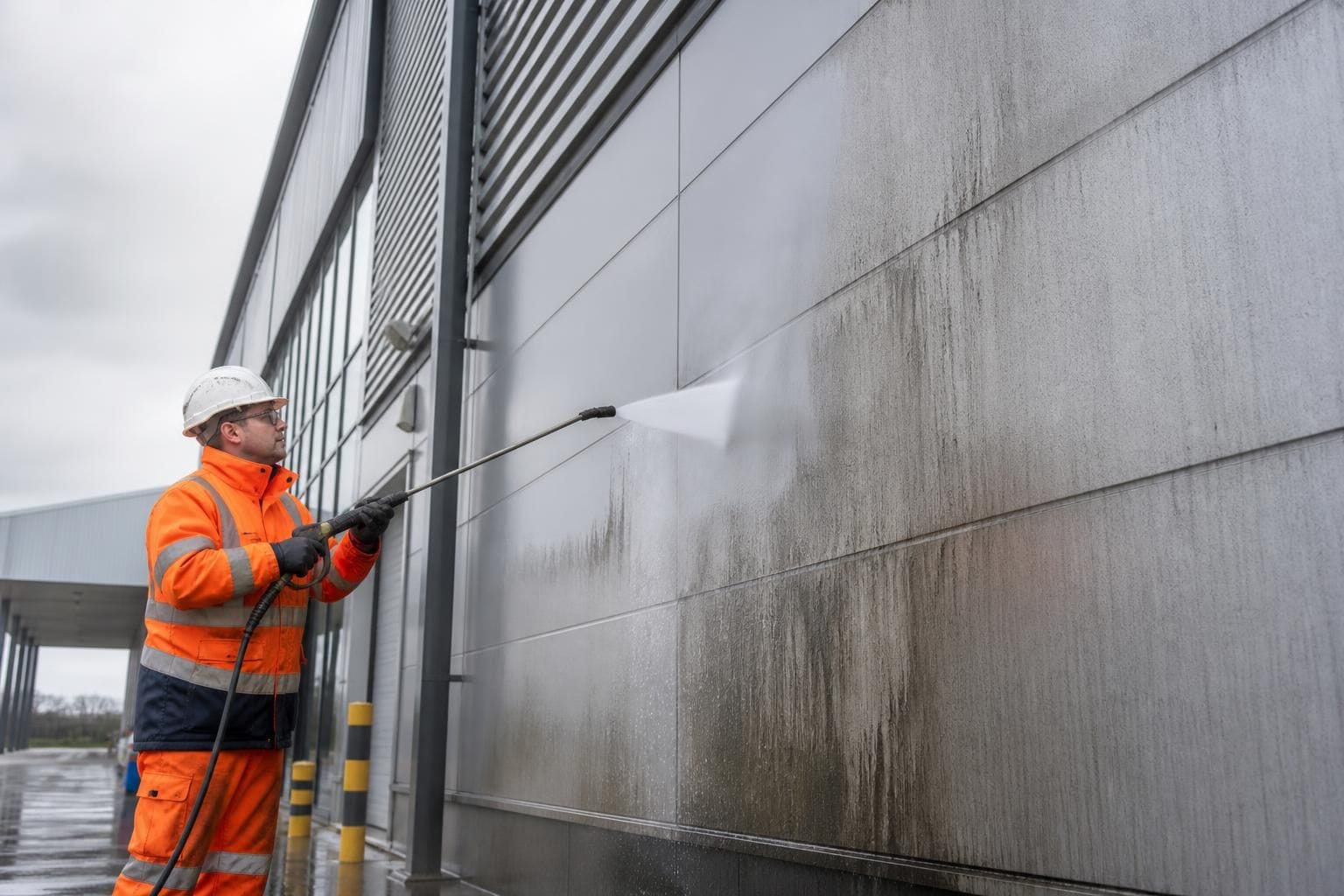
What surfaces can hot water pressure washing effectively clean without damage?
Hot water pressure washing can effectively clean robust surfaces such as brickwork, concrete, stone, paving, tarmac, metal cladding and some rendered façades without damage when the correct temperature, pressure and nozzle are selected. Delicate, aged or poorly bonded materials require a site assessment and controlled testing first, as excessive heat or pressure can affect coatings, joints, sealants and vulnerable surfaces.
Hot water pressure washing can clean robust, non-porous surfaces such as brickwork, concrete, natural stone, paving, tarmac and suitable metal cladding without damage when the water temperature, pressure, nozzle and cleaning distance are matched to the material. Heat helps loosen grease, oil, traffic film, biological growth, chewing gum and some deposits, but it does not make every surface suitable for high-pressure cleaning. Aged, coated, friable or poorly bonded materials should be assessed and test-cleaned before the main work begins.
Brickwork is generally well suited to hot water pressure washing, particularly where façades have accumulated soot, traffic pollution, algae or organic staining. Sound, dense brick can tolerate controlled cleaning, but older or softer bricks may have eroded faces or vulnerable mortar joints. Excessive pressure can widen joints, remove the outer surface of the brick or force water into the wall. The lance should therefore be kept at a suitable distance, with pressure reduced where necessary and the mortar condition checked before cleaning.
Concrete is usually a suitable surface for hot water cleaning. It can be used on walls, columns, loading areas, steps and other external structures to remove dirt, oil, chewing gum and biological deposits. The main risks are surface etching, exposing aggregate or damaging already weakened concrete. Cracks, spalled sections and previously repaired areas need particular care because hot water and pressure can remove loose material or penetrate defects.
Natural stone can often be cleaned effectively, but suitability depends on the type, finish and condition of the stone. Dense granite and some well-maintained sandstone surfaces may respond well to controlled hot water cleaning. Softer or porous stone, including weathered limestone, may be affected by excessive pressure, heat or water absorption. Stone façades should be checked for delamination, open joints, previous coatings and existing deterioration. A small, inconspicuous test area helps establish the safest method before wider cleaning.
Block paving, concrete paving and slabs are commonly suitable for hot water pressure washing. The method can remove ingrained dirt, algae, moss, oil and other deposits from pedestrian areas, service yards and access routes. Care is needed around jointing material, drainage channels, loose slabs and damaged edges. Cleaning can displace jointing sand or reveal movement that was already present, so joints and trip hazards should be inspected afterwards and reinstated where required.
Tarmac and asphalt can be cleaned with hot water, particularly where oil, grease, tyre marks or organic growth are present. However, excessive heat or pressure may soften the binder, disturb loose aggregate or leave visible cleaning marks. The surface condition, age, weather and type of contamination all affect the appropriate settings. Hot water should be used in a controlled way, with care around damaged edges, patched areas and surfaces exposed to prolonged heat.
Metal cladding and architectural metalwork are often suitable for hot water cleaning when the coating and substrate are sound. Hot water can remove traffic film, grease, bird fouling and general atmospheric deposits from coated steel, aluminium and similar surfaces. The key concern is not usually the metal itself, but the paint, powder coating, protective finish, sealants and joints. High pressure can lift a failing coating or drive water behind panels, while unsuitable cleaning may mark or dull the finish. A lower-pressure approach and a compatible detergent may be preferable for coated or decorative panels.
Rendered façades require a more cautious assessment. Sound, well-bonded cement render may be cleaned with controlled hot water pressure, especially when removing algae or surface dirt. Render that is cracked, hollow, powdery, loose or recently repaired can be damaged by water impact. Insulated render systems and textured finishes may have specific manufacturer requirements. Pressure should be kept as low as practical, and test cleaning should confirm that the texture, colour and bond remain unaffected.
Painted and coated surfaces can sometimes be cleaned safely, but hot water is not automatically suitable for every coating. Heat and pressure may soften paint, expose a weak substrate, remove decorative finishes or worsen existing flaking. Before cleaning, the coating should be checked for adhesion, chalking, blistering and previous repairs. If the purpose is to retain the coating rather than strip it, the cleaning method must be set below the point at which the finish is disturbed.
Glass, windows and glazed elements should not normally be treated in the same way as masonry. Glass may be damaged by trapped grit, a concentrated jet, sudden temperature changes or pressure directed at seals and frames. Hot water may be appropriate for carefully controlled cleaning of compatible glass, but the nozzle should not be held close to the pane, and seals, gaskets, vents and adjacent coatings must be protected. Specialist window-cleaning methods are often more appropriate for routine glazing.
uPVC, plastics, timber and composite materials need individual consideration. Low-pressure cleaning may be suitable for sound uPVC frames, doors and some composite panels, but high heat can deform plastics or affect seals. Timber can absorb water, lift fibres and suffer coating failure, particularly when weathered. Composite panels may contain finishes or cores that are vulnerable to heat or water penetration. These materials should be tested and cleaned using the lowest effective pressure and temperature.
Hot water pressure washing is generally unsuitable for surfaces that are already loose, delaminating, friable, cracked or poorly bonded. It should also be reconsidered where water could enter electrical equipment, cavity openings, roof build-ups, failed joints or occupied internal areas. The presence of asbestos-containing materials, lead-based coatings or unknown surface treatments requires appropriate controls and, where necessary, specialist advice before any cleaning takes place.
Safe cleaning depends on more than the surface name. The assessment should consider:
- the material, age, porosity, finish and structural condition;
- the type and strength of the contamination;
- the required water temperature and working pressure;
- the nozzle pattern, spray angle and distance from the surface;
- the condition of joints, sealants, coatings, fixings and drainage points;
- nearby windows, vents, signage, electrical equipment and vulnerable landscaping; and
- how wastewater and loosened contaminants will be contained and removed.
A competent operator will begin with a visual inspection and a controlled test patch in a discreet location. The test should be checked after drying, because some damage, colour change or coating failure is not immediately obvious while the surface is wet. The main clean can then use the lowest effective settings, working methodically and avoiding prolonged heat on one area. If the test shows that pressure washing could affect the substrate, alternatives such as soft washing, steam cleaning, gentle agitation or a specialist stone and façade treatment may be safer.
In practical terms, brick, concrete, sound stone, paving, tarmac and suitable metal cladding are the surfaces most likely to benefit from hot water pressure washing. Render, painted finishes, glazing, plastics, timber and composite materials are not automatically excluded, but they require tighter controls and a material-specific assessment. Selecting the method after inspecting the façade is the best way to remove contamination effectively while preserving the surface, joints and protective finishes.
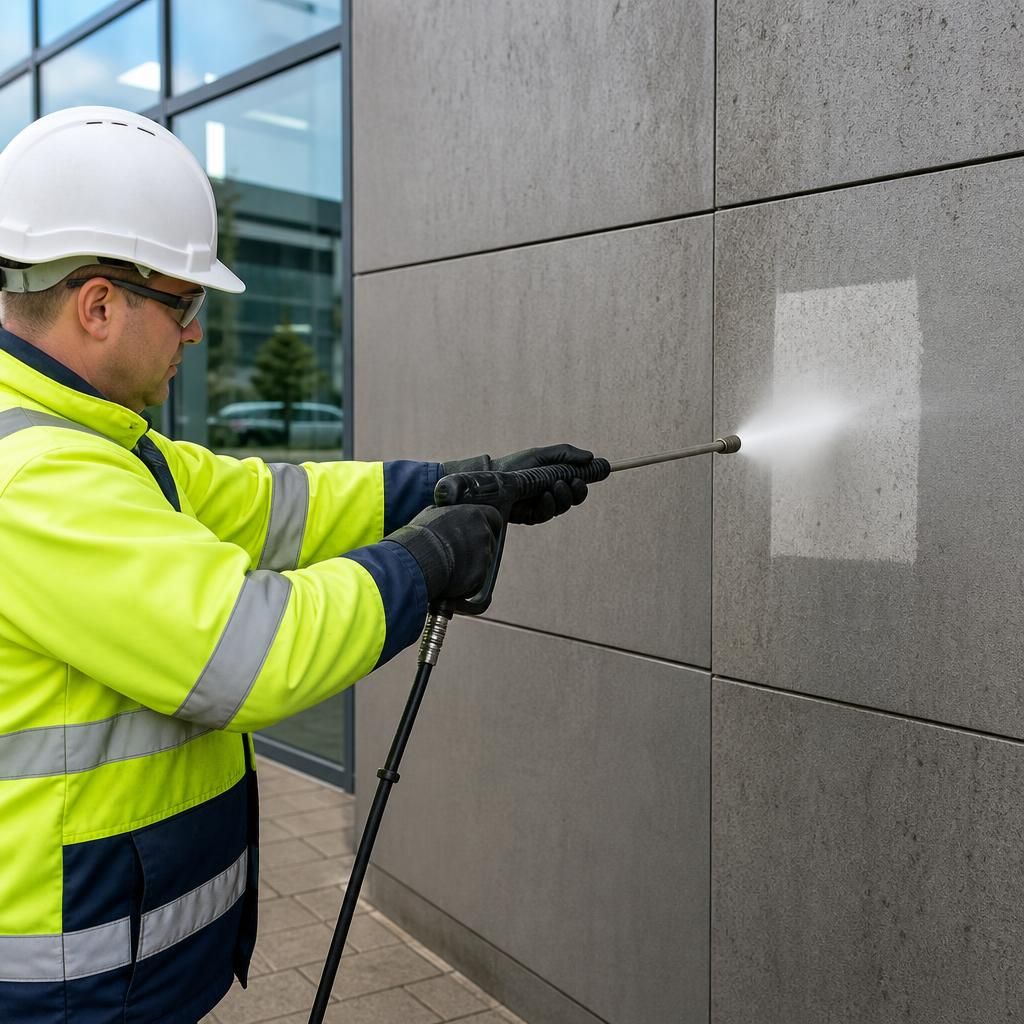
Hot water pressure washing is safest when the surface is tested first and the lowest effective temperature and pressure are used. A discreet test patch shows whether the material, coating, mortar joints or sealants can withstand the cleaning process without etching, colour change or loss of adhesion.
The test area should be inspected after it has dried, as some damage is not visible while the surface is wet. If the result is satisfactory, the operator can match the working distance, nozzle and pressure to the façade and avoid prolonged heat on one section. Where the test reveals deterioration or coating failure, a gentler method such as steam cleaning or soft washing may be more appropriate.
Arrange a façade surface assessment
Arrange a façade surface assessment to confirm whether hot water pressure washing is suitable for the material, coating and existing condition. Encanto Exterior Cleaning can recommend the safest cleaning method and carry out controlled test cleaning where required.