
What safety measures should be considered when using hot water pressure washing on building façades?
Hot water pressure washing on building façades requires a site-specific risk assessment, trained operators, suitable PPE, controlled access and careful adjustment of water temperature and pressure to protect workers, the public and the façade material. Operators should also manage hoses, electrical equipment, runoff, working-at-height risks and nearby occupants in line with current health and safety requirements.
Safe hot water pressure washing of building façades depends on a site-specific risk assessment, competent operators, suitable personal protective equipment (PPE), controlled access and careful management of heat, pressure, water and working-at-height hazards. The equipment, cleaning method and operating limits should be selected for the façade material and the conditions at the premises, rather than relying on a standard setting.
Complete a risk assessment and method statement
Before work begins, the cleaning contractor should inspect the façade, surrounding ground and access arrangements, then prepare a suitable risk assessment and method statement. This should address:
- the condition, construction and height of the façade;
- the maximum suitable water temperature and pressure;
- falling-object, slip, trip and electrical risks;
- nearby pedestrians, vehicles, tenants and members of the public;
- water discharge, drainage and any contaminated runoff;
- access equipment, weather conditions and emergency arrangements; and
- the location of fragile materials, openings, vents, signage, cables and other building features.
Any previous coatings, loose masonry, damaged pointing or suspected asbestos-containing materials should be identified before cleaning. Pressure washing should not be used to remove or disturb hazardous materials unless the work has been properly assessed and controlled under the relevant regulations.
Use trained and competent operators
Hot water pressure washers combine thermal energy with high water pressure, so operators need practical training in the specific machine and attachments being used. They should understand how to adjust pressure, temperature, flow and nozzle selection, and recognise when a surface is reacting badly. Operators must follow the equipment manufacturer’s instructions, receive a clear site briefing and know how to isolate the machine quickly in an emergency.
Equipment should be checked before use, including hoses, couplings, trigger guns, lances, nozzles, fuel lines, guards, electrical connections and emergency shut-off controls. Damaged or leaking components should be removed from service rather than temporarily secured with unsuitable tape or fittings. Routine servicing and inspection records should be maintained in line with the manufacturer’s requirements and the company’s equipment procedures.
Wear PPE suited to heat, pressure and contaminants
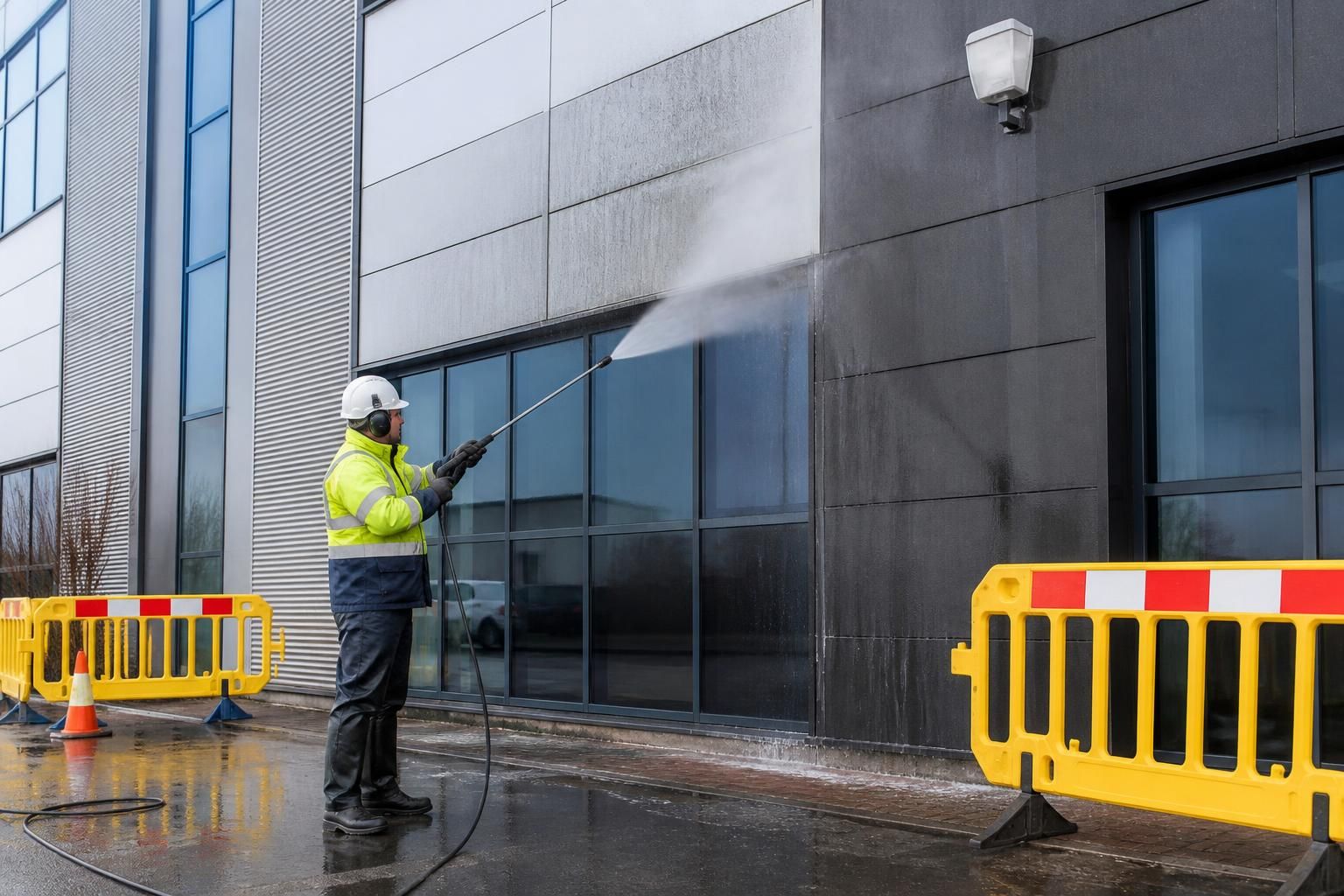
PPE does not replace safe working methods, but it reduces exposure if water, debris or cleaning residue reaches the operator. The required combination will depend on the task and the substances present, but may include:
- waterproof protective clothing and suitable gloves with thermal and grip protection;
- eye protection or a full-face visor to guard against spray and fragments;
- slip-resistant, waterproof safety footwear;
- hearing protection where noise levels require it;
- head protection where there is a risk of falling debris; and
- respiratory protection where the assessment identifies airborne dust, biological matter or chemical vapour risks.
Operators should avoid exposed skin at points where hot spray, rebound or contaminated water could make contact. PPE must be kept clean, inspected and replaced when damaged or no longer providing effective protection.
Control the work area and protect the public
Hot water, high-pressure spray and loosened façade debris can injure people outside the immediate cleaning team. Establish a clearly defined exclusion zone around the work area using suitable barriers and warning signs. Do not rely solely on signs where pedestrians could enter the spray path. A trained banksman or site marshal may be needed to control vehicle and pedestrian movements, particularly at entrances, pavements, car parks and busy commercial premises.
Coordinate the work with the building manager and inform occupants about access restrictions, noise, spray, temporary closure of doors or windows and any planned interruption to normal activities. Keep windows, air intakes, doors and vulnerable equipment closed or protected where appropriate. Never direct hot spray towards people, animals, traffic, glazing or occupied areas.
Manage working at height carefully
Façade cleaning frequently involves ladders, mobile access towers, powered access platforms or rope-access systems. The safest practical method should be selected after assessing the height, reach, ground conditions, façade profile and duration of the work. Access equipment must be suitable, inspected and used by trained personnel. It should be positioned on stable ground, secured where necessary and kept clear of the pressure-washer hose and other trip hazards.
Operators working from a platform must account for the reaction force from the lance and avoid overreaching. Hoses, lances and tools should be managed so that they cannot pull an operator off balance or fall onto people below. Where fall-arrest equipment is required, it must be compatible with the access system and attached to an appropriate anchor point. Dropped-object controls should include tool restraints or a protected exclusion zone where necessary.
Set temperature and pressure conservatively
Hot water can soften coatings, damage sealants, affect joint materials and cause thermal shock to some surfaces. Begin with the lowest effective pressure and temperature, then increase them only when testing shows that the substrate can tolerate the change. Test an inconspicuous area first and allow it to dry before assessing colour, texture, coating adhesion, pointing and any signs of water penetration.
Keep the lance moving at a controlled distance and avoid concentrating the spray on joints, cracks, vents, seals, edges, damaged render or open masonry. Use a suitable nozzle and spray pattern rather than attempting to compensate for an unsuitable attachment by increasing pressure. Take additional care around glass, natural stone, terracotta, painted surfaces, metal panels and older façades, as their resistance can vary significantly even within the same elevation.
Prevent burns, slips and equipment-related incidents
Operators should treat the lance, trigger gun, hose and discharged water as hot during and immediately after use. Allow equipment to cool before maintenance, nozzle changes or handling components that may retain heat, and isolate the machine before clearing a blockage. Never point the lance at another person, even when the trigger is released, and never leave a pressurised machine unattended.
Water and loosened dirt can make paving, steps and access routes slippery. Use hose ramps or suitable routing where hoses cross walkways, keep working surfaces orderly and remove standing water where practicable. Fuel-powered equipment must be positioned to prevent exhaust fumes entering the building or enclosed work areas. Electrical equipment and connections must be protected from water, checked for damage and used in accordance with site electrical safety procedures.
Control chemicals, biological contamination and runoff
If detergents, biocides or other treatments are used with hot water, assess them under the Control of Substances Hazardous to Health requirements and follow the product instructions. Store, dilute and apply them safely, using the PPE and controls identified in the assessment. Hot water may reduce the need for chemicals, but it does not remove the need to manage contaminants released from the façade.
Prevent dirty or chemically contaminated water from entering surface-water drains, watercourses, planted areas or neighbouring property. Use drain covers, bunding, collection systems or other suitable controls where required, and confirm the disposal route before work starts. Collect debris and residues safely, and report any spill or unexpected discharge in accordance with the site’s environmental and emergency procedures.
Monitor conditions and have an emergency procedure
Wind can carry spray and debris beyond the planned work area, while rain, frost and poor visibility can increase slip and access risks. Pause the operation if conditions make the exclusion zone, access equipment or façade inspection unreliable. The team should know how to respond to a burn, pressure-injection injury, fall, chemical exposure, electrical incident, equipment failure or uncontrolled water discharge. First-aid arrangements, communication methods, site access details and emergency contact information should be confirmed before starting.
After cleaning, inspect the façade and surrounding area for damage, loose material, water ingress, blocked drainage, residual contamination and unsafe access conditions. Remove barriers only when the area is safe for normal use. For complex elevations, occupied sites or work at height, using a specialist commercial contractor provides a controlled process from assessment and testing through to completion and handover.
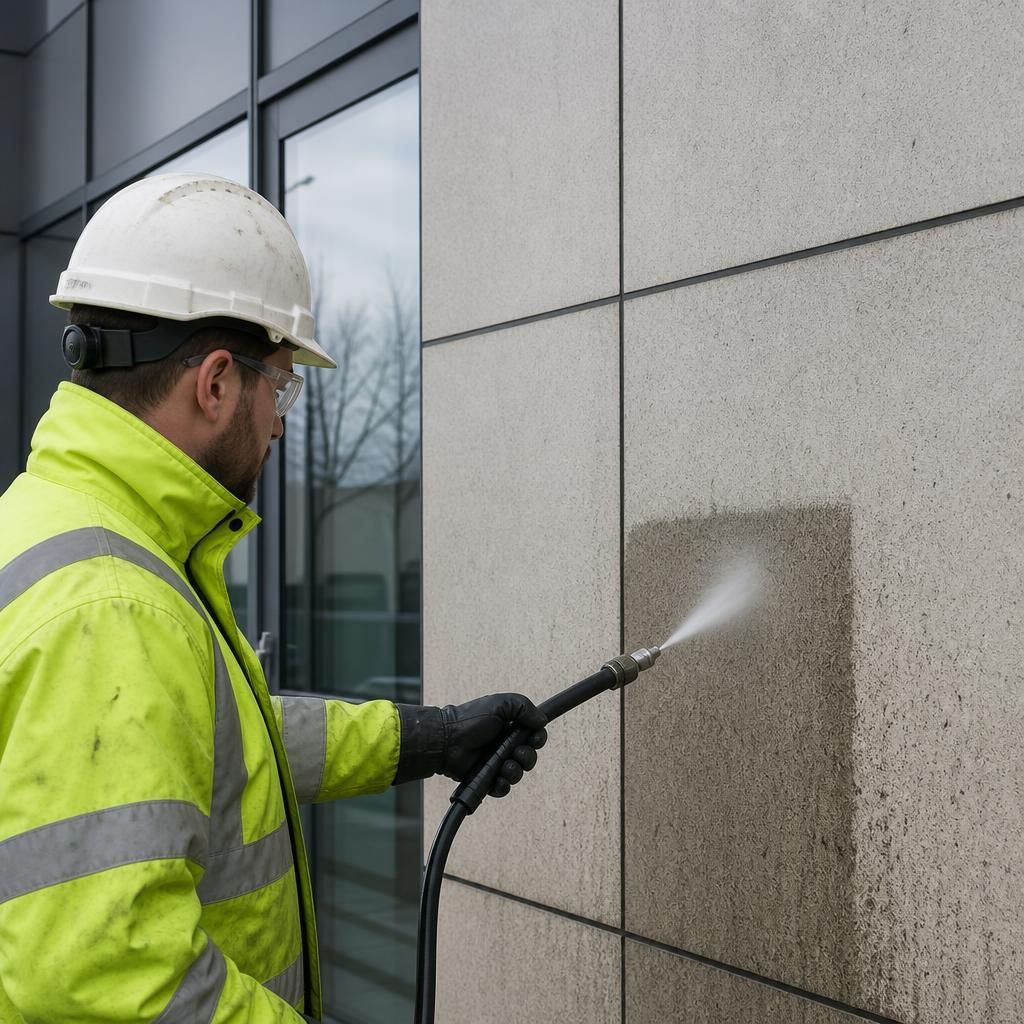
Testing the façade before full-scale hot water pressure washing is a key safety control. A small, inconspicuous area should be cleaned using the lowest practical temperature and pressure, then inspected after drying for coating damage, colour change, surface erosion, loosened pointing or water penetration.
If the substrate reacts adversely, the method must be adjusted or stopped rather than compensating with greater force. This is particularly important on painted finishes, natural stone, terracotta, glazing surrounds, older masonry and areas containing damaged joints or sealants.