
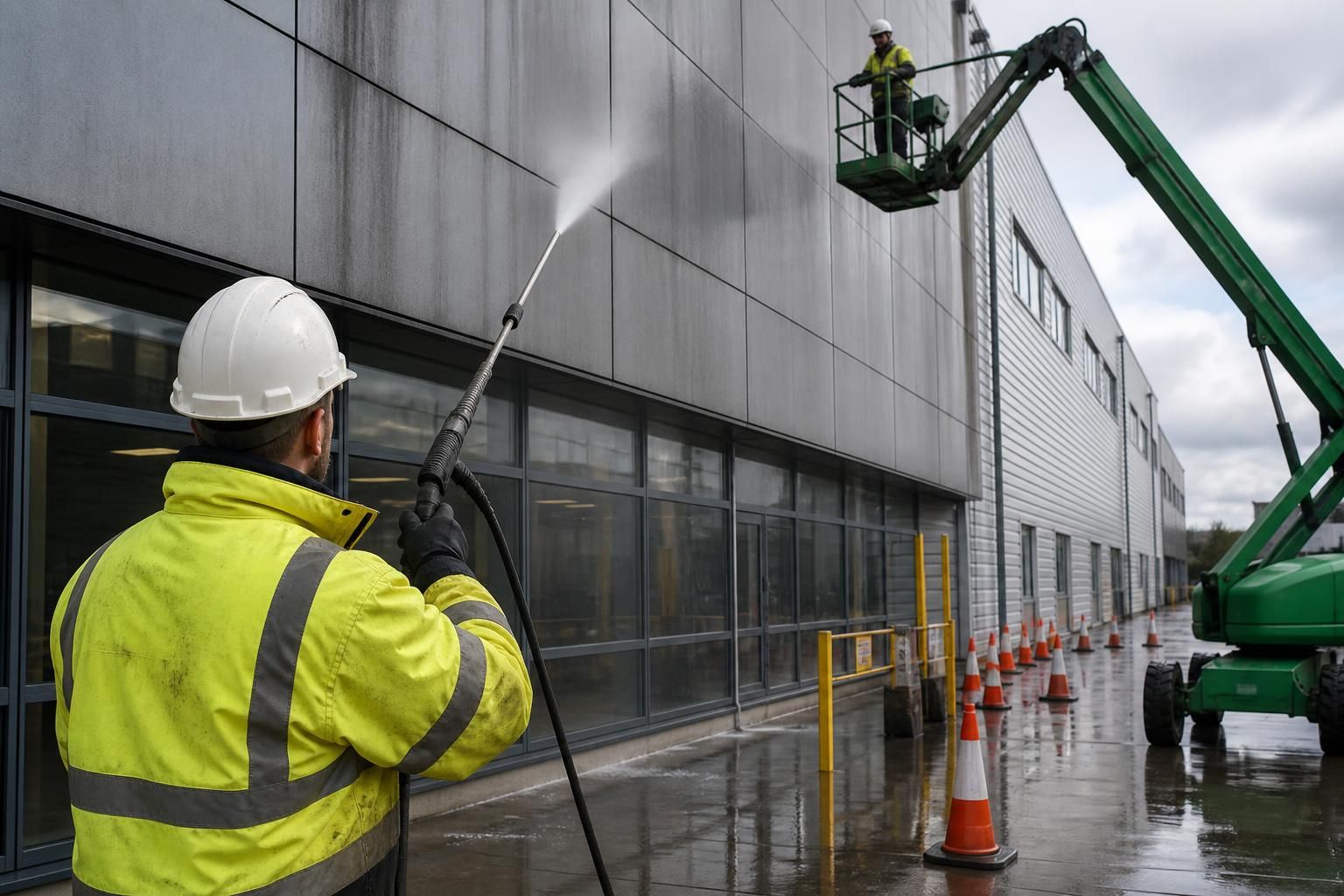
What are the safety precautions to consider when opting for hot water pressure washing for façades?
Hot water pressure washing façades requires trained operators to control water temperature, pressure and spray distance according to the façade material, while checking for loose coatings, damaged joints and vulnerable fittings beforehand. Use suitable PPE and access equipment, establish an exclusion zone, manage hot-water and electrical hazards, and contain runoff to protect people, property and drainage systems.
Hot water pressure washing façades is safe only when the water temperature, pressure, spray distance, access method and runoff controls are matched to the building and the site. The main risks are burns, high-pressure injection injuries, falling objects, slips, damage to the façade and exposure to contaminated water or cleaning chemicals. A competent contractor should assess these risks before work begins and control them throughout the operation.
Assess the façade before applying heat or pressure. The operator should identify the façade material, coating system and condition, including brickwork, render, stone, concrete, metal cladding, glazed surfaces, sealants and painted finishes. Loose masonry, failed pointing, cracked render, open joints, damaged coatings and defective fixings can deteriorate further under pressure. Windows, vents, electrical fittings, sensors, lighting, signage and other vulnerable items should be protected or excluded from the cleaning area. A small test clean in an inconspicuous location can confirm whether the chosen temperature, pressure and detergent are suitable.
Hot water can soften coatings, loosen adhesives and increase the risk of thermal shock on certain materials. Operators should therefore follow the façade and equipment manufacturers’ guidance rather than assuming that a higher temperature will produce a better result. Pressure should be kept as low as practical, the lance should be held at a controlled distance and the spray should not be concentrated on joints, edges or damaged areas. The operator should stop if the surface begins to erode, craze, blister, discolour or allow water behind the cladding or façade system.
Use a documented method statement and risk assessment. These should cover the building condition, water and power supplies, access arrangements, overhead hazards, nearby pedestrians and vehicles, weather conditions, drainage, wastewater, chemical use and emergency procedures. Where detergents, biocides or other treatments are required, the relevant COSHH controls, product instructions and safety data should be followed. Everyone involved should understand the work sequence, exclusion zones, communication arrangements and stop-work conditions before cleaning starts.
Operators need suitable training and personal protective equipment. Protective equipment will normally include waterproof and heat-resistant gloves, eye protection or a face shield, protective footwear with slip-resistant soles, suitable waterproof clothing and hearing protection where noise levels require it. Additional respiratory protection or chemical-resistant equipment may be necessary for particular products or contaminated surfaces. PPE does not replace safe operating procedures: hot water and high-pressure equipment should only be used by trained personnel who understand the controls and limitations of the machinery.
Control access and falling-object risks. Barriers, signage and a clearly defined exclusion zone should keep pedestrians, staff and vehicles away from the façade, hoses and spray. The size of the exclusion zone should reflect the building height, pressure, wind and likelihood of debris or contaminated water travelling beyond the immediate work area. Doors, entrances and emergency routes must not be blocked without an agreed alternative arrangement. If the work is above ground level, loose materials should be removed or secured and the area below should be controlled.
Scaffolding, mobile elevating work platforms, towers and other access equipment must be selected for the task and used on suitable ground. Equipment should be inspected before use, positioned safely and operated by people with the appropriate competence. Harnesses and restraint systems should be used where required by the access method and risk assessment. Pressure-washer hoses should be routed to prevent trip hazards, snagging and damage to the equipment or building. They should never be used to support a person or left across an unprotected public route.
Prevent burns, injection injuries and equipment failures. The lance should always be pointed away from people, animals, glazing and unprotected surfaces. Operators should never touch the nozzle or fittings while the system is hot or pressurised, and the machine should be shut down, isolated and allowed to cool before maintenance, unblocking or changing attachments. A high-pressure jet can penetrate skin even when the wound appears small, so any suspected injection injury requires urgent medical assessment. Leaking hoses, damaged couplings and defective safety devices should be taken out of service immediately.
Hot-water equipment also creates fuel, exhaust, fire and electrical hazards. Boilers and fuel-powered machines should be positioned with adequate ventilation and away from combustible materials, air intakes and public areas. Electrical connections must be suitable for wet conditions, protected by the correct residual-current protection and kept away from standing water wherever possible. Operators should not use damaged leads, plugs or extension equipment, and should follow the manufacturer’s requirements for isolation and storage of fuel.
Manage water, drainage and weather conditions. Runoff may contain dirt, paint fragments, oils, biological growth or cleaning chemicals and should not be allowed to enter surface-water drains without approval. Drain covers, bunding, wet vacuums, collection systems or other containment measures may be needed, with disposal arranged in accordance with site and environmental requirements. Slippery surfaces should be controlled during the work and left in a safe condition afterwards.
Wind can carry hot spray, droplets, debris and chemicals towards people, neighbouring property or ventilation systems. Rain, freezing conditions, poor visibility and extreme temperatures can also make access and ground conditions unsafe. Work should be paused when the weather prevents effective control of the spray, access equipment or runoff. Building occupants should be informed about the work and any temporary restrictions, particularly where windows, entrances or ventilation systems are nearby.
After cleaning, the façade, surrounding ground, access equipment and protected items should be inspected. The contractor should check for coating failure, water ingress, displaced materials, damaged sealants and residual slip or contamination, then remove barriers only when the area is safe. A clear record of the test area, settings, products, defects identified and any follow-up repairs provides useful information for future maintenance. For large or complex premises, coordinating these precautions with the site manager, building owner and relevant specialists helps ensure that hot water pressure washing is carried out without exposing people or the façade to avoidable risk.
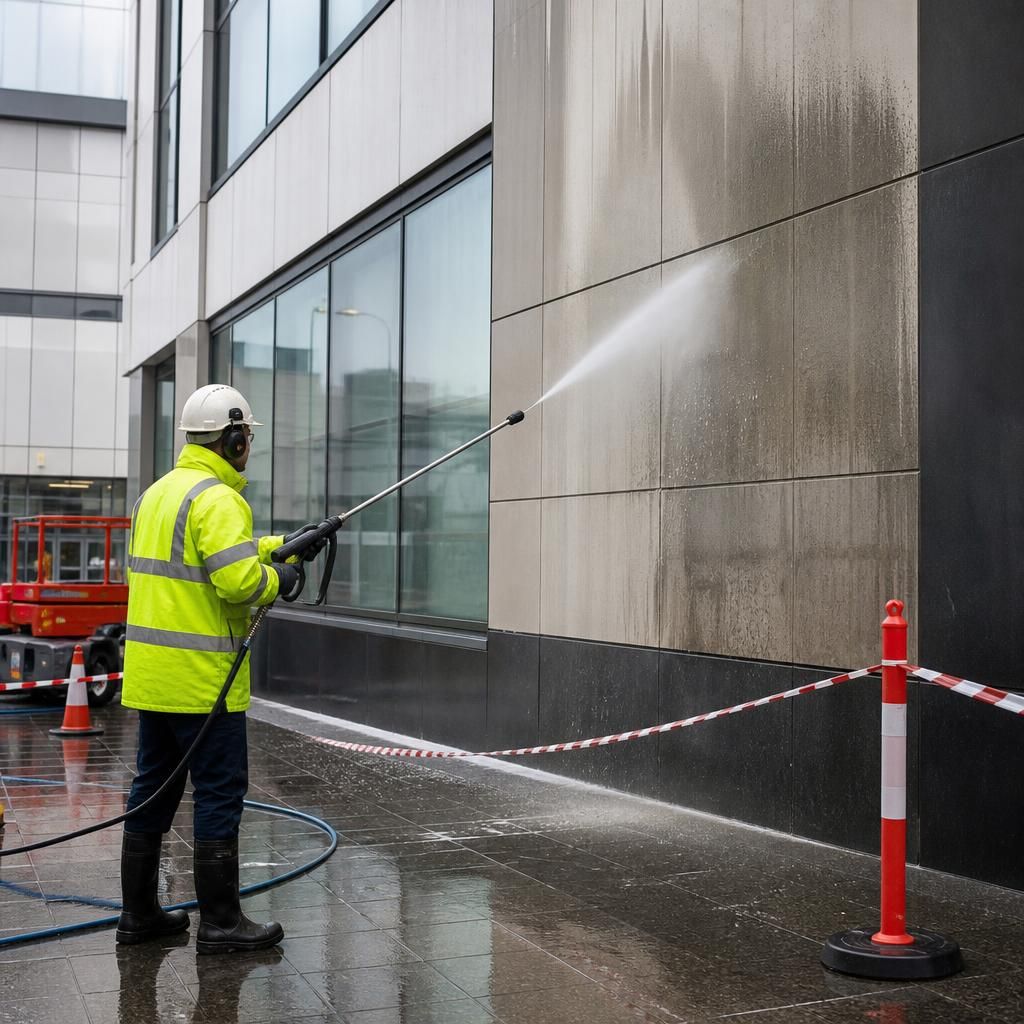
Safe hot water pressure washing of façades depends on controlling heat, pressure, access and runoff before cleaning begins. A competent operator should inspect the façade for loose masonry, failed joints, damaged coatings and vulnerable fittings, then confirm the cleaning settings with a small test area.
People and property must be protected throughout the work. Use suitable PPE, secure access equipment, route hoses safely and establish an exclusion zone below and around the façade. Keep the lance away from people, glazing and electrical fittings, and isolate the machine before changing attachments or clearing blockages. Runoff should also be contained where it may carry debris, oils, biological growth or cleaning products into surface-water drains.
Discuss Your Façade Cleaning Safety Requirements
Discuss your façade cleaning safety requirements with Encanto Exterior Cleaning before work begins, including access, hot-water settings, exclusion zones and runoff control. We can help confirm the appropriate precautions for your building and site conditions.