
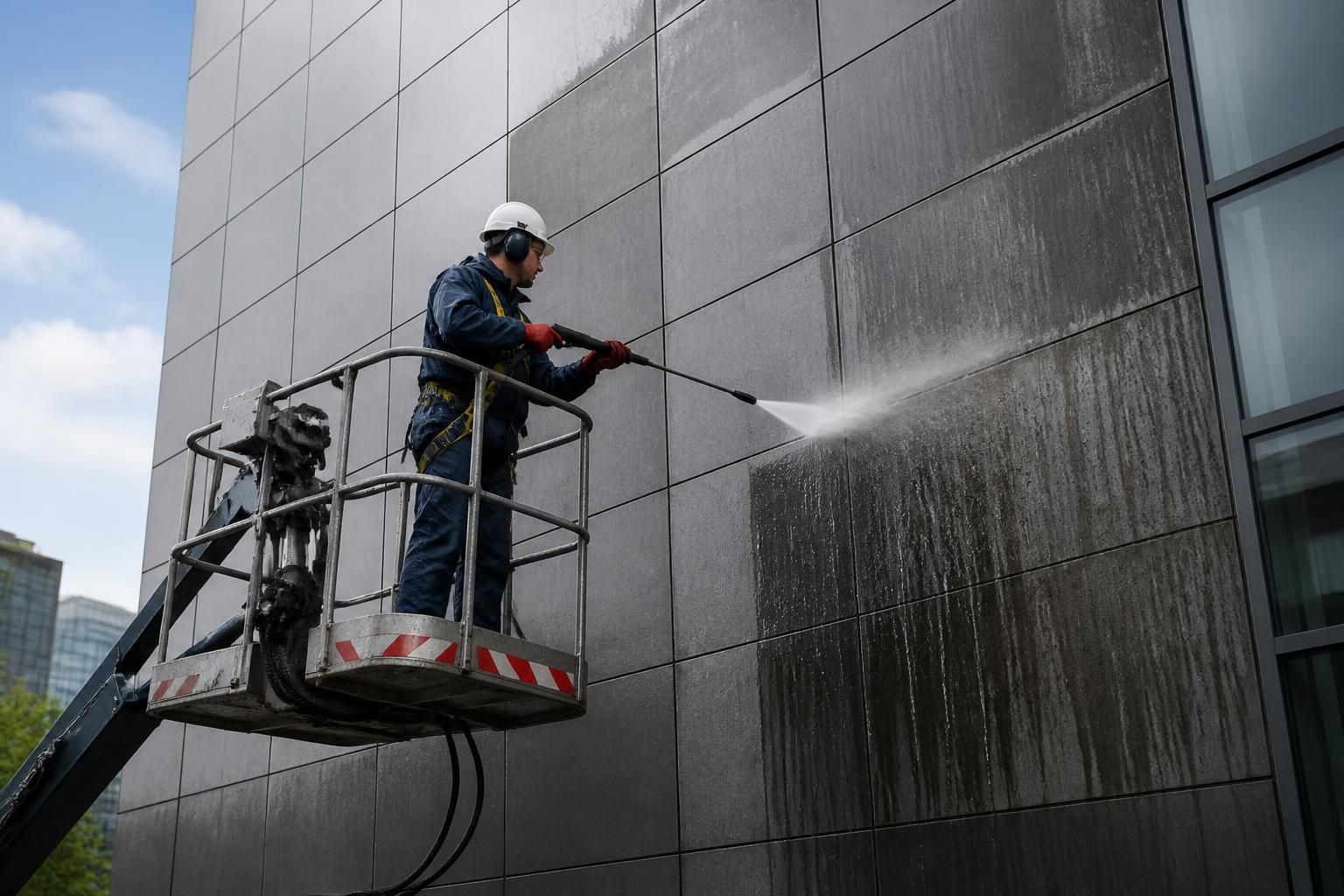
What are the environmental benefits of using hot water pressure washing for façades?
Hot water pressure washing can reduce the need for chemical detergents, remove contaminants efficiently and minimise repeat cleaning, helping to lower chemical discharge, water use and associated environmental impact. Responsible wastewater capture and disposal are still essential, particularly where façade dirt or treatment residues could enter surface drains.
Hot water pressure washing can reduce the environmental impact of façade cleaning by removing dirt, oils, biological growth and other deposits with less reliance on chemical detergents and, in suitable conditions, less water and repeat cleaning. The environmental outcome depends on the equipment, temperature, pressure, cleaning method and wastewater controls used, so hot water should be treated as part of a managed cleaning system rather than an environmental benefit in isolation.
Reduced use of cleaning chemicals is one of the main advantages. Heat helps soften greasy deposits, traffic film, oils and some biological contamination, allowing them to be removed mechanically. This can reduce the need for strong detergents, solvents, biocides or other treatment products. Using fewer chemicals reduces the risk of residues being left on façade materials and limits the quantity that could enter drains or the wider environment if wastewater is not properly contained.
This does not mean chemicals are never required. Certain biological growth, staining or specialist façade treatments may need a carefully selected product, particularly where the objective is to treat the root of the growth rather than only remove its visible surface. A responsible specification uses the least aggressive product that will achieve the required result, applies it only where necessary and follows the manufacturer’s instructions for dilution, dwell time, rinsing and disposal.
Efficient soil removal can also reduce water demand. Hot water loosens deposits more readily than cold water in many applications, so operatives may be able to clean effectively with an appropriate flow rate, pressure and pass pattern instead of compensating with prolonged rinsing or repeated attempts. The actual saving depends on the façade material, the type and thickness of soiling, access arrangements and the condition of the equipment. A poorly controlled hot-water clean can still use excessive water, so monitoring flow and avoiding unnecessary rinsing remain important.
More effective first-time cleaning may reduce repeat work. When a façade is cleaned thoroughly and the method is matched to its material, fewer return visits may be needed to deal with residual traffic film, grease or surface contamination. This can reduce the fuel, transport and equipment use associated with repeated cleaning. It also helps avoid the environmental impact of applying several incompatible treatments to the same surface. However, cleaning frequency should be based on the building’s exposure, material and maintenance needs rather than reduced solely for environmental reasons.
Hot water can support lower-impact mechanical cleaning. Because heat contributes to the cleaning action, it may be possible to use a suitable pressure level rather than relying on excessive pressure to remove deposits. This can be beneficial where the façade has sound but sensitive coatings, pointing or surface finishes. Lower pressure is not automatically safer or more sustainable: the correct setting must be established through inspection and testing, as damage can create a need for repair, replacement or additional materials.
There is an important energy trade-off. Heating water requires fuel or electricity, and the environmental benefit is reduced if the machine is inefficient, left running unnecessarily or operated at a higher temperature than the deposit requires. Efficient burners, well-maintained equipment, sensible temperature selection and good planning help control energy use. Operators should also avoid idling equipment, minimise unnecessary water heating and select the lowest effective temperature for the façade and contamination involved.
Wastewater management is essential. Removed dirt, oil, paint particles, biological residues and cleaning products can make the wastewater unsuitable for direct discharge to surface-water drains. Before work begins, the site should be assessed for drainage routes and nearby watercourses. Where necessary, wastewater should be contained, recovered, filtered or otherwise managed before disposal through an appropriate route. Capturing wastewater prevents the environmental benefit of reduced chemical use from being undermined by uncontrolled discharge.
Particular care is needed on façades affected by:
- oil, fuel or hydraulic-fluid deposits;
- flaking paint, coatings or render;
- bird fouling or other organic contamination;
- algae, moss, lichen or other biological growth;
- old cleaning residues or specialist surface treatments; and
- pollution deposits located above public areas or drainage channels.
These contaminants should be assessed before cleaning so that the appropriate controls can be selected. Wastewater may need to be collected and separated from ordinary rainwater, while solid debris should be prevented from entering drains. The relevant site requirements, trade effluent conditions and local authority expectations should always be checked before discharge or disposal.
The most environmentally responsible approach is therefore to combine hot water with a documented method statement, a façade-material assessment, controlled pressure and temperature, targeted chemical use and suitable wastewater handling. Hot water pressure washing can lower chemical use, improve cleaning efficiency and reduce avoidable repeat work, but careful operation and disposal controls are what turn those potential advantages into a genuinely lower-impact façade cleaning process.
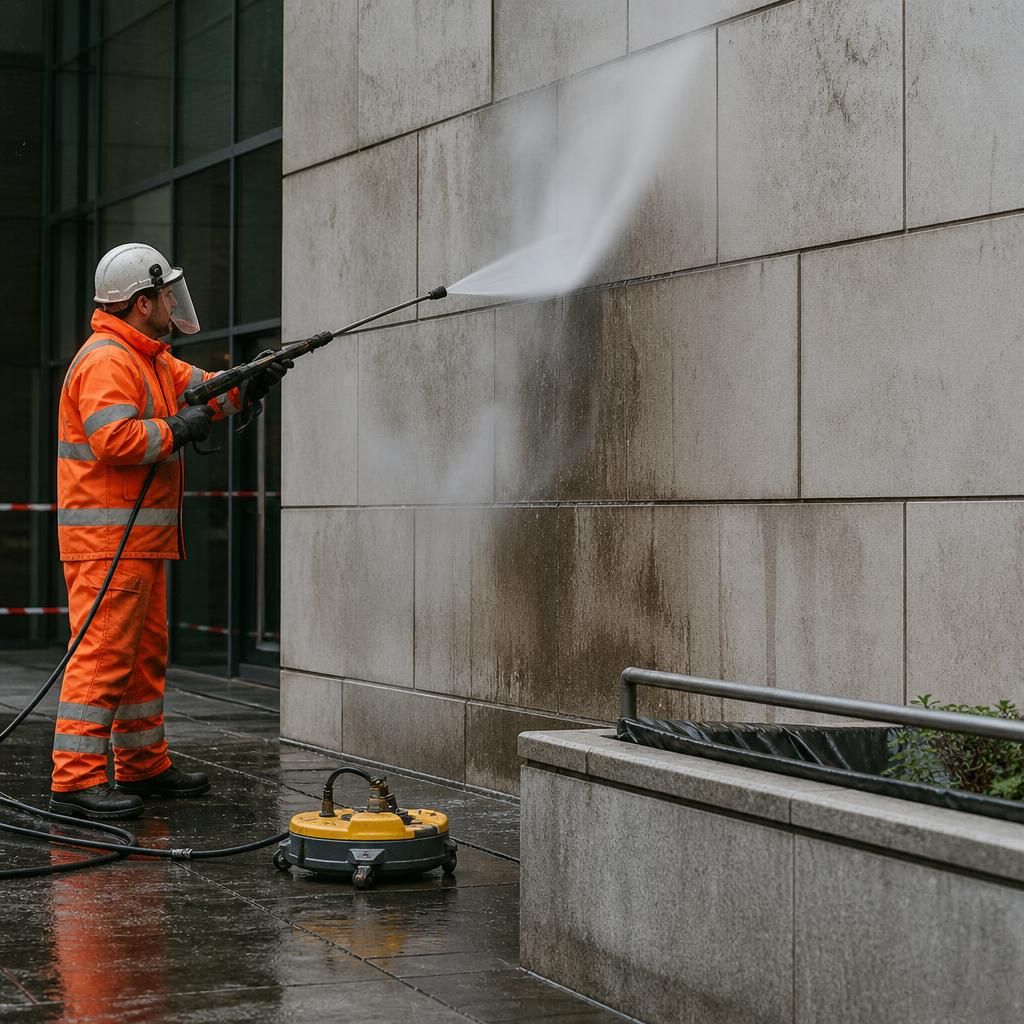
Hot water pressure washing can reduce the need for chemical detergents when cleaning façade deposits such as traffic film, grease and oils. Heat softens these contaminants, allowing controlled mechanical cleaning to remove them without relying on strong solvents or high detergent concentrations.
Using fewer chemicals can reduce the risk of residues remaining on the façade and limit pollutants in recovered wastewater. It does not remove the need for responsible waste management: wastewater containing oil, dirt, biological matter or cleaning products must be contained and disposed of through an appropriate route rather than allowed to enter surface-water drains.
Discuss an environmentally responsible façade cleaning plan
Discuss an environmentally responsible façade cleaning plan with our team, including suitable temperatures, pressure settings, chemical use and wastewater controls for your site. We can help identify a practical method that protects the façade while reducing avoidable environmental impact.