
What are the environmental benefits of opting for hot water pressure washing over chemical cleaning methods for façades?
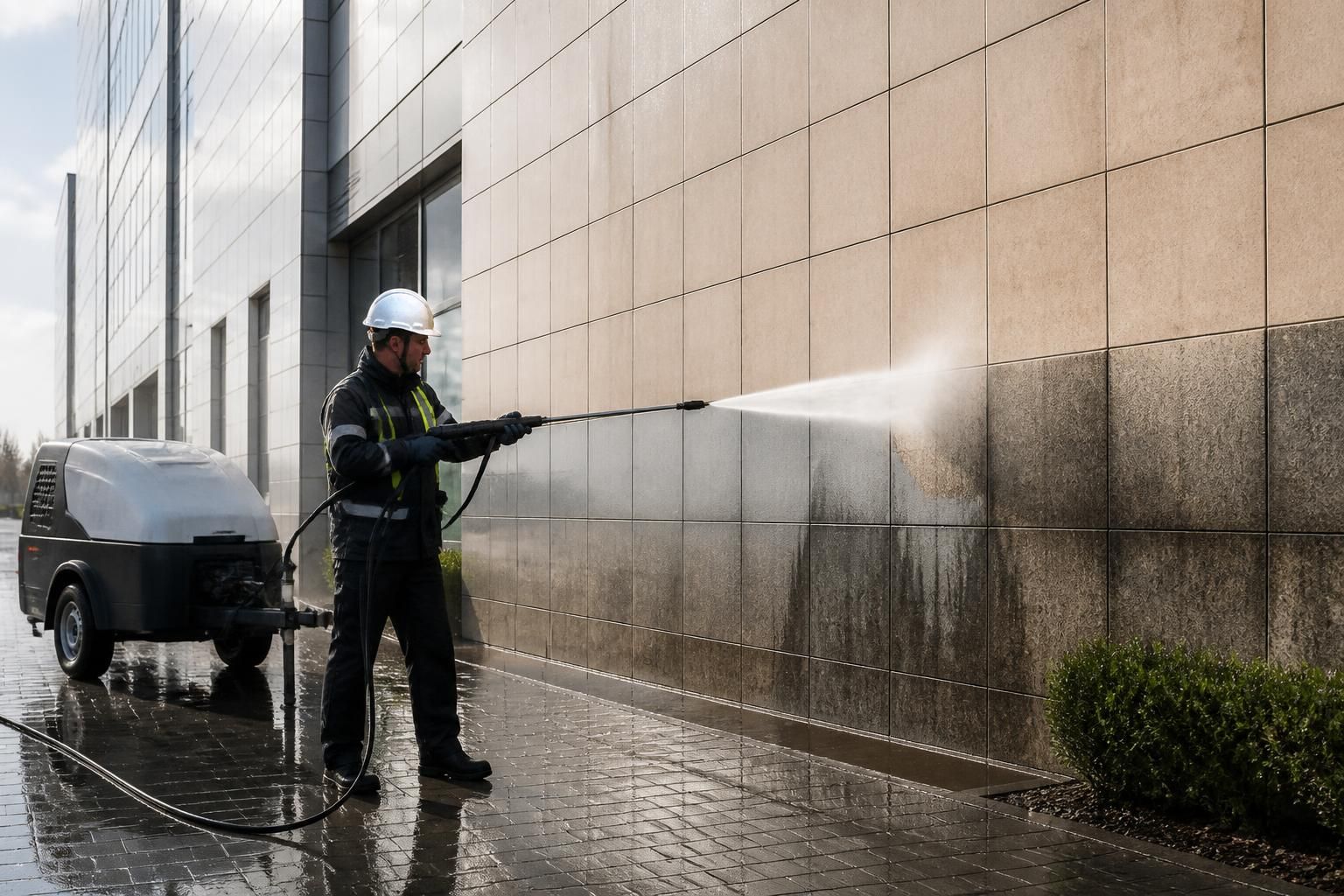
Hot water pressure washing can reduce or eliminate the need for chemical cleaners when removing organic growth, oil, grease and surface grime from façades, helping limit chemical residues and contaminated run-off. When the system is correctly selected and wastewater is managed responsibly, it can also reduce repeat treatments and protect surrounding soil, drains and watercourses, although fuel use and discharge controls still need to be considered.
Hot water pressure washing can provide a lower-impact alternative to chemical façade cleaning because heat helps loosen oils, grease, biological growth and ingrained dirt without relying on large quantities of detergents, biocides or solvents. This can reduce chemical use, limit residues on the building and simplify the management of contaminated run-off, provided the equipment, pressure, temperature and wastewater controls are selected for the façade and the site.
The principal environmental benefits include:
- Reduced chemical discharge: Hot water can break down and lift many common contaminants using water and mechanical action alone. Where chemical pre-treatment is unnecessary, there is less risk of detergent, solvent or biocide entering drainage systems, soil or nearby watercourses.
- Lower risk of persistent residues: Some cleaning products can remain on porous masonry, joints or surrounding surfaces after washing. Avoiding unnecessary chemicals reduces the likelihood of residues affecting plants, adjacent materials or future maintenance work.
- More effective removal of organic contamination: Heat helps soften moss, algae, bird fouling and other biological deposits. This can reduce the need for repeated chemical applications, although established growth may still require a carefully controlled treatment where removal alone will not address the underlying spores or roots.
- Less aggressive mechanical cleaning: Because heat improves the cleaning action, effective results may be achieved at a lower pressure than would otherwise be required. Lower pressure can reduce the risk of damaging masonry, coatings, pointing and sealants, helping preserve the façade and avoid resource-intensive repairs or premature replacement.
- Fewer repeat visits in suitable conditions: A thorough hot water clean can remove both surface grime and greasy deposits that would otherwise cause rapid resoiling. Fewer repeat treatments can reduce equipment use, vehicle movements, water consumption and associated emissions, although the long-term result also depends on the building’s exposure and maintenance regime.
Hot water is particularly useful for façades affected by traffic film, oil-based deposits, food or industrial residues, chewing gum and biological staining. Heat reduces the viscosity of greasy contamination, allowing it to be lifted and recovered more effectively than with cold water alone. This can be valuable on commercial and industrial premises where cleaning residues must be controlled around entrances, loading areas, car parks and drainage points.
Environmental performance depends on what happens to the wastewater as well as how the dirt is removed. Wash water may contain suspended sediment, oils, paint particles, biological material or traces of existing coatings. It should not be allowed to flow unchecked into surface-water drains or watercourses. Appropriate measures may include drain protection, bunding, collection, filtration, recovery and disposal through an authorised route. The correct approach depends on the contamination, site drainage and local requirements.
Hot water pressure washing is not automatically the greener option in every situation. Heating water requires fuel or electricity, and excessive temperature, prolonged washing or poor equipment maintenance can increase energy consumption. A responsible method therefore uses the lowest effective temperature and flow, avoids unnecessary over-cleaning and selects efficient equipment. Where a small, targeted amount of detergent produces a materially better result with less water and energy, its controlled use may be more sustainable than relying on heat alone.
Chemical cleaning should also be assessed on a case-by-case basis. Certain coatings, delicate substrates, heavy biological growth or specialist stains may require a compatible treatment. Products described as biodegradable are not necessarily harmless to aquatic life, plants or drainage systems, so their use still requires correct dilution, application and recovery. Chemicals should never be selected solely on the basis that they are effective; compatibility with the façade and the environmental controls at the site are equally important.
A lower-impact façade cleaning plan should therefore consider:
- the façade material, coating, age and condition;
- the type and depth of contamination;
- the lowest effective pressure, temperature and water flow;
- whether chemical treatment is genuinely necessary;
- how overspray and wastewater will be contained;
- the destination of recovered water and solid waste; and
- whether preventative maintenance could reduce future cleaning requirements.
For existing customers, the practical conclusion is that hot water pressure washing can reduce a façade project’s chemical burden and support better control of wastewater, while also helping protect the substrate from unnecessarily aggressive cleaning. The most environmentally responsible outcome comes from a site-specific method statement, controlled application, appropriate access equipment and responsible waste management rather than from temperature alone.
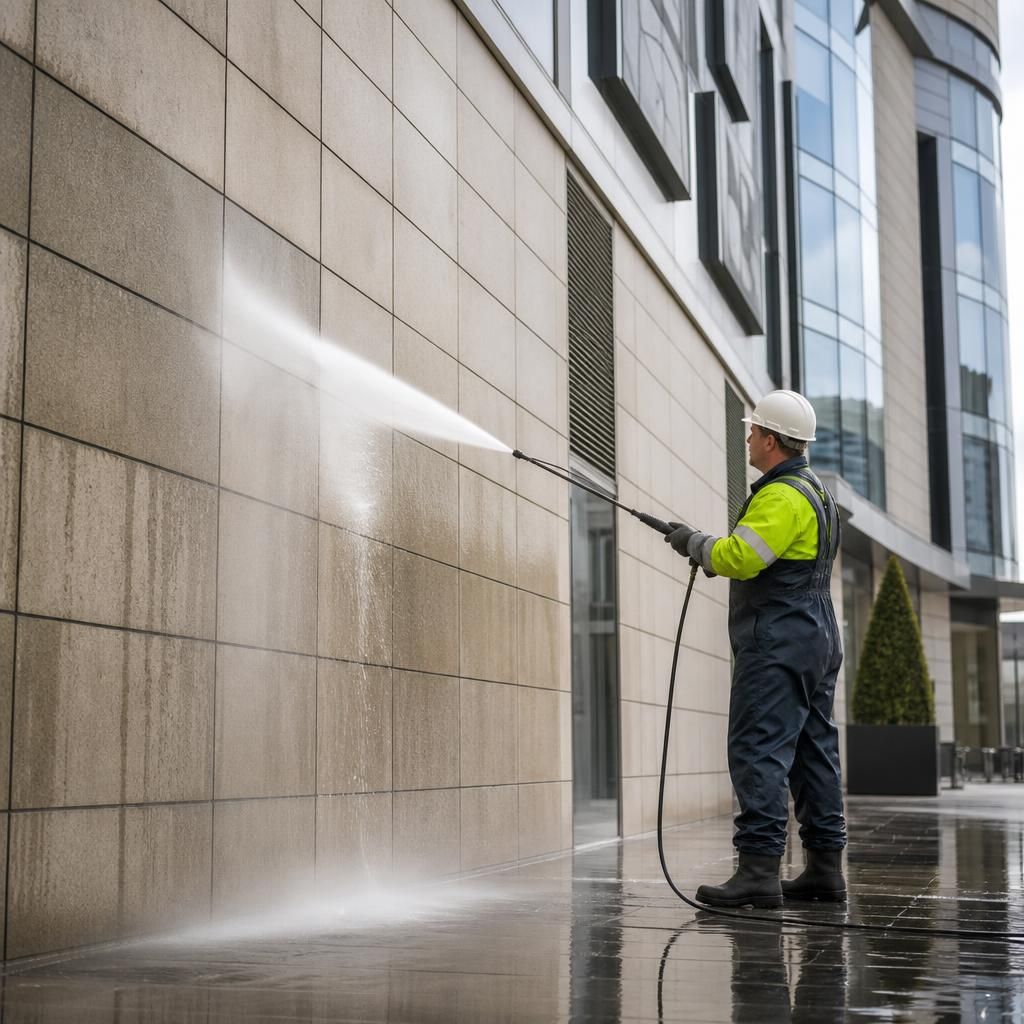
Hot water pressure washing can reduce the need for detergents, solvents and biocides when removing grease, traffic film, biological growth and ingrained dirt from façades. Using heat alongside controlled pressure helps loosen contamination so it can be lifted with less reliance on chemical treatment, reducing the potential for residues on masonry, coatings, nearby planting and surrounding ground.
The environmental benefit depends on responsible wastewater management. Wash water may contain oils, sediment, paint particles or biological material, so it should be contained, recovered and directed to an authorised disposal route rather than allowed to enter surface-water drains or watercourses. A site-specific method using the lowest effective temperature, pressure and flow provides a more sustainable result than simply applying maximum heat or pressure.