
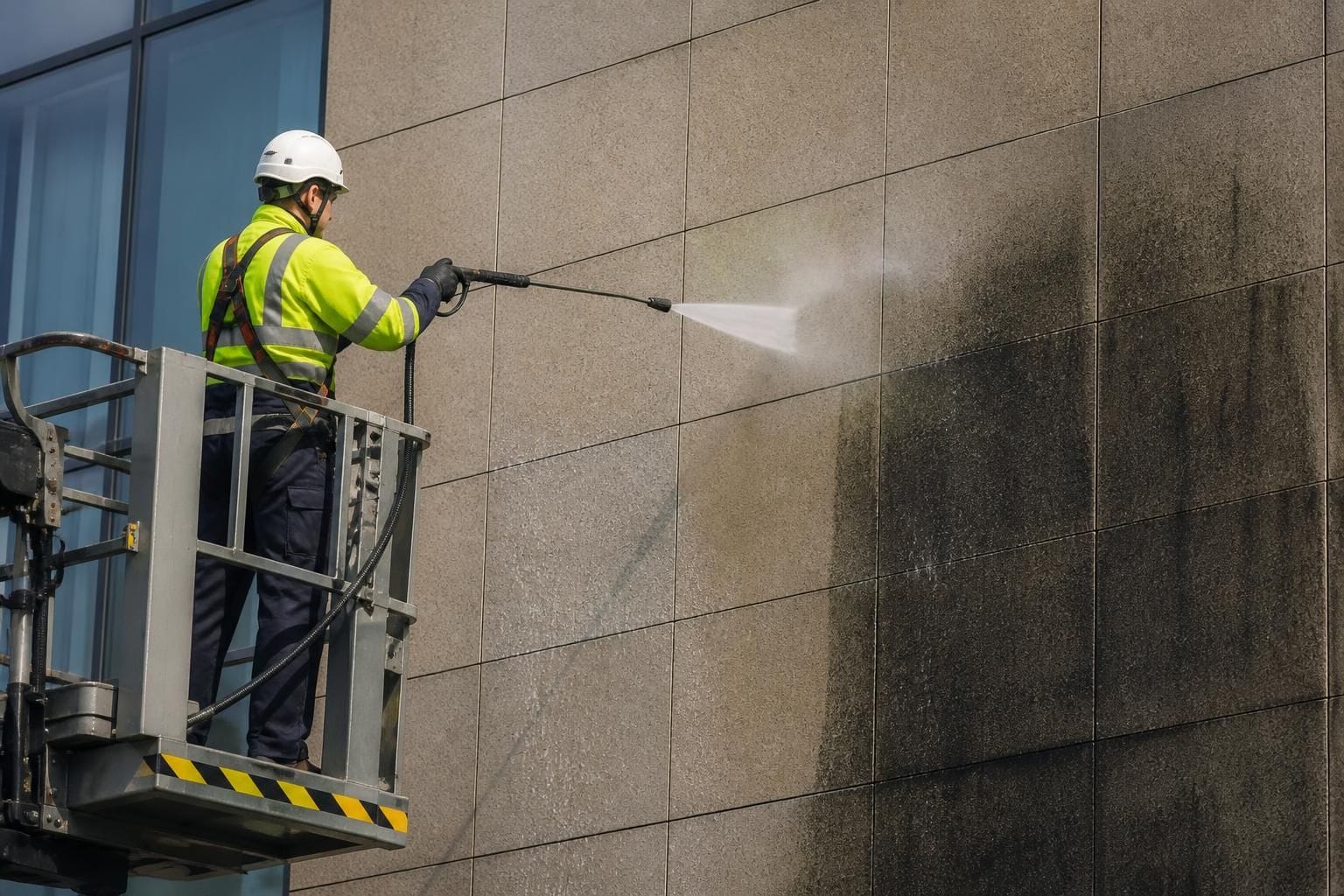
How effective is hot water pressure washing compared to cold water methods for façade cleaning?
Hot water pressure washing is generally more effective than cold water for façade cleaning because heat helps break down grease, oil, biological growth and ingrained grime, often achieving a thorough result with less pressure or chemical treatment. Cold water remains suitable for loose dirt and some sensitive surfaces, but the correct temperature and pressure must always be matched to the façade material.
Hot water pressure washing is usually more effective than cold water for façade cleaning because heat softens and breaks down greasy deposits, oils, traffic film, biological growth and ingrained grime. This allows the operator to achieve a thorough clean with less mechanical force and, in some cases, less chemical treatment. Cold water remains effective for loose dust, soil and surface dirt, and may be the safer choice for heat-sensitive materials or lightly soiled façades.
The difference is not simply the water temperature. The final result depends on the relationship between temperature, pressure, flow rate, cleaning technique, dwell time and the façade material. A professional assessment is therefore needed before selecting hot or cold water for a commercial or industrial building.
How hot water improves cleaning performance
Heat reduces the viscosity of oily and greasy deposits, making them easier to lift from the surface. It also softens some layers of weathered grime that cold water may only move across or partially remove. This is particularly useful on façades affected by vehicle emissions, kitchen or industrial residues, workshop contamination, food-related grease and persistent urban film.
Hot water can also help loosen algae, moss, mould and other organic contamination. It does not replace the need for appropriate treatment where biological growth has penetrated joints or porous materials, but it can improve the removal stage and reduce the amount of scrubbing required. On hard, non-porous surfaces, the combination of heat and controlled pressure can produce a more consistent finish than cold water alone.
Where cold water can be effective
Cold water is often suitable when the façade has loose dust, cobwebs, light soil, pollen or recently deposited dirt. It can provide an efficient first-stage wash on robust surfaces, particularly where there is little grease or biological build-up. Cold water may also be preferable when the substrate, coatings, sealants or adjacent features could be affected by elevated temperatures.
However, cold water may require increased pressure, more agitation or longer chemical dwell times to remove deposits that hot water would soften more readily. Increasing pressure is not always an appropriate solution. Excessive pressure can drive water into joints, remove sound coatings, damage pointing or erode softer masonry. Choosing hot water can sometimes allow the same contamination to be removed more gently.
Comparison by type of contamination
- Loose dust and surface soil: Cold water is commonly sufficient, provided the pressure and spray pattern are suitable.
- Grease, oil and traffic film: Hot water generally provides better cutting action and can reduce the need for aggressive pressure or detergents.
- Algae, moss and organic growth: Hot water can assist with loosening and removing growth, although a suitable biocidal or specialist treatment may still be required for long-term control.
- Atmospheric staining: The most appropriate method depends on the type of deposit and the porosity of the façade. Hot water may improve removal, but testing is important.
- Paint, coatings and fragile finishes: Cold water at carefully controlled pressure may be safer, particularly where heat could soften, blister or alter the finish.
- Efflorescence and mineral deposits: Water temperature alone may not resolve the problem. The deposit may require a compatible specialist treatment, followed by controlled rinsing.
Effect on different façade materials
Hot water can be used successfully on many robust façade surfaces, including suitable brickwork, concrete, certain stone types, metal cladding and some coated substrates. This does not mean every example of these materials can tolerate the same treatment. Age, surface condition, previous repairs, coatings, sealants, joints and porosity all affect the risk.
Porous masonry may absorb water and release salts during drying. Older brick, soft stone, weathered render and painted surfaces can be damaged by excessive heat, pressure or rapid changes in condition. Metal panels may have vulnerable coatings or exposed corrosion, while composite materials and plastics can distort or discolour if heated excessively. A competent contractor should inspect the façade, identify vulnerable areas and carry out a discreet test clean before proceeding across the full elevation.
Why pressure must not be used to compensate for low cleaning power
Cold water can be effective when correctly applied, but operators may be tempted to increase pressure when deposits remain. That approach can create unnecessary risk, particularly around mortar joints, façade interfaces, vents, window seals and damaged coatings. Hot water can improve the cleaning action without relying solely on higher impact, although it still needs to be used within the limits of the substrate.
The aim is not to use the hottest water or the highest pressure available. The aim is to use the lowest effective combination of heat, pressure, flow and cleaning solution that removes the contamination without altering the façade. This approach helps protect the building while providing a more even result.
Time, rinsing and chemical use
Hot water can shorten the time needed to soften stubborn deposits and may reduce manual agitation. It can also improve the performance of some detergents, but chemicals should never be selected or heated without considering the façade material, surrounding landscaping, drainage and legal requirements for wastewater management. Some contaminants need a specific chemical process rather than heat alone.
Thorough rinsing is essential with either method. Residual dirt, detergent or loosened salts can leave streaks and may affect the surface as it dries. Cleaning should normally be planned around suitable weather conditions so that the façade can be inspected during and after the work.
Which method is best for a commercial façade?
For façades with heavy traffic film, grease, organic growth or ingrained urban grime, hot water pressure washing will usually provide the stronger cleaning performance. It is especially useful where a cold-water process would require substantially more pressure, repeated passes or extensive manual work. Cold water remains a practical option for routine washing, loose contamination and materials where heat is unsuitable.
The correct choice should follow a site survey and test area rather than a fixed rule. The assessment should consider the façade construction, existing defects, coating condition, contamination type, nearby windows and services, access arrangements, water management and the required finish. With those factors controlled, hot water can deliver a faster and more thorough clean while cold water remains a valuable lower-temperature option for appropriate surfaces.
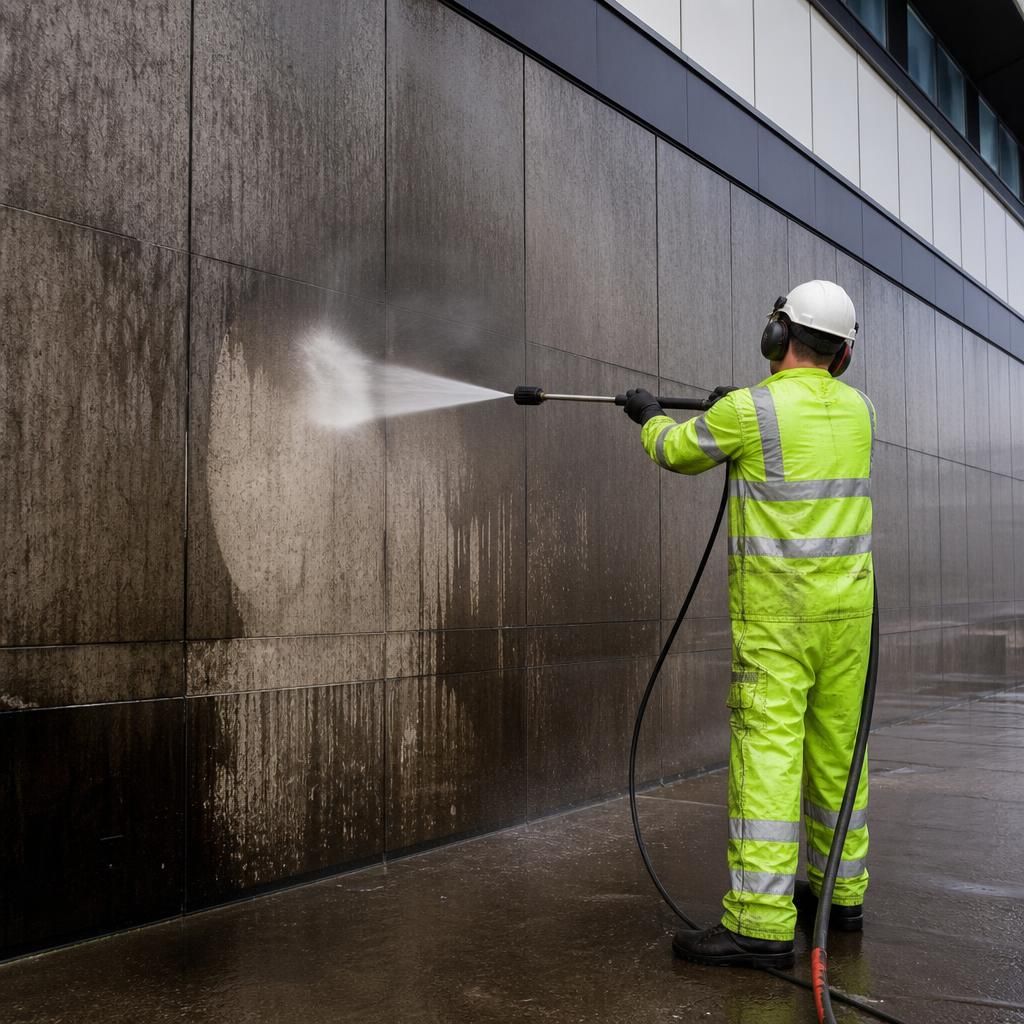
Hot water pressure washing is generally more effective than cold water for removing greasy deposits, traffic film, biological growth and ingrained grime from suitable façades. Heat softens these contaminants, allowing them to be lifted with less mechanical force and often fewer repeated passes.
Cold water remains appropriate for loose dirt and lightly soiled surfaces, and may be preferable for heat-sensitive coatings, sealants or plastics. The correct method depends on the façade material, its condition and the type of contamination. A test area should be completed first so temperature, pressure and flow can be set low enough to clean effectively without damaging joints, coatings or porous surfaces.