
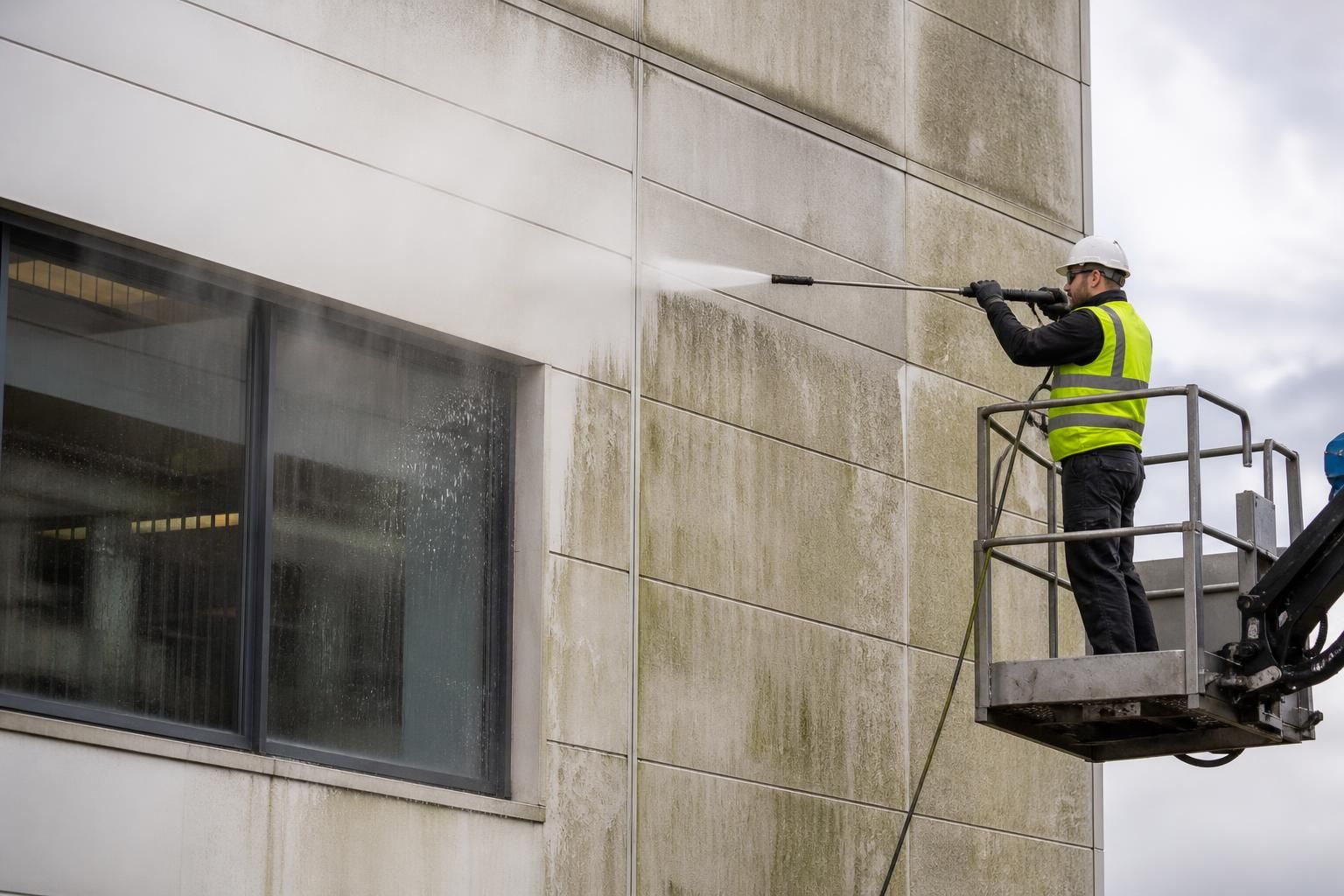
How does hot water pressure washing impact the longevity and maintenance requirements of building façades?
Hot water pressure washing removes embedded dirt, oils, biological growth and other contaminants that can gradually stain or degrade façade surfaces, helping preserve their appearance and condition. Regular, correctly controlled cleaning can reduce the need for intensive remedial work and extend maintenance intervals, although the pressure, temperature and method must be matched to the façade material to avoid damage.
Hot water pressure washing can extend the serviceable life of a building façade by removing contaminants that hold moisture, encourage biological growth and gradually attack or stain the surface. It can also reduce the frequency of intensive cleaning and remedial work, provided the water temperature, pressure, nozzle selection and cleaning technique are matched to the façade material and its condition.
Façades are exposed to traffic film, airborne pollution, bird fouling, oils, algae, moss, lichen and other deposits. Left in place, these contaminants can make the surface retain moisture and may contribute to staining, blocked drainage details or deterioration of vulnerable finishes. On masonry, biological growth can remain damp against the surface; on cladding, oils and industrial residues can become increasingly difficult to remove; and on painted or coated façades, accumulated dirt can obscure early signs of coating failure.
Hot water improves the cleaning process because heat softens greasy, oily and organic deposits. This allows the operator to remove contamination more effectively, often with less mechanical action or a lower pressure setting than would be needed with cold water. Reducing the need to scour or repeatedly pass over the same area can help limit unnecessary wear to sound façade finishes.
However, hot water pressure washing is not automatically safer or more effective for every building. Excessive temperature or pressure can damage mortar joints, weathered brick, render, sealants, paint, protective coatings and delicate architectural details. The objective is controlled contaminant removal, not simply using the hottest water or highest pressure available.
How it supports façade longevity
- Removes moisture-retaining growth: Algae, moss and lichen can keep surfaces damp and may spread across joints, ledges and drainage areas. Removing them helps the façade dry more normally between periods of rain.
- Reduces the build-up of damaging deposits: Pollution and industrial grime can combine with moisture to form persistent staining and acidic residues. Prompt removal helps prevent these deposits becoming more firmly bonded to the surface.
- Limits mechanical abrasion: When heat loosens oils and organic matter, effective cleaning may be possible without aggressive brushing, abrasive methods or unnecessarily high pressure.
- Protects the appearance of coatings and cladding: Regular removal of dirt helps maintain the intended finish and makes coating defects, corrosion and failed sealant easier to identify.
- Supports drainage and detailing: Cleaning around sills, parapets, vents and other façade features can help prevent deposits obstructing water paths, although blocked or defective drainage should be repaired rather than treated as a cleaning issue.
These benefits are preventative rather than structural. Hot water cleaning cannot repair cracked masonry, open joints, failed render, corroded fixings, damaged insulation systems or leaking windows. It may expose such defects by removing the dirt that was hiding them, which is useful for maintenance planning but does not remove the need for inspection and repair.
How it can reduce maintenance requirements
A well-planned cleaning programme reduces the amount of firmly bonded contamination that has to be removed during future visits. Façades that are kept free from heavy organic growth and oily deposits are generally easier to clean, and routine maintenance can often remain focused on surface cleaning and condition checks rather than more disruptive restoration work. The appropriate interval depends on the building’s location, exposure, materials, surrounding traffic, nearby industrial activity, tree cover and the type of contamination present.
Cleaning should therefore form part of a wider façade maintenance plan. A suitable programme may combine scheduled washing with inspections of mortar joints, coatings, sealants, flashings, fixings, drainage outlets and areas where water collects. Records of previous cleaning methods and observed defects are valuable because they help determine whether a façade needs routine washing, local treatment, repairs or specialist restoration.
Why the method must be controlled
Heat changes the way water interacts with a surface. It can soften coatings, affect sealants and accelerate the movement of moisture through porous materials. Sudden temperature changes may also create thermal stress in some substrates, particularly where the surface is already weakened or contains areas of differing material. For this reason, professional cleaning should begin with an assessment of the façade and a test clean in an inconspicuous location.
The cleaning approach should take account of:
- the façade material, including brick, stone, concrete, render, metal, glass or composite panels;
- the condition and porosity of the substrate;
- existing paint, coatings, sealants and repairs;
- the type and strength of contamination;
- the required temperature, pressure, nozzle pattern and working distance;
- water run-off, drainage and protection of nearby surfaces and occupants; and
- any manufacturer’s cleaning guidance or site-specific restrictions.
Operators should work progressively, using the least aggressive combination of heat and pressure that achieves a satisfactory result. A test area confirms whether the surface changes colour, sheds material, opens joints, develops a visible water mark or reacts adversely to the chosen method. On sensitive façades, steam cleaning, low-pressure hot water or a controlled detergent treatment may be more suitable than conventional high-pressure washing.
Care is particularly important around aged mortar, historic masonry, friable stone, painted finishes, insulated render systems and façade joints. Water should not be directed into open cracks, defective seals, vents or electrical fittings. Run-off must also be managed so that loosened contaminants do not stain lower sections of the building or enter drainage systems without suitable controls.
When hot water washing may increase maintenance needs
Incorrect cleaning can shorten the life of a façade rather than extend it. Excessive pressure may erode joints or the face of porous materials, while excessive heat may soften coatings or disturb sealants. Water forced behind cladding, render or defective joints can increase damp-related problems and may lead to additional drying, repair or redecoration requirements. Cleaning a damaged surface without addressing the underlying defect can also result in rapid recontamination.
For these reasons, a clean appearance should not be the only measure of success. The correct outcome is the removal of harmful or unsightly contamination while retaining the integrity of the substrate, joints, coatings and detailing. Where defects are identified before or during cleaning, they should be recorded and referred for appropriate repair.
In practical terms, hot water pressure washing is most beneficial when used as a controlled, preventative maintenance treatment rather than a one-off aggressive restoration process. Correct assessment and technique can preserve façade finishes, make future cleaning more straightforward and help maintenance teams identify defects at an earlier stage. The result is a cleaner, more serviceable façade with a lower risk of avoidable deterioration and less need for intensive remedial cleaning.
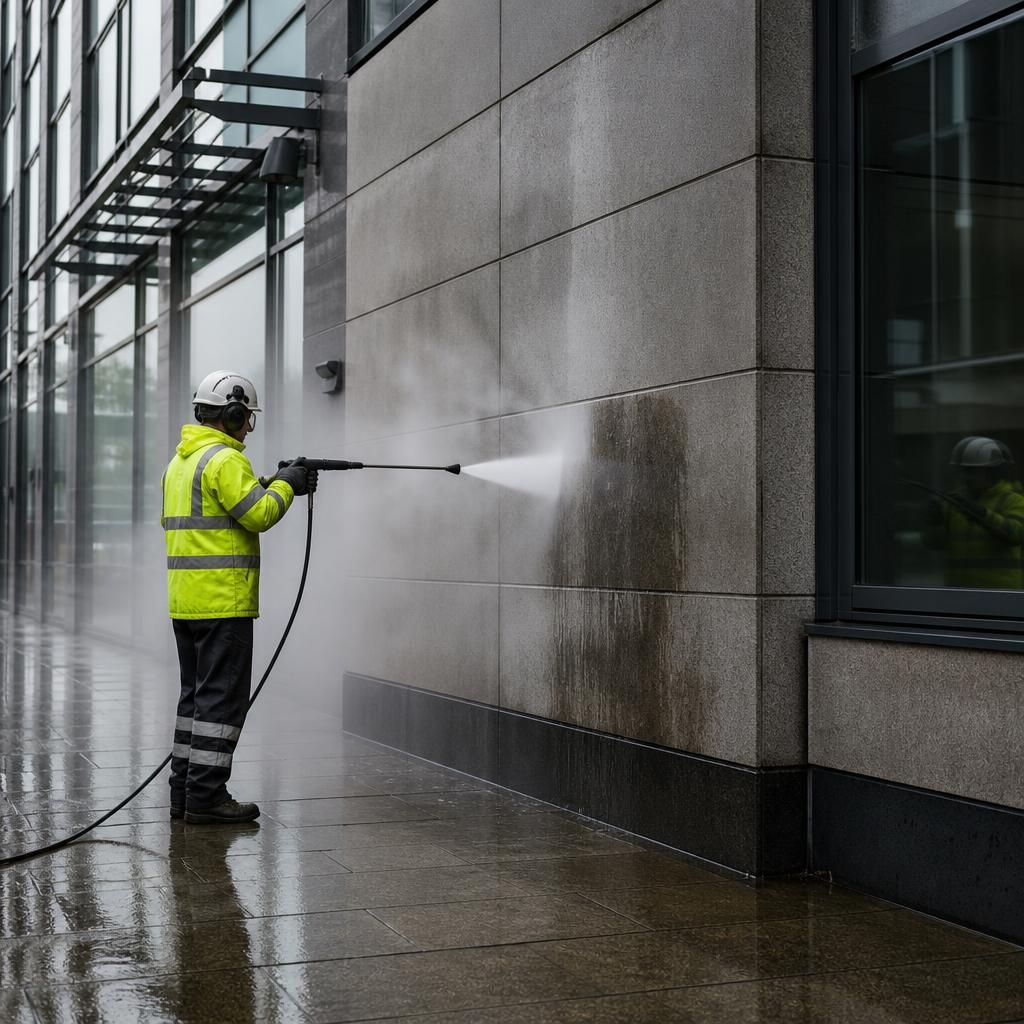
Hot water pressure washing can reduce façade maintenance requirements by loosening oily residues, organic growth and embedded grime before they become firmly bonded to the surface. This often allows effective cleaning at a more controlled pressure, reducing the need for aggressive brushing or repeated passes that may wear sound coatings, cladding or masonry.
Regular, material-appropriate cleaning also makes defects easier to identify. Once dirt and biological growth are removed, maintenance teams can check mortar joints, sealants, coatings, fixings and drainage details before minor issues develop into more disruptive repairs. The method should always be tested and adjusted to the façade’s material, condition and contamination.