
How does hot water pressure washing help in maintaining the longevity of building façades?
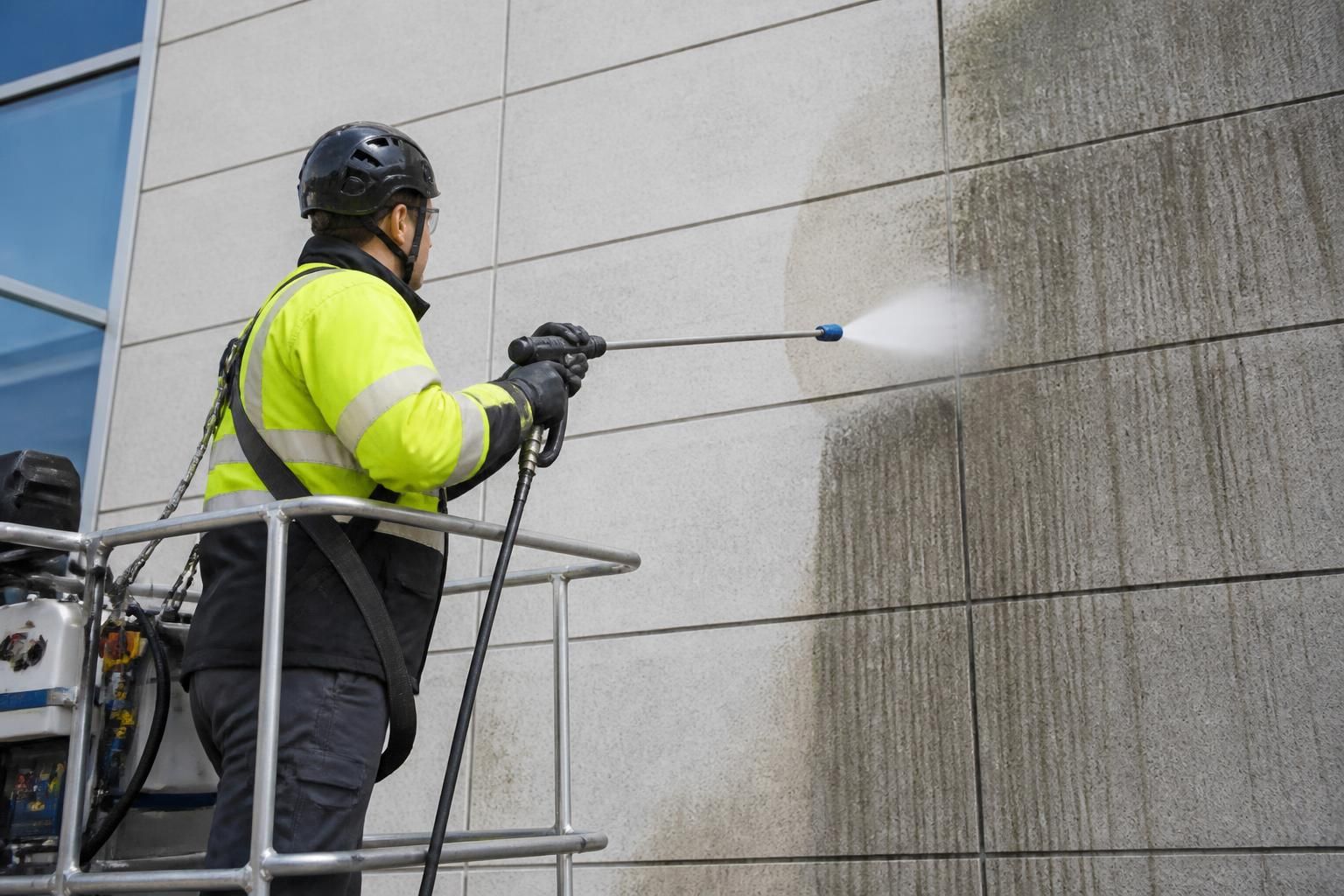
Hot water pressure washing helps extend the service life of building façades by removing ingrained dirt, algae, pollutants and oily deposits that can retain moisture and accelerate surface deterioration. Used with the correct pressure and technique for the façade material, it reduces the need for abrasive cleaning and helps prevent costly staining, biological growth and premature repair work.
Hot water pressure washing helps maintain the longevity of building façades by removing contaminants that hold moisture against the surface, encourage biological growth and accelerate staining or material deterioration. When the water temperature, pressure, nozzle and cleaning technique are matched to the façade material, the process can restore the surface without relying on aggressive abrasion or excessive chemical treatment, helping to preserve both its appearance and physical condition.
Façades are exposed to traffic pollution, airborne dust, soot, algae, moss, bird fouling, salts and oily deposits. These contaminants are not merely cosmetic. Some form a film that retains moisture, while organic growth can remain damp against masonry, render, cladding or other finishes. Repeated wetting and drying may then contribute to staining, surface weakening, corrosion of fixings or deterioration of coatings. Removing the deposits helps the façade dry more effectively and reduces the conditions in which further growth and soiling can develop.
The heat is particularly useful where grime contains grease, oil or other tenacious residues. Warm water softens these deposits and lowers their viscosity, allowing them to be lifted more effectively at a controlled pressure. This can reduce the need to increase pressure to levels that may erode mortar joints, damage coatings or mark softer materials. Hot water can also loosen ingrained dirt from textured surfaces and joints, where cold water alone may leave residues behind.
Regular professional cleaning can therefore support façade maintenance in several ways:
- Reducing moisture retention: removing dirt films, algae and moss helps the surface shed water and dry more readily.
- Limiting biological growth: hot water can help remove organic contamination and disturb the conditions that support regrowth, although persistent growth may require an appropriate treatment as well.
- Preventing deep-set staining: early removal of soot, pollutants and organic marks is generally less aggressive than trying to remove long-established staining after it has penetrated or altered the surface.
- Protecting coatings and finishes: controlled cleaning removes contaminants without unnecessarily stripping sound paint, render coatings or protective finishes.
- Reducing abrasive intervention: effective heat and correct technique may achieve the required result with less reliance on harsh brushing, abrasive media or excessive pressure.
- Identifying defects earlier: cleaning exposes cracks, failed joints, blistering coatings, corrosion and damaged panels so that remedial work can be planned before defects become more extensive.
The method must be selected for the specific façade rather than applied as a standard pressure-washing treatment. Brickwork, stone, render, concrete, metal cladding, glazed surfaces and painted finishes all respond differently to heat, pressure and water flow. Softer stone, aged mortar, friable render and weathered coatings may require lower pressure, wider spray patterns or a gentler cleaning approach. More robust surfaces may tolerate a stronger treatment, but this still depends on their age, condition and previous repairs.
A competent cleaning process begins with a site assessment. This should consider the façade material, the type and severity of contamination, existing defects, surrounding surfaces, drainage, access requirements and the risk of water entering joints, vents or openings. A small test area should be cleaned first where the material or finish is uncertain. The test confirms whether the selected temperature and pressure remove the contamination without causing etching, colour change, surface loss or coating failure.
Good technique is as important as water temperature. The operator should use an appropriate nozzle, maintain a suitable working distance, avoid directing water into vulnerable joints and work methodically so that loosened contamination does not dry back onto the façade. Run-off should also be controlled, particularly where it may contain oils, biological matter, paint residue or other pollutants. Cleaning should not conceal defects or substitute for repairs: damaged pointing, failed sealants, cracked render and defective cladding should be recorded and addressed as part of the wider maintenance plan.
Hot water pressure washing is most beneficial when included in planned façade maintenance rather than used only after severe soiling has developed. The appropriate cleaning frequency depends on the building’s location, exposure, material and level of pollution. Buildings beside busy roads, industrial areas, trees or sources of moisture may need closer inspection than façades in cleaner, more sheltered locations. Cleaning at suitable intervals helps prevent deposits becoming increasingly difficult to remove and allows early signs of deterioration to be monitored.
It is important to distinguish between cleaning and protection. Hot water pressure washing removes harmful or unsightly contamination, but it does not repair defective materials or permanently prevent future soiling. After cleaning, the façade may benefit from repairs, repointing, replacement of failed sealants or a compatible protective treatment where the material and manufacturer’s guidance support its use. Any treatment should only be applied to a clean, sound and sufficiently dry surface.
Used with a material-specific assessment and controlled application, hot water pressure washing can extend the practical service life of a façade by reducing contaminant-related deterioration, limiting the need for aggressive restoration and exposing maintenance issues at an earlier stage. It is not simply a cosmetic wash; it is a preventative maintenance measure that should form part of a planned inspection and repair regime.
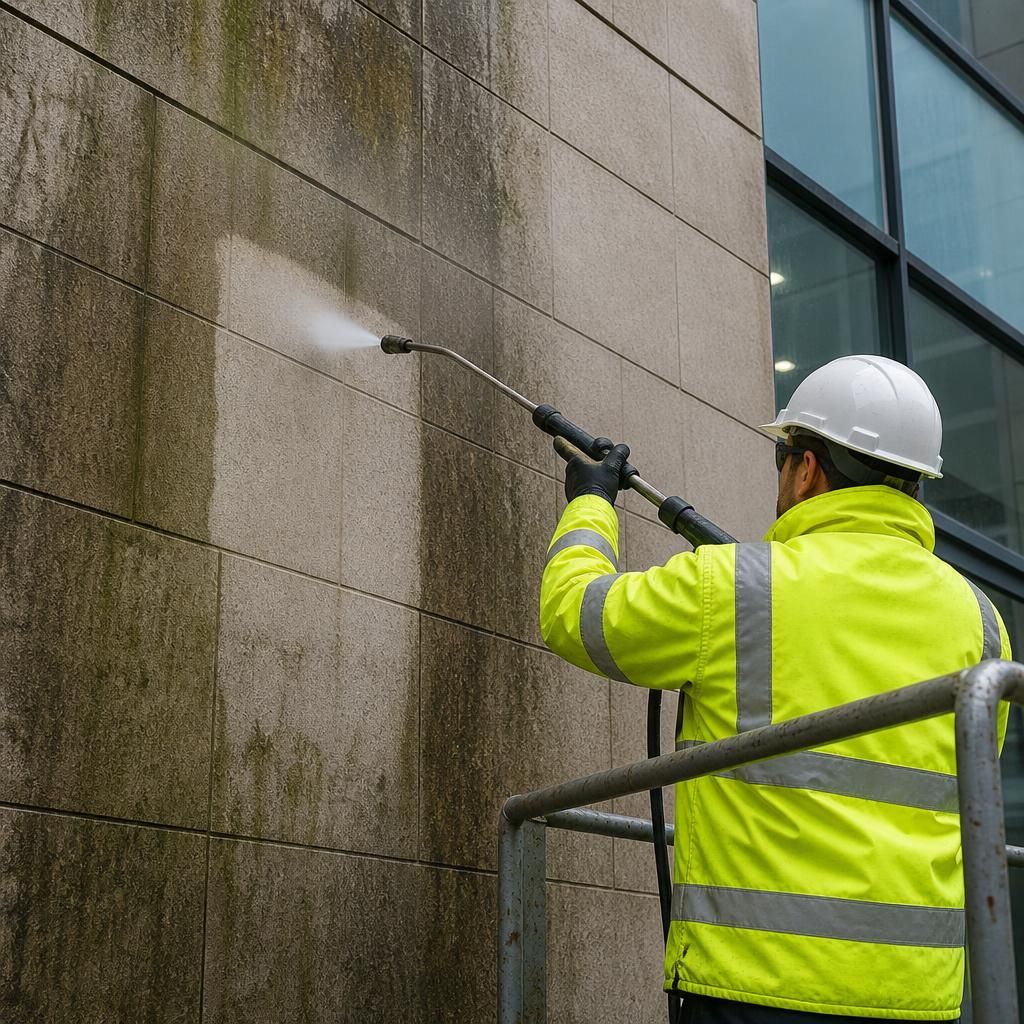
Hot water pressure washing supports façade longevity by removing contaminants that retain moisture and encourage surface deterioration. Algae, moss, soot, traffic film and oily deposits can keep masonry, render and cladding damp, increasing the risk of staining, biological growth and coating failure. Heat softens stubborn residues, allowing them to be removed at a controlled pressure rather than relying on unnecessarily aggressive abrasion.
The process must be matched to the façade material and its condition. A professional assessment and test clean help determine the appropriate temperature, pressure, nozzle and working distance, reducing the risk of damage to mortar joints, coatings or softer surfaces. Cleaning also exposes defects such as cracked render, failed sealants and corrosion, allowing repairs to be planned before deterioration becomes more extensive.
Plan Your Façade Cleaning and Maintenance Assessment
Arrange a façade cleaning and maintenance assessment to identify contamination, surface defects and the most suitable hot water pressure washing method for your building. This helps prioritise cleaning and repairs before deterioration becomes more extensive.