
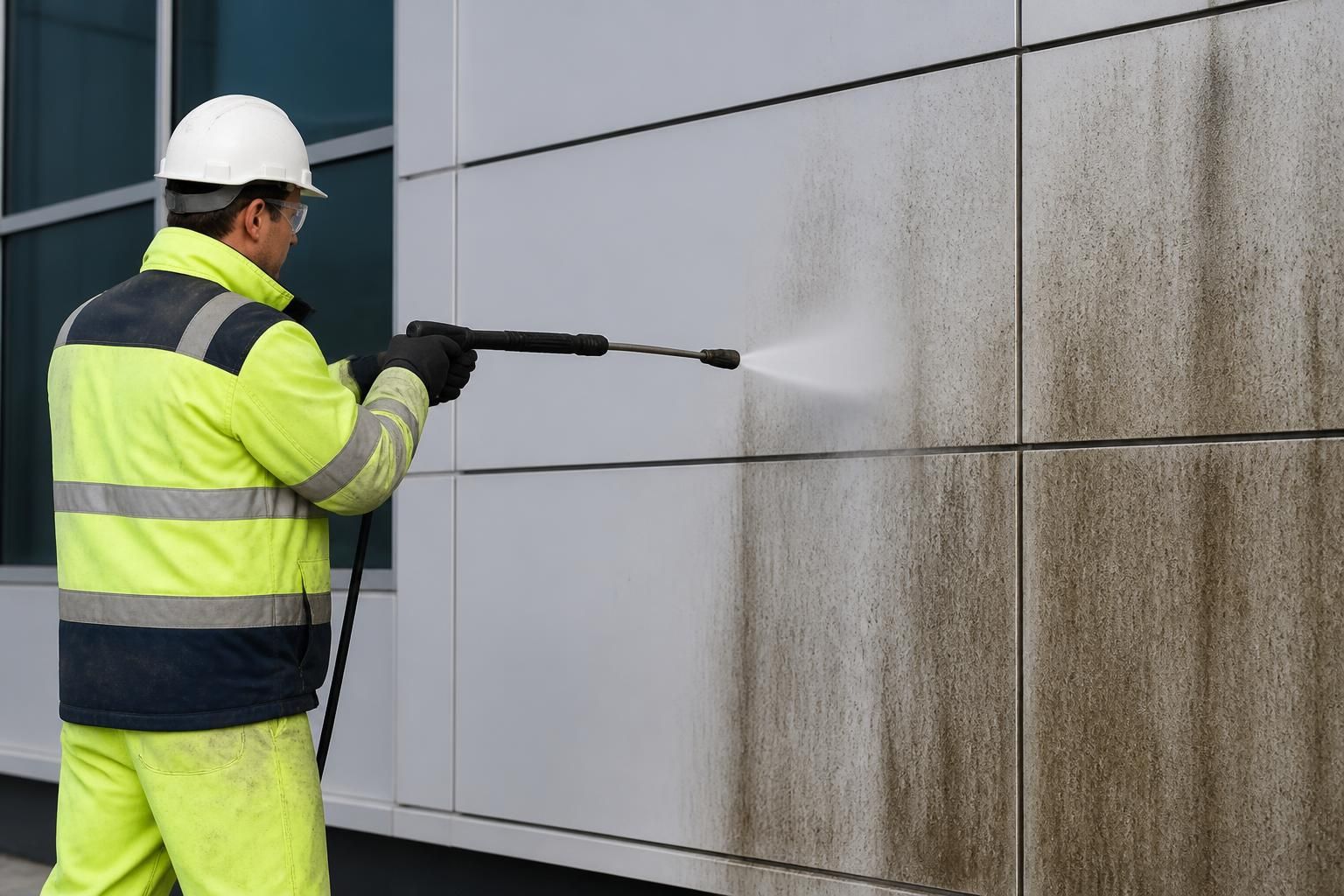
How does hot water pressure washing compare to traditional cleaning methods for façades?
Hot water pressure washing generally removes dirt, grease, biological growth and old surface residues faster and more thoroughly than traditional cold-water washing or manual scrubbing. It can reduce the need for harsh chemicals and labour-intensive methods, while still requiring controlled pressure and a surface-appropriate technique to protect façade materials.
Hot water pressure washing is generally more effective and efficient than traditional cold-water washing or manual cleaning for removing embedded dirt, grease, traffic film, biological growth and some old surface residues from building façades. Heated water softens and lifts contaminants more readily, so the cleaning process can require less pressure, less chemical treatment and less intensive scrubbing. The method must still be controlled carefully, because excessive heat or pressure can damage vulnerable façade materials, joints, coatings and sealants.
Traditional façade cleaning methods include cold-water pressure washing, hand scrubbing, chemical application, steam cleaning and abrasive techniques. Each has a place, but they do not perform in the same way:
- Cold-water pressure washing relies mainly on water pressure and mechanical impact. It can remove loose dirt, dust and some surface staining effectively, but may be less effective against grease, oil-based deposits, chewing gum residue, traffic film and organic matter that has bonded to the surface.
- Manual scrubbing provides close control and can be suitable for small areas or delicate details. However, it is labour-intensive and may produce inconsistent results across a large façade, particularly where contamination is widespread or deeply ingrained.
- Chemical cleaning can dissolve specific deposits, such as mineral staining, biological growth or oily residues. It requires accurate chemical selection, controlled dwell time, thorough rinsing and suitable collection or disposal of wastewater. Incorrect use can discolour surfaces, affect coatings or harm surrounding materials.
- Abrasive cleaning can remove heavy deposits and unwanted coatings, but it may erode the substrate, expose aggregate, damage finishes or alter the appearance of masonry. It is therefore unsuitable for many façades unless a carefully controlled specification permits it.
- Steam or low-pressure specialist cleaning can be appropriate for sensitive materials and detailed architectural surfaces. It offers a gentler approach in some situations, although the equipment, operating method and production rate differ from hot water pressure washing.
Hot water improves cleaning by reducing the adhesion and viscosity of contaminants. Grease and oily films become easier to mobilise, while dirt trapped within biological growth or textured finishes can be released more effectively. On suitable surfaces, this allows the operator to achieve the required result with a lower working pressure than might otherwise be needed. Lower pressure can reduce the risk of forcing water into joints, seals and cracks, although it does not remove the need for careful water management.
The main practical advantage is often reduced cleaning effort rather than heat alone. A trained operator can select the appropriate temperature, pressure, nozzle, flow rate and distance from the façade, then work progressively from test areas to the wider elevation. This can shorten cleaning time on large commercial buildings and reduce repeated passes over the same surface. It can also limit manual agitation and, where the contamination allows, reduce reliance on detergents or biocides.
Hot water is not automatically the safest or most suitable option for every façade. Natural stone, historic masonry, painted surfaces, render, composite panels, sealants and some cladding systems can react adversely to heat, pressure or rapid changes in temperature. Existing defects may also allow water to enter the building fabric. Before work begins, the cleaning specification should consider the age and condition of the façade, its construction, previous coatings, joint details, drainage arrangements and the type of contamination present.
A competent cleaning process normally includes a site assessment and small test patch. The test should establish whether the chosen temperature and pressure remove the deposit without causing etching, colour change, surface loss, coating failure or water penetration. The operator can then adjust the method before proceeding across the full elevation. Sensitive areas, glazing, vents, electrical equipment, signage and adjoining finishes should be protected or cleaned using a separate technique.
From an environmental and operational perspective, hot water can offer advantages when it reduces chemical consumption, repeat cleaning and physical abrasion. Those benefits depend on the equipment and site conditions: heating water uses energy, and wastewater may still contain oils, metals, biological material or cleaning agents that require containment and appropriate disposal. Responsible façade cleaning therefore includes runoff controls, protection of drains and compliance with site and local authority requirements.
Hot water pressure washing is particularly useful for commercial and industrial façades affected by traffic film, grease, food-related residues, bird fouling, algae, moss and general urban soiling. It is less appropriate as a universal solution for every stain. Rust, efflorescence, paint, cement residues and some mineral deposits may require a separate treatment, and aggressive pressure should not be used to compensate for an unsuitable cleaning method.
In practice, the best comparison is not simply hot water versus traditional cleaning. The most reliable results come from matching the method to the façade and contamination. Hot water pressure washing may be used alone, with a mild compatible detergent, or as part of a wider programme involving soft washing, steam cleaning, manual detailing or specialist stain treatment. This combined approach preserves control while using heat where it provides a clear cleaning advantage.
For ongoing façade maintenance, hot water pressure washing can provide a faster and less abrasive alternative to repeated cold-water washing or intensive manual work. It should be specified on the basis of material compatibility, contamination type, access, runoff management and the condition of the building—not simply the highest available temperature or pressure. A documented survey, test clean and method statement help ensure that the efficiency benefits are achieved without compromising the façade.
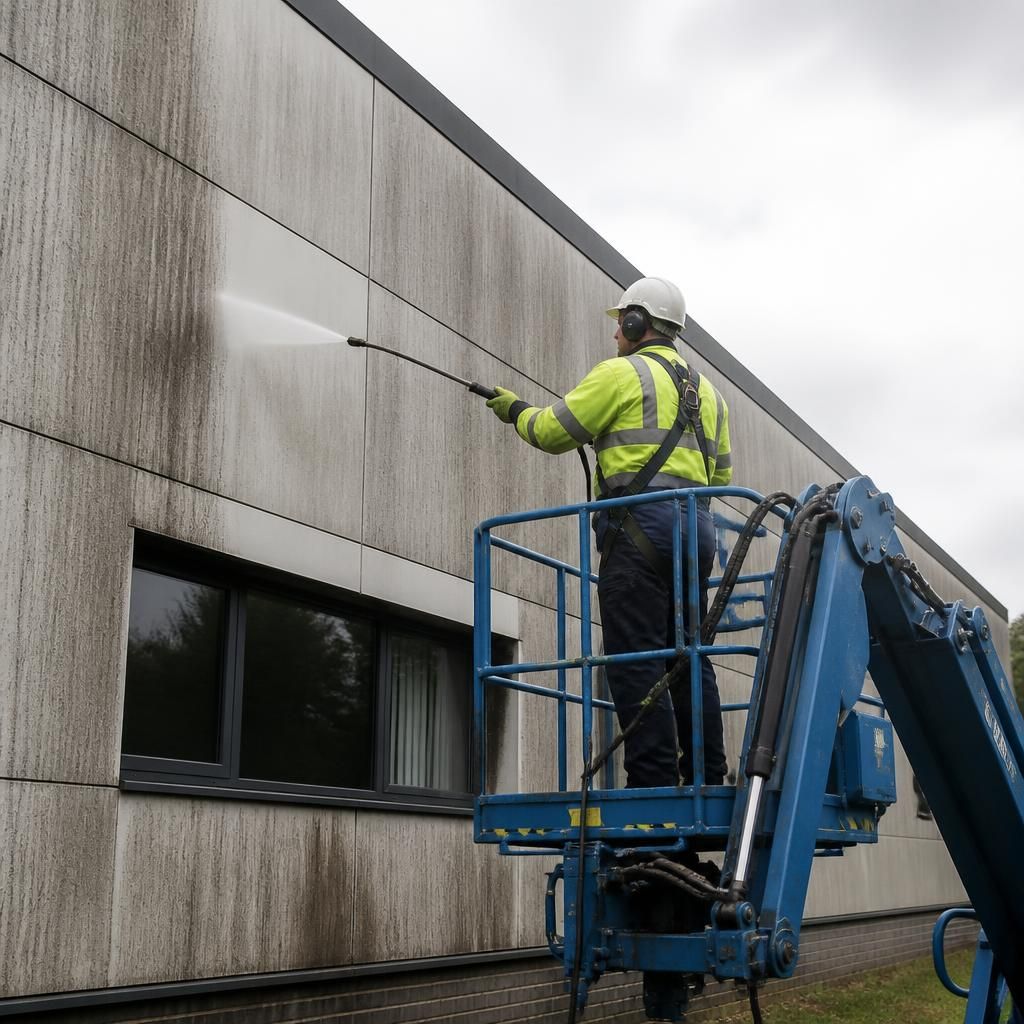
Hot water pressure washing differs from traditional façade cleaning because heat helps soften and release grease, traffic film, biological growth and other bonded residues before they are rinsed away. This often achieves a cleaner result with less mechanical force than cold-water washing or prolonged manual scrubbing.
Using lower working pressure where the façade allows it can reduce unnecessary abrasion and limit the risk of driving water into joints, cracks or seals. It can also reduce repeated passes and the need for strong detergents, particularly on commercial façades affected by urban pollution, oily deposits or bird fouling.
The method still requires a material-specific assessment. A test patch should confirm that the selected temperature, pressure and nozzle do not affect coatings, render, masonry, cladding or sealants. Where heat is unsuitable, traditional hand cleaning, low-pressure washing or specialist treatment may provide better control.