
What types of cleaning agents are used for graffiti removal and are they safe for all surfaces?
Graffiti removal commonly uses alkaline cleaners, solvent-based products, specialist emulsifying gels and low-impact steam or detergent systems, selected according to the paint, substrate and surrounding conditions. No cleaning agent is automatically safe for every surface, so it should be tested in an inconspicuous area and applied using a method suited to the masonry, metal, glass, cladding or coating being treated.
Graffiti removal cleaning agents are selected according to the coating being removed and the surface beneath it. Common options include alkaline cleaners, solvent-based removers, emulsifying gels, detergent systems and specialist biocidal or oxidising products. None is universally safe for every surface: a product that works well on sealed masonry may stain, soften, etch or strip paint from metal, plastic, glass, powder-coated cladding or previously treated brickwork.
Alkaline cleaners are often used for water-based paints, spray paints and heavy organic soiling on robust, absorbent substrates such as brick, concrete and some stone. They work by breaking down or lifting the paint film. Their suitability depends on the strength of the formulation, the type and condition of the masonry, and how long the product remains in contact with the surface. Strong alkaline products can affect decorative finishes, certain stones, jointing materials and aluminium if they are misapplied or not thoroughly rinsed.
Solvent-based removers are formulated to soften or dissolve paints, marker inks, lacquers and other coatings that may resist water-based cleaning. They can be effective on non-porous surfaces, but some solvents may soften plastics, attack sealants, discolour painted finishes or damage powder coatings. They also require careful control of vapour, ignition sources, runoff and worker exposure. The safety data sheet and product instructions should always be checked before use.
Emulsifying gels and poultice-style products are useful where the remover needs to stay in contact with vertical or textured surfaces. The gel can reduce run-off and help draw softened graffiti from pores, which may be preferable on detailed façades or sensitive areas. However, it is not automatically suitable for every masonry type. Residues must be removed properly, particularly from porous brick, stone joints and textured coatings, or further staining may occur.
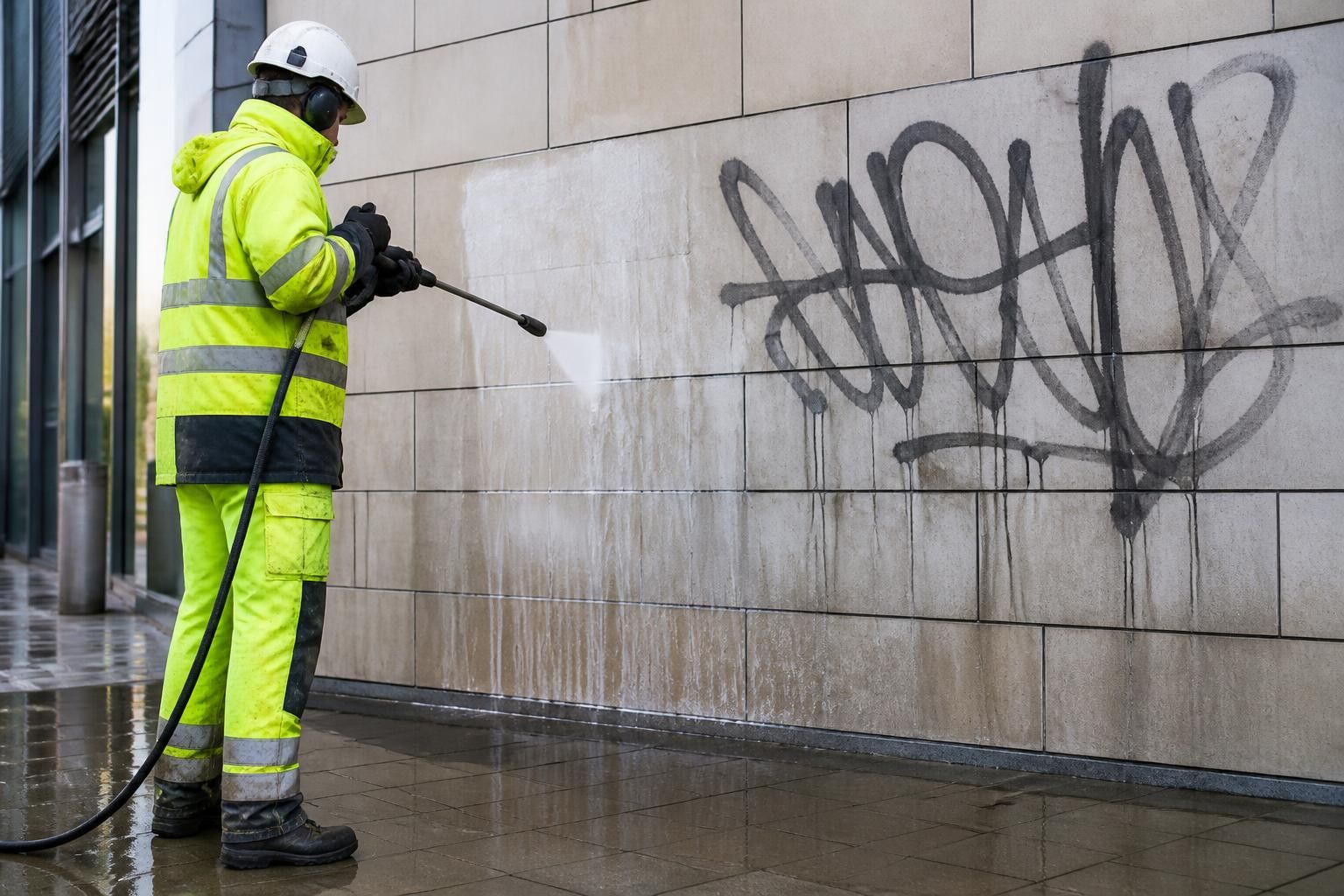
Low-impact detergents, steam and hot-water systems may be sufficient for fresh, lightly bonded or water-soluble graffiti. These methods can reduce reliance on aggressive chemicals, although detergent and temperature still need to be matched to the substrate. Excessive heat, pressure or prolonged moisture can damage friable masonry, lift pointing, drive contaminants deeper into porous materials or affect façade coatings. Chemical-free cleaning is therefore not automatically risk-free.
On glass and glazed ceramic, a carefully selected solvent or detergent may remove graffiti effectively, but abrasive pads, harsh alkaline products and contaminated tools can scratch or dull the surface. Metal requires particular care because some chemicals can cause corrosion, staining or damage to anodised, painted or powder-coated finishes. Plastics, signage, render, painted façades and composite panels are similarly variable; a remover that is suitable for bare steel may permanently affect a coating or plastic panel.
Before applying any agent, the surface should be identified and inspected for porosity, existing coatings, cracks, failed pointing, previous repairs and signs of weathering. The graffiti itself should also be assessed. Paint type, age, thickness, colour and penetration into the substrate all influence the choice of product. Where the graffiti is extensive or layered, a controlled combination of product and mechanical or steam cleaning may be safer than repeatedly increasing chemical strength.
Testing is essential. A small trial area should be selected in an inconspicuous location and treated using the proposed dilution, dwell time, agitation and rinsing process. The test should be checked for colour change, gloss loss, etching, staining, softened coatings, residue and movement of dissolved pigment into surrounding pores. On porous façades, the result should be assessed after drying, as some discolouration or tide marks are not immediately visible.
Safe application also depends on process control. The operator should:
- follow the manufacturer’s instructions and safety data sheet;
- use the lowest effective concentration and shortest practical dwell time;
- protect adjoining windows, doors, landscaping, vehicles, drainage points and vulnerable finishes;
- prevent dissolved paint and chemical residue from spreading across clean areas;
- use suitable personal protective equipment and control access to the work area;
- rinse or recover residues using a method appropriate to the surface and drainage arrangements; and
- inspect the completed area once dry and make sure no cleaning agent or pigment remains.
Environmental and regulatory considerations are part of product selection. Runoff may contain dissolved paint, heavy metals, solvents or alkaline residues, particularly where older coatings are present. Wastewater should not be allowed to enter surface-water drains unless it is legally suitable to do so. Where runoff cannot be contained or recovered, a lower-runoff gel, steam method or other controlled approach may be more appropriate, subject to a site assessment.
For commercial and industrial premises, the safest approach is to record the substrate, graffiti type, test results, product used, dilution, dwell time and rinsing method. This creates a repeatable specification for future maintenance and helps avoid using an unsuitable agent when different façade materials are present on the same building. If the surface is historic, highly porous, coated, unstable or otherwise uncertain, specialist testing and a conservation-sensitive method may be required before full removal.
In practice, cleaning agents are safe only when they are compatible with the surface and used under controlled conditions. Product choice, test cleaning, containment, application technique and final inspection are as important as the chemical formulation itself. A professional graffiti removal assessment should therefore identify the substrate and coating before recommending a treatment rather than applying one general-purpose remover across the entire façade.
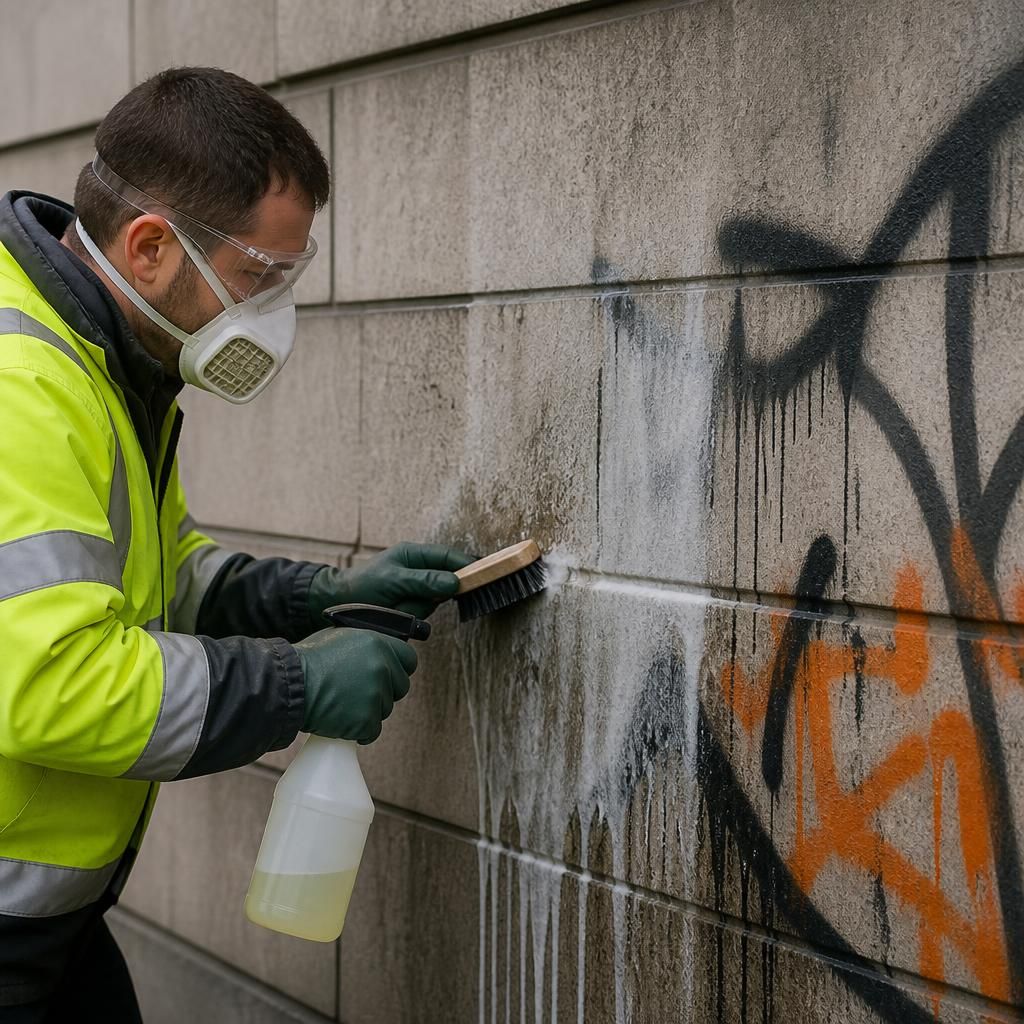
Graffiti removal agents are not safe for every surface; they must be matched to the substrate, coating and type of paint. A controlled test clean confirms whether the product causes staining, etching, gloss loss, softened coatings or pigment spread before the full façade is treated.
For porous brick and concrete, a suitable alkaline cleaner, emulsifying gel or low-impact detergent may lift embedded paint without excessive abrasion. Non-porous materials such as glass, metal, powder-coated panels and plastics require different formulations because solvents or strong alkalis can damage finishes, sealants or protective coatings. The trial area should be checked after drying, as residue and tide marks may not appear immediately.
Application also matters. Using the lowest effective concentration, limiting dwell time, protecting adjoining surfaces and recovering contaminated rinsing water helps control both surface risk and environmental impact. The selected product, dilution, dwell time and rinsing method should be recorded so future graffiti removal follows a proven specification.
Arrange a Graffiti Removal Surface Assessment
Arrange a graffiti removal surface assessment with Encanto Exterior Cleaning to identify the substrate, coating and suitable cleaning agent before work begins. We will recommend a controlled treatment and test clean for your Birmingham, West Midlands or UK property.