
What protocols are followed to ensure safety and compliance during graffiti removal operations?
Professional graffiti removal operations follow a documented risk assessment, method statement and site-specific plan covering surface protection, access equipment, chemical handling, water management, waste disposal and emergency procedures. Trained operatives use appropriate PPE, isolate or control the work area, follow COSHH and health and safety requirements, and complete final checks to confirm the façade and surrounding area are safe and compliant.
Professional graffiti removal operations are controlled through a documented risk assessment, method statement and site-specific work plan. These documents define the hazards, suitable removal method, surface protection, access arrangements, public protection, chemical controls, water management, waste disposal and emergency procedures before work begins. The controls are then briefed to the operatives and reviewed if site conditions change.
Pre-work assessment and planning
A site survey is completed to identify the façade material, condition of the surface, location and extent of the graffiti, nearby occupants, pedestrian and vehicle movements, overhead services, drainage points and access restrictions. The assessment also considers whether the work is close to roads, schools, transport areas, retail premises or other locations where members of the public may be exposed to the operation.
The findings are recorded in the risk assessment and method statement, often referred to as RAMS. This sets out the approved cleaning technique, equipment, products, operating controls and responsibilities. It also confirms whether permissions, traffic management, access arrangements or coordination with the property manager and other contractors are required. Operatives are briefed before starting and are expected to stop and seek further instruction if conditions differ from the agreed plan.
Competence and supervision
Graffiti removal is carried out by trained operatives who understand the relevant equipment, cleaning products, surface types and hazards. Training includes safe use of pressure washing and steam-cleaning equipment, chemical handling, personal protective equipment, manual handling and emergency arrangements. Additional competence is required for activities involving mobile access equipment, work at height or operating near live traffic and public areas.
Supervision is proportionate to the risks and complexity of the project. Site rules, client requirements and the RAMS are checked during the work, with changes communicated to everyone involved. Where the work forms part of a larger construction or maintenance project, the team coordinates with the principal contractor or site manager so that cleaning activities do not conflict with other operations.
Controlling the work area
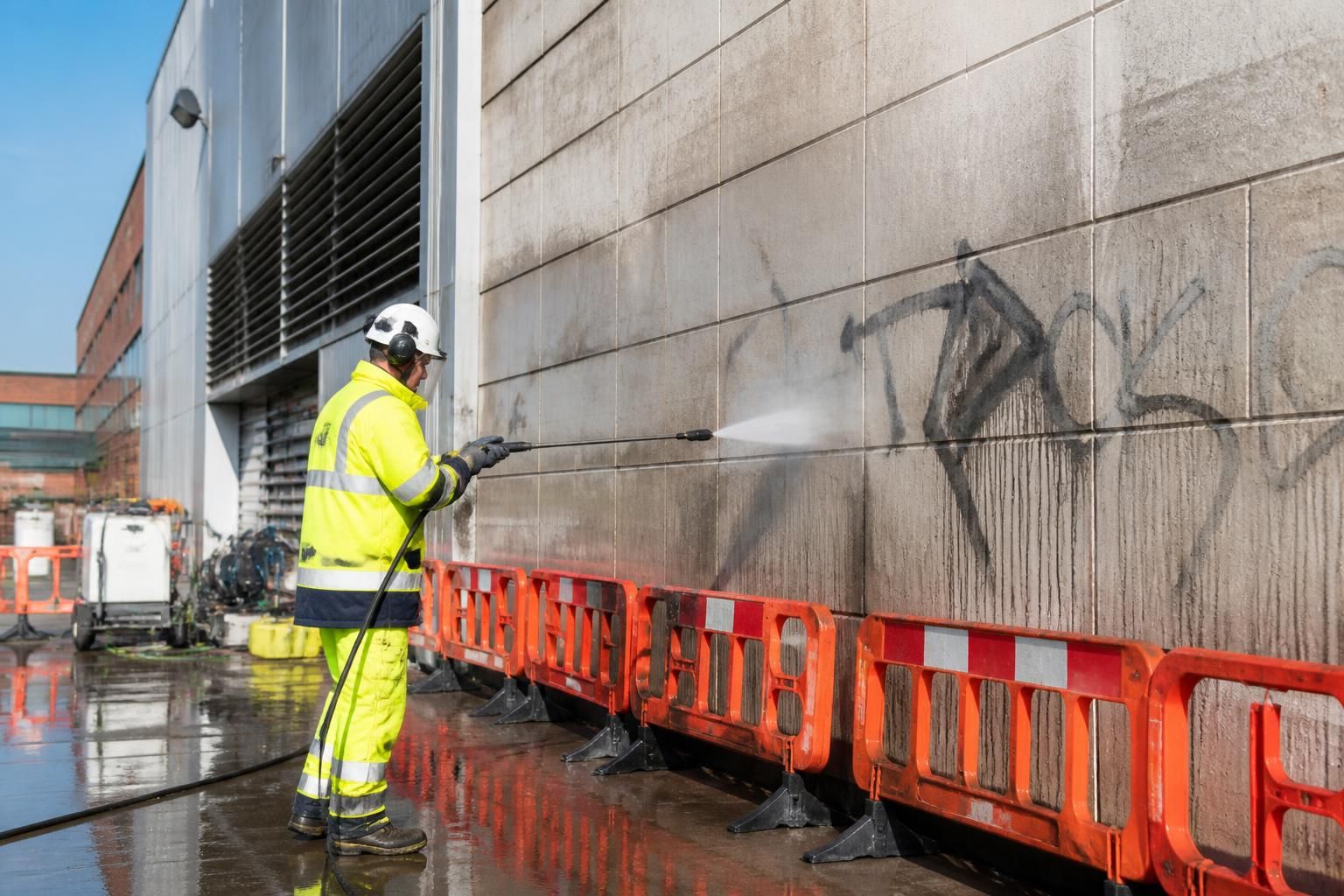
The working area is isolated or clearly controlled using barriers, cones, warning signs and, where necessary, a banksman or dedicated site marshal. Pedestrian routes, entrances and emergency exits are kept clear or diverted safely. Equipment, hoses and cables are positioned to reduce trip hazards, and tools or materials are not left where they could be accessed by unauthorised people.
Work may be scheduled for quieter periods where this reduces the risk to the public or disruption to the premises. The team also monitors wind, rain, temperature and visibility because weather can affect overspray, chemical performance, access equipment and the safety of nearby surfaces or people. The work is paused if conditions make the controls ineffective.
Personal protective equipment
Personal protective equipment is selected through the risk assessment rather than used as a substitute for other controls. Depending on the method, it can include protective clothing, gloves suitable for the products being handled, safety footwear, eye or face protection, hearing protection and respiratory protection. PPE is inspected, correctly fitted and maintained, and contaminated or damaged items are removed from service.
Where respiratory protection is required, the equipment must be suitable for the contaminant and task. Face-fit testing and appropriate maintenance are necessary for tight-fitting masks. Operatives are also provided with suitable facilities and instructions for removing contaminated clothing and maintaining personal hygiene.
Safe use of cleaning products
Any chemical product is selected for the graffiti, substrate and surrounding conditions. The team follows the product label and safety data sheet, including instructions for dilution, application, contact time, ventilation, storage and disposal. COSHH controls are used to assess exposure risks and specify the required PPE, washing facilities, first-aid measures and spill response.
Products are kept in labelled containers and are never transferred into unmarked bottles. Chemicals are stored securely, kept away from incompatible materials and transported in a way that prevents leaks. Operatives avoid mixing products unless the manufacturer expressly permits it, as incompatible substances can create hazardous reactions or harmful fumes. Test patches are used where appropriate to confirm that the chosen product and dwell time will remove the graffiti without affecting the brick, mortar, coating, sealant or adjacent finishes.
Access equipment and work at height
Access is planned according to the height, layout and condition of the façade. Ladders are not treated as a general work platform where safer equipment is reasonably practicable. Depending on the site, access may involve mobile elevated work platforms, towers, scaffold or other suitable systems. Equipment is selected, inspected and operated by competent personnel, with ground conditions, overhead obstructions, exclusion zones and rescue arrangements considered in advance.
Pressure hoses, steam lines and tools are managed so that they do not destabilise the operative or create a falling-object risk. Where a harness or other fall-protection system is required, it is used with a suitable anchorage and a realistic rescue plan. Access equipment is secured or removed when unattended, particularly in areas accessible to the public.
Protecting the façade and surrounding property
Safety and compliance also involve preventing damage to the client’s property. The method is adjusted to the substrate and its condition; pressure, temperature, nozzle selection, distance and chemical dwell time are controlled rather than applied uniformly. Vulnerable items such as windows, doors, vents, signage, lighting, electrical fittings, vegetation and painted surfaces are protected before cleaning.
Drainage routes are identified before work starts. Run-off, slurry and residue are prevented from entering areas where they could stain finishes, damage landscaping, contaminate watercourses or create a slip hazard. Nearby vehicles, equipment and occupied areas are protected from overspray, and ventilation openings are covered or managed where appropriate.
Water, run-off and waste controls
Water use and run-off are managed in accordance with the site plan and applicable environmental requirements. The team uses containment, collection or filtration measures where necessary and avoids allowing contaminated water, chemical residue, paint particles or abrasive material to enter surface-water drains. Disposal arrangements are agreed in advance rather than relying on uncontrolled discharge.
Removed paint, used absorbents, contaminated protective materials and chemical containers are handled as waste appropriate to their properties. Waste is contained, labelled where required and transferred through suitable disposal arrangements. Spill kits are available where the assessment identifies a spill risk, and any spill is contained, reported and cleaned up using the documented procedure.
Emergency and incident arrangements
The RAMS identifies what to do if there is a chemical splash, equipment failure, loss of containment, injury, unexpected surface damage or contact with a utility or member of the public. First-aid arrangements, emergency contact details, access for emergency services and the location of welfare facilities are confirmed before work starts. Operatives know how to stop equipment, isolate the area and escalate an incident.
Any accident, near miss, spill or property damage is recorded and reported to the appropriate site contact. The method statement is reviewed before work resumes, and additional controls are introduced where the original arrangements were not sufficient.
Completion checks and records
After removal, the team checks the treated façade and surrounding area for remaining residue, staining, overspray, slip risks, exposed substrate damage and disturbed protection. Barriers and equipment are removed only when the area is safe for normal use. Drainage points and access routes are checked, and waste and contaminated materials are taken away in accordance with the agreed arrangements.
Project records can include the site survey, RAMS, COSHH assessments, product information, equipment checks, access inspections, operative briefings, waste documentation, incident reports and completion photographs. These records provide a clear audit trail and allow the client or property manager to verify that the work was planned, carried out safely and completed in line with the agreed scope.
For ongoing graffiti removal, the same controls are revisited for each visit because the location, graffiti medium, surface condition, weather and surrounding activity may vary. A repeat maintenance programme should therefore retain the core safety procedures while allowing the risk assessment and cleaning method to be updated for the specific site and incident.
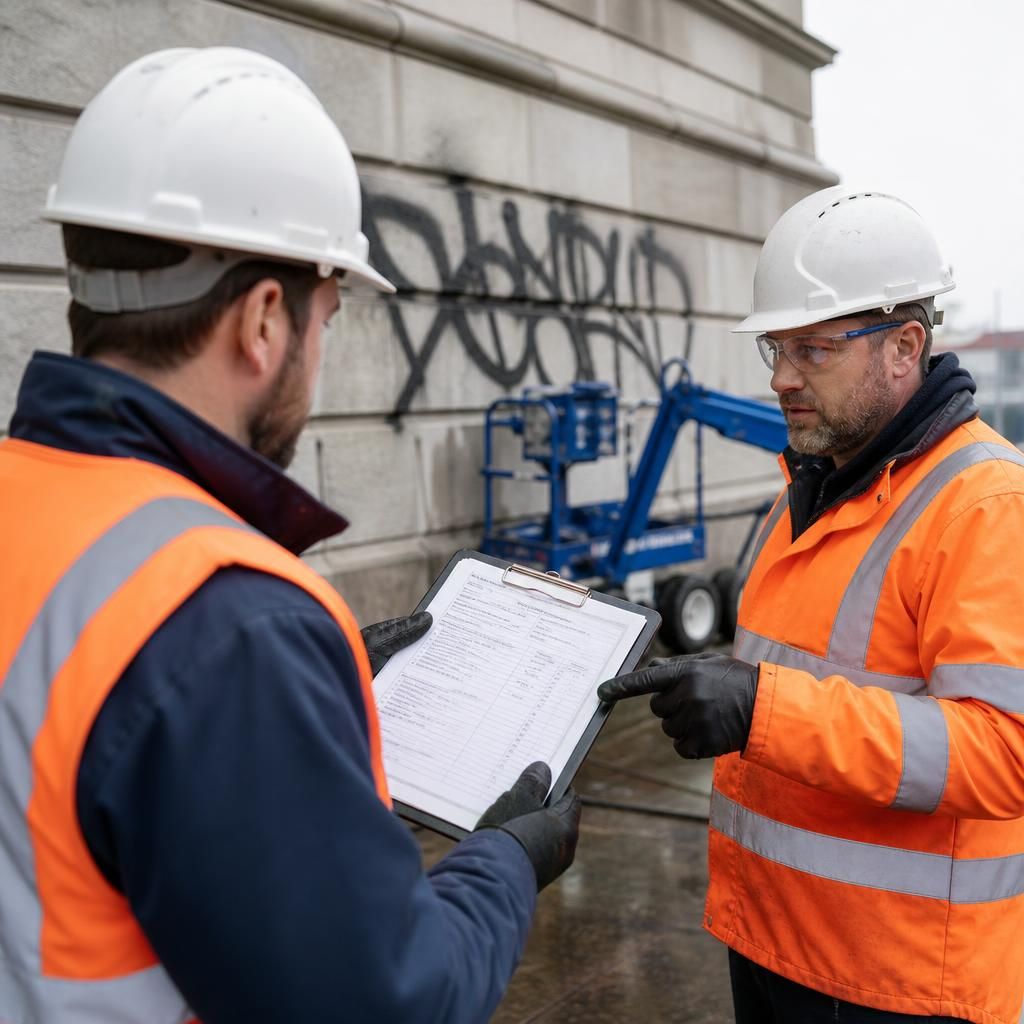
A site-specific risk assessment and method statement (RAMS) is the main control document for safe graffiti removal. It records the façade material, cleaning method, access arrangements, chemical controls, public protection measures, drainage considerations and emergency procedures before work begins.
Operatives are briefed on the RAMS before starting and follow it throughout the operation. If weather, access, pedestrian movement, surface condition or the graffiti itself differs from the original assessment, work is paused and the controls are reviewed. This ensures the agreed method remains suitable for the actual site rather than relying on a generic procedure.
Arrange a Safe, Compliant Graffiti Removal Assessment
Arrange a site-specific graffiti removal assessment to review the façade, access requirements, public protection measures and environmental controls before work begins. We will prepare the appropriate safe and compliant removal plan for your property.