
What precautions are necessary to ensure public safety during the graffiti removal process?
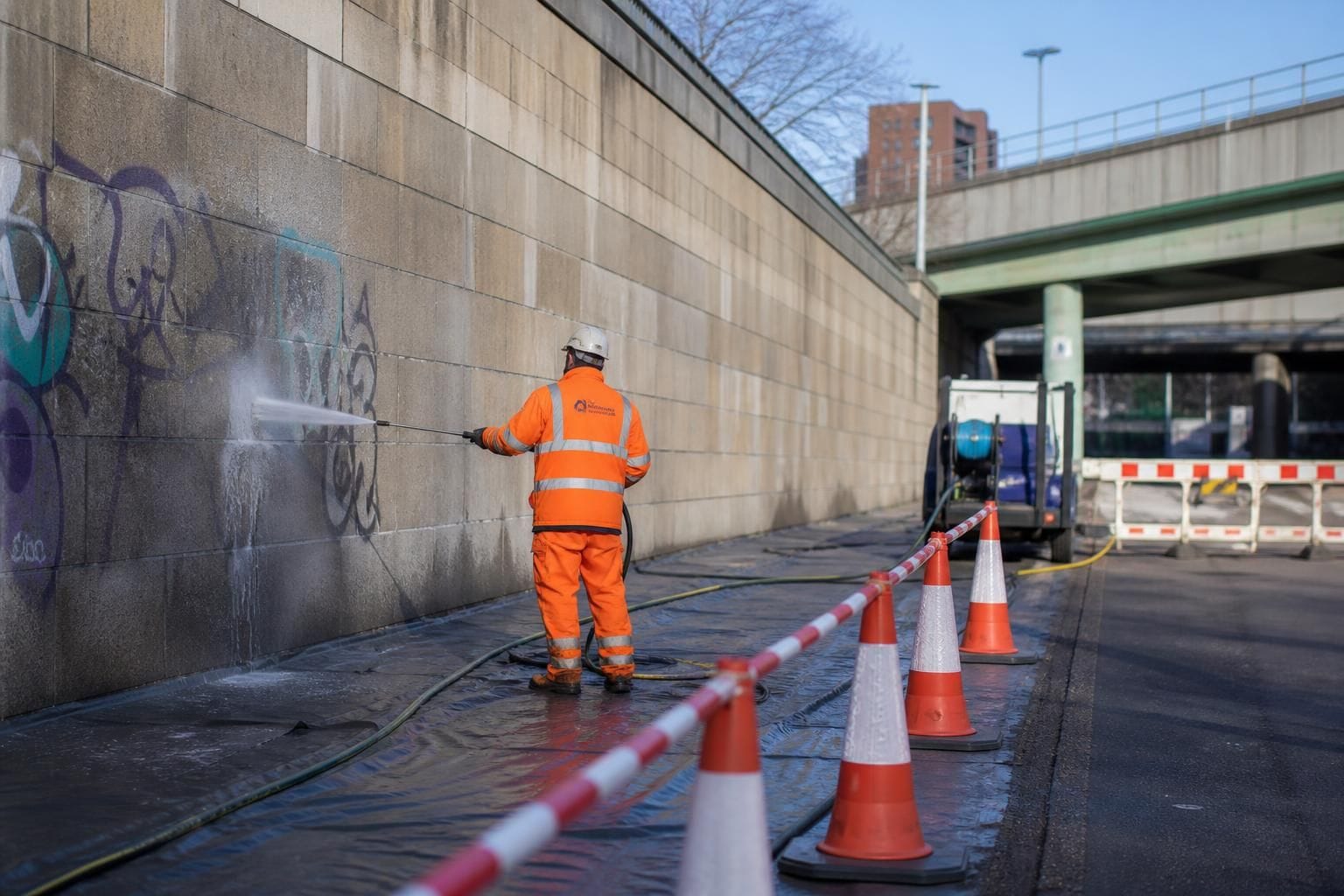
Public safety during graffiti removal is protected by securing the work area with barriers and warning signs, controlling pedestrian and vehicle access, and using safe access equipment and suitable personal protective equipment. We also manage water, cleaning chemicals, debris and waste responsibly to prevent slips, exposure, contamination or harm to people nearby.
Public safety during graffiti removal depends on controlling access to the work area, preventing exposure to cleaning products and contaminated residue, and managing equipment, water and waste safely. Before work begins, we assess the site and establish controls proportionate to the location, surface, cleaning method and risks to pedestrians, residents, road users and neighbouring businesses.
Securing the work area
- Barriers, cones and suitable warning signs are positioned around the cleaning zone to create a clear exclusion area.
- Pedestrians are prevented from walking beneath access equipment or entering areas where spray, falling debris or wet surfaces could create a hazard.
- Where the façade borders a pavement, entrance or public route, we agree a safe diversion or controlled pedestrian route with the responsible site contact.
- Vehicles, deliveries and nearby contractors are kept clear of hoses, cables, equipment and falling materials.
- Barriers remain in place until the surface, pavement and surrounding area have been checked and are safe to reopen.
Warning signs must be visible, easy to understand and positioned where people can see them before reaching the work area. Signs alone are not a substitute for physical separation where there is a realistic risk of contact with equipment, chemicals, spray or debris.
Planning and risk assessment
A site-specific assessment identifies hazards such as passing traffic, restricted pavements, overhead services, fragile surfaces, working at height, chemical exposure, pressure-washing spray, poor drainage and members of the public approaching the operation. The method of work is then adjusted to the building and its surroundings. This may include scheduling the work during a quieter period, using a spotter at busy access points, dividing the façade into controlled sections or pausing the operation when people need to pass.
Work should not start until responsibilities are clear. The cleaning team needs to know who controls the site, how to report an incident, where emergency equipment is located and how the public will be kept away from the operation. Conditions are monitored throughout the job because traffic, weather, access requirements or pedestrian movements can change after the initial assessment.
Safe access and work at height
Access equipment is selected for the height, reach, ground conditions and layout of the façade. Operatives use suitable equipment only when they are trained and authorised to do so, and the equipment is checked before use. Platforms, towers, ladders or other access systems must be positioned on stable ground and kept away from unauthorised access. Where necessary, the area beneath the work is protected from falling tools, residue and materials.
Pressure-washing hoses and electrical leads are routed to reduce trip hazards and are not left across public routes without protection and effective segregation. Access equipment is not moved while occupied unless it is designed and operated for that purpose. Work at height is planned to avoid relying on improvised platforms or unsafe overreaching.
Managing water, spray and cleaning products
Pressure, temperature and cleaning agents are selected for the graffiti and the underlying façade. This reduces the risk of uncontrolled spray, surface damage and chemical exposure. Operatives use the product information and risk controls applicable to each cleaning agent, including appropriate storage, handling, dilution and disposal requirements.
- Suitable protective gloves, eye or face protection, footwear and protective clothing are worn where the task requires them.
- People nearby are kept away from mist, splash, run-off and treated surfaces until the area is safe.
- Containers are kept secure and labelled, with decanted products managed in accordance with the relevant control measures.
- Cleaning products are never mixed unless the manufacturer’s instructions and the risk assessment specifically permit it.
- Wind, rain and drainage conditions are considered because they can carry spray or contaminated water beyond the intended work area.
Run-off is controlled so it cannot create a slippery pavement, enter an unsuitable drain or spread graffiti residue into surrounding areas. Collection, filtration or other containment measures may be needed, depending on the cleaning method and site drainage. Where a spill occurs, work is stopped and the affected area is isolated and dealt with using the planned response procedure.
Protecting the public from slips, trips and falling materials
Wet paving, hoses, cables, removed paint fragments and cleaning equipment are common causes of avoidable incidents. The team keeps access routes clear, removes residue as the work progresses and inspects the surrounding ground before allowing normal use to resume. Entrances are not left wet or obstructed, and alternative access is arranged when cleaning affects a doorway or shared route.
Loose masonry, deteriorated coatings or damaged façade materials may become apparent during cleaning. If there is a risk of material falling, the affected area is isolated and the responsible client contact is informed. Cleaning does not continue in a way that could expose the public to an unstable surface.
Traffic and occupied premises
Sites next to roads, car parks, schools, retail areas or occupied commercial premises need additional controls. These can include a banksman or spotter, controlled vehicle movements, temporary closure of a parking bay, delivery coordination and a clearly marked pedestrian diversion. Any work affecting a public highway or requiring equipment to occupy a road or pavement must be planned in line with the relevant site and local authority requirements.
Building occupants are advised about affected entrances, temporary restrictions, noise, spray and expected working arrangements. Emergency exits and access for emergency services must remain available. If that cannot be achieved, the work is rearranged rather than obstructing the route.
Emergency arrangements and site checks
Operatives know how to respond to chemical splashes, spills, equipment failure, loss of containment, public access to the exclusion zone and unexpected façade defects. First-aid provisions, clean water for rinsing where appropriate and spill-response materials are available according to the risks identified. Any incident or near miss is recorded and controls are reviewed before work resumes.
At the end of each work period, equipment, containers, barriers and waste are secured. The team checks the cleaned surface, surrounding pavement, access routes and drainage points for residual hazards. Barriers and warning signs are removed only when there is no remaining risk from wet surfaces, chemicals, equipment or loose material.
Responsible waste and residue handling
Graffiti residues, used wipes, contaminated absorbent materials, empty containers and collected run-off are handled according to their nature and the site requirements. Waste is kept contained, labelled where necessary and removed through an appropriate disposal route. It is not left where members of the public, site users or animals can come into contact with it, and contaminated water is not discharged without confirming that the receiving drainage system is suitable.
These precautions are applied alongside appropriate training, personal protective equipment, equipment checks and documented control measures. For a commercial or industrial site, the final arrangements should also be coordinated with the client’s own health and safety procedures, access rules and emergency plan.
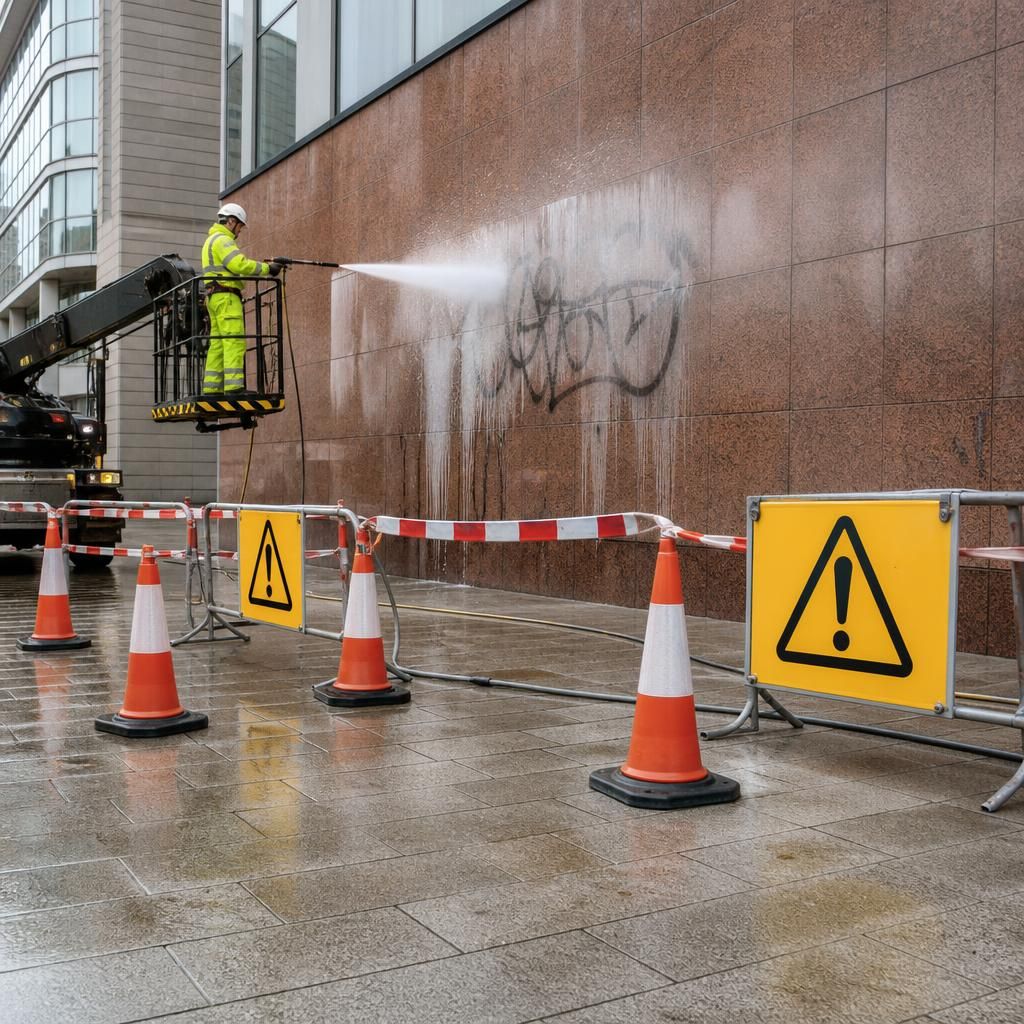
Public safety during graffiti removal starts with a clearly controlled exclusion zone around the façade and equipment. Barriers, cones and visible warning signs prevent pedestrians, vehicles and building users from entering areas exposed to spray, cleaning chemicals, falling residue, wet surfaces or access equipment.
Where the work affects a pavement, entrance or car park, we arrange a safe diversion or controlled route with the site contact. Hoses and cables are kept away from walkways, run-off is contained to prevent slips, and the area is inspected before barriers are removed. Signs alone are not sufficient where physical contact with the work presents a realistic risk.