
What methods do you use to remove graffiti without damaging brick façades?
We remove graffiti from brick façades using a tested combination of low-pressure rinsing, controlled steam cleaning and masonry-compatible graffiti removal agents, selected according to the brick type, paint and surface condition. We begin with a discreet test area, work at the lowest effective pressure and rinse carefully to remove residues without eroding the brick face, mortar or joints.
We remove graffiti from brick façades by matching the cleaning method to the brick, mortar, paint and condition of the wall. Our usual approach combines a discreet test area, the lowest effective pressure, controlled water or steam cleaning, and a masonry-compatible graffiti remover where required. This removes paint while reducing the risk of eroding the brick face, opening the surface or damaging mortar joints.
We assess the façade before selecting a method. Brick varies considerably in hardness, porosity, firing quality, age and previous treatment. A modern, dense facing brick may tolerate a different process from a soft, weathered or historic brick. We also examine the mortar, repointed areas, cracks, spalled sections, previous coatings and any water-sensitive features. The type of graffiti matters as well: aerosol paint, marker ink, emulsion paint and adhesive residues do not all respond to the same treatment.
A test patch is completed before full-scale cleaning. We select an inconspicuous area and compare suitable methods, checking whether the graffiti is lifting, whether the brick colour or texture is changing, and whether residues are being drawn deeper into the masonry. The test also helps establish the correct dwell time for a cleaning agent and the lowest effective pressure for rinsing. We proceed only when the result is acceptable and the method can be controlled consistently across the façade.
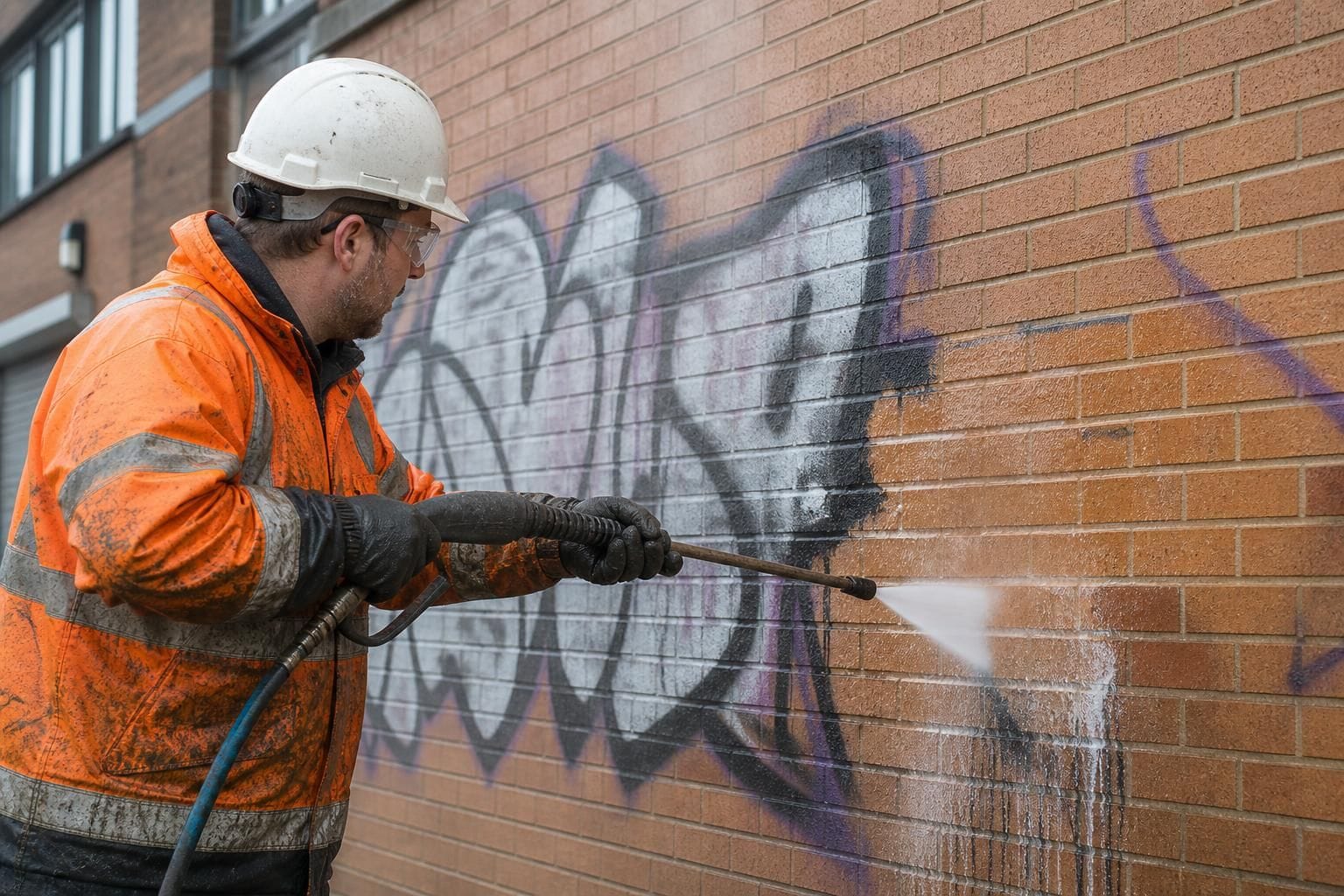
Low-pressure water cleaning is often suitable for removing loosened paint and rinsing treated areas. The pressure is kept as low as practical, with the nozzle and spray pattern controlled to avoid concentrating force on one brick or mortar joint. We work methodically rather than repeatedly blasting the same mark. Excessive pressure can remove the fired surface of a brick, expose a more porous core, widen defects and damage softer mortar, so pressure washing is never treated as a one-size-fits-all solution.
Steam cleaning can be useful where heat helps soften paint, marker residues or deposits without relying on aggressive mechanical action. Controlled steam is applied carefully, particularly around older brickwork, cracked areas and vulnerable joints. It can reduce the amount of chemical product needed, but it still requires a suitable test area and controlled rinsing. Steam is not automatically safe for every façade; moisture-sensitive materials, failing coatings and defective masonry need additional consideration.
Masonry-compatible chemical treatments are used when paint has penetrated the brick texture or cannot be removed effectively with water or steam alone. The product is selected for the graffiti and substrate, applied only to the affected area where possible, and allowed to work for the specified period. We avoid leaving treatment on the wall longer than necessary. After the paint has softened, the residue is lifted and the surface is rinsed thoroughly so that cleaning agents and dissolved graffiti are not left in the pores or joints.
Depending on the surface and the type of marking, the process may include:
- Careful scraping or brushing with non-damaging tools to remove thick paint runs before wet cleaning.
- Targeted application of a graffiti remover for stubborn paint, ink or adhesive residues.
- Controlled low-pressure rinsing to remove loosened material and product residues.
- Steam cleaning where heat can soften the marking without abrasive treatment.
- A masonry poultice or absorbent treatment where residues have migrated into a porous brick and require gradual extraction.
We generally avoid aggressive abrasive cleaning on brick façades unless a specialist assessment confirms that it is appropriate. Dry blasting, harsh mechanical abrasion and excessive pressure may remove graffiti quickly but can also strip the brick’s protective fired surface, create a visibly rough patch and accelerate future staining. Abrasive methods are particularly unsuitable for soft, historic, glazed or heavily weathered brick unless carefully specified and tested.
Protecting the brick also depends on how the work is carried out. We protect adjacent windows, doors, signs, vents, lighting and sensitive surfaces from chemical contact and overspray. Run-off is controlled so dissolved paint and cleaning products do not spread across clean masonry or enter surface water drains. The façade is rinsed in a controlled manner, and the cleaned area is inspected for remaining pigment, streaking, residue and changes in appearance before equipment is removed.
Some graffiti can leave a shadow or stain after the visible paint has been removed. This does not mean that the brick should be subjected to increasingly aggressive treatment. Further cleaning may cause more damage than the remaining discolouration, particularly where pigment has entered porous masonry or the original surface has already been altered. We explain the likely outcome before continuing and record any limitations caused by the graffiti, the substrate or previous cleaning.
Where appropriate, a suitable anti-graffiti treatment can be considered after the façade has been cleaned and fully assessed. The coating must be compatible with the brick and mortar, and its appearance, vapour permeability and future maintenance requirements should be understood before application. A protective treatment can make subsequent markings easier to remove, but it does not replace prompt inspection and planned maintenance.
The safest result comes from treating each façade as a specific cleaning project rather than applying the same pressure or chemical to every wall. Our method is therefore based on testing, controlled application, careful rinsing and final inspection, with the priority being complete practical graffiti removal while retaining the original brick texture, colour and mortar condition.
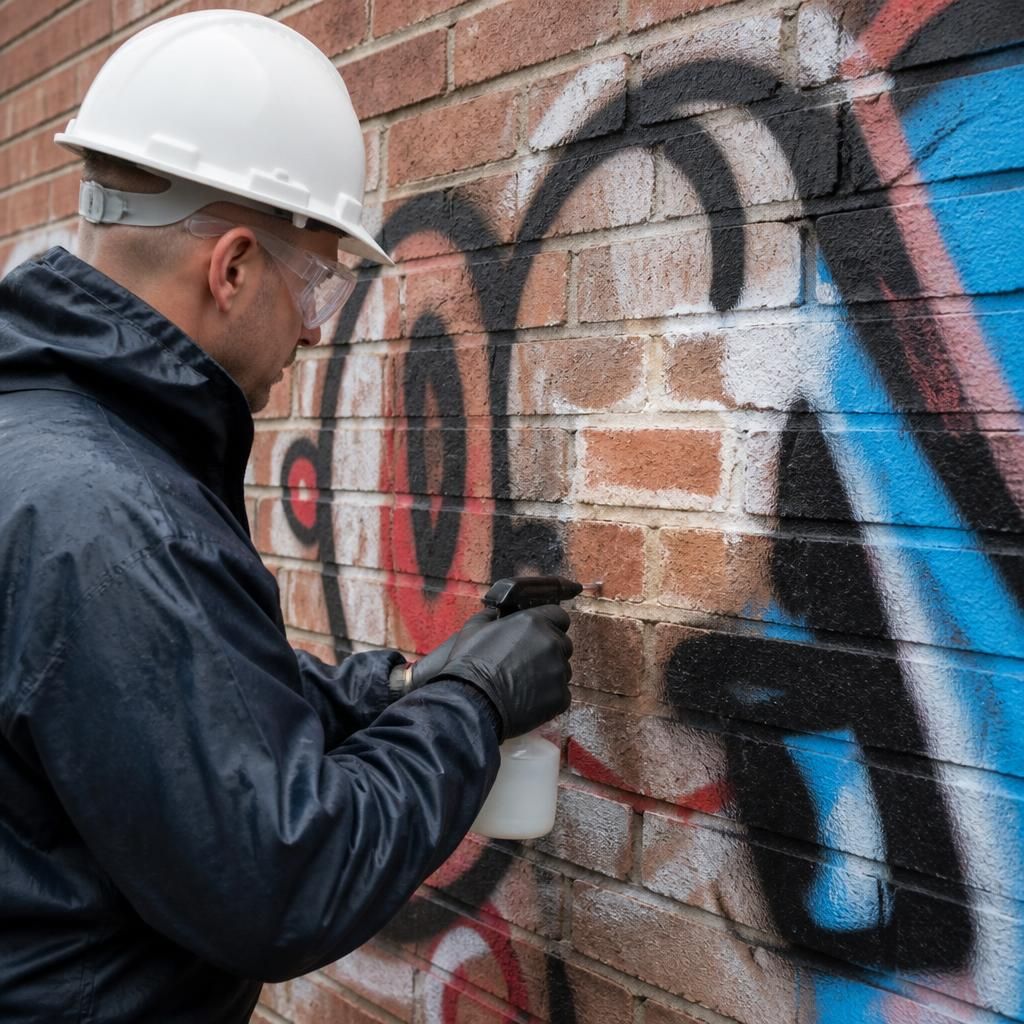
Testing a discreet area before full graffiti removal is the main safeguard for a brick façade. It shows how the brick, mortar and graffiti respond to low-pressure rinsing, controlled steam or a masonry-compatible cleaning agent before the method is used across the wall.
We assess whether the paint is lifting cleanly, whether the brick colour or texture is changing and whether dissolved pigment is moving deeper into the pores or joints. The test also establishes the shortest suitable dwell time and lowest effective rinsing pressure. If a method risks exposing the brick face, softening mortar or creating a visible difference, it is rejected or adjusted before wider cleaning begins.