
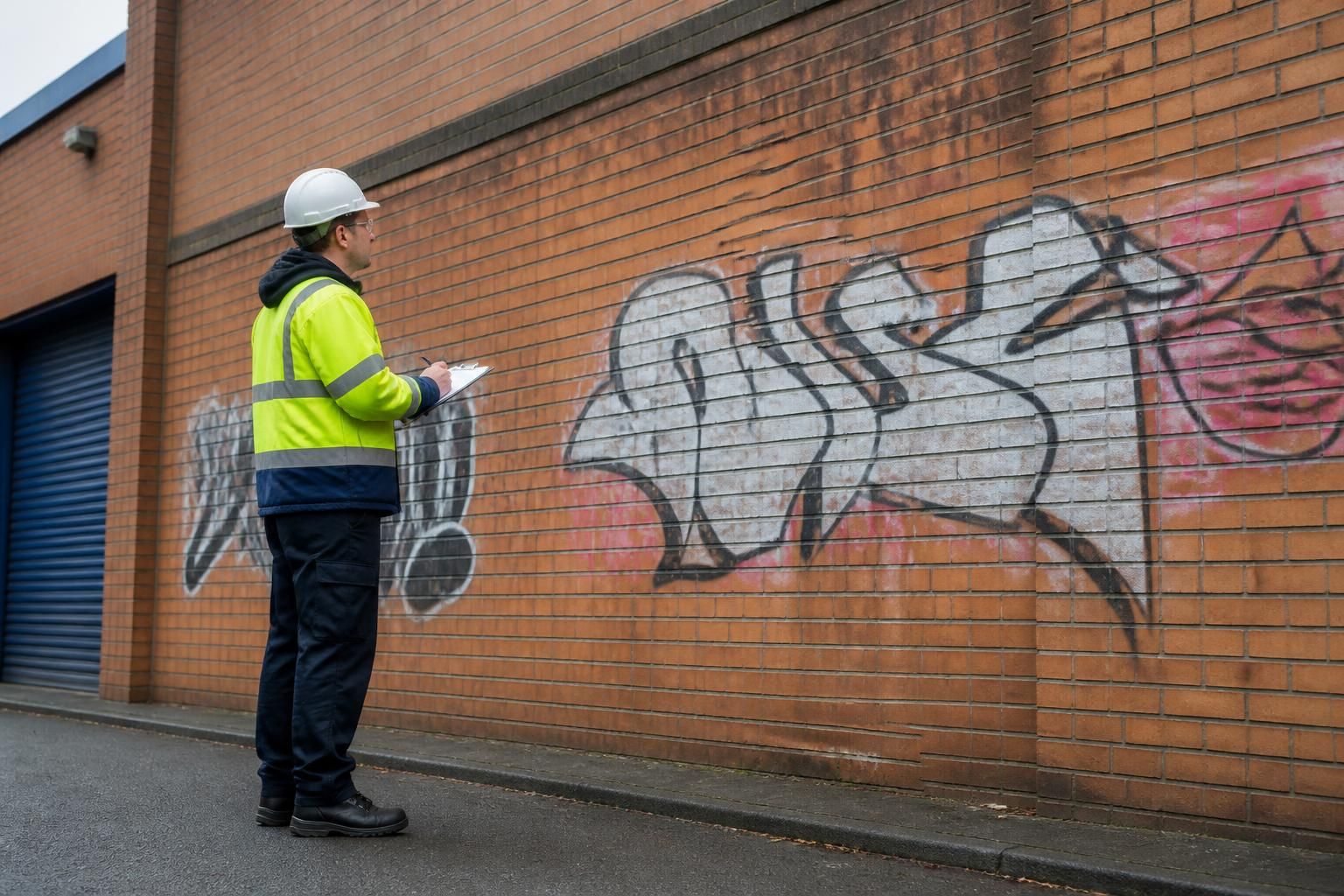
What maintenance plans are recommended for long-term protection against graffiti on brick façades?
A long-term graffiti protection plan for brick façades should combine scheduled inspections, prompt removal of new graffiti and a suitable anti-graffiti treatment selected for the brick’s age, porosity and finish. The plan should also include periodic coating checks, photographic records and reviews after any façade repairs or significant changes in graffiti risk.
A long-term graffiti protection plan for a brick façade should combine risk-based inspections, prompt removal of new graffiti, suitable anti-graffiti protection and regular reviews of the brickwork and coating. The correct inspection frequency depends on the site’s exposure, previous incidents, public access, surrounding land use and the condition of the façade. A written plan makes these activities consistent rather than relying on reactive cleaning after vandalism occurs.
1. Start with a condition and risk assessment
Before selecting a maintenance schedule, the façade should be assessed for brick type, mortar condition, surface porosity, previous repairs, existing coatings and areas that are difficult to access. The assessment should also consider likely sources of graffiti, such as public footpaths, transport routes, vacant areas, service entrances and poorly lit elevations.
This information establishes the areas that need closer monitoring and helps determine whether a protective treatment is appropriate. Historic, soft or highly porous brick may require a gentler approach than dense modern brick. Damaged mortar, open joints and cracked units should be recorded because water and cleaning products can enter these defects and increase the risk of deterioration.
2. Use scheduled inspections rather than waiting for reports
Inspections should be carried out at a frequency proportionate to the graffiti risk. High-risk façades may need frequent checks, while lower-risk elevations can be reviewed less often as part of planned building maintenance. Checks should cover the full façade, including upper levels, recessed entrances, plant enclosures, loading areas, boundary walls and locations hidden from normal view.
Inspectors should look for fresh graffiti, staining, failed or worn protective coating, water ingress, damaged pointing, efflorescence, flaking repairs and changes in access conditions. Photographs should be taken from consistent viewpoints so that new damage and gradual coating wear can be distinguished from existing marks.
3. Remove graffiti promptly using an agreed method
New graffiti is generally easier to remove before paint, marker or adhesive has weathered into the brick. The maintenance plan should specify who reports incidents, how they are logged, how access is arranged and what response is expected for different areas of the site.
Removal should not be carried out with an unsuitable solvent, aggressive pressure or abrasive technique simply because the mark is fresh. The cleaning method must be tested in an inconspicuous area and selected according to the graffiti medium, brick porosity, mortar condition and any existing anti-graffiti treatment. Steam cleaning, controlled pressure washing, specialist chemical treatment or a combination of methods may be appropriate, but the objective is to remove the marking without eroding the brick face or spreading contamination.
4. Apply protection where the façade is suitable
An anti-graffiti treatment can reduce the penetration of paint and make subsequent removal safer, but it is not a substitute for inspection and prompt response. The treatment should be compatible with the brick and mortar and should not trap moisture within the wall. Breathability, colour, texture, sheen and the appearance of repaired areas should all be considered before application.
Protective systems are commonly either sacrificial or permanent. A sacrificial coating is removed or partly removed during graffiti cleaning and must then be reapplied to the affected area. A permanent or semi-permanent system is designed to remain in place through repeated cleaning, although it still requires periodic inspection and may eventually need renewal. The manufacturer’s maintenance requirements should be followed, and any proposed treatment should be tested on representative brickwork before full application.
5. Include coating checks in planned maintenance
Protective coatings should be checked after graffiti removal, façade repairs, repointing, pressure washing and other works that may affect the treated surface. Visual inspection can identify patchiness, discolouration, loss of sheen, peeling, localised wear or areas where water behaves differently from the surrounding brick. Where the condition is uncertain, a small controlled test can help establish whether the coating is still performing as intended.
Renewal should be based on observed performance and the requirements of the selected system, rather than applying a new coating automatically over dirt, failed material or incompatible repairs. Localised reapplication may be suitable for isolated damage, while widespread deterioration may require preparation and treatment of the complete elevation to avoid visible differences.
6. Keep records that support consistent decisions
A useful graffiti maintenance record should include:
- inspection dates, areas checked and photographs;
- the location, size and type of each graffiti mark;
- the cleaning method and products used;
- test patch results and any areas requiring additional treatment;
- the condition of the brick, mortar and protective coating;
- repairs, coating applications and renewal dates; and
- recommendations for the next inspection or remedial action.
These records help identify recurring locations and prevent incompatible cleaning methods being used by different contractors. They also provide evidence of how the façade has been maintained and can support decisions about access equipment, budgeting and future coating work.
7. Review the plan after changes or repeated incidents
The maintenance plan should be reviewed after repeated graffiti, a change in nearby use, alterations to lighting or security, façade refurbishment, new construction, repointing or changes to public access. Recurring vandalism may justify a different inspection frequency, improved lighting, revised access controls or a change in the protective system. Cleaning alone will not address every underlying risk.
Where a building has historic or architecturally important brickwork, the plan should also allow for conservation advice and approval requirements before cleaning or coating. Any treatment must remain compatible with the building’s construction and appearance.
A practical plan therefore combines prevention, monitoring and controlled response:
- assess the brick façade and its graffiti risk;
- set inspection intervals for high- and lower-risk areas;
- record and report new graffiti promptly;
- remove markings using a tested, surface-appropriate method;
- inspect and renew anti-graffiti protection when its performance declines;
- record every inspection, cleaning operation and repair; and
- review the approach when site conditions or graffiti patterns change.
This approach provides long-term protection without treating the brickwork more aggressively than necessary. It also makes maintenance predictable, helps preserve the façade’s appearance and reduces the risk that repeated graffiti removal will cause gradual surface damage.
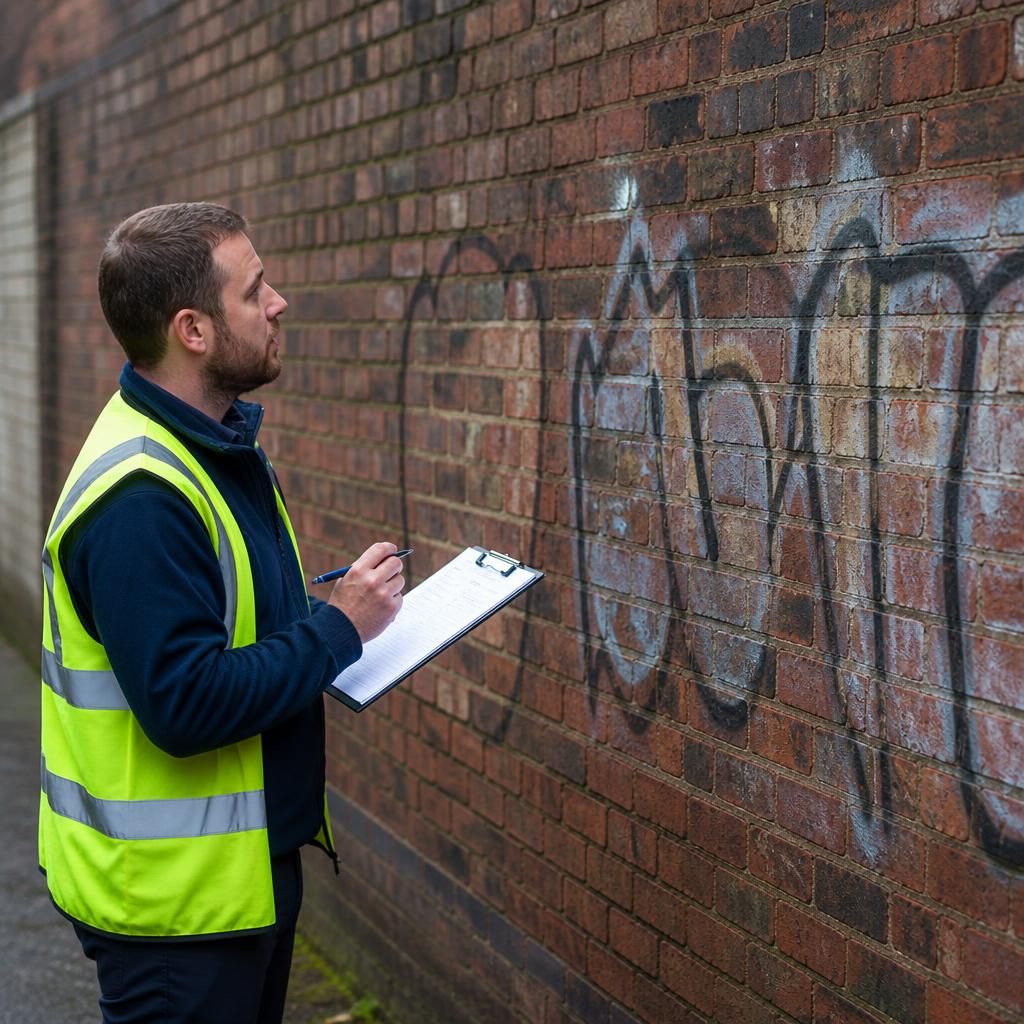
A planned inspection and response schedule is one of the most effective ways to protect a brick façade from recurring graffiti damage. Regular checks identify fresh marks, coating wear and defects in the brickwork before they become more difficult or costly to address.
Inspection frequency should reflect the site’s graffiti risk. High-risk areas, including recessed entrances, boundary walls, service access points and elevations beside public routes, may require closer monitoring than less accessible façades. Each inspection should record the location and condition of any graffiti, mortar defects and anti-graffiti treatment.
New graffiti should be reported and removed using a tested method suited to the brick, mortar and protective coating. Prompt treatment can reduce penetration and avoids unnecessary aggressive cleaning. After removal, the affected area should be checked for coating loss or surface damage, with localised reapplication considered where the protection has been compromised.
Arrange a Graffiti Protection Plan for Your Brick Façade
Arrange a graffiti protection plan for your brick façade, including scheduled inspections, prompt removal and coating checks tailored to the site’s risk and condition. Contact Encanto Exterior Cleaning to discuss a practical maintenance schedule.