
What factors should be considered when selecting a graffiti removal service for brick façades?
When selecting a graffiti removal service for brick façades, assess its experience with masonry, proposed cleaning methods, surface-testing procedures, safety controls, environmental practices and relevant insurance. A reliable contractor should explain how it will remove the paint without damaging brick or mortar, contain wash water and provide a clear quotation and maintenance advice.
The most important factors are the contractor’s experience with brick and mortar, the proposed removal method, the way the surface will be tested, and the controls used to protect people, property and the environment. A suitable graffiti removal service should be able to inspect the façade, identify the brick and coating types, explain the risks, and provide a method statement tailored to the building rather than applying the same treatment everywhere.
Experience with brick façades should be assessed before work begins. Brick varies in hardness, porosity, firing, colour and condition, while older mortar can be softer and more vulnerable than the brick itself. Ask whether the contractor has carried out comparable work on external masonry, including historic or weathered façades, and whether it understands how graffiti can penetrate porous brick. Experience should include removing paint, marker ink, aerosol coatings and layered graffiti without spreading staining or eroding the surface.
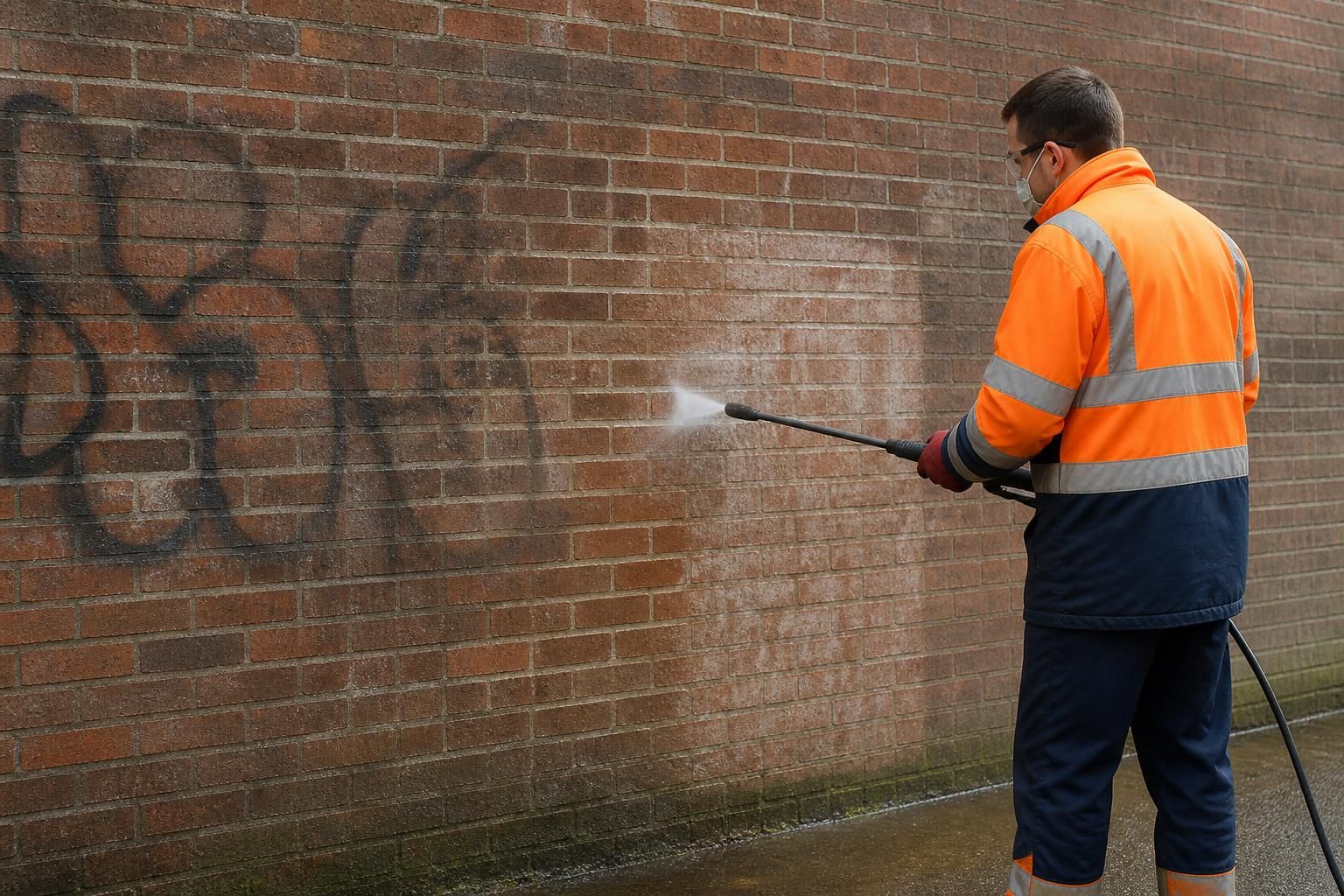
The proposed cleaning method must be appropriate for both the graffiti and the substrate. Depending on the paint, brick condition and location, a contractor may recommend controlled pressure washing, steam cleaning, a specialist chemical poultice or a combination of techniques. High pressure is not automatically the most effective option: excessive pressure can remove the brick face, widen existing defects, dislodge mortar and force water into the wall. Chemical products can also cause staining or damage if they are unsuitable, left on too long or inadequately rinsed.
Before approving the work, request a clear explanation of:
- How the graffiti and brick will be assessed.
- Which cleaning method and products are being proposed, and why.
- How pressure, temperature, dwell time and rinsing will be controlled.
- How mortar joints, adjacent finishes, windows, doors and signage will be protected.
- How removed paint, residues and wastewater will be contained and disposed of.
Testing and inspection procedures are essential. A responsible contractor should carry out a small test area in an inconspicuous or representative location before treating the whole façade. The test should assess whether the graffiti can be removed without altering the brick colour, texture or mortar. It should also identify any pre-existing defects, patch repairs, water staining or weak areas that may affect the result. The proposed approach should be reviewed if testing shows etching, colour change, mortar loss or persistent shadowing.
Surface protection and expected results should be discussed realistically. Some graffiti leaves a shadow or penetrates deeply into porous masonry, particularly when it has weathered or been repeatedly overpainted. Complete removal may not be possible without causing unacceptable damage. A competent service should explain this before work starts and distinguish between removing the visible coating, reducing residual staining and restoring the appearance of the brick. It should not promise a uniform result without inspecting the façade.
Health and safety arrangements are particularly important where façades face pavements, roads, car parks or occupied premises. Check that the contractor will provide a suitable risk assessment and method statement, establish exclusion zones, control overspray and manage access equipment safely. The plan should address pedestrians, vehicles, residents, employees and other contractors, as well as risks from wet surfaces, cleaning chemicals, falling debris and work at height. Where access equipment is required, operators should be appropriately trained and the equipment should be suitable for the ground and façade conditions.
Environmental controls should form part of the quotation and method statement, not be treated as an afterthought. Ask how chemical runoff and contaminated wash water will be prevented from entering drains, soil or watercourses. The contractor should select the least aggressive effective product, use water responsibly, protect nearby planting and explain how residues and consumables will be collected and disposed of in accordance with applicable requirements. Steam or low-water techniques may be suitable in some locations, but their suitability still depends on the graffiti and the condition of the brick.
Insurance, competence and documentation provide useful evidence that the service is properly managed. Request confirmation of appropriate public liability cover, relevant employer’s liability arrangements where applicable, and any qualifications or training required for access equipment and chemical handling. A professional quotation should identify the areas to be treated, preparation and protection measures, access arrangements, cleaning method, limitations, waste controls, timescale and any exclusions. It should also explain whether follow-up treatment is included if shadowing remains after the initial clean.
Cost should be compared against the scope of work rather than considered in isolation. A low quotation may exclude access, protection, wastewater collection, test patches or the treatment of residual staining. Compare quotations on a like-for-like basis and check whether the contractor has allowed for difficult access, occupied surroundings and additional protection for adjoining surfaces. The cheapest method can become more expensive if it causes brick damage, requires repointing or leaves the façade needing further treatment.
Finally, consider aftercare and prevention. The service should advise whether a sacrificial or permanent anti-graffiti coating is suitable for the brick, how it may affect the appearance and breathability of the façade, and how future tags will be removed. A written maintenance plan can set out inspection arrangements, reporting procedures and response times so that new graffiti is dealt with before it penetrates further. Selecting a contractor that combines masonry knowledge, controlled testing, safe working practices, environmental management and transparent documentation gives the best protection for the façade and helps avoid unnecessary repeat cleaning.
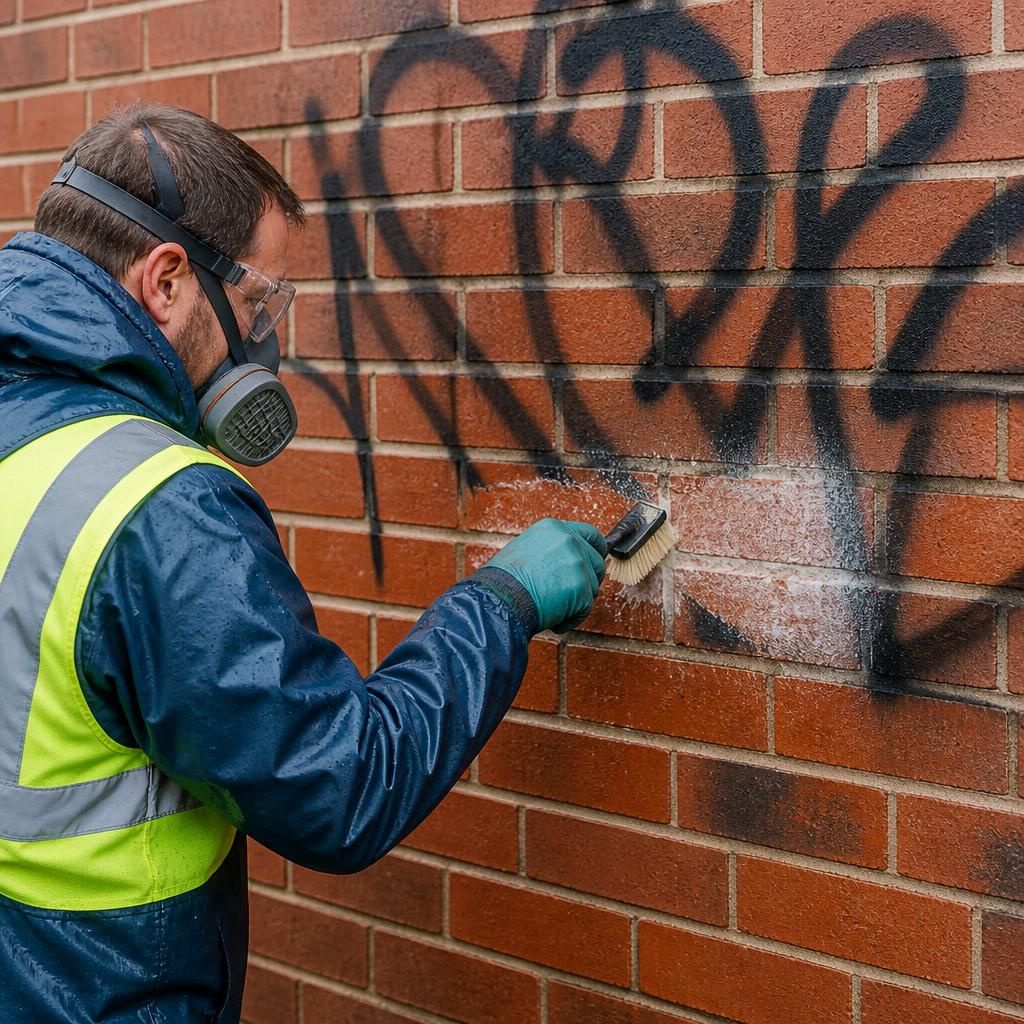
A test patch is an essential part of selecting a graffiti removal service for a brick façade. It allows the contractor to confirm that the proposed product, pressure, temperature and dwell time will remove the graffiti without changing the brick colour, damaging the surface or eroding the mortar joints.
The test should be carried out in an inconspicuous but representative area, particularly where the façade contains older brick, soft mortar, previous repairs or weathered surfaces. The contractor should inspect the result after rinsing and drying, checking for etching, staining, paint shadowing and colour variation before recommending full treatment. If the test exposes a risk of damage, the cleaning method should be adjusted rather than applied across the whole façade.