
What environmentally friendly methods are used for graffiti removal on brick façades?
Environmentally friendly graffiti removal from brick façades typically uses low-pressure steam or hot-water cleaning, supported where necessary by biodegradable, surface-compatible products. Run-off is contained and handled responsibly, while pressure, temperature and cleaning agents are controlled to protect the brick, surrounding environment and public areas.
Environmentally friendly graffiti removal from brick façades combines low-pressure steam or controlled hot-water cleaning with carefully selected, biodegradable products where required. The process is designed to remove the paint effectively while minimising chemical use, water consumption, surface damage, airborne spray and contaminated run-off.
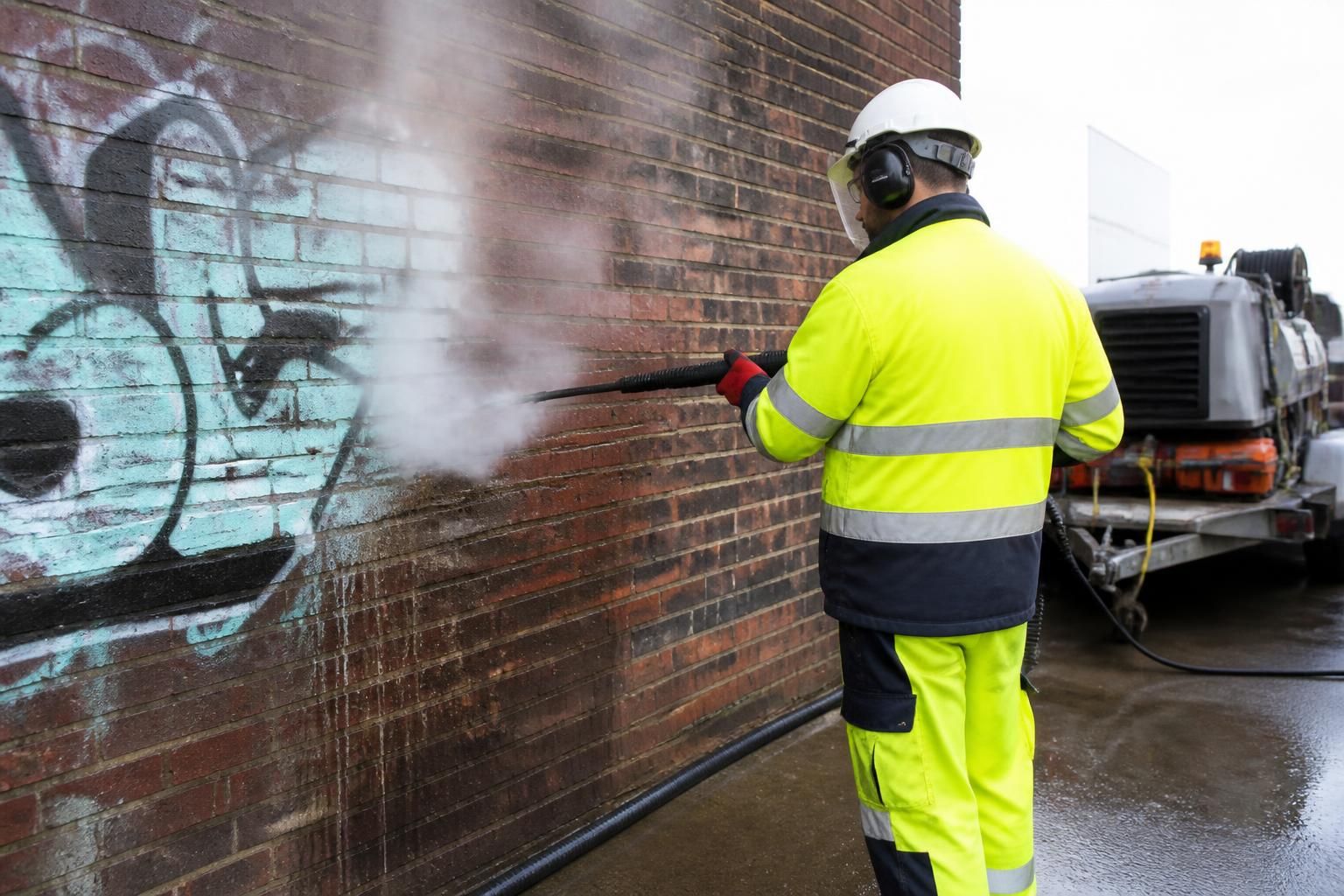
Low-pressure steam cleaning is often the preferred first option for suitable brickwork. Steam softens and lifts many spray paints, marker inks and adhesive residues without relying on aggressive solvents or high-impact pressure. The operator controls the temperature, pressure and distance from the façade to suit the brick, mortar and type of graffiti. This is important because excessive pressure can erode friable brick faces, open joints or force contamination further into porous masonry.
Hot-water cleaning at controlled pressure can be used where steam alone is not sufficient. Heated water helps break down paint and reduces the need for strong detergents. Using the lowest effective pressure limits damage to the façade and reduces splashing. Cleaning is normally carried out in manageable sections so that the operator can monitor the result and avoid repeatedly treating areas that are already clean.
Biodegradable, surface-compatible cleaning products may be applied to persistent or deeply absorbed graffiti. The product should be selected according to the paint, ink and brick condition rather than applied as a general-purpose chemical. Suitable products are used sparingly, allowed the correct dwell time and thoroughly rinsed or removed in accordance with the product instructions. Biodegradable does not mean that a product can be discharged untreated: used solutions may still contain paint particles, pigments and other contaminants.
For some porous or delicate façades, a carefully controlled poultice or gel treatment can provide a more targeted alternative to broad chemical application. The material holds the cleaning agent against the graffiti, helping to limit run-off and reduce the amount applied to surrounding brickwork. It must be removed fully and assessed for compatibility, as unsuitable products or excessive dwell times can stain masonry or affect the surface finish.
An environmentally responsible operation also controls what happens to the water and removed material:
- Drain covers, temporary bunding, absorbent materials or collection equipment are used where necessary to prevent contaminated water entering surface-water drains, soil or planted areas.
- Collected run-off is filtered or otherwise managed so that paint flakes, sediment and other solids are not released into the drainage system.
- Wastewater and cleaning residues are handled in line with site requirements and applicable environmental and trade-waste controls.
- Water use is kept to the minimum needed for safe, complete rinsing, rather than relying on prolonged high-volume washing.
- Nearby vehicles, entrances, ventilation points, landscaping and pedestrian routes are protected from spray and chemical contact.
Pre-cleaning assessment is essential. Brick type, porosity, age, previous repairs, mortar condition, coatings and the age of the graffiti all influence the safest method. A small, inconspicuous test area should be used to check whether the treatment removes the graffiti without lightening the brick, altering its texture, spreading the pigment or damaging the mortar. The selected method can then be adjusted before wider cleaning begins.
Harsh acids, highly caustic products, paint strippers with unnecessary solvent content and abrasive blasting are not automatically environmentally responsible, even when they remove graffiti quickly. They can damage masonry, create hazardous residues or increase the likelihood of repeat cleaning. Mechanical abrasion may also remove the fired surface of the brick, leaving it more porous and vulnerable to future staining. These approaches should only be considered after less aggressive methods have been assessed and with appropriate controls.
Where appropriate, a compatible anti-graffiti treatment can provide longer-term protection by reducing paint penetration and making future removal possible with milder methods. The coating must be suitable for the specific brick façade and its moisture behaviour. An incompatible or poorly applied coating can trap moisture, change the appearance of the building or complicate future maintenance.
In practice, the most sustainable approach is usually a measured combination of testing, low-impact cleaning, targeted product use and proper run-off control. Environmentally friendly graffiti removal is not defined by one product alone; it depends on choosing the least harmful effective method for the façade, applying it precisely and managing the resulting waste responsibly.
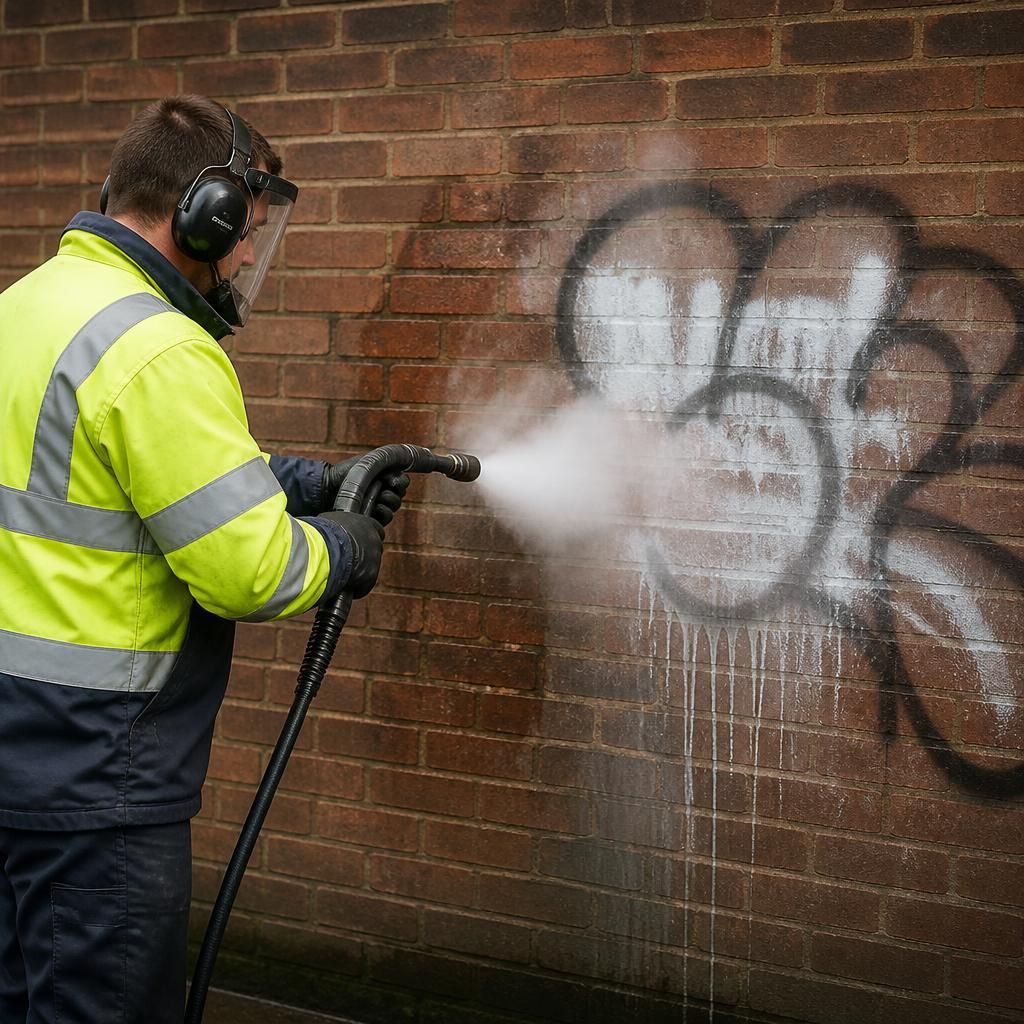
Low-pressure steam cleaning is often an environmentally preferable method for removing graffiti from suitable brick façades because it softens paint and marker residues without relying on aggressive solvents. The operator adjusts the temperature, pressure and working distance to lift the graffiti while limiting erosion, water use and disturbance to the brick and mortar.
Where steam alone is insufficient, controlled hot-water cleaning or a biodegradable, surface-compatible product may be used selectively. A small test area should be checked first, and any contaminated run-off must be collected or filtered rather than allowed to enter surface-water drains, planted areas or soil. This combination of targeted treatment and responsible waste control is what makes the process environmentally friendly in practice.