
How do you handle environmentally sensitive graffiti removal operations?
Environmentally sensitive graffiti removal uses the least aggressive effective method for the surface, while controlling overspray, preventing contaminated runoff and protecting nearby soil, drains, watercourses and vegetation. We assess the site beforehand, select appropriate low-impact cleaning products and equipment, contain and collect wastewater where necessary, and dispose of residues in accordance with UK environmental requirements.
Environmentally sensitive graffiti removal means removing paint, ink or other markings while minimising harm to the building, people, surrounding environment and drainage system. We achieve this by assessing the site first, using the least aggressive effective cleaning method, controlling overspray and runoff, protecting nearby vegetation and watercourses, and handling residues responsibly.
Environmental controls are planned around the location, substrate and type of graffiti rather than applied as a standard procedure. A façade beside a busy road, school, canal, planting area or surface-water drain may require different precautions from an isolated industrial elevation. Before work starts, we consider:
- The surface condition, including damaged mortar, open joints, cracks, coatings and areas that may absorb cleaning products.
- The graffiti medium, such as aerosol paint, marker ink, bitumen or adhesive residue.
- The proximity of drains, watercourses, soil, planting, nesting areas and sensitive neighbouring properties.
- Public access, vehicle movements, wind direction and the likelihood of spray or vapour travelling beyond the work area.
- Whether wastewater can be safely collected, filtered or removed from site rather than allowed to enter a surface-water system.
Where practical, we carry out a small test area before full removal. This confirms how the façade responds to the selected product, pressure, temperature and dwell time. Testing helps prevent unnecessary repeat cleaning, excessive water use and damage to the underlying brick, stone, render, cladding or coating.
Low-impact methods and products
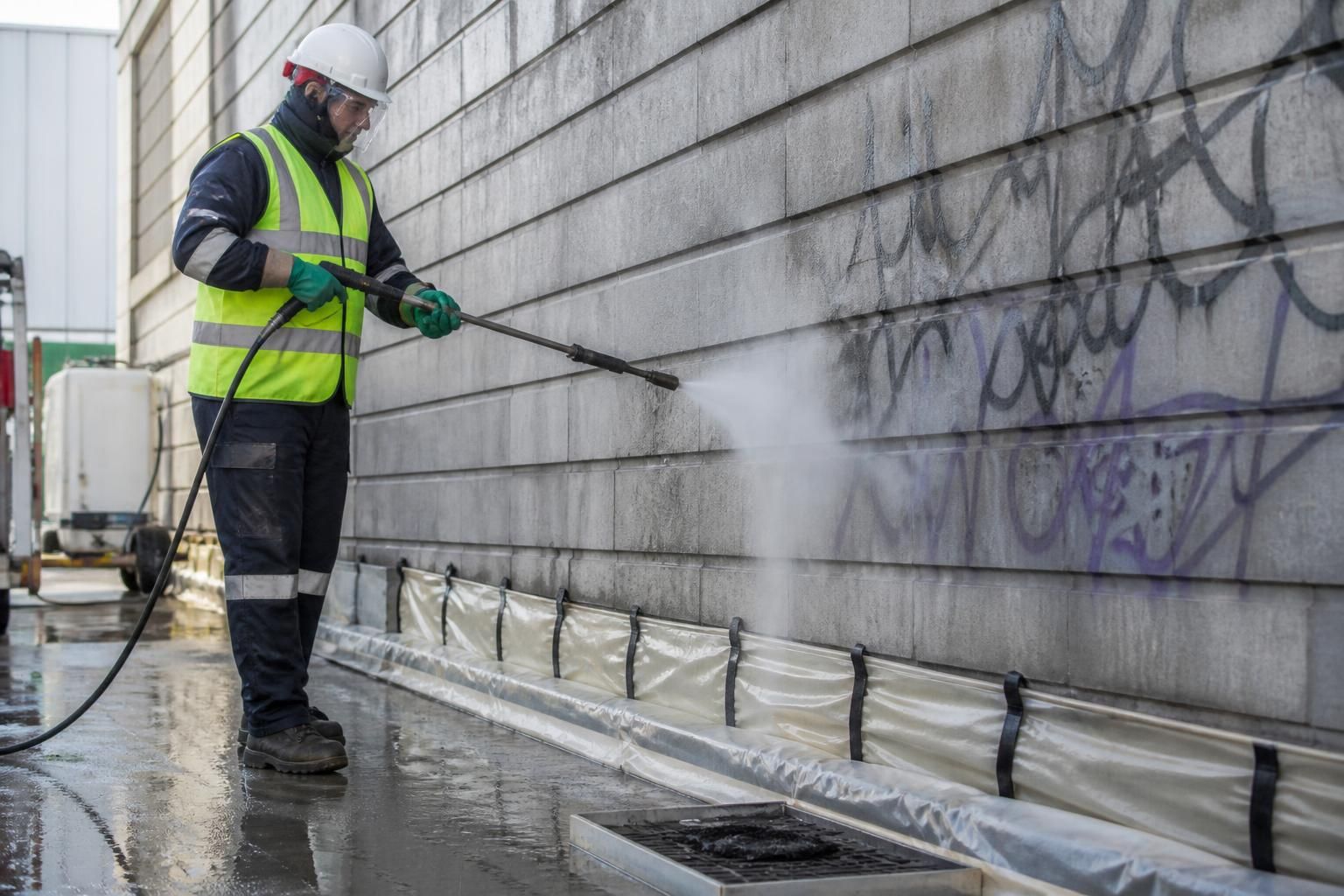
We select the mildest process capable of removing the marking effectively. Depending on the substrate, this may involve controlled low-pressure washing, steam cleaning, a suitable biodegradable or water-based cleaning product, or a combination of techniques. Steam can be useful where reduced chemical use is appropriate, while specialist graffiti-removal products may be required for deeply absorbed or layered paint. Product selection is based on compatibility with the surface and the environmental controls available at the site.
A product being described as biodegradable does not automatically make it suitable for unrestricted discharge. Cleaning agents can still affect aquatic life, vegetation, coatings or drainage systems if they are misused. We therefore follow the relevant product instructions, control application carefully and prevent concentrated residues from reaching soil or water.
Containing spray, runoff and residues
Protective sheeting, drain covers, absorbent materials, bunding or temporary collection systems may be used where the site assessment indicates a risk of contamination. The work area is managed to keep overspray within the controlled zone, with particular care around air intakes, doorways, planted areas and public routes. Where wastewater is generated, we assess whether it can be discharged lawfully and safely. If not, it is collected for appropriate handling instead of being directed into a surface-water drain.
Solid paint flakes, used absorbents, disposable coverings and contaminated cleaning materials are also treated as work-related waste. These materials are gathered promptly so that wind, rain or foot traffic cannot spread them. Wastewater and residues are managed in accordance with the site requirements, product guidance and applicable UK environmental controls.
Protecting vegetation, wildlife and neighbouring areas
Plants, grass, tree pits and other permeable surfaces near the façade are protected from splash and chemical contact. We may adjust the cleaning sequence, reduce application volume or use additional screening where vegetation cannot be moved. Work can also be rescheduled when heavy rain or unsuitable wind would make containment unreliable. If the site presents a potential wildlife or nesting concern, this is considered during planning and the responsible site contact is consulted before work proceeds.
On occupied or publicly accessible sites, environmental protection is coordinated with safety controls. Barriers, warning signs and controlled access help prevent members of the public from entering the work area or contacting wet surfaces and residues. Equipment is positioned to avoid creating unnecessary obstruction, and the team monitors changing weather and site conditions throughout the operation.
Verification after cleaning
Once the graffiti has been removed, we inspect the façade and surrounding area for remaining residue, overspray, pooled water or displaced waste. Protective materials are removed carefully, drains and nearby surfaces are checked, and the area is left in a condition suitable for its normal use. For larger or sensitive projects, the work plan, products used, controls applied and waste arrangements can be recorded for the client’s maintenance or compliance records.
Early reporting is important if graffiti appears close to a drain, watercourse, planted area or vulnerable surface. Prompt attendance can reduce the amount of paint that penetrates the substrate and may allow a less intensive treatment. When arranging a removal operation, provide details of the façade material, nearby drainage, access restrictions, sensitive landscaping and any site-specific environmental requirements so that the method and containment plan can be prepared correctly.
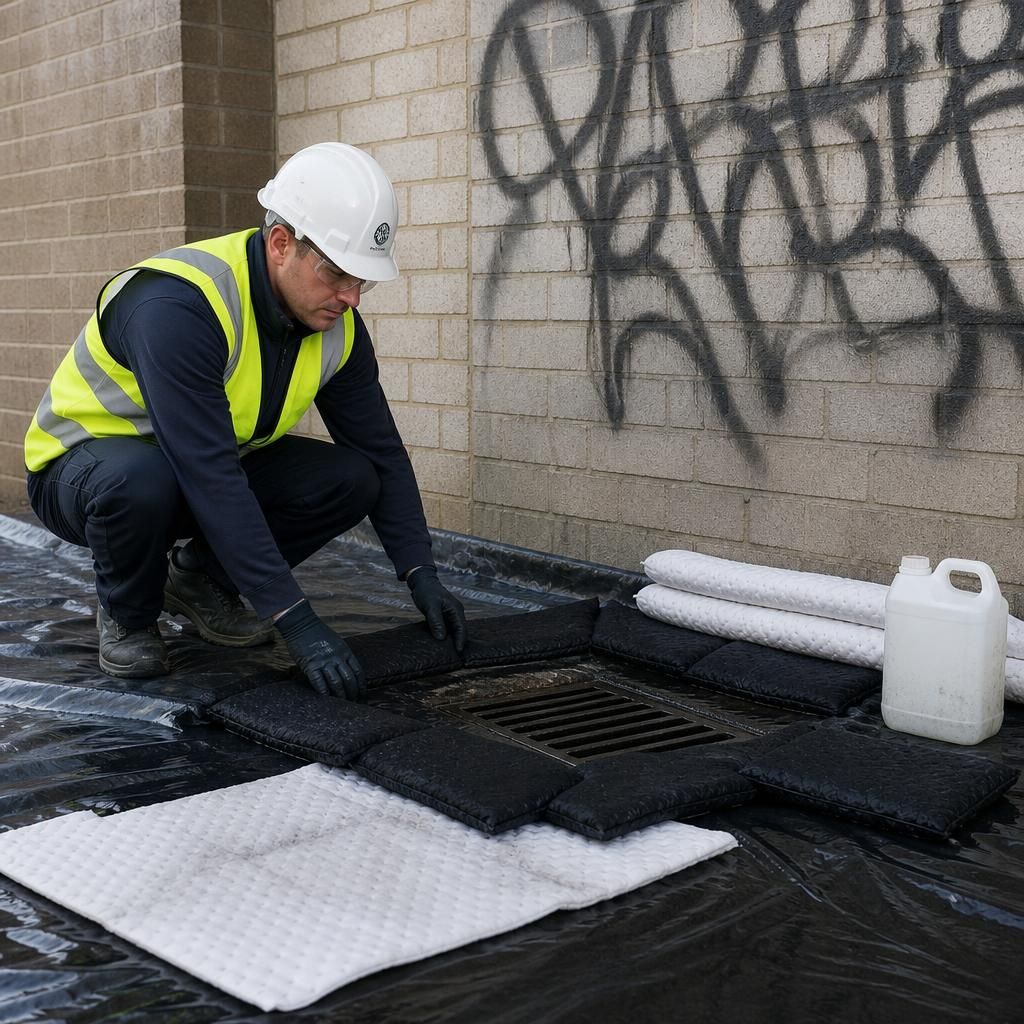
Controlling contaminated runoff is a central part of environmentally sensitive graffiti removal. Paint residues, cleaning products and dissolved contaminants must not be allowed to flow into surface-water drains, soil, planting areas or nearby watercourses.
Before cleaning, we identify drainage routes and protect vulnerable areas with drain covers, absorbent materials, bunding or temporary collection systems where required. Water and residues are then assessed for lawful discharge or collected for appropriate handling. Solid paint flakes and used absorbents are gathered as work-related waste, while the surrounding area is inspected after cleaning to confirm that no residue or pooled wastewater remains.