
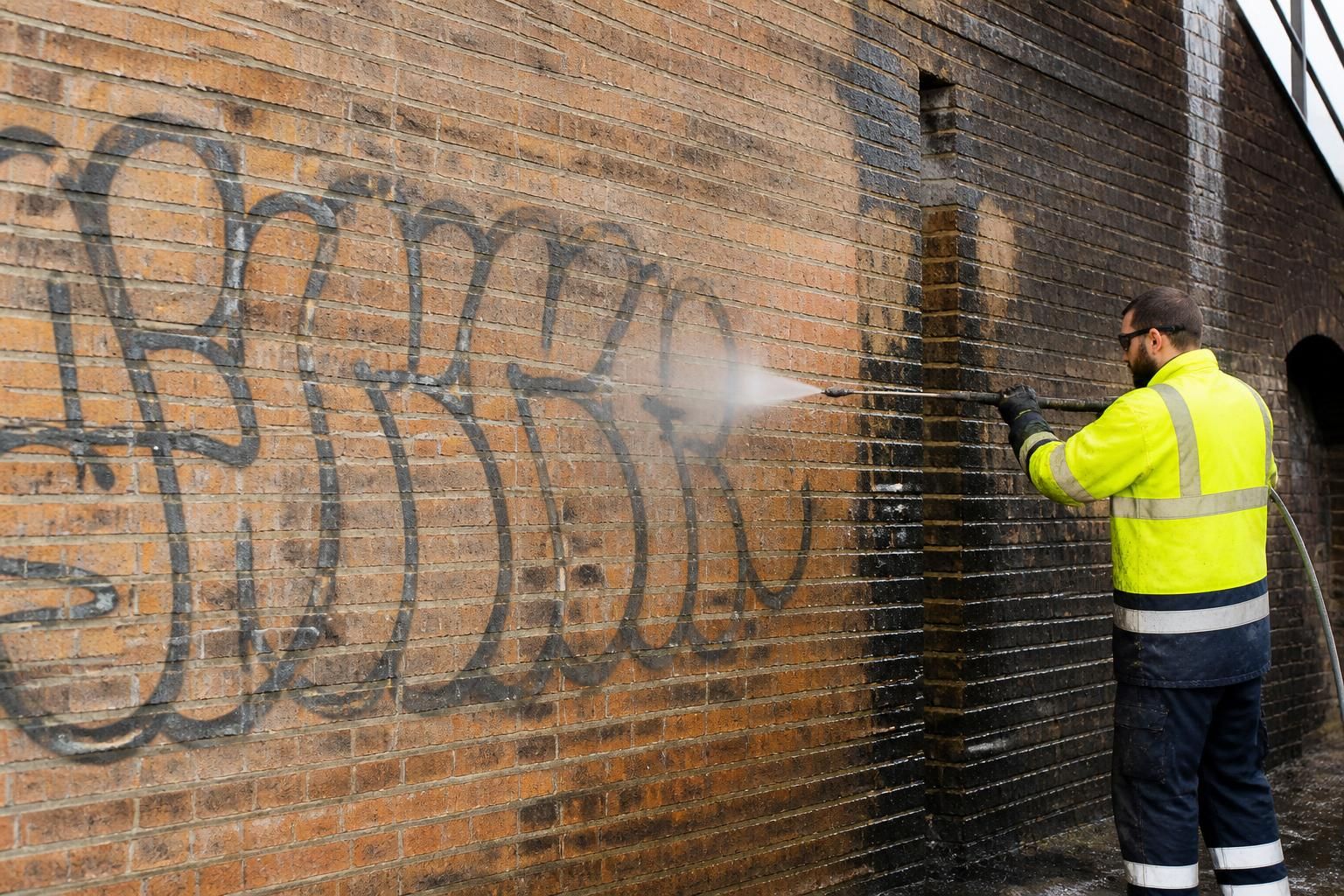
How can you ensure that graffiti removal doesn't damage the underlying brick surface?
Graffiti can be removed without damaging brickwork by identifying the brick and coating first, testing a discreet area, and selecting the least aggressive suitable method. Controlled pressure, low-pressure steam or a surface-compatible cleaning agent should be applied by trained operatives, with careful rinsing to prevent abrasion, mortar damage or chemical staining.
Graffiti can be removed without damaging the underlying brick surface by identifying the brick, mortar and graffiti coating, testing the proposed method in an inconspicuous area, and using the least aggressive technique that achieves a clean result. Pressure, steam, chemical products and rinsing must all be controlled by trained operatives, because excessive abrasion, heat, chemical strength or water pressure can remove the brick’s surface, erode mortar joints, drive paint further into porous masonry or leave staining.
A professional assessment should take place before any cleaning begins. The operative should examine:
- Whether the brick is hard-fired, soft, weathered, glazed, painted or previously repaired.
- The condition and profile of the mortar joints, including any open, friable or recently repointed areas.
- Whether the graffiti is fresh or aged, and whether it consists of aerosol paint, masonry paint, marker ink, adhesive or another coating.
- Existing sealants, coatings, repairs, efflorescence and signs of previous cleaning.
- Nearby materials such as stone, timber, glass, metal, render and painted surfaces that may react differently to the cleaning process.
This assessment is important because brick is not a single uniform material. Older or softer brick can be more vulnerable to surface loss than dense modern brick, while damaged mortar may be affected before the graffiti is fully removed. A method that is suitable for a robust façade may therefore be unsuitable for a historic elevation or a weathered boundary wall.
A small test area should be cleaned before work proceeds across the full façade. Testing should use the intended equipment, pressure, temperature, dwell time, dilution and rinsing method, rather than a stronger process simply to obtain a quick demonstration result. The test should be inspected after cleaning and again once the brick has dried. This helps identify colour change, surface roughening, patchiness, chemical staining, paint migration and mortar damage that may not be immediately visible while the surface is wet.
The cleaning method should then be selected in a controlled sequence:
- Start with the least aggressive suitable option. Low-pressure water, gentle brushing or low-pressure steam may be appropriate for some coatings and sound brickwork.
- Use pressure only where necessary. Water pressure should be kept as low as practicable, with the nozzle, angle, distance and movement controlled to avoid cutting into the brick face or mortar.
- Consider a compatible cleaning agent for resistant coatings. The product must be suitable for the brick and the graffiti type, correctly diluted and applied for only the required contact time.
- Remove softened residue carefully. Paint should not be aggressively scoured from the surface, as this can create a clean-looking area with permanent abrasion or a visibly different texture.
- Rinse thoroughly but responsibly. Residual chemical and loosened pigment must be removed without forcing water into joints, cavities or vulnerable parts of the façade.
Low-pressure steam can be useful where the coating responds to heat and moisture, particularly when minimising abrasive action is important. It still requires care: excessive heat can affect coatings, sealants and adjacent materials, while prolonged application to porous brick may increase water penetration. Steam is not automatically safe for every façade, so it should also be tested and adjusted to the condition of the masonry.
Chemical removal requires particular attention. Products should never be selected solely for their strength. A suitable formulation should soften or lift the graffiti without attacking the brick, mortar, pointing, sealant or nearby finishes. Operatives should follow the manufacturer’s instructions, protect adjacent surfaces, prevent the product from drying on the wall and neutralise or rinse residues where required. Mixing cleaning products is unsafe and can create damaging or hazardous reactions.
Controlling the water and runoff is part of protecting the brickwork. Excessive water can carry dissolved paint into porous areas, leave tide marks or spread contamination to lower courses. Rinsing should work from clean areas towards the contaminated section where appropriate, while collecting or containing dirty water in accordance with the site’s environmental controls. Nearby drains, planted areas and public spaces should be protected from contaminated runoff.
Extra caution is needed around mortar joints, damaged bricks and previous repairs. If pointing is loose, cleaning may need to be delayed until repairs have been assessed. Deeply penetrated paint may not be removable without some visual change to the masonry, particularly where earlier cleaning has already altered the surface. In these circumstances, the objective is to remove the graffiti while retaining as much original brick fabric and colour as possible, rather than pursuing an unnecessarily aggressive level of uniformity.
After removal, the façade should be inspected in daylight from suitable viewing distances. The inspection should check for remaining pigment, shadowing, disturbed mortar, exposed brick faces, staining and differences between the treated and untreated areas. Any protective anti-graffiti treatment should only be considered once the brick is clean, dry and suitable for that coating. The protection must be compatible with the masonry and applied evenly; an unsuitable coating can alter appearance or restrict the way moisture moves through the wall.
The safest approach is therefore a documented, test-led process rather than a fixed cleaning recipe. Recording the substrate condition, test results, chosen method, product information and final inspection provides a clear basis for future maintenance and helps ensure that repeated graffiti removal does not gradually wear away the brick surface. Where the façade is historic, listed, heavily weathered or structurally defective, the cleaning plan should also be coordinated with the relevant conservation or building professional before work begins.
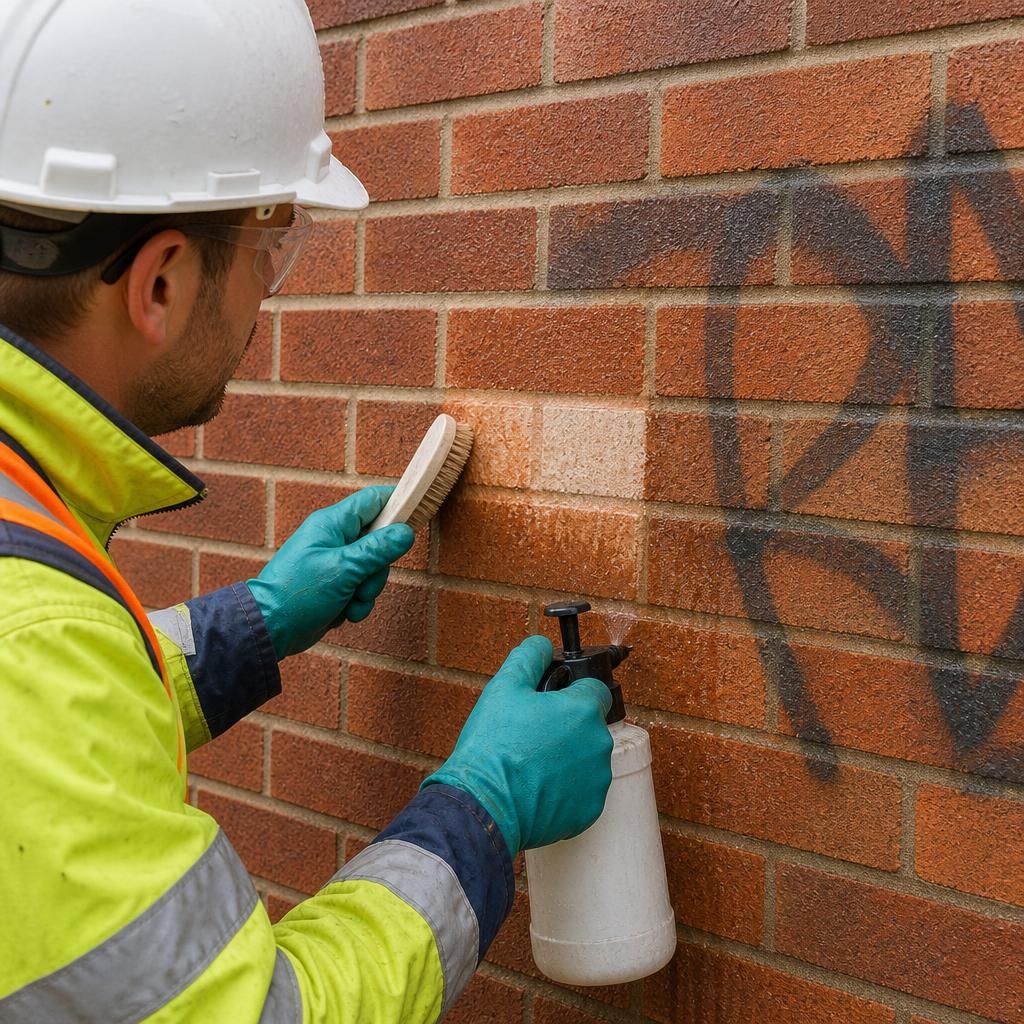
Testing a discreet patch is one of the most important safeguards against damaging brickwork during graffiti removal. The test should use the proposed cleaning product, dilution, pressure, temperature, dwell time and rinsing method, rather than a milder process that does not represent the planned work.
Inspect the area while wet and again after it has dried. Check for colour change, surface roughening, paint migration, staining and disturbed mortar. If the brick face or pointing shows any adverse response, the method should be stopped and adjusted before treatment continues. This test-led approach helps identify whether low-pressure washing, steam, gentle brushing or a compatible chemical cleaner is the least aggressive effective option for that particular façade.