
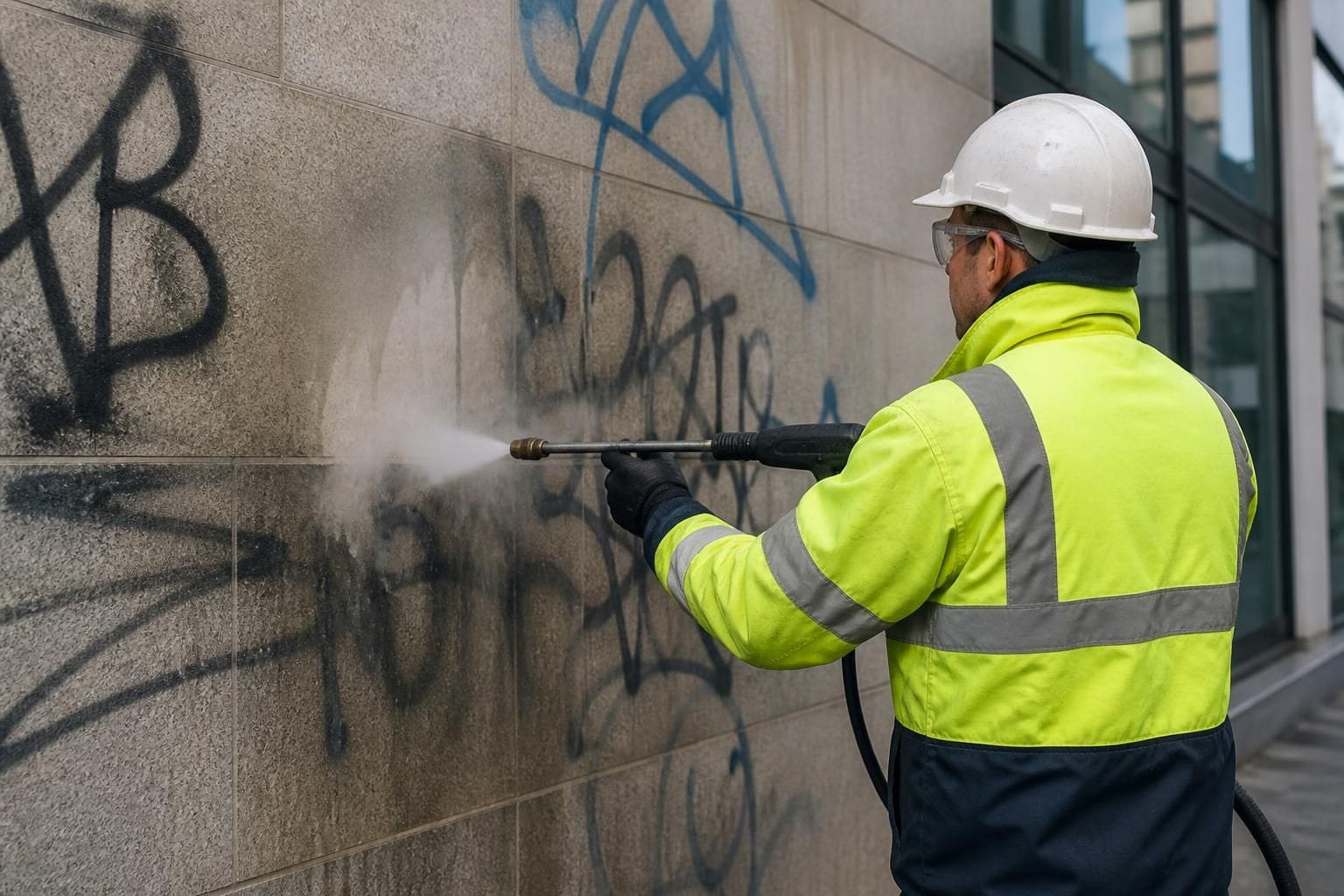
How can regular graffiti removal maintenance benefit my commercial property?
Regular graffiti removal maintenance protects your commercial property’s appearance, helps prevent porous surfaces from becoming harder to clean, and supports a safer, more professional environment for visitors, staff and tenants. Prompt removal also reduces the likelihood of repeat tagging and helps maintain the condition and reputation of the premises.
Regular graffiti removal maintenance protects a commercial property by controlling unsightly markings before they become embedded, reducing the risk of permanent surface damage and helping the premises remain safe, presentable and easier to manage. A planned service is generally more effective than treating graffiti only when complaints arise, particularly on porous brick, concrete, stone, render, cladding and painted surfaces.
Key benefits include:
- Protecting the surface: Paint, marker ink and adhesive materials can penetrate porous substrates. The longer they remain, the more difficult it may be to remove them without changing the appearance of the underlying surface. Prompt treatment helps limit staining and reduces the need for more aggressive cleaning.
- Maintaining a professional appearance: Clean façades, entrances, shutters, boundary walls and service areas contribute to a well-managed appearance. This is important for offices, retail premises, industrial estates, housing developments, public buildings and sites visited by customers, tenants, contractors or members of the public.
- Reducing repeat tagging: Visible graffiti can make a location appear unmanaged and may encourage further tagging. Removing markings quickly does not guarantee that further incidents will stop, but it reduces the time graffiti remains visible and supports a consistent approach to deterring repeat activity.
- Preserving property value and condition: Repeated staining, overpainting and unsuitable cleaning can gradually affect façades and external finishes. A controlled maintenance programme helps preserve the appearance and condition of the building envelope, supporting planned refurbishment and reducing avoidable remedial work.
- Supporting public safety: Graffiti removal can address markings on walkways, signs, access points, walls and other areas where poor visibility or damaged finishes may affect visitors and staff. Planned work also allows access arrangements, pedestrian controls, traffic management and safe working methods to be considered before cleaning begins.
- Improving cost control: Scheduled inspections and prompt response can prevent small areas of graffiti developing into larger cleaning requirements. Maintenance also makes it easier to plan access equipment, isolate work areas and coordinate cleaning with other property services instead of arranging unplanned attendance each time an incident occurs.
- Providing consistent results: Regular work allows the appropriate treatment to be recorded for each surface. This helps avoid incompatible chemicals, excessive pressure or repeated testing and supports a consistent finish across different elevations and materials.
A suitable maintenance arrangement normally begins with a site assessment. The cleaning contractor should identify the substrate, the type and age of the graffiti, nearby drainage points, public access routes, vulnerable finishes and any existing protective coating. A small test area can then be used to confirm that the selected cleaning agent, steam process, pressure level and rinsing method will remove the marking without etching, discolouring or loosening the underlying material.
The frequency of maintenance should reflect the property’s exposure, location, surface types and previous incidents. High-risk areas such as accessible boundary walls, shutters, transport-facing elevations and poorly overlooked service yards may need more frequent inspections or a rapid-response arrangement. Other areas may be suitable for periodic inspection alongside planned exterior cleaning. The objective is not to apply the same schedule to every property, but to create a proportionate plan based on observed risk and actual maintenance history.
Regular removal should be carried out by trained operatives using methods appropriate to the surface. Brick, natural stone, render, painted metal, powder-coated cladding, glass and plastic may each require different dwell times, cleaning agents and pressure settings. Run-off should be controlled and collected or directed appropriately where required, particularly near drainage systems, watercourses, planted areas and environmentally sensitive locations. The work area should be left free from chemical residue, loose debris and slip hazards.
Maintenance records are also valuable for commercial property management. A useful record can include the location and extent of each incident, the surface affected, the treatment used, photographs where appropriate, access requirements, waste or run-off controls and any recommendations for further protection. These records help identify recurring problem areas and provide evidence that external cleaning and safety procedures are being managed systematically.
Where suitable for the substrate, an anti-graffiti coating may be considered as part of the longer-term strategy. The coating must be compatible with the façade and applied to a properly prepared surface; it is not a universal solution and may alter appearance or require renewed protection over time. A specialist assessment should establish whether a sacrificial or permanent system is appropriate and how future graffiti will be removed.
For an existing commercial property, the most practical approach is usually a documented inspection and response plan covering priority areas, approved cleaning methods, access and public-safety controls, environmental precautions and escalation procedures for extensive or repeated tagging. This combines prompt removal with informed prevention, helping maintain the appearance, condition and day-to-day usability of the premises across Birmingham, the West Midlands or other UK locations.
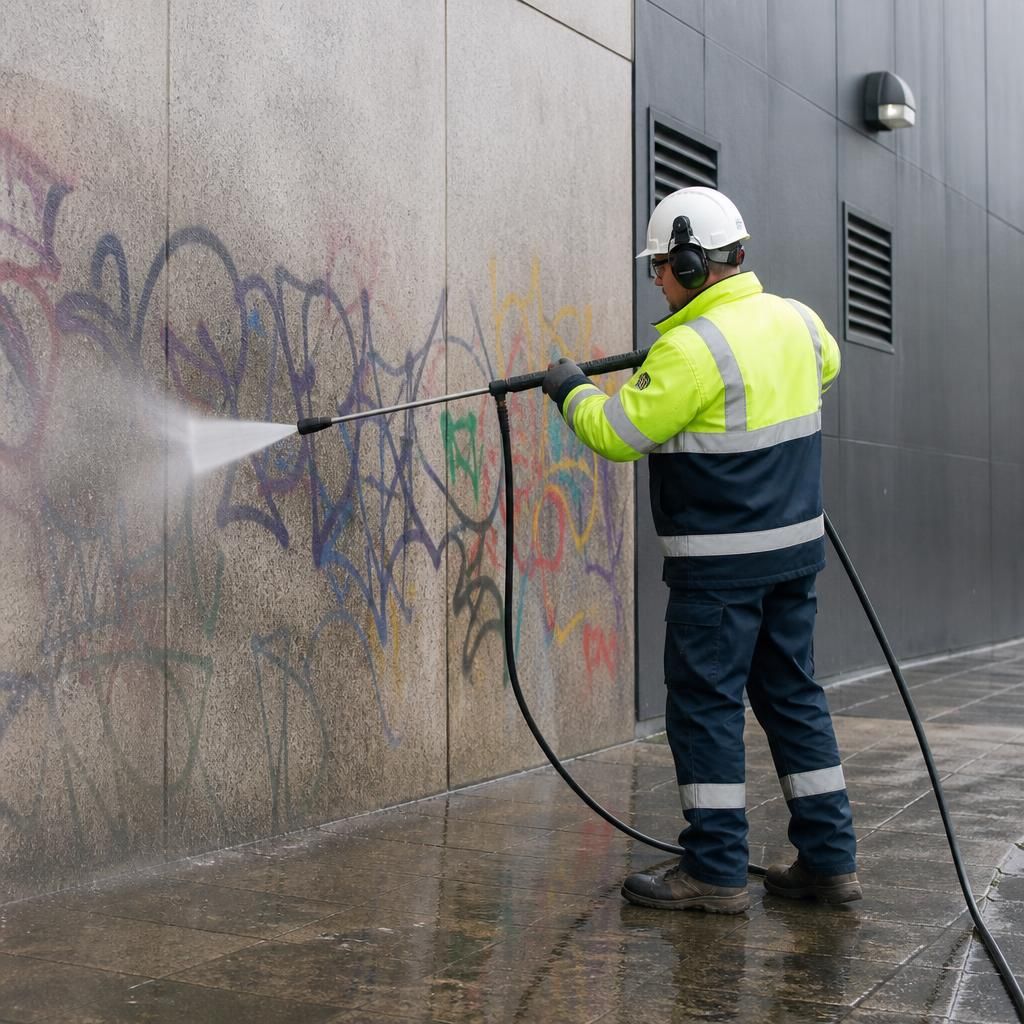
Regular graffiti removal helps prevent paint and marker ink from penetrating porous surfaces such as brick, concrete and natural stone. Treating markings promptly usually allows gentler cleaning methods to be used, reducing the risk of staining, surface erosion or visible differences between cleaned areas and the surrounding façade.
A planned maintenance response also ensures that the correct treatment is selected for each material. Operatives can assess the substrate, test the cleaning method and control pressure, dwell time and rinsing before work begins. This is particularly important where façades include mixed materials, painted finishes, cladding or protective coatings.