
What techniques are most effective for removing graffiti from building façades?
The most effective graffiti removal technique depends on the façade material, paint type and surface condition, but commonly involves controlled pressure washing, steam cleaning and carefully selected graffiti-removal products. The method should remove the paint without damaging the underlying brick, stone, render, cladding or protective coating.
The most effective graffiti removal technique is a controlled, surface-specific process combining low-pressure cleaning, steam and, where necessary, a suitable graffiti-removal product. The correct choice depends on the façade material, the type and age of the graffiti, the condition of the surface and whether a protective coating is present. The aim is to remove the paint, ink or marker without etching the substrate, stripping the finish or spreading contamination.
Assessment comes before cleaning. The façade should be inspected to identify the substrate, existing coatings, joints, cracks, weathering and any areas that have already been damaged by unsuitable cleaning. Graffiti on brick, stone, render, concrete, metal cladding and glass can require very different treatment. The paint type also matters: aerosol paint, marker ink, bitumen-based products and layered or aged graffiti do not all respond to the same cleaner or temperature.
A discreet test area is normally cleaned first. This confirms whether the proposed pressure, steam temperature, cleaning product and dwell time are appropriate. It also shows whether the graffiti has penetrated a porous surface or whether the façade has an existing sealer that could be affected. The method can then be adjusted before work proceeds across the visible elevation.
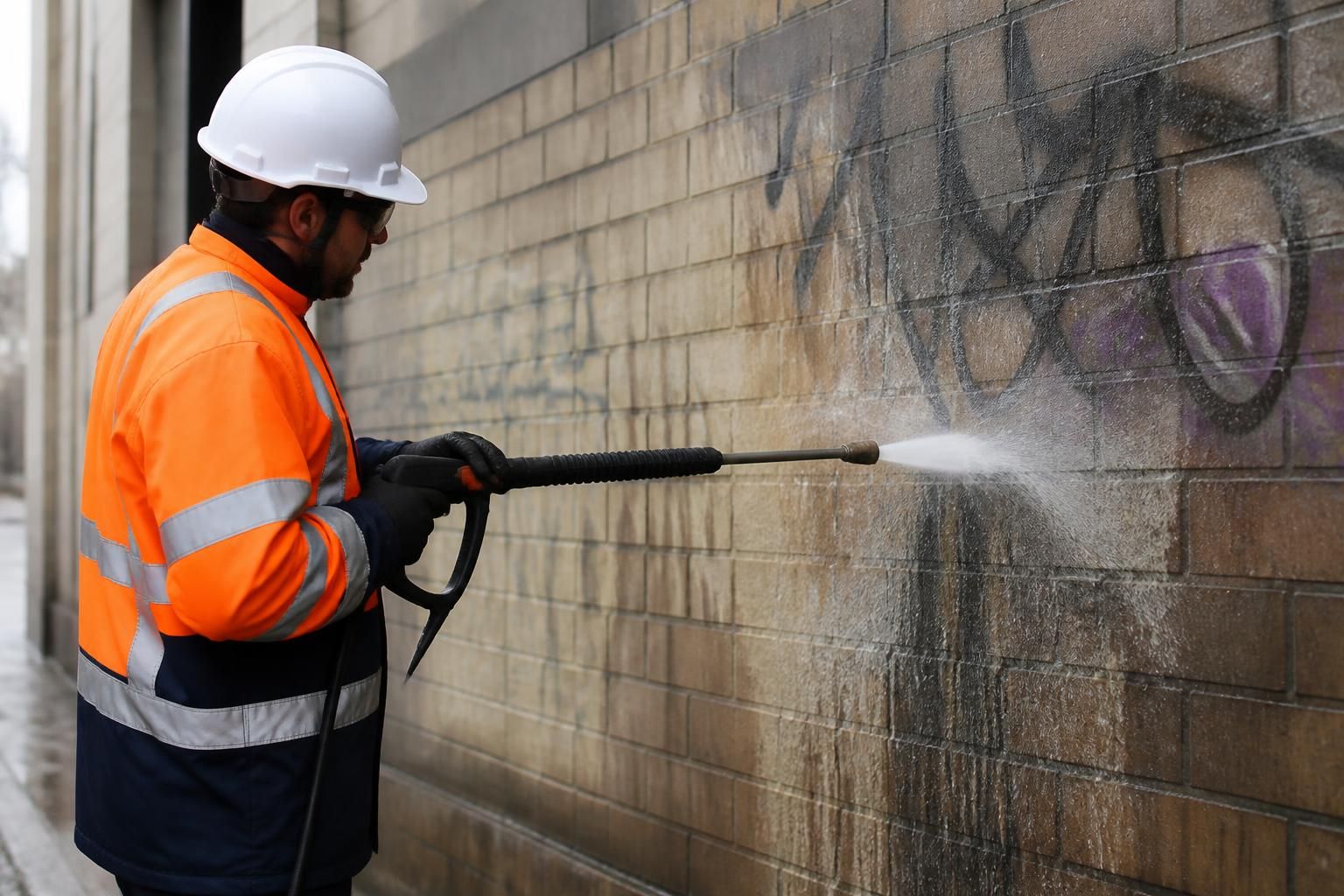
Controlled pressure washing is effective on robust, non-porous or suitably sound surfaces where the graffiti is loosely bonded. Water pressure, flow rate, nozzle type and working distance must be controlled rather than simply set as high as possible. Excessive pressure can scar brick faces, remove mortar from joints, drive pigment deeper into porous masonry and damage render or protective coatings. Clean water is directed in a consistent pattern, generally working from the least contaminated areas towards the graffiti and managing the rinse water so it does not mark the façade below.
Pressure washing is often most useful as part of a wider process rather than as the sole technique. It can remove softened paint and cleaning residue after a suitable treatment has been applied, while controlled rinsing helps prevent dissolved graffiti from being left on the surface. On delicate or heavily weathered façades, a lower-pressure approach may be preferable, even if it takes longer.
Steam cleaning uses heat and moisture to soften many paints, inks and adhesive residues while applying less mechanical force than conventional high-pressure washing. This makes it useful for detailed masonry, older brickwork, stone features and surfaces where aggressive abrasion would be unsuitable. Steam can also reduce the need for stronger chemical products, although it is not automatically safe for every façade. Heat and moisture may affect friable stone, failing coatings, timber elements or vulnerable joints, so testing remains essential.
Steam cleaning is particularly helpful where graffiti is close to architectural details, signs, window surrounds or other areas that could be damaged by forceful water. The operator works methodically, allowing the heat to loosen the coating before removing it with controlled agitation or rinsing. Persistent staining may need more than one treatment, especially where pigment has entered the pores of masonry.
Specialist graffiti-removal products are used when water and steam alone cannot break down the coating. Products may be solvent-based, alkaline, citrus-based or formulated for particular substrates, but the choice should be based on the paint and façade rather than on a general-purpose product. A cleaner that works on smooth metal may stain natural stone, soften a resin finish or draw pigment further into porous brick.
The product is applied only to the affected area where practicable, allowed to dwell for the time established during testing, and then removed thoroughly. Dwell time should be controlled: leaving a chemical in place for too long can cause discolouration or damage, while removing it too quickly may leave graffiti behind. Adjacent windows, seals, painted surfaces, landscaping and drainage points should be protected, and residues must be collected or rinsed in accordance with the product instructions and site requirements.
Porous façades often require a different approach. Brick, sandstone, limestone, unsealed render and some concrete can absorb graffiti below the visible surface. Abrasive blasting or high-pressure cleaning may remove the surface paint but leave a shadow or create a visibly lighter patch around it. Depending on the substrate, controlled steam, a compatible poultice or a carefully selected chemical treatment may draw out or break down the embedded pigment more safely. Historic or soft masonry requires particular caution because loss of the original surface can be irreversible.
Non-porous façades are generally more straightforward but still need care. Glass, glazed tiles, powder-coated metal and some cladding systems may allow paint to be removed with a suitable product and gentle mechanical action. Scrapers, pads or abrasive tools should only be used where they are confirmed to be compatible with the surface. Even a hard finish can be scratched, dulled or stripped if the wrong tool or solvent is used. Window seals, gaskets and coating edges also need protection during application and rinsing.
For textured coatings, render and painted façades, the priority is to preserve the underlying finish. Cleaning may need to be limited to the graffiti itself, using a low-impact product and minimal agitation. If the graffiti has bonded strongly or the original coating is already failing, complete removal may expose a colour difference or damaged substrate. In such cases, localised repair or redecoration may be more appropriate than progressively increasing pressure.
Effective removal also includes containment and final inspection. Runoff, dissolved paint and cleaning residues should be prevented from entering surface-water drains or spreading to clean parts of the building. Surrounding areas are protected before work begins, and the façade is rinsed or neutralised as required by the treatment used. Once dry, the area should be checked from normal viewing distances to identify remaining shadowing, streaks, coating damage or differences in appearance.
Where repeat tagging is a concern, a compatible anti-graffiti coating can make future removal faster and reduce the need for aggressive cleaning. The coating must be suitable for the façade and applied to a properly prepared surface; it should not be treated as a substitute for testing or routine inspection. On listed, historic or architecturally significant buildings, the cleaning specification may also need approval from the responsible conservation body before work starts.
In practice, the best result usually comes from combining techniques: testing first, softening the graffiti with steam or a compatible remover, using controlled pressure or gentle agitation to lift the residue, and rinsing without spreading contamination. This approach protects the façade while providing a clean, even finish and a method that can be repeated safely if further graffiti appears.
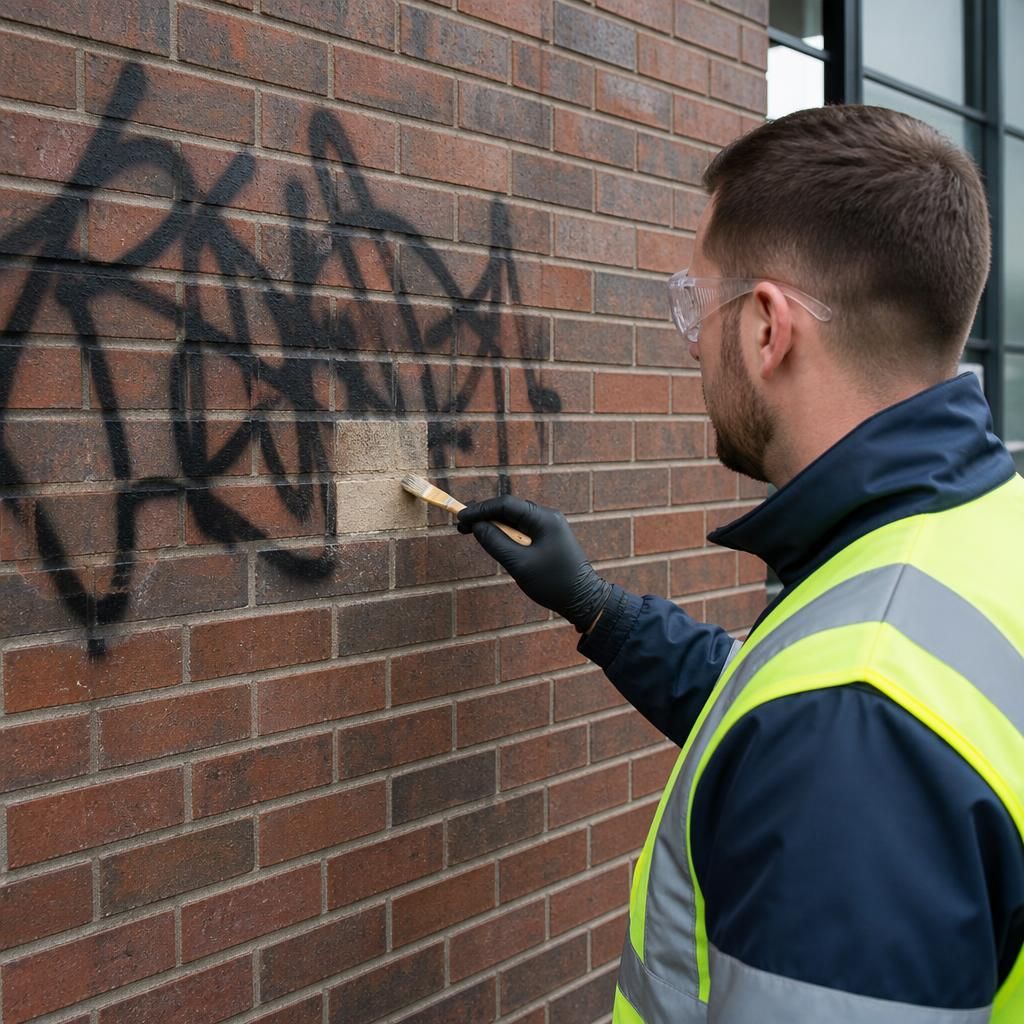
Effective graffiti removal from a building façade starts with a small test area, not maximum pressure. Testing confirms how the paint reacts and whether the brick, stone, render, cladding or coating can withstand the proposed treatment without staining, etching or loss of finish.
The cleaning method can then be selected with greater control. Steam may soften paint while limiting mechanical force, controlled pressure washing can remove loosened residue from robust surfaces, and a compatible graffiti remover may be needed for persistent or embedded marks. The treated area should be rinsed and inspected before the full elevation is cleaned, with runoff contained so dissolved paint does not spread across the façade or enter surface-water drains.