
What measures do you take to minimise disruption to business operations during the façade cleaning process?
We minimise disruption by planning the façade cleaning around your operating hours, access requirements and site activities, using phased work areas, suitable equipment and controlled cleaning methods. We agree the programme with your team in advance, maintain safe pedestrian and vehicle routes, and provide clear updates so any temporary restrictions can be managed efficiently.
We minimise disruption to business operations by planning the façade cleaning around your working hours, access requirements and other site activities. Before work starts, we agree a practical method statement and programme with your team, then use phased work areas, controlled cleaning methods and suitable access equipment to keep unaffected parts of the premises operational.
Planning around your operations
We review how the building is used, including entrances, loading areas, customer routes, staff access, deliveries, parking, adjoining properties and any time-critical activities. This allows us to identify where cleaning could affect normal operations and schedule those tasks for quieter periods, early mornings, evenings, weekends or planned closures where appropriate.
The programme is coordinated with the responsible site contact and can be aligned with other contractors working on the building. If the property is occupied throughout the work, we divide the façade into manageable sections so that cleaning does not unnecessarily restrict the whole site at once.
Maintaining safe access and clear routes
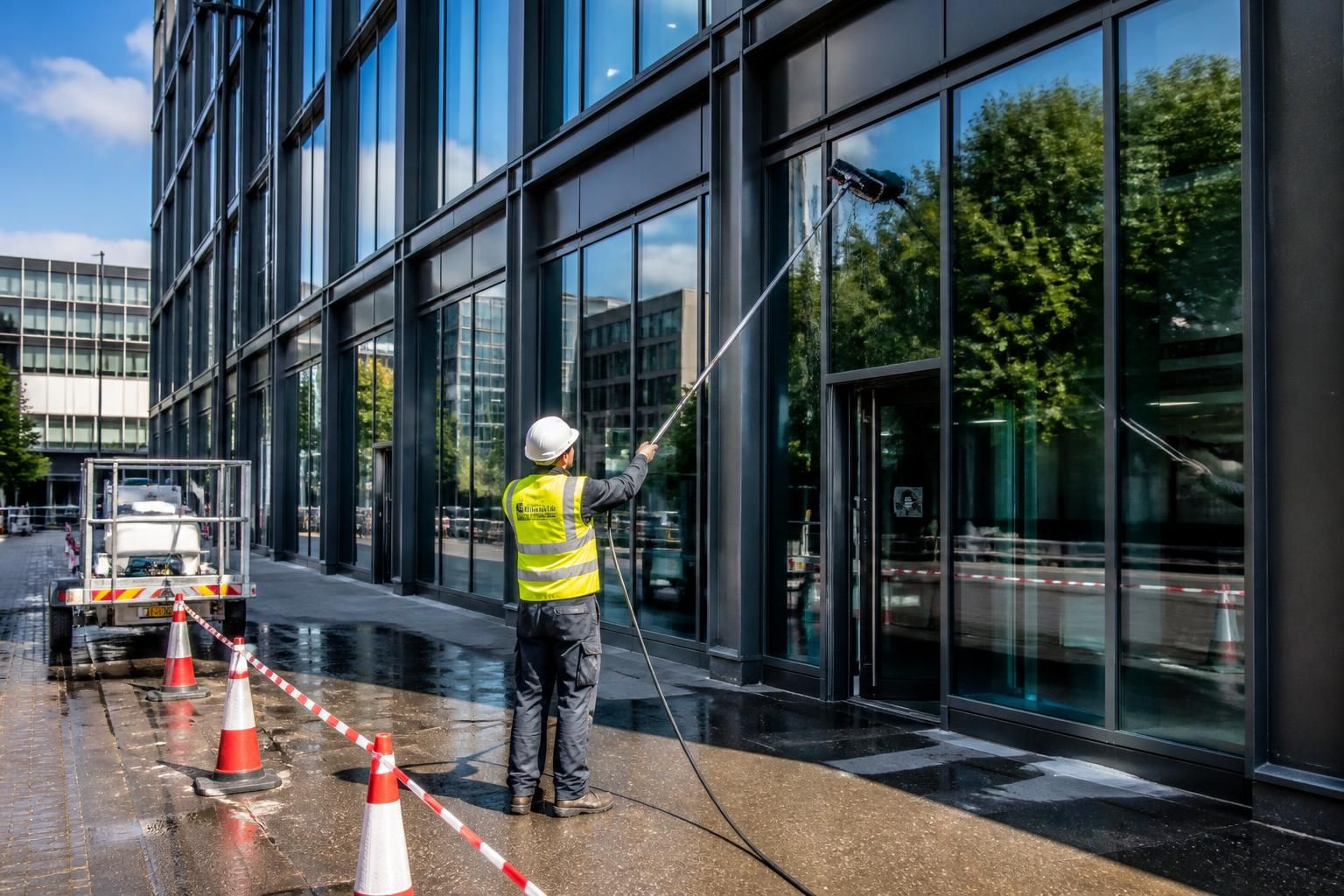
We establish controlled work zones around the areas being cleaned and keep pedestrian and vehicle routes clearly defined. Where an entrance, pavement, service yard or car park is affected, we agree suitable alternative routes or temporary controls in advance. Barriers, signage and exclusion zones help separate people from access equipment, falling debris, overspray and wet surfaces.
Access arrangements are reviewed as the work progresses. We avoid blocking fire exits and maintain emergency access, while any temporary restriction is communicated to the people who need to know. Deliveries, collections and high-traffic periods can be coordinated with the cleaning team so that vehicles and pedestrians are not brought into conflict with the work area.
Using appropriate equipment and cleaning methods
We select equipment according to the façade material, building height, available space and required level of control. Pressure washing, steam cleaning and other techniques are adjusted to avoid unnecessary noise, water use, spray or vibration. Where access is restricted, suitable access equipment can reduce the time spent occupying a busy area and limit the footprint of the work zone.
Cleaning pressures, temperatures, detergents and rinse volumes are controlled rather than applying the same method across the entire building. This helps prevent damage to the façade and reduces issues such as excessive runoff, splashback and repeated cleaning. Before wider work begins, we can carry out a test area to confirm the method and identify any practical effects on nearby operations.
Protecting the building and surrounding areas
Windows, doors, vents, signage, lighting, electrical equipment, landscaping and other vulnerable features are identified during the site assessment. Appropriate sheeting, screening or temporary protection is used where required. We also plan how wastewater, dirt and dislodged deposits will be contained and removed, particularly near entrances, drainage points, neighbouring premises and occupied areas.
These controls help reduce the chance of contamination, staining or water entering the building. They also make the work area easier to manage and reduce the need for avoidable remedial cleaning after the façade work is complete.
Controlling noise, water and working times
Some cleaning activities and access equipment can create noise, spray or temporary changes to the surrounding area. We take account of the building’s use and nearby occupants when selecting methods and working times. Noisy or disruptive tasks can be scheduled away from meetings, customer-facing periods, school activity, loading operations or other sensitive site events where this is practical.
Water supply, drainage and weather conditions are checked before work begins. If rain, wind, freezing temperatures or poor drainage would make the operation unsafe or increase disruption, the affected task may be rearranged rather than carried out under unsuitable conditions.
Keeping communication clear
A named contact and agreed communication process help resolve operational issues quickly. We provide the working schedule, identify areas affected by each stage and explain any temporary changes to access. If conditions on site require the programme to change, we discuss the impact with your team before altering the planned work wherever possible.
At the end of each work area, we check that routes, entrances and surrounding surfaces are safe and usable before moving on. Any outstanding restrictions, follow-up cleaning or access requirements are reported clearly so your team can plan accordingly.
For larger or more complex premises, the most effective approach is usually a phased programme supported by an initial site survey, agreed access controls and regular progress reviews. This allows façade cleaning to proceed efficiently while keeping essential business activities, deliveries and public access running with as little interruption as the site conditions allow.
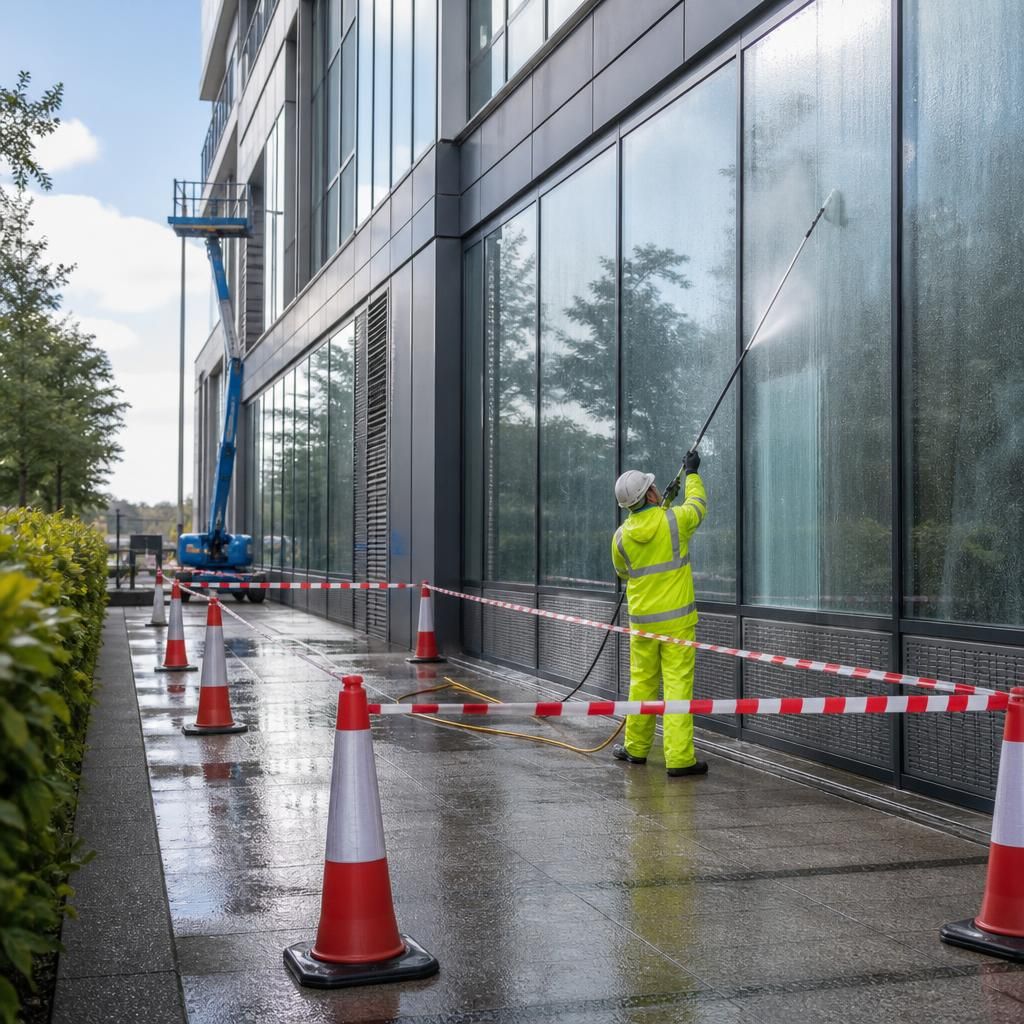
A phased façade cleaning programme limits disruption by dividing the building into controlled work areas rather than restricting access to the entire premises at once. We agree the sequence with your site contact, prioritising less busy elevations first and scheduling work near entrances, loading bays or customer routes for quieter operating periods where possible.
Each phase includes suitable barriers, signage and temporary access arrangements, with pedestrian and vehicle routes kept separate from the cleaning zone. Before moving to the next area, we check that surfaces, entrances and surrounding routes are safe and usable. This approach allows essential business activities, deliveries and public access to continue while the cleaning progresses in a controlled manner.