
What is the best method for cleaning delicate façade materials like stucco or glass?
The safest method for delicate façade materials such as stucco and glass is a tested, low-pressure clean using compatible, non-abrasive solutions and controlled rinsing. Stucco generally requires gentle soft washing to protect its surface, while glass is best cleaned with purified water or a residue-free glass treatment, with a small test area completed first.
The best method for cleaning delicate façade materials such as stucco and glass is a controlled, low-pressure process using a compatible cleaning solution, gentle agitation where necessary and thorough rinsing. The method should be selected after checking the material, coating, condition and surrounding details, with a small test area completed before the wider clean. Stucco generally responds well to soft washing, while glass is usually cleaned with purified water or a residue-free glass-cleaning treatment.
Why delicate façades need a controlled approach
Delicate materials can be damaged by excessive pressure, abrasive particles, unsuitable chemicals or rapid changes in temperature. Stucco may be porous, friable or cracked, allowing water to penetrate behind the finish. Glass can develop scratches, streaks, mineral deposits or coating damage if it is cleaned with contaminated water, harsh chemicals or unsuitable tools. The aim is to remove dirt, biological growth, staining and atmospheric deposits without affecting the surface, joints, sealants, coatings or adjacent materials.
Before cleaning, the façade should be assessed for cracking, loose areas, failed sealant, exposed reinforcement, staining, previous repairs, painted finishes and sensitive architectural details. We also check nearby windows, vents, doors, signage, lighting and drainage routes. This assessment helps determine the appropriate pressure, cleaning product, dwell time, rinsing method and access equipment.
Cleaning stucco and render finishes
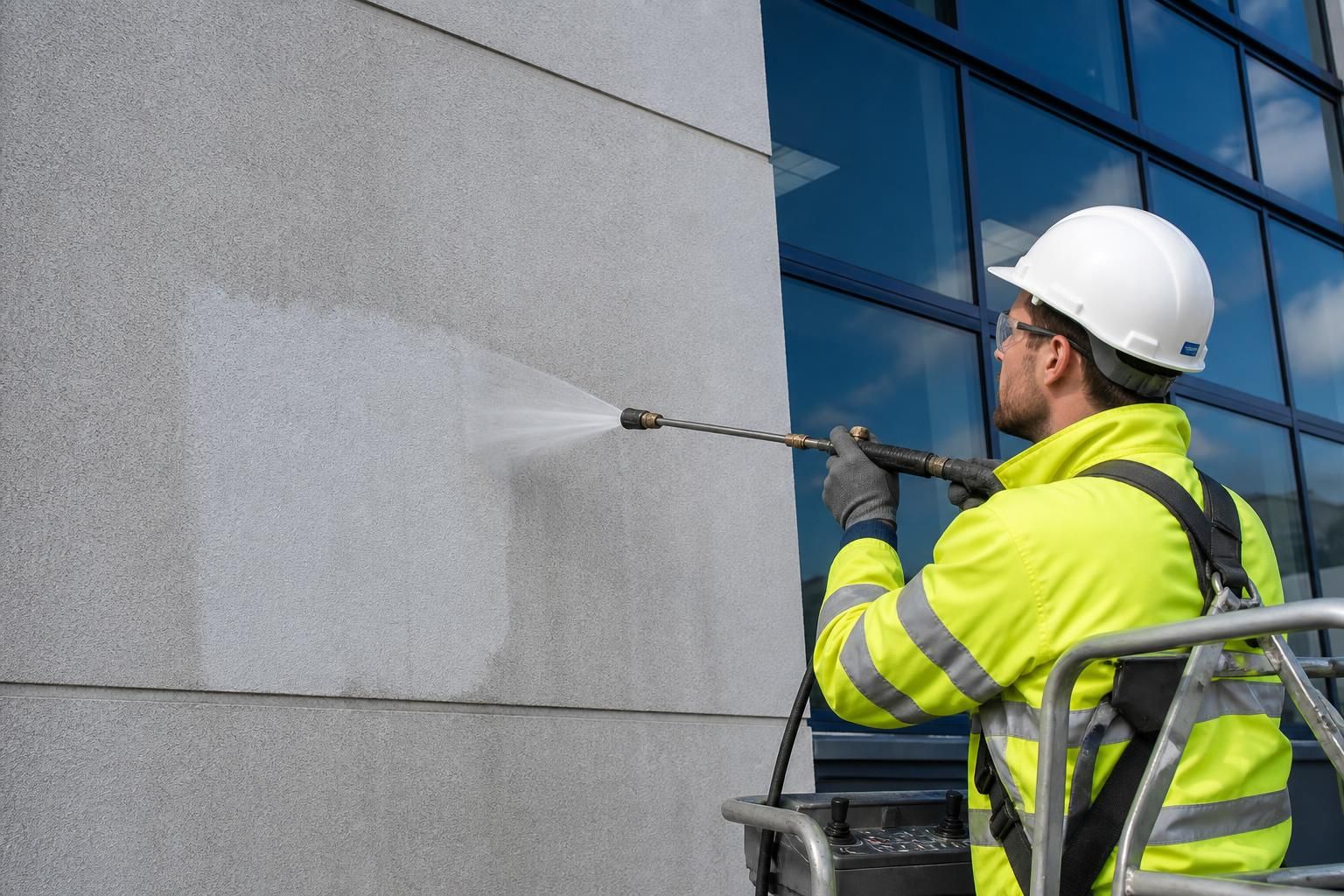
Stucco is normally cleaned using a soft-washing method rather than conventional high-pressure washing. A compatible, low-strength solution is applied at low pressure to loosen organic growth, surface dirt and atmospheric soiling. The solution is allowed to work for an appropriate period, without being allowed to dry, and the surface is then rinsed gently using controlled water flow.
Where deposits remain, gentle brushing with a soft, non-abrasive brush may be used. Stubborn marks are treated locally rather than by increasing pressure across the entire façade. This reduces the risk of removing the surface texture, opening fine cracks, dislodging weak areas or forcing water behind the finish.
Particular care is needed around cracks, movement joints, window and door openings, parapets and areas where the stucco has separated from its backing. Cleaning cannot correct failed render, defective pointing or water ingress. If these defects are identified, they should be recorded and referred for suitable repair before, or alongside, the cleaning programme.
Strong acids, aggressive alkaline products, abrasive blasting and unregulated pressure can etch, bleach or weaken stucco. Chemicals must also be selected with regard to the substrate beneath the finish and any adjacent materials, including masonry, metal trims and glass. A test patch confirms whether the proposed treatment removes the soiling without changing the colour or texture of the surface.
Cleaning glass façades
Glass is best cleaned using purified water, a suitable residue-free glass-cleaning solution or a combination of both. Purified water reduces the mineral content left behind during drying, helping to prevent spotting and streaking. The glass is washed with clean, non-abrasive equipment and rinsed or squeegeed in a controlled manner.
Before cleaning, the surface should be checked for construction residue, paint, silicone, mortar, hard-water deposits, scratches and specialist coatings. Debris must be removed carefully before any wiping or agitation, because loose grit can scratch the glass. Blades, abrasive pads and scraping tools should not be used unless the glass type, coating and condition have been confirmed and the method has been specifically approved.
Glass cleaning also includes the surrounding framework, gaskets and sealant lines. Aluminium, painted frames, powder-coated finishes and uPVC may each require different products and levels of agitation. Water should not be directed into vents, drainage slots, failed seals or open joints. Run-off must be controlled so that dirt and cleaning solution do not mark lower panes, façades, entrances or pedestrian areas.
Specialist glass requires additional checks. Solar-control, low-emissivity, tinted, mirrored and coated glass may be more sensitive to chemicals, heat and mechanical contact. The cleaning method should follow the available manufacturer or building-maintenance guidance where applicable. If the coating or glass specification is unknown, a discreet test area is particularly important.
How the cleaning process is controlled
- Survey the façade: Identify the materials, coatings, existing defects, access requirements and areas at risk from water or chemical contact.
- Choose compatible products: Select a non-abrasive treatment that is suitable for the substrate and surrounding finishes. Product strength is kept to the level required for the particular deposit.
- Protect adjacent areas: Cover or shield vulnerable fixtures, isolate sensitive equipment where required and plan run-off and waste-water controls.
- Complete a test patch: Check cleaning effectiveness, colour consistency, surface reaction, dwell time and rinsing requirements before proceeding.
- Clean in manageable sections: Work methodically from clean areas towards more heavily soiled areas, preventing premature drying and uncontrolled run-off.
- Rinse and inspect: Remove residues thoroughly using controlled water flow, then inspect the finish from suitable angles and distances.
- Record findings: Note defects, areas requiring repair and any limitations caused by permanent staining, failed coatings or substrate deterioration.
Pressure, temperature and access considerations
Pressure is adjusted to the material rather than using a fixed setting for the whole building. The nozzle, spray distance, water volume and angle all affect the force applied to the surface. Delicate stucco and vulnerable joints normally require a wider spray pattern and greater working distance than robust masonry. Glass may tolerate controlled rinsing, but pressure should never be used to compensate for an unsuitable chemical or poor preparation.
Hot water or steam can be effective for some deposits, but temperature must be controlled around glass coatings, sealants, painted frames and repaired stucco. Sudden temperature changes can place stress on glass and other materials. High-level sections should be reached using suitable access equipment rather than directing excessive pressure from a distance. This improves control and reduces overspray, missed areas and unnecessary disturbance.
What results to expect
Routine dirt, algae, mould and general atmospheric soiling can often be removed without altering a delicate finish. Permanent staining, corrosion marks, etched glass, failed coatings, embedded pollution or discolouration caused by previous cleaning may not be fully reversible. Where a mark is likely to require restoration rather than cleaning, this should be explained before work starts so that the cleaning objective remains realistic.
For commercial façades, the safest specification is therefore a material-led cleaning plan rather than a single method applied across the building. Low-pressure soft washing is normally the appropriate starting point for stucco, while purified-water or residue-free cleaning is generally suitable for glass. Both methods depend on correct assessment, a controlled test patch, compatible products, careful protection and a final inspection.
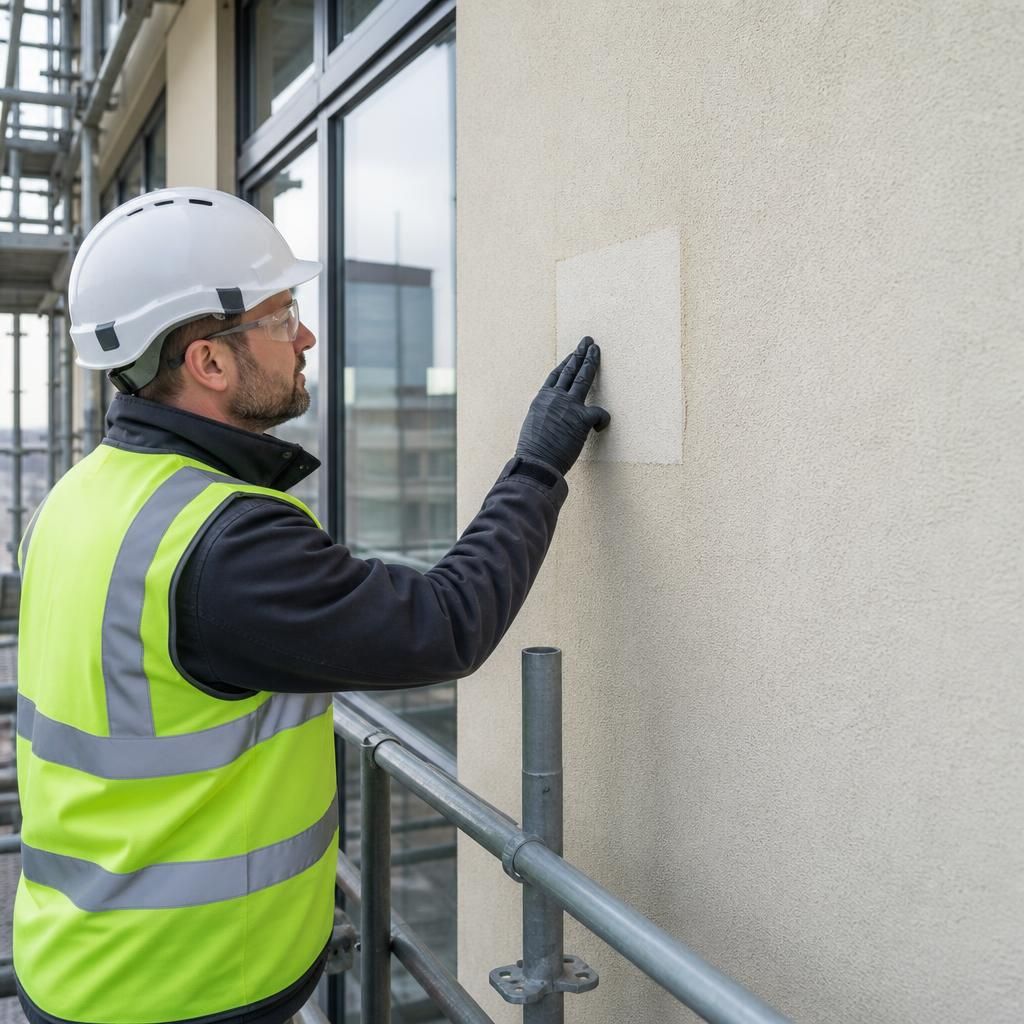
A small test patch is the safest way to confirm the correct cleaning method for delicate stucco or glass before work begins across the façade. It shows whether the chosen solution, pressure and rinsing process will remove the soiling without changing the surface colour, texture, coating or finish.
The test area should include representative dirt and, where possible, different conditions such as exposed edges, repaired sections or coated glass. It should be inspected after cleaning and drying, including the surrounding seals, frames and joints. If the result is unsuitable, the method can be adjusted before full-scale cleaning, reducing the risk of surface damage, streaking or permanent marking.